 LazAgro
Broiler farming in Cameroon looks simple from the outside. You buy day-old chicks, feed them for six to eight weeks, and sell. Then the first batch arrives, and you learn that the first 72 hours, the cost of feed and the week buyers actually show up decide whether you make money.
Broilers are popular with new farmers because the cycle is short and demand is everywhere, from Mile 17 and Mokolo markets to restaurants, "braise" spots and families buying for Christmas, New Year and Easter. But margins are thin. A batch run carelessly can lose money even when every bird survives, simply because feed was wasted or the birds were sold a week too late.
This guide walks through one batch from start to finish: preparing the house, buying chicks, brooding, feeding, vaccination and biosecurity, then timing your sale and checking whether the batch paid.
1. Planning a batch before buying chicks
The planning step is where most beginners cut corners. Before you pay a deposit on chicks, answer these questions on paper:
- How many birds can my house hold comfortably? Crowding increases heat stress, wet litter and disease.
- Who will buy them, and when? Count backwards from the date you want to sell.
- Where will feed come from? Running out of feed in week five is a disaster. Agree supply with a feed dealer in advance.
- Who will be at the farm every day? Broilers need checking several times a day, especially in the first two weeks.
Start small
Many experienced farmers advise a first batch of 100 to 300 birds. You will learn more from one well-managed small batch than from a crowded large one where you are always running behind.
2. Preparing the poultry house
The house must be clean, dry and ready at least a few days before chicks arrive. If you are still building, our guide on building a poultry house in a tropical climate covers orientation, roofing, ventilation and drainage.
Cleaning between batches
- Remove all old litter and manure, far from the house.
- Scrape and wash floors, walls, feeders and drinkers with detergent.
- Disinfect with a product sold for poultry houses, following the label.
- Leave the house empty to dry. Many farmers aim for about two weeks between batches.
Litter and the brooding area
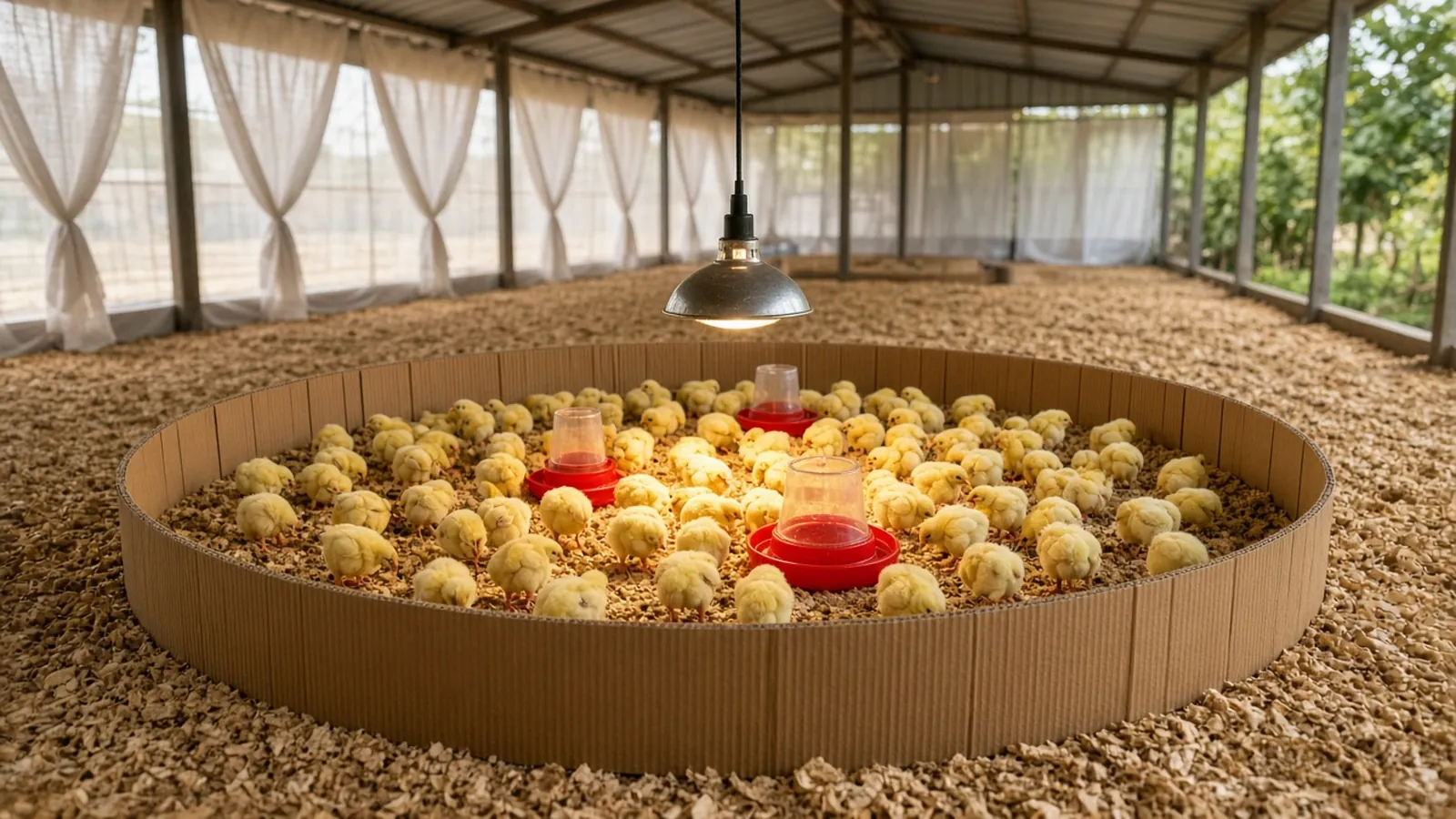
Spread clean, dry wood shavings or rice husks several centimetres deep. Set up a smaller brooding area using a brooder guard (cardboard, plywood or mesh with sacks) so chicks stay near heat, feed and water in the first days.
3. Buying good day-old chicks
Your chick supplier matters as much as your feed. A poor batch of chicks will never catch up, no matter how well you feed it.
- Buy from a known hatchery or a reliable distributor, and book in advance during festive seasons when demand is high.
- Ask what vaccines, if any, were given at the hatchery, and get it in writing.
- On arrival, chicks should be active, alert, with dry navels and bright eyes.
- Count them in front of the driver and note weak or dead chicks immediately.
4. Brooding: the first two weeks
Day-old chicks cannot control their own body temperature well. Brooding is about giving them steady warmth, fresh air, easy water and feed.
Temperature
A commonly used target is around 32–35°C at chick level in the first week, reduced by about 2–3°C each week as feathers grow. A thermometer at chick height is useful, but the chicks themselves are the best guide:
- Crowded under the heat source, chirping loudly: too cold.
- Pressed against the walls, panting, wings spread: too hot.
- Spread evenly, some eating, some sleeping: about right.
- All bunched on one side: probably a draught.
Heat sources range from charcoal pots and kerosene lamps to gas brooders and electric bulbs. In places with frequent power cuts, have a backup plan. Charcoal and gas give off fumes, so keep some ventilation even on cold nights in the highlands.
Water and first feed
Give clean water as soon as chicks arrive. Some farmers add a small amount of sugar or a vitamin product on the first day; follow product labels. Offer starter feed on trays or paper so every chick finds it easily, and gently dip a few beaks into water if chicks look slow to drink.
Check often
Walk through the brooder several times a day in the first week, including late at night. Many early losses come from cold nights, overturned drinkers and chicks that never found water.
5. Feeding broilers by phase
Feed is the biggest cost in broiler farming in Cameroon, often the large majority of the batch budget. Broilers are bred to grow fast, but only on a balanced feed given in the right phase.
| Phase | Typical age | Goal |
|---|---|---|
| Starter | Roughly the first 2–3 weeks | Build frame, organs and immunity; high protein |
| Grower | Middle weeks (if your supplier uses this phase) | Steady muscle growth |
| Finisher | Final weeks until sale | Weight gain; more energy |
Follow your feed mill's recommended ages for each phase. They differ between brands.
Stop feed waste
- Raise feeders as birds grow so the lip sits around back height.
- Fill feeders only partly. Overfilled feeders get scratched out onto the litter.
- Store bags off the floor on pallets, away from walls and rain.
- Record every bag opened, by date.
For more on tracking and reducing feed costs, see our guide on livestock feed management.
6. Heat stress in the dry season
Late broilers are heavy and produce a lot of body heat. During hot afternoons, especially in the dry season and in lowland areas like Douala, birds can die of heat stress within hours.
- Open curtains fully during the day and keep airflow moving.
- Give cool, clean water. Add more drinkers in hot weeks.
- Avoid feeding during the hottest hours; feed early morning and evening.
- Do not overcrowd. Space needs grow quickly in the last two weeks.
- Plant shade trees around the house and keep grass short so air flows.
7. Vaccination and biosecurity
Vaccination
Newcastle disease and Gumboro (infectious bursal disease) are among the most common vaccines in broiler programmes in the region. The right schedule depends on your hatchery, local disease pressure and the vaccines available. Agree a written plan with a veterinarian or a trusted animal health technician, and record each date, product and batch number.
Vaccine handling basics
- Keep vaccines cold from the shop to the farm, in a cool box with ice.
- Use clean water without chlorine or disinfectant when vaccinating through drinking water.
- Use the mixed vaccine within the time stated on the label.
Why biosecurity matters so much in Cameroon
In 2016, highly pathogenic avian influenza (H5N1) was confirmed in Cameroon. A study of the outbreaks describes how it began at a poultry complex in Yaoundé and spread to farms in several regions, leading to culling, movement restrictions and market disruption. Even farms that were never infected lost sales.
- Fence the farm and keep one controlled entrance.
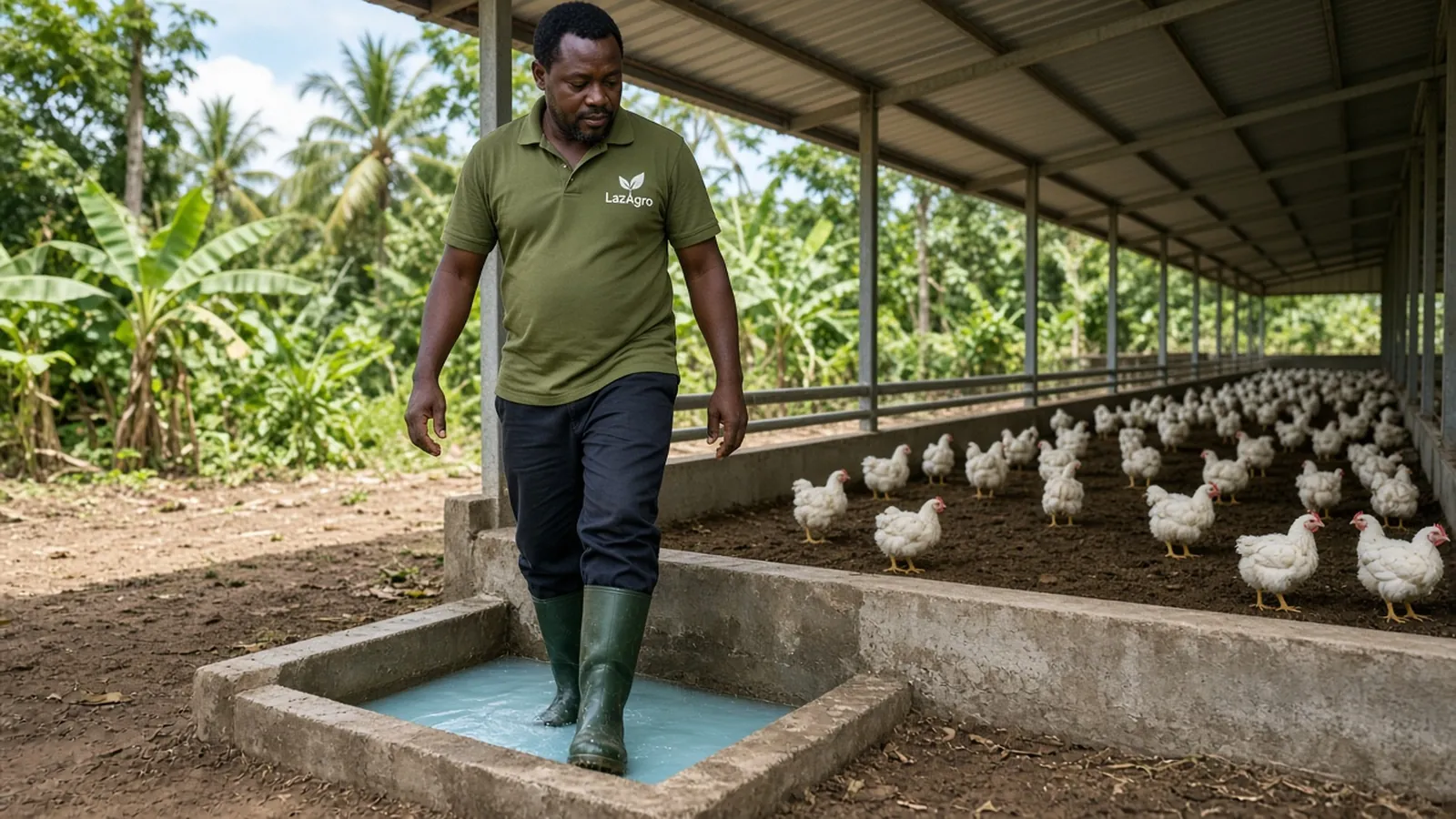
- Use a footbath and farm-only boots.
- Keep visitors, traders and other farmers out of the house.
- Run one age group at a time ("all-in, all-out") where possible.
- Keep wild birds, rodents and village chickens away from feed and water.
- Dispose of dead birds safely by burying or burning, never by throwing them in the bush.
- Report sudden high mortality to MINEPIA veterinary services immediately.
8. Watching your birds every day
Good broiler farmers notice small changes early. Each morning, check:
- Are birds eating and drinking normally? A sudden drop in water use is often the first sign of trouble.
- Is the litter dry? Caked, wet litter around drinkers causes ammonia, breast blisters and leg problems.
- Are droppings normal? Bloody or watery droppings need attention.
- How many birds died, and how did they look?
Write it down daily. Records are how you spot a problem on day two instead of day five. Our guide on keeping livestock farm records shows what to track.
9. Selling at the right time
Many farmers sell broilers somewhere around six to eight weeks, depending on the weight buyers want. Every extra day on feed costs money. Birds that are not sold on time keep eating, and their growth per bag of feed slows down as they get older.
- Line up buyers early. Restaurants, market sellers, schools, churches and families planning events.
- Plan for festive peaks. Demand usually rises around Christmas, New Year and Easter. Count back from those dates when you place your chick order.
- Weigh a sample. Knowing average live weight helps you negotiate.
- Consider dressed birds. Selling slaughtered, cleaned chickens can earn more, but it needs clean water, hygienic handling and cold storage.
10. Did the batch make money?
When the last bird is sold, close the batch on paper. Add up:
- Chicks, including transport.
- All feed bags used.
- Vaccines, drugs and disinfectant.
- Litter, heating fuel or electricity, water.
- Labour, if paid.
Comparing batches over a year shows you whether your management is improving. The LazAgro app records feed issued, mortality and sales per batch, works without network, and gives you the totals when you close a batch.
11. Mistakes that quietly eat broiler profits
Ordering chicks before the house is ready
Chicks arrive, the brooder is still being built, the litter is damp and the heat source is not tested. The batch starts behind and rarely catches up. Finish preparation two or three days before the delivery date.
Overcrowding the last two weeks
A house that looks spacious with day-old chicks is full by week five. Plan bird numbers for the size they will be at sale, not the size they arrive. Crowded birds pant, eat less and leave the litter soaked.
Running out of feed
Switching suddenly to a different brand, or leaving birds without feed for a day while you look for stock, sets growth back. Keep at least a few days of feed in store and order early.
Treating without a diagnosis
Buying random antibiotics at the market when birds look sick wastes money and leaves residues in meat. Get a veterinarian or trained animal health worker to look at the birds, respect withdrawal periods, and record every treatment.
Keeping birds "a little longer" for a better price
Sometimes it works. More often, feed costs climb, mortality from heat rises and the price does not move. Decide your selling window before the batch starts and stick to it unless you have a firm buyer offer.
Ignoring wet litter
Leaking drinkers and rain blowing in under the roof create wet patches that smell of ammonia within days. Fix leaks immediately, turn the litter, and replace wet patches with dry shavings.
Frequently asked questions about broiler farming in Cameroon
1. How many weeks does it take to raise broilers?
Many farmers sell between six and eight weeks, depending on the weight their buyers want and how well the birds have been fed and managed.
2. What kills most broiler chicks?
In the first week, chilling, overheating, dehydration and poor-quality chicks cause most losses. Later, heat stress, wet litter and disease become bigger risks.
3. Which vaccines do broilers need?
Newcastle disease and Gumboro vaccines are common in broiler programmes. Agree the exact schedule with a veterinarian and your hatchery, since it depends on local disease pressure.
4. How can I reduce broiler feed costs?
Buy good-quality feed, store it dry, avoid overfilling feeders, adjust feeder height, sell on time and record every bag. Cheap feed with poor nutrition often costs more per kilo of meat produced.
5. Is broiler farming profitable in Cameroon?
It can be, especially when batches are timed for festive demand and losses are kept low. Profit depends on feed prices, chick quality, mortality and selling on time, so keep records for every batch.
Final thoughts
Broiler farming rewards attention to detail. The farmers who do well are rarely the ones with the biggest houses. They prepare before chicks arrive, watch their birds closely, keep feed off the floor and sell on schedule. Run one batch properly, learn from your numbers, and the next one will be better.
Close every batch with real numbers
Track chicks, feed, vaccines, mortality and sales batch by batch with LazAgro, online or offline.
Discover LazAgro