 LazAgro
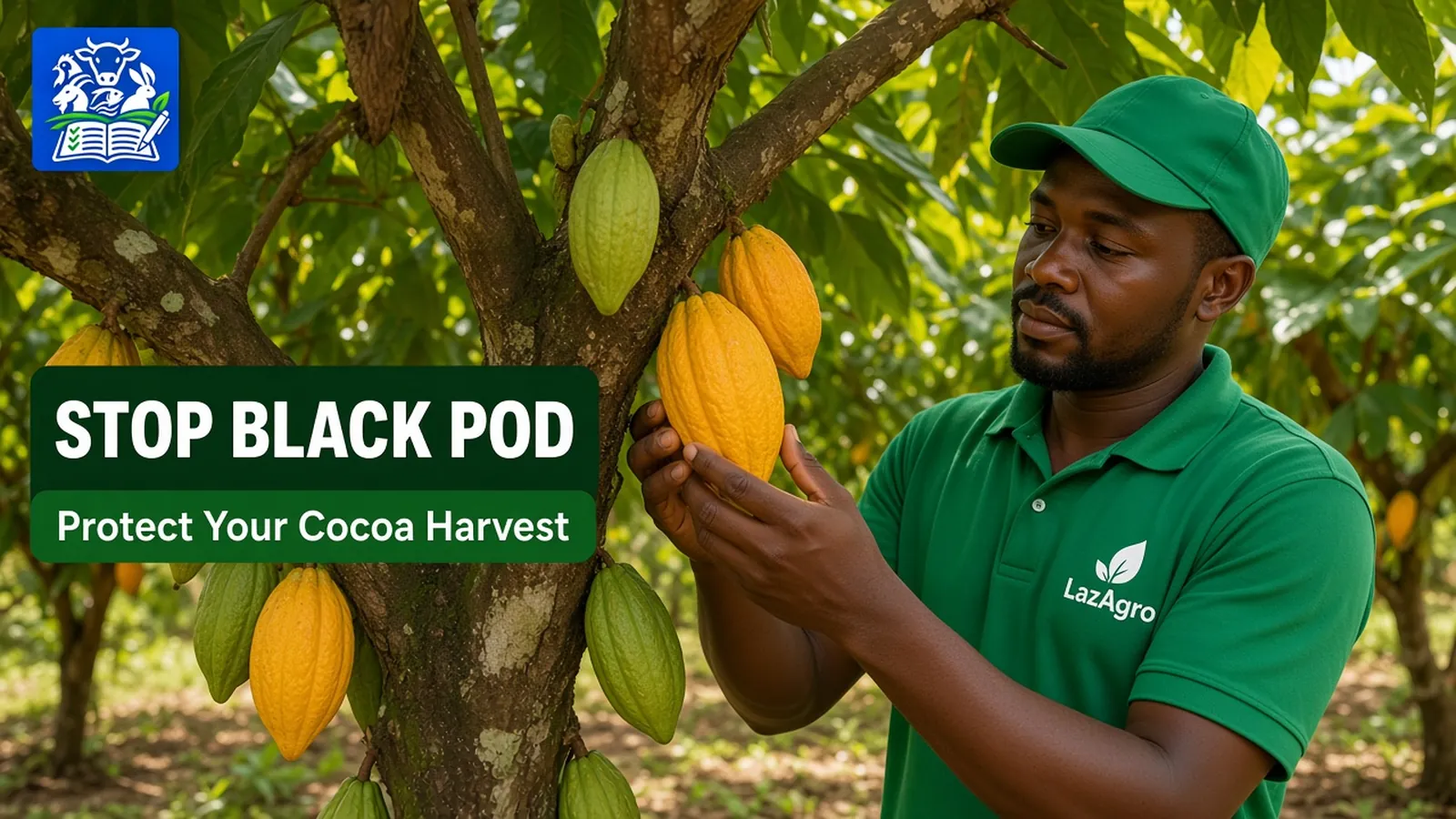
If you farm cocoa anywhere from Kumba and Mamfe to Mbalmayo, Obala or Ebolowa, you already know the smell of a rotting pod. A healthy, swelling pod turns brown in a few days, then grey with powdery spores, and the beans inside are lost. That is cocoa black pod disease, and in Cameroon it is the single biggest reason good trees give poor harvests.
Research from CIRAD on Phytophthora megakarya in Cameroon estimates that it destroys close to half of pods on average. Without any control, losses can reach 80% or more in bad years. Those figures explain why some farmers spray every couple of weeks through the rainy season, and why others with similar farms harvest far less.
The good news is that black pod is manageable. No single method stops it, but farmers who combine early detection, sanitary harvesting, shade and pruning, and well-timed spraying consistently lose less. This guide explains how the disease spreads and what to do at each point in the season.
1. What causes cocoa black pod disease?
Black pod is caused by fungus-like organisms in the genus Phytophthora. In Cameroon, the main species is Phytophthora megakarya, which is found only in Africa and is more aggressive than P. palmivora, the species common in other cocoa regions. Research shows P. megakarya has largely replaced P. palmivora in Cameroonian and Nigerian cocoa farms.
How it survives and spreads
- In the soil. The organism survives in soil and plant debris through the dry season. A study published through ICCO describes how, when the rains return, splashing water carries it from the soil to the lowest pods.
- From pod to pod. An infected pod produces huge numbers of spores. Rain splash, insects (especially ants that build tents of soil on pods), and contaminated tools carry them to healthy pods.
- From farm to farm. Neighbouring plantations, old cocoa husk heaps and shared equipment keep reinfecting fields.
This is why black pod gets worse as the rainy season goes on. The first few infections on low pods multiply into many more on every branch.
2. How to recognise black pod early
The earlier you spot it, the less it spreads. Walk your farm at least once a week during the rains and look at pods at every height.
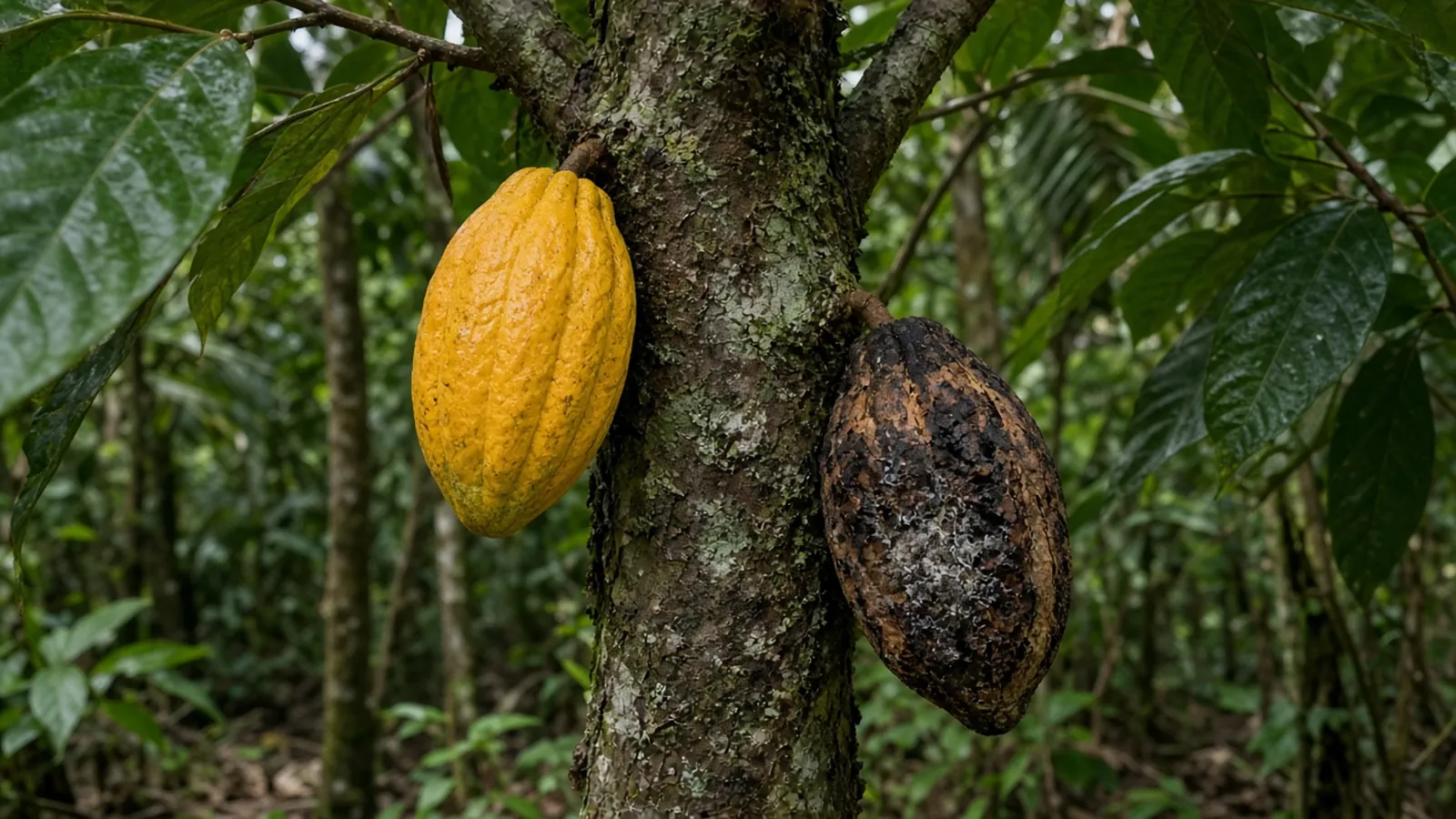
- First signs: a small, firm, brown spot on the pod surface, often near the tip or stalk, or where the pod touches another surface.
- Within days: the spot spreads rapidly until the whole pod is brown or black.
- Later: a white to grey powdery layer of spores forms on the surface in humid conditions.
- Inside: beans become discoloured and stuck together, and are useless for good-quality cocoa.
Do not confuse black pod with damage from mirids (capsids), which leave many small dark scars, or with pods that simply dried on the tree. Black pod lesions are firm, spread fast and have a clear edge.
3. Sanitary harvesting: the foundation of control
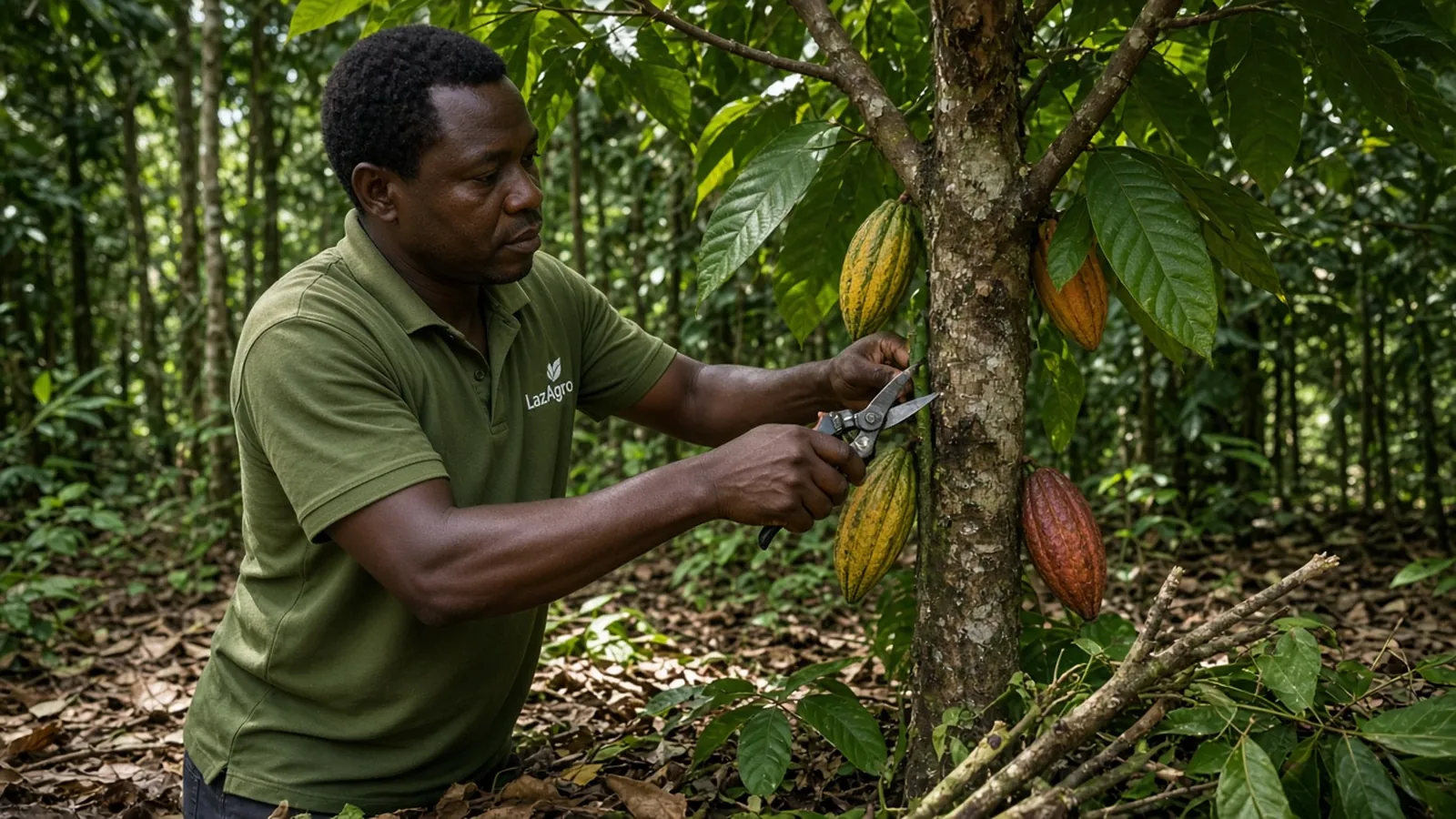
Sanitary harvesting means removing every infected pod as soon as you see it, along with mummified (dried, blackened) pods left from the previous season. A doctoral study on P. megakarya epidemics in Cameroon concluded that rigorous sanitary harvesting at the start of the epidemic limits spread and reduces how much fungicide is needed.
How to do it well
- Start before the rains: remove all old, mummified pods from trunks and branches during the dry season.
- From the first rains, walk every row at least weekly and cut off every pod showing a brown spot.
- Collect infected pods in a bag or basket. Do not drop them under the tree.
- Bury them, or pile them far from the cocoa, ideally covered.
- Harvest ripe pods regularly, every one to two weeks in peak season. Ripe pods left hanging are easy targets.
- Break open healthy harvested pods away from the trees, and do not leave husk heaps in the farm.
4. Shade, pruning and farm hygiene
Black pod loves still, humid air. Anything that helps the canopy dry faster after rain makes infection harder.
Manage shade
Cocoa in Cameroon is often grown under forest shade, which brings real benefits for soil, biodiversity and tree health. But very dense shade keeps the farm damp. Thin shade trees selectively so light reaches the cocoa canopy and air moves. Keep useful fruit and timber trees, but reduce tangled, overgrown cover.
Prune cocoa trees
- Remove chupons (vertical water shoots) regularly.
- Cut dead, diseased and crossing branches.
- Open the centre of the tree so air can move.
- Keep trees at a height you can inspect and harvest easily.
Weed and drain
Slash weeds under the trees and clear drainage channels so water does not stand. Mulching the soil surface with leaves can also reduce rain splash from soil to the lowest pods.
Watch the ants
Certain ants build soil tents on pods and trunks, carrying spores from the ground up. Knock down these tents during your inspections.
5. Fungicide spraying: when, what and how
On farms with high black pod pressure, sanitary measures alone are often not enough during the peak of the rains. Fungicide sprays protect pods, but only if used correctly.
Products
Copper-based fungicides and products containing metalaxyl combined with copper are widely used against black pod. Use only products registered for cocoa in Cameroon (ask your MINADER agricultural post, cooperative or SODECAO technician), and buy from reputable dealers. Counterfeit and diluted pesticides are a real problem in rural markets.
Timing
- Start early in the rainy season, once young pods are present, rather than waiting until many pods are already rotting.
- Repeat at the interval recommended on the label and by local technicians. Heavy rain washes products off, so sprays are often repeated every few weeks in wet periods.
- Focus on pods: spray to cover pods on trunks and main branches thoroughly.
Safety
- Wear gloves, boots, long sleeves, eye protection and a mask.
- Do not eat, drink or smoke while spraying. Wash after.
- Keep children away from sprayed areas and stored chemicals.
- Rinse empty containers and never reuse them for water or food.
- Respect the pre-harvest interval on the label.
6. Biological control and research in Cameroon
Researchers in Cameroon have tested Trichoderma asperellum, a beneficial fungus, as a biological control for black pod. Studies near Nkolbisson in the Centre Region, summarised by ICCO, found that applications on pods reduced black pod, and soil applications slowed the disease's progress. These products are not yet as widely available as copper fungicides, but they show the direction research is going. Ask IRAD or your cooperative whether approved biocontrol products are available in your area.
Breeding programmes also screen cocoa for tolerance to P. megakarya. When replanting, ask for improved planting material from recognised seed gardens or nurseries.
7. A seasonal plan for black pod control
| Period | Main tasks |
|---|---|
| Dry season | Remove mummified pods, prune, thin shade, clear drains, repair sprayers, buy inputs early |
| Start of the rains | Weekly inspection, remove first infected pods, start protective sprays as advised |
| Peak rains and main harvest | Harvest ripe pods every 1–2 weeks, remove infected pods at every visit, repeat sprays, break pods away from trees |
| End of season | Clean up remaining infected pods and husks, review records, plan next season |
Exact months differ between the bimodal Centre/South/East and the monomodal South West and Littoral. Adjust to your local rains.
8. Recording losses so you can manage them
Most cocoa farmers know they lose pods, but few know how many. Counting gives you control. On a few marked trees, or for the whole plot if you can, record each week: healthy pods harvested, black pods removed, and any spray done. After one season you will see when infection starts on your farm, which blocks are worst, and whether spraying paid off.
Our guide on keeping accurate farm records focuses on livestock, but the habit is the same. The LazAgro app lets you log activities, inputs and harvests by field from your phone, even in a forest plot with no signal, and syncs when you return to network. If you farm deep in the bush, see how offline recording works in our guide on managing a farm without internet.
9. Mistakes that make black pod worse
- Waiting until many pods are already black before acting.
- Leaving infected and mummified pods hanging or lying under trees.
- Breaking pods and leaving husk heaps inside the farm.
- Never pruning or thinning shade on an old plantation.
- Spraying cheap, unregistered or diluted products.
- Long gaps between harvest rounds during peak season.
10. Protecting soil and the long-term health of your farm
A healthy, well-fed tree with good roots tolerates disease pressure better. Keep leaf litter on the ground, avoid erosion on slopes (see our guide on preventing soil erosion), and replace very old, unproductive trees gradually with improved material. Black pod management is part of good farm management, not a separate task.
11. Why your neighbours matter: managing black pod as a group
Spores do not respect farm boundaries. A perfectly managed plot next to an abandoned one full of rotting pods will keep receiving fresh infection every time it rains. That is why black pod control often works best at village or cooperative level.
- Agree on timing. When neighbouring farmers start sanitary harvesting and first sprays in the same weeks, the overall amount of spores in the area falls faster.
- Share equipment carefully. Sprayers and harvesting tools passed between farms should be cleaned between uses.
- Buy inputs together. Cooperatives can buy registered fungicides in bulk from reliable suppliers, which reduces the risk of fake products and often lowers cost.
- Train together. Farmer field schools and cooperative trainings on pruning and spraying spread good habits quickly.
- Deal with abandoned plots. Talk with owners of neglected farms nearby. Even a basic clean-up of mummified pods before the rains helps everyone.
Group action also strengthens your position when selling. Cooperatives that deliver clean, well-fermented and dried beans in volume are in a better position to negotiate with buyers than individual farmers selling a few bags at a time.
Frequently asked questions about cocoa black pod disease
1. What causes black pod in Cameroon?
Black pod in Cameroon is mainly caused by Phytophthora megakarya, which survives in soil and infected pods and spreads by rain splash, insects and tools during the rainy season.
2. Can black pod be cured on an infected pod?
No. Once a pod is infected, it is lost. The goal is to remove it quickly so it does not infect others, and to protect healthy pods.
3. How often should I spray against black pod?
Follow the label and local advice. In wet periods, sprays are usually repeated every few weeks because rain washes products off. Combine spraying with sanitary harvesting for the best results.
4. Is there an organic way to control black pod?
Sanitary harvesting, pruning, shade management and good drainage are all non-chemical. Biological products based on Trichoderma have been tested in Cameroon; ask IRAD or your cooperative about approved products.
5. Should I burn infected cocoa pods?
The goal is to remove them from the farm and stop spores from spreading. Burying them or piling them away from the trees works. Do not leave them under the cocoa.
Final thoughts
Cocoa black pod disease is not a mystery and it is not fate. It follows the rain, and it spreads from pods you can see. Farmers who clean their farm before the rains, walk their rows every week, prune, and spray on time keep far more of their harvest. Start this season by counting what you lose. That number will tell you what to do next.
Count your pods, manage your losses
LazAgro helps you record harvests, inputs and farm activities by field, online or offline.
Discover LazAgro