 LazAgro

Harvesting maize is a major achievement for any farmer. Months of land preparation, planting, weeding, fertilisation and crop management finally produce a harvest that can feed a household or generate income. However, the work does not end when the maize is harvested.
Poor post-harvest handling can destroy a significant portion of that value. Maize that is stored while too wet can develop mould. Insects can damage the grain, rodents can consume it, and poor storage conditions can reduce its quality before the farmer gets an opportunity to sell.
In some cases, mould contamination can also result in aflatoxins, naturally occurring toxins produced by certain fungi. These substances are a serious food and feed safety concern. Contaminated maize may be unsafe even when the damage is not obvious.
Learning how to store maize properly is therefore not simply about keeping grain until the next planting season. It is about protecting food quality, reducing financial losses and preserving the value of an entire production cycle.
1. Harvest maize at the right stage
Good storage begins in the field. Harvesting too early can leave maize with excessive moisture, while leaving mature cobs exposed in the field for too long can increase losses from rain, birds, insects and other pests.
Maize is generally ready for harvest when the kernels have matured and the crop has reached physiological maturity. Farmers should look for signs such as dry or drying husks, mature kernels and the development of a black layer at the base of the kernel, where this can be checked.
These signs indicate that grain development is complete, but they do not necessarily mean that the maize is dry enough for safe storage. Harvested maize may still contain considerable moisture and need further drying.
What farmers should do during harvesting
- Harvest mature cobs promptly rather than leaving them exposed unnecessarily.
- Avoid harvesting during rainfall where possible.
- Separate visibly diseased, mouldy or insect-damaged cobs.
- Use clean harvesting containers and equipment.
- Move harvested maize to a suitable drying area without unnecessary delays.
Farmers should also avoid mixing visibly damaged or mouldy grain with healthy maize. Separating poor-quality material early makes later cleaning and quality control easier.
2. Dry maize thoroughly before storage
Moisture is one of the biggest threats to stored maize. Grain that contains too much water can support fungal growth and spoilage, especially in warm and humid environments.
Drying reduces the moisture available for microorganisms and helps make grain more suitable for storage. For many conventional grain-storage situations, a moisture content of around 13–14% or lower is a common target for maize, but the safe target depends on storage duration, temperature, storage system and local guidance.
For longer storage periods, farmers should follow the more conservative moisture requirements recommended for their specific storage system. A calibrated grain moisture meter is much more reliable than judging dryness by appearance or biting a kernel.
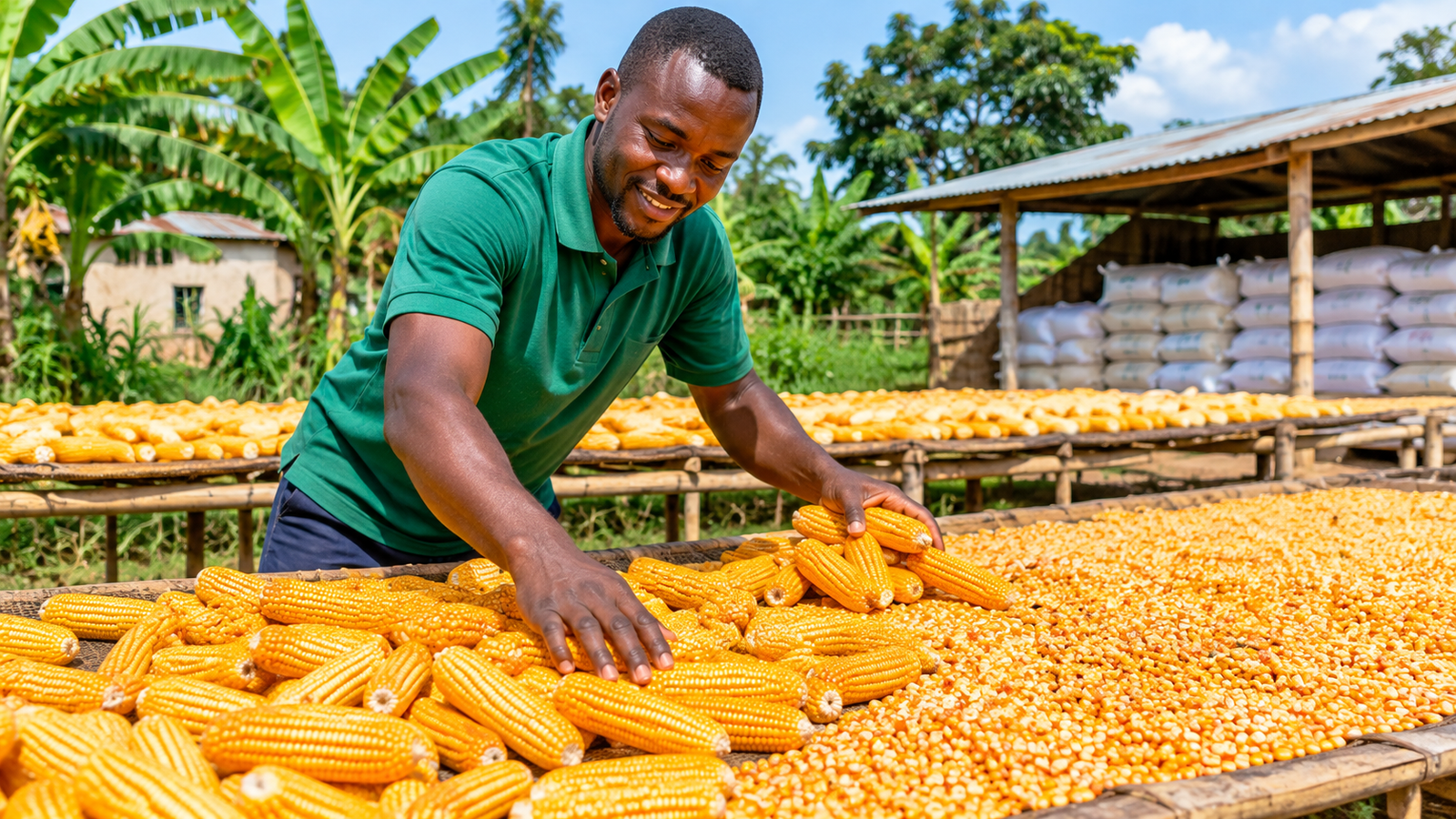
Proper drying helps reduce moisture-related spoilage before maize enters storage.
Practical ways to dry maize
Small-scale farmers may use sun drying, while larger farms may have access to mechanical dryers. Whichever method is used, the objective is to achieve uniform drying without contaminating the grain.
- Use a clean drying surface: Dry maize on a clean tarpaulin, raised platform or other suitable surface rather than directly on bare soil.
- Spread grain evenly: Avoid excessively thick layers that prevent moisture from escaping.
- Turn the grain: Regular turning helps different portions dry more evenly.
- Protect against rain: Move the maize under cover when rain threatens.
- Keep animals away: Prevent livestock, poultry and other animals from contaminating the drying grain.
- Measure moisture: Use a properly calibrated moisture meter where possible.
3. Clean and sort maize before storage
Once the maize is adequately dried, the next step is cleaning. Harvested grain may contain pieces of cobs, husks, dust, stones, broken kernels, insect-damaged grain and other foreign materials.
These materials can interfere with storage, reduce the quality of the final product and make it harder to inspect the grain properly.
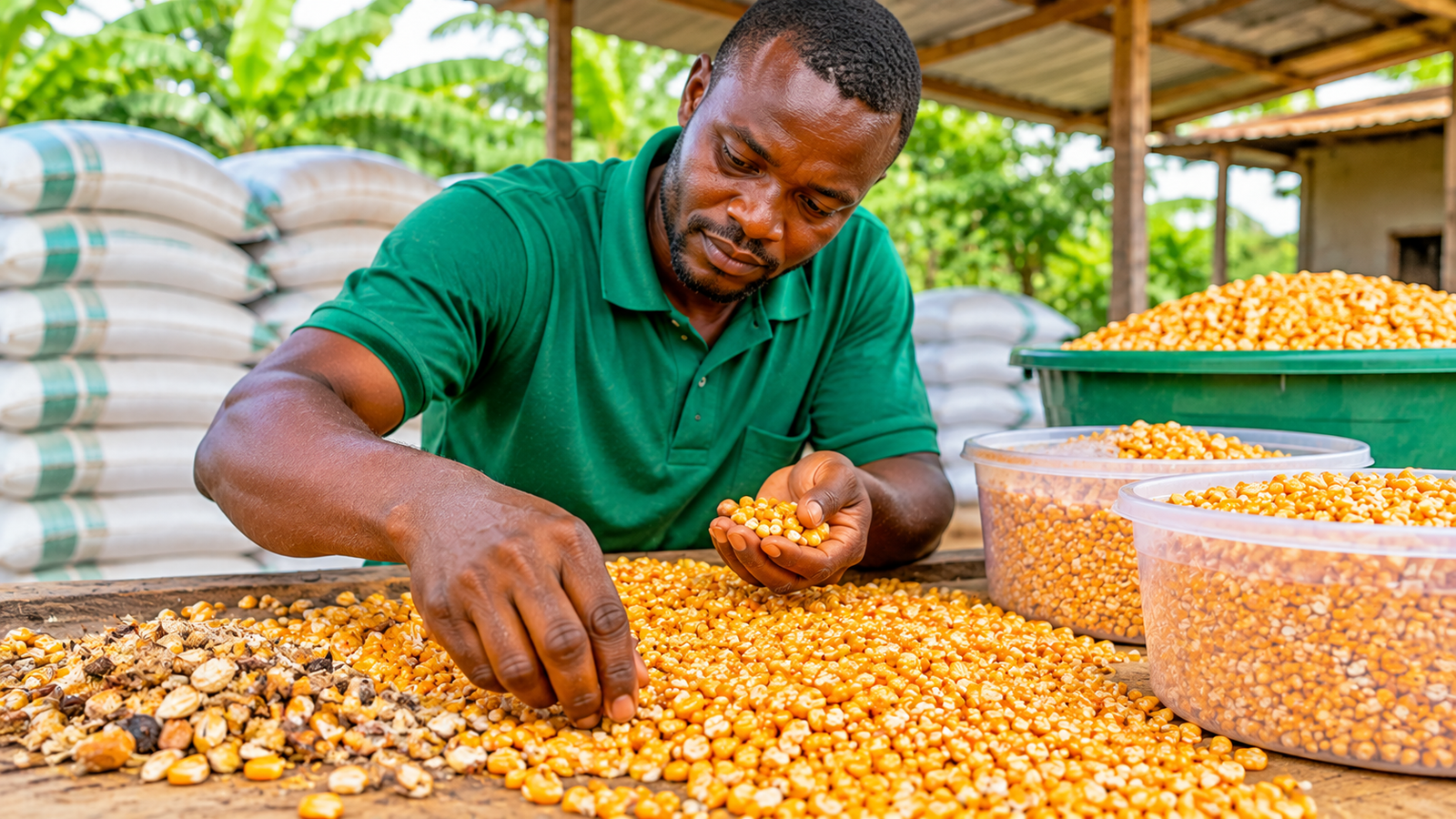
Cleaning and sorting help separate good-quality maize from damaged grain and foreign materials.
What should be removed?
- Broken and visibly damaged kernels.
- Grain showing signs of mould or unusual discolouration.
- Insect-infested kernels and debris.
- Stones, soil, husks and pieces of cobs.
- Other foreign materials that may have entered during harvesting and drying.
Cleaning does not make mould-contaminated maize safe. Sorting out visibly affected grain is useful, but aflatoxins may be present in kernels that look normal. Do not rely on visual inspection alone to establish food or feed safety.
4. Choose a suitable maize storage system
The best storage method depends on the quantity of maize, the length of storage, the farmer's budget, the local climate and the intended use of the grain.
A household storing a few bags for consumption has different requirements from a commercial producer holding several tonnes for later sale. The storage method should protect the grain against moisture, insects, rodents and contamination.
Hermetic storage bags
Hermetic bags are designed to create a sealed environment that limits the exchange of air. When properly used with sufficiently dry grain and kept sealed, they can help control storage insects by reducing the oxygen available inside the bag.
Farmers should use genuine, suitable hermetic storage products and follow the manufacturer's instructions. The bags should be properly closed, protected from punctures and handled carefully.
Hermetic storage is not a substitute for drying. Sealing wet maize can preserve conditions that encourage spoilage and may result in serious losses.
Traditional grain stores
Traditional stores remain important in many farming communities. Depending on their design, they may be used for storing maize in the form of cobs or shelled grain.
However, traditional storage structures should be maintained carefully. They need protection against rain, ground moisture, insects, rodents and other sources of contamination. Their suitability depends on construction quality, local conditions and how long the maize will be stored.
Improved granaries and storage rooms
A well-designed grain store should have a sound roof, dry floors, suitable ventilation and protection against pests. The structure should be easy to inspect and clean.
Grain bags should be raised off the floor on suitable pallets and positioned to allow inspection. They should not be placed directly against damp walls or in areas where water can enter.
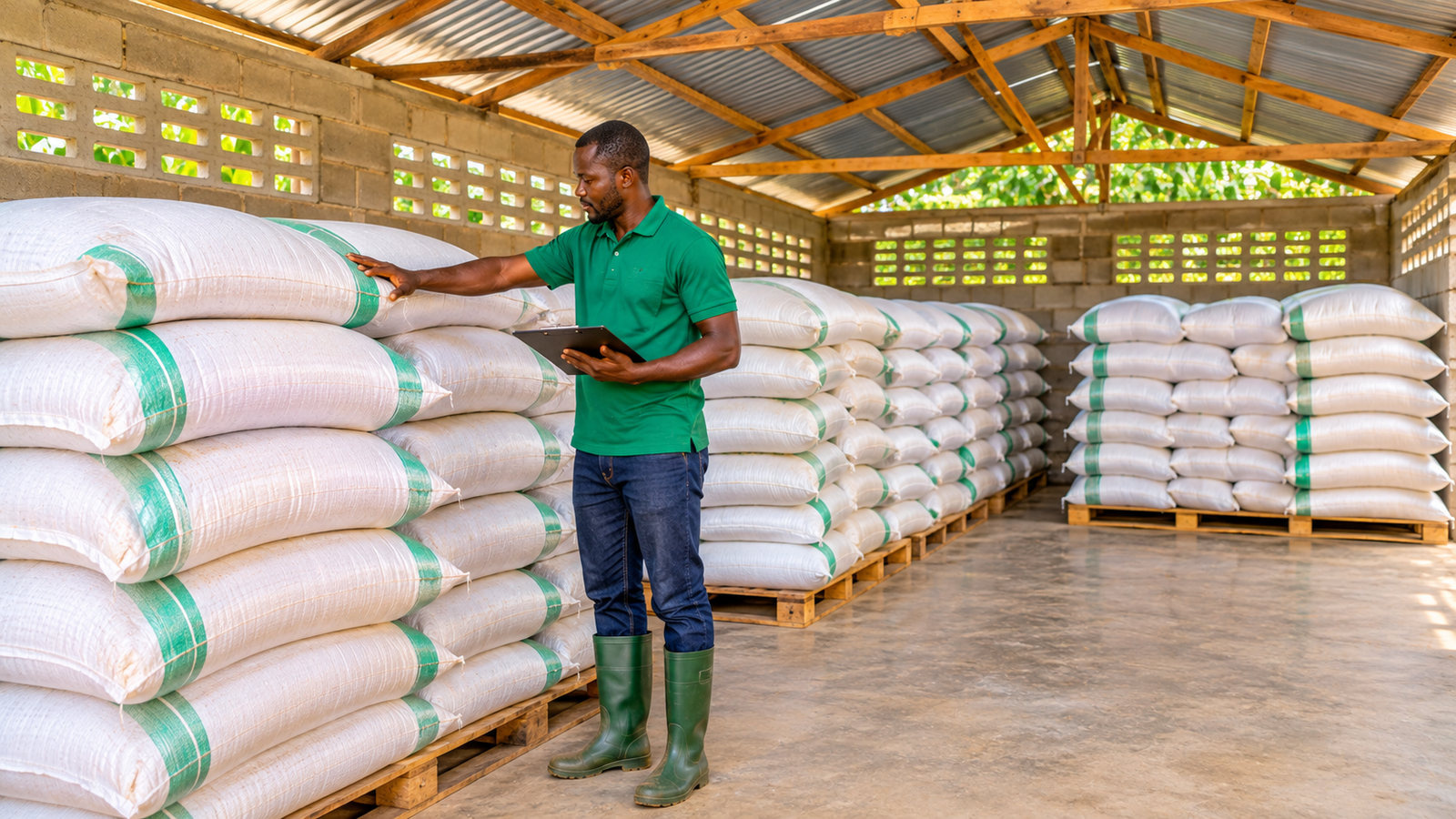
A clean, dry store and correctly arranged grain bags help protect maize during storage.
5. Protect stored maize from insects and rodents
Storage pests can cause significant damage if they are not controlled. Common maize storage pests include maize weevils and larger grain borers. Rodents can also damage bags, contaminate grain and consume stored produce.
Prevention is usually easier and less costly than dealing with a severe infestation after it has developed.
Practical pest prevention measures
- Clean the storage room before introducing a new harvest.
- Remove old grain residues, dust and spilled kernels.
- Inspect bags and containers for holes or damage.
- Keep the store free from food waste and unnecessary materials.
- Seal gaps that allow rodents to enter where practical.
- Use appropriate rodent-control measures safely and according to product instructions.
- Inspect stored grain regularly for insect activity and other changes.
Avoid applying pesticides directly to stored maize unless the product is specifically approved for that use and is applied by someone trained to follow its label and applicable safety requirements. Never improvise chemical treatments or mix chemicals with grain.
6. Prevent mould and aflatoxin contamination
Aflatoxins deserve particular attention in maize production and storage. They are toxic substances produced by certain species of fungi, including some Aspergillus fungi. Contamination can occur before harvest or during drying and storage when conditions are favourable.
Aflatoxin contamination is a food-safety issue, not merely a cosmetic problem. It can affect human health and livestock when contaminated maize or maize-based feed is consumed.
How farmers can reduce the risk
- Harvest maize at the appropriate stage and avoid unnecessary field delays.
- Dry grain promptly and adequately after harvest.
- Prevent maize from becoming wet again during drying and storage.
- Remove visibly mouldy and damaged grain from good-quality batches.
- Maintain clean storage structures and suitable storage conditions.
- Use proper moisture testing and appropriate storage systems.
- Arrange laboratory testing where food or feed safety standards require it or where contamination is suspected.
7. Keep the storage environment dry and organised
Even well-dried maize can become unsafe if moisture enters the storage area. Leaking roofs, damp floors, water entering through walls and condensation can all create conditions that encourage deterioration.
Before storing the harvest, inspect the building and make necessary repairs. The store should also be organised so that bags can be checked without having to move the entire stock.
Storage room management tips
- Repair roof leaks before the rainy season.
- Keep the floor dry and free from standing water.
- Raise bags on pallets or another suitable platform.
- Leave enough space for inspection and cleaning.
- Keep maize away from chemicals, fuel and other contaminants.
- Use a separate, clearly identified area for damaged or suspect grain.
- Prevent unauthorised access and maintain a record of stock movements.
8. Inspect stored maize regularly
Storage is not a one-time activity. Farmers should continue checking the grain throughout the storage period, particularly during humid or rainy conditions.
Regular inspection helps identify problems before they spread. A small leak or damaged bag can become a major loss if it remains unnoticed for weeks.
What should you check?
- Signs of moisture or water entering the store.
- Unusual smells, visible mould or discolouration.
- Insect activity or damaged grain bags.
- Rodent droppings, gnawing or other signs of infestation.
- Changes in the condition of the storage structure.
- Whether grain quantities match your stock records.
If a problem is discovered, isolate the affected batch where safe to do so. Do not mix suspect grain with good-quality stock. Seek appropriate advice before deciding whether it can be used, sold or must be discarded.
9. Manage maize storage as part of your farm business
For commercial farmers, storage decisions affect cash flow, profitability and the ability to meet market demand. Knowing how much maize is available, where it is stored and when it was harvested makes it easier to plan sales and manage inventory.
A farmer who stores grain without keeping records may struggle to determine the actual quantity remaining, calculate losses or establish the cost of production per bag.
Records worth maintaining
- Harvest records: Record the harvest date, field or production batch and quantity harvested.
- Drying records: Record drying dates and moisture measurements where available.
- Storage records: Record the quantity stored, storage location and storage method.
- Inspection records: Document pest activity, moisture problems and corrective actions.
- Sales records: Record the quantity sold, selling price, buyer and transaction date.
- Loss records: Document damaged, rejected or discarded grain and the reason for the loss.
These records help farmers understand how much of the harvest remains available for sale or household consumption. They also make it easier to compare production costs with actual revenue.
10. Common maize storage mistakes to avoid
Many post-harvest losses are preventable. The following mistakes can undermine even a good harvest:
- Storing wet maize: Excess moisture encourages spoilage and can increase mould risk.
- Drying directly on bare soil: This can introduce dirt, stones and other contaminants.
- Using damaged bags: Holes allow pests to enter and grain to spill.
- Storing bags on damp floors: Ground moisture can damage grain over time.
- Ignoring storage inspections: Small problems can develop into large losses.
- Mixing old and new grain without inspection: This can spread infestation and make stock management difficult.
- Using unapproved chemicals: Incorrect pesticide use can contaminate food and create health risks.
- Relying only on appearance: Grain that looks normal is not automatically free from aflatoxins.
11. A practical maize storage checklist
Before putting your maize into storage, use this checklist to review the most important steps.
- Harvested maize at an appropriate stage.
- Separated visibly damaged and mouldy cobs or kernels.
- Dried maize to the recommended moisture level.
- Checked moisture with a suitable meter where available.
- Cleaned the grain and removed foreign materials.
- Prepared a clean and dry storage area.
- Selected a storage system appropriate for the storage period.
- Protected the store against rodents and insects.
- Raised bags off the floor and arranged them for inspection.
- Recorded the quantity and storage date.
- Established a regular inspection routine.
Conclusion: Protecting your harvest protects your income
Producing maize requires time, labour, money and careful management. Losing part of the harvest after production because of poor drying or storage practices reduces the value of all that effort.
Farmers can reduce many post-harvest risks by harvesting at the right stage, drying maize properly, cleaning and sorting grain, using suitable storage systems and inspecting stored produce regularly.
The most important lesson is that maize storage should be treated as part of the production process, not an afterthought. Every bag protected from avoidable damage helps preserve food, reduce waste and improve the financial outcome of the farming business.
Manage your farm records with LazAgro
Good farm management does not stop at harvesting. Keep track of farm activities, purchases, sales, inventory and production records in one place. LazAgro helps farmers and farm teams organise their operations, including when internet access is unreliable.
Never lose field data again.
Discover LazAgro