 LazAgro
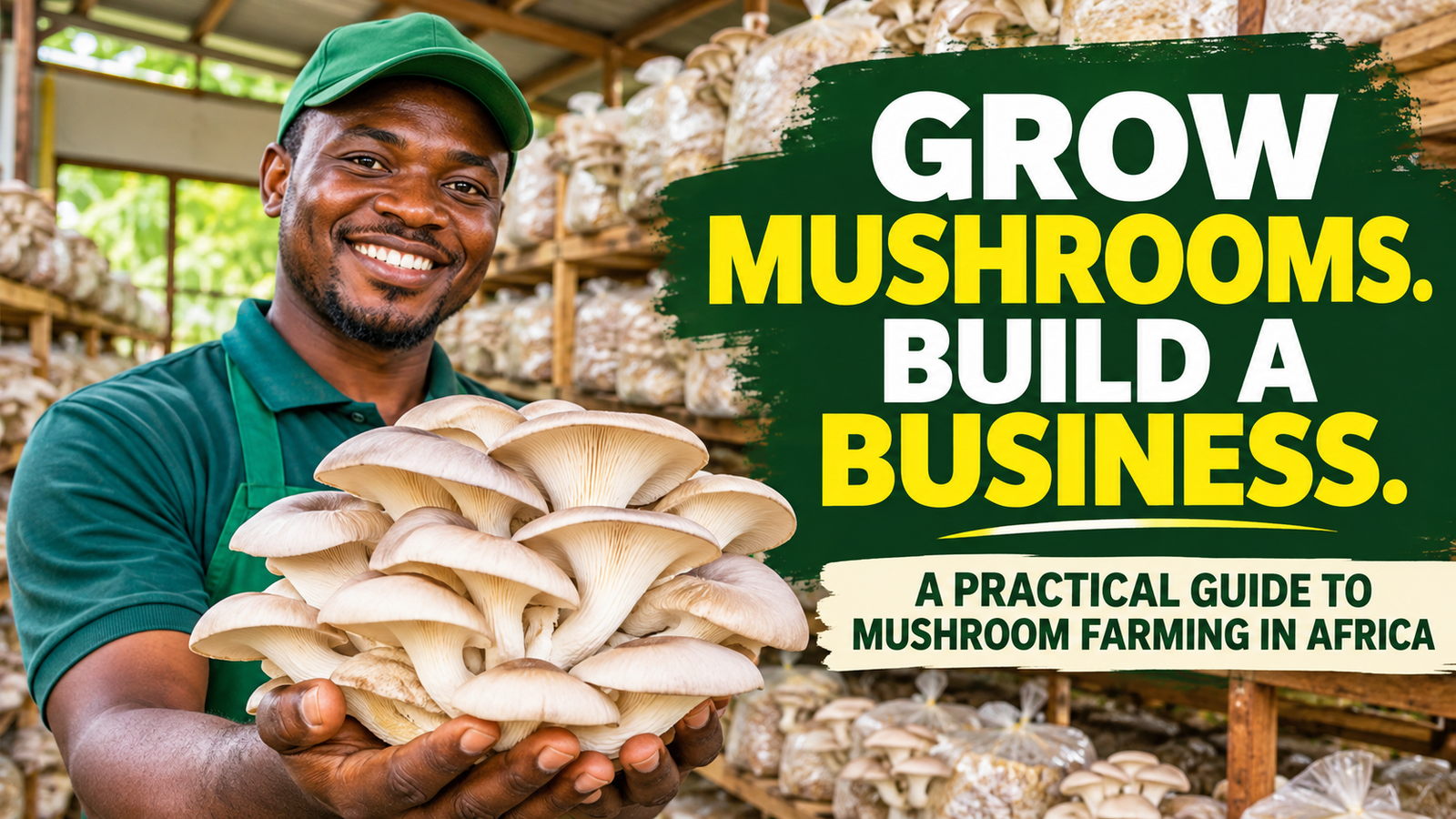
Mushroom farming is an agricultural enterprise that can turn certain agricultural by-products into a valuable food product. With suitable growing materials, proper hygiene and a carefully managed production environment, small-scale farmers can cultivate mushrooms for households, restaurants, hotels and food retailers.
Unlike many conventional crops, cultivated mushrooms do not require ordinary farmland or direct sunlight to grow. Some varieties can be produced indoors using prepared agricultural materials, making mushroom cultivation an option worth exploring for farmers with limited land.
However, mushroom production is not simply about filling bags with straw and waiting for mushrooms to appear. Successful cultivation requires the correct mushroom variety, quality spawn, properly prepared substrate, suitable environmental conditions and careful handling after harvest.
This guide explains how to establish a small mushroom farm, manage production and develop a market for your harvest.
1. Why Consider Mushroom Farming in Africa?
Mushrooms are consumed in many parts of the world and are valued for their flavour, texture and versatility in cooking. They can be used in soups, sauces, vegetable dishes, rice meals and other food products.
For agricultural entrepreneurs, mushroom farming offers an opportunity to produce a marketable food crop in a relatively compact space. Some production systems also make use of agricultural materials that might otherwise be discarded.
Potential advantages of mushroom cultivation
- Limited land requirement: Many cultivated mushrooms can be grown indoors using shelves or racks.
- Use of agricultural by-products: Suitable straw, sawdust and other plant materials can serve as growing substrates.
- Multiple production cycles: Properly managed production systems can support repeated growing cycles.
- Food-market opportunities: Fresh mushrooms may be sold to households, restaurants, hotels and retailers.
- Small-scale entry: A beginner can test production on a manageable scale before expanding.
These advantages do not guarantee profitability. The business must still account for spawn, substrate preparation, labour, water, electricity where required, packaging, transportation, spoilage and market demand.
2. Choosing the Right Mushroom Variety
One of the first decisions is selecting a mushroom variety suited to your production environment and intended market. Different mushrooms have different growing requirements, production methods and handling characteristics.
Oyster mushrooms
Oyster mushrooms are among the commonly cultivated mushrooms for small-scale production. They grow on suitable lignocellulosic materials such as straw and certain types of sawdust.
They are available in different varieties and colours, depending on the species and strain. Their relatively adaptable cultivation methods make them a common starting point for beginner producers.
Button mushrooms
Button mushrooms are widely recognised in commercial food markets. Their cultivation generally requires a more specialised composting and environmental-management process than many basic oyster mushroom systems.
Before choosing this variety, assess whether you can obtain suitable compost, manage the required growing conditions and access appropriate technical training.
Shiitake mushrooms
Shiitake mushrooms are cultivated using suitable hardwood-based substrates or specialised growing materials. Their production can involve a different preparation and colonisation process from oyster mushrooms.
They may appeal to specialised markets, but producers should investigate local demand and production requirements before investing.
| Mushroom type | Growing considerations | Business consideration |
|---|---|---|
| Oyster | Suitable straw and other plant-based substrates | Common beginner option; check local demand |
| Button | Specialised composting and environmental control | Requires more technical preparation |
| Shiitake | Suitable hardwood-based substrates or specialised blocks | Assess specialist market opportunities |
For a first project, oyster mushrooms are often a practical option to investigate. This does not mean they are automatically the most profitable in every location. The best variety is the one you can grow reliably and sell consistently.
3. Understanding the Mushroom Growing Process
Cultivated mushrooms are fungi, not ordinary green plants. They do not produce food through photosynthesis. Instead, they obtain nutrients from organic materials in their growing environment.
The visible mushroom is the fruiting body of a larger fungal organism. Much of the organism develops inside the growing material as a network of fine threads called mycelium.
What is mycelium?
Mycelium is the network of fungal threads that grows through the substrate. When conditions are suitable, the colonised material can produce mushroom fruiting bodies.
What is mushroom spawn?
Spawn is planting material containing actively growing mushroom mycelium. It is used to introduce the desired mushroom fungus into a prepared substrate.
Quality spawn is essential. Contaminated, poorly stored or unsuitable spawn can cause production failures even when other growing conditions are good.
What is a substrate?
The substrate is the material on which mushrooms grow. Depending on the mushroom species, it may consist of prepared straw, sawdust or other suitable agricultural materials.
The substrate provides the nutrients and physical environment needed for mycelium development and mushroom production.
4. Preparing the Growing Substrate
Substrate preparation is one of the most important stages of mushroom cultivation. The materials must be suitable for the chosen mushroom variety and prepared in a way that supports healthy mycelium growth while reducing contamination.
Select suitable raw materials
Oyster mushroom producers commonly investigate materials such as:
- Clean cereal straw.
- Suitable hardwood sawdust.
- Some processed agricultural plant residues.
- Other locally available materials recommended for the selected mushroom strain.
The material must be free from chemical contamination, excessive decay, mould and unwanted substances. Not every agricultural waste material is suitable for mushroom production.
Chop and prepare the material
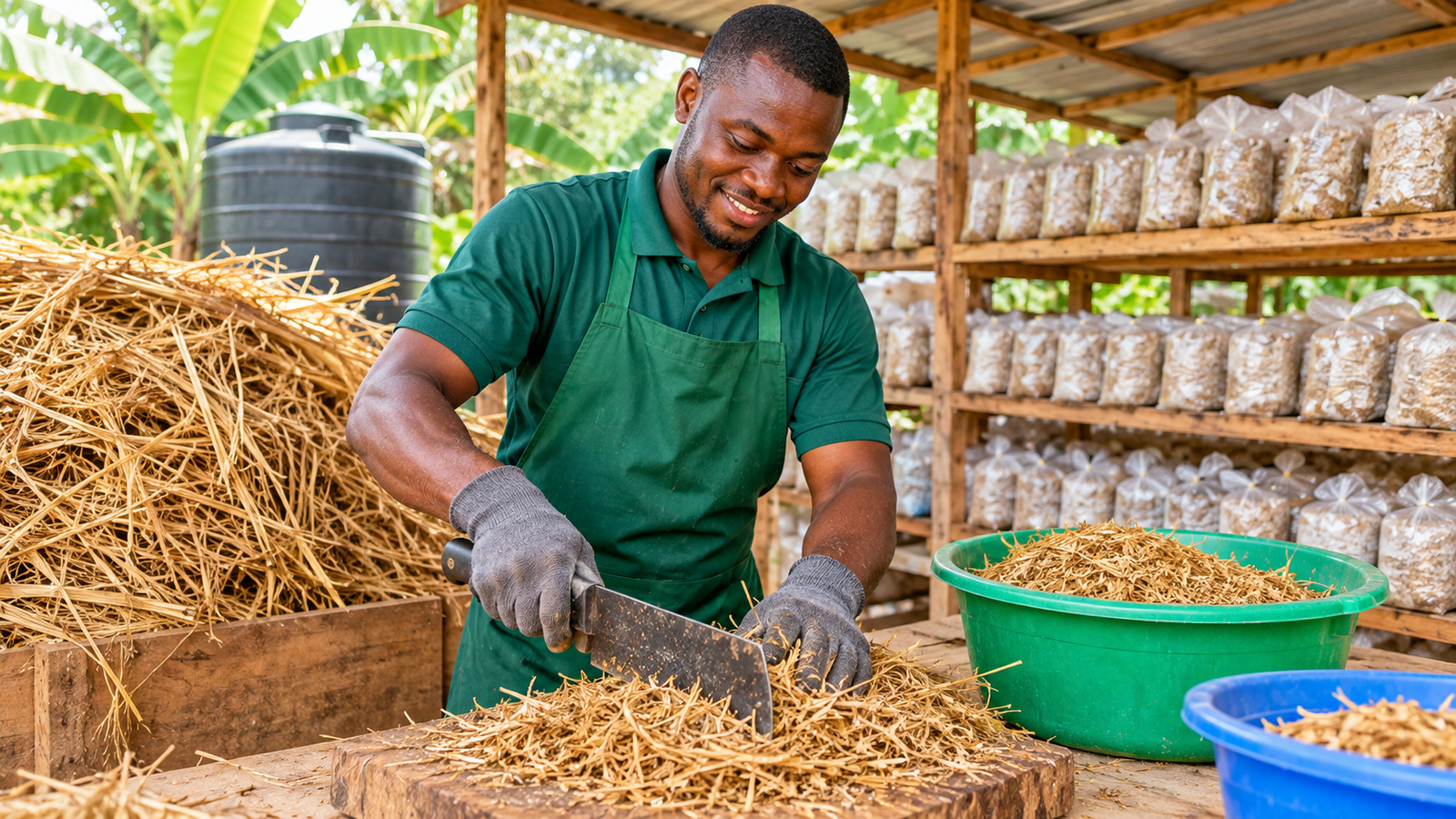
Straw may need to be chopped into manageable pieces to make handling and packing easier. The preparation method should be consistent so that the growing bags have a reasonably uniform structure.
Control moisture
Mushroom substrates need suitable moisture levels. A substrate that is too dry can restrict mycelium development, while excessive water can reduce air spaces and encourage contamination.
The required moisture depends on the substrate and cultivation method. Follow a reliable preparation procedure rather than adding water randomly.
Pasteurise or sterilise as appropriate
Substrate treatment helps reduce competing organisms that may interfere with mushroom growth. Pasteurisation and sterilisation are different processes and are not interchangeable in every cultivation system.
The appropriate method depends on the substrate, mushroom species, supplementation and production method. Use a tested procedure and observe the required time and temperature controls.
5. Inoculating the Substrate with Mushroom Spawn
Inoculation is the process of introducing mushroom spawn into the prepared growing substrate. This stage requires particular attention to hygiene because unwanted microorganisms can compete with the desired mushroom fungus.
Prepare a clean working area
Clean the surfaces, containers and tools that will come into contact with the treated substrate and spawn. Wash hands and use suitable protective equipment. Avoid handling materials in dusty or dirty environments.
Use good-quality spawn
Purchase spawn from a reliable supplier who can identify the mushroom species or strain and provide appropriate storage and handling instructions.
Avoid spawn that shows suspicious colours, unpleasant smells, excessive moisture or other signs of contamination.
Mix or layer the spawn correctly
The exact inoculation method depends on the production system. Some methods involve mixing spawn through the substrate, while others use layers inside growing bags.
Follow the recommended spawn rate and procedure for the chosen mushroom strain. Incorrect handling can lead to uneven colonisation or contamination.
Pack the growing bags
Use suitable growing bags or containers that can maintain the required growing conditions. They should be clean, appropriately filled and prepared according to the selected cultivation method.
6. Managing the Mushroom Growing Environment
Environmental management strongly influences mushroom production. Temperature, humidity, fresh air and light requirements vary according to the mushroom species and the stage of growth.
Temperature
Different mushroom strains perform best within different temperature ranges. The temperature needed for mycelium colonisation may also differ from the conditions required for fruiting.
Before selecting a production space, obtain the recommended temperature range for your spawn. Do not assume that all mushrooms grow well under the same conditions.
Humidity
Many cultivated mushrooms require high relative humidity during fruiting. Insufficient humidity can cause developing mushrooms to dry out, while excessive moisture on surfaces and poor sanitation can encourage contamination.
A suitable humidity-measuring instrument can help producers monitor the growing room instead of relying only on how the air feels.
Ventilation
Fresh air exchange is important for many cultivated mushrooms. Inadequate ventilation can result in elevated carbon dioxide levels and poor mushroom development.
Ventilation should be balanced with humidity management. Simply opening every window may cause excessive drying or introduce dust and contaminants.
Light
Some mushroom varieties, including many oyster mushrooms, benefit from indirect light during fruiting. They do not need the same direct sunlight required by many conventional crops.
The amount and type of light required depend on the species and production stage.
Cleanliness
Remove contaminated bags promptly, keep floors and shelves clean and avoid allowing decaying materials to accumulate in the growing room.
7. Building a Small Mushroom Growing Facility
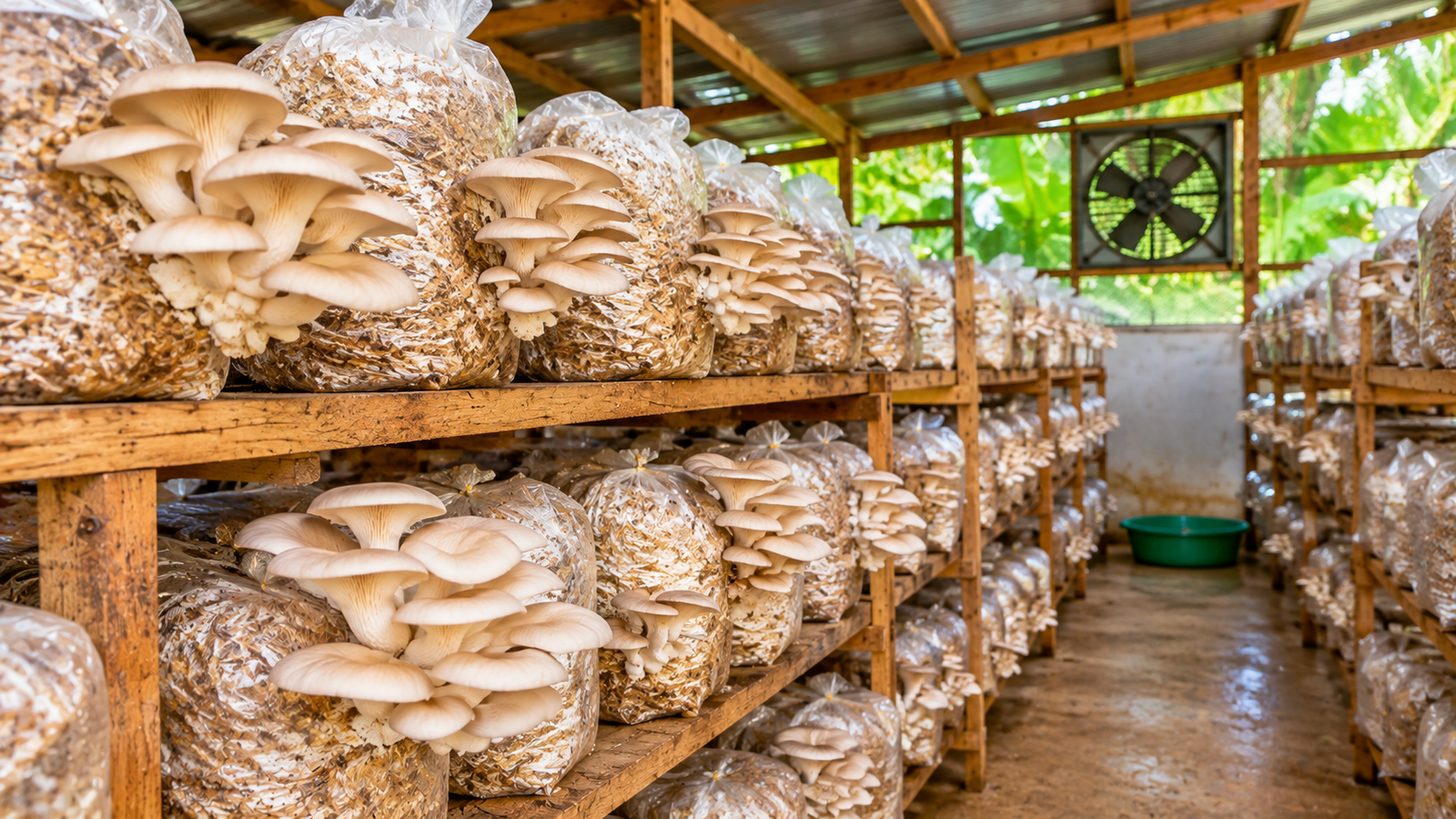
A mushroom farm does not necessarily need a large industrial building. A small operation can begin with a suitable room that can be cleaned, organised and adapted to the requirements of the selected mushroom.
Choose an appropriate building
The room should protect growing materials from direct sunlight, heavy rain, pests and unnecessary disturbance. It should also allow suitable ventilation and environmental management.
Organise shelves and growing bags
Shelves can help use vertical space efficiently. Arrange bags so that air can circulate and workers can inspect them without damaging developing mushrooms.
Separate production stages where possible
Substrate preparation, inoculation and fruiting may have different hygiene and environmental requirements. Separating these activities can help reduce contamination risks.
Provide access to clean water
Water is needed for substrate preparation and environmental management. Its quality and handling should be appropriate for food production.
Keep pests out
Insects and rodents can damage growing materials and introduce contamination. Use suitable physical controls, maintain cleanliness and avoid practices that create unnecessary pest habitats.
8. Identifying and Managing Contamination
Contamination is one of the common challenges in mushroom production. Unwanted fungi, bacteria and other organisms may grow in the substrate and interfere with the intended mushroom crop.
Common warning signs
- Unusual green, black or other unexpected coloured growth.
- Unpleasant or sour smells.
- Abnormal wet or slimy patches.
- Failure of mycelium to colonise as expected.
- Unusual growth patterns that differ from the normal appearance of the selected strain.
Not every colour difference means contamination, so producers should learn the normal appearance of their particular mushroom strain.
What should you do with contaminated bags?
Separate suspected contaminated bags from healthy production areas. Avoid opening them unnecessarily inside the growing room because this may spread unwanted spores or microorganisms.
Follow appropriate disposal and sanitation procedures. Investigate the likely cause, such as poor substrate treatment, contaminated spawn, dirty equipment or unsuitable environmental conditions.
Prevent problems before they occur
- Buy spawn from reliable suppliers.
- Use clean substrate materials.
- Follow a tested substrate-treatment procedure.
- Clean equipment and working surfaces.
- Control access to production areas.
- Remove contaminated materials appropriately.
- Keep records of production batches and contamination incidents.
9. Harvesting, Storage and Packaging
Mushrooms are delicate products. Their quality can deteriorate quickly after harvesting, particularly when they are exposed to heat, rough handling or unsuitable storage conditions.
Harvest at the right stage
Harvesting time depends on the mushroom variety and the intended market. For oyster mushrooms, producers commonly harvest clusters when the caps have developed but before they become excessively mature.
Follow guidance for your particular strain and assess the appearance, texture and quality expected by your customers.
Handle mushrooms carefully
Use clean harvesting tools and containers. Avoid squeezing or crushing the mushrooms. Remove damaged or visibly contaminated portions and sort produce according to quality.
Keep harvested mushrooms cool
Fresh mushrooms are perishable. Rapid cooling after harvest, appropriate refrigeration and timely distribution can help preserve quality.
Do not leave harvested mushrooms exposed to direct sunlight or high temperatures for long periods. Storage duration depends on the species, maturity, handling and temperature.
Choose suitable packaging
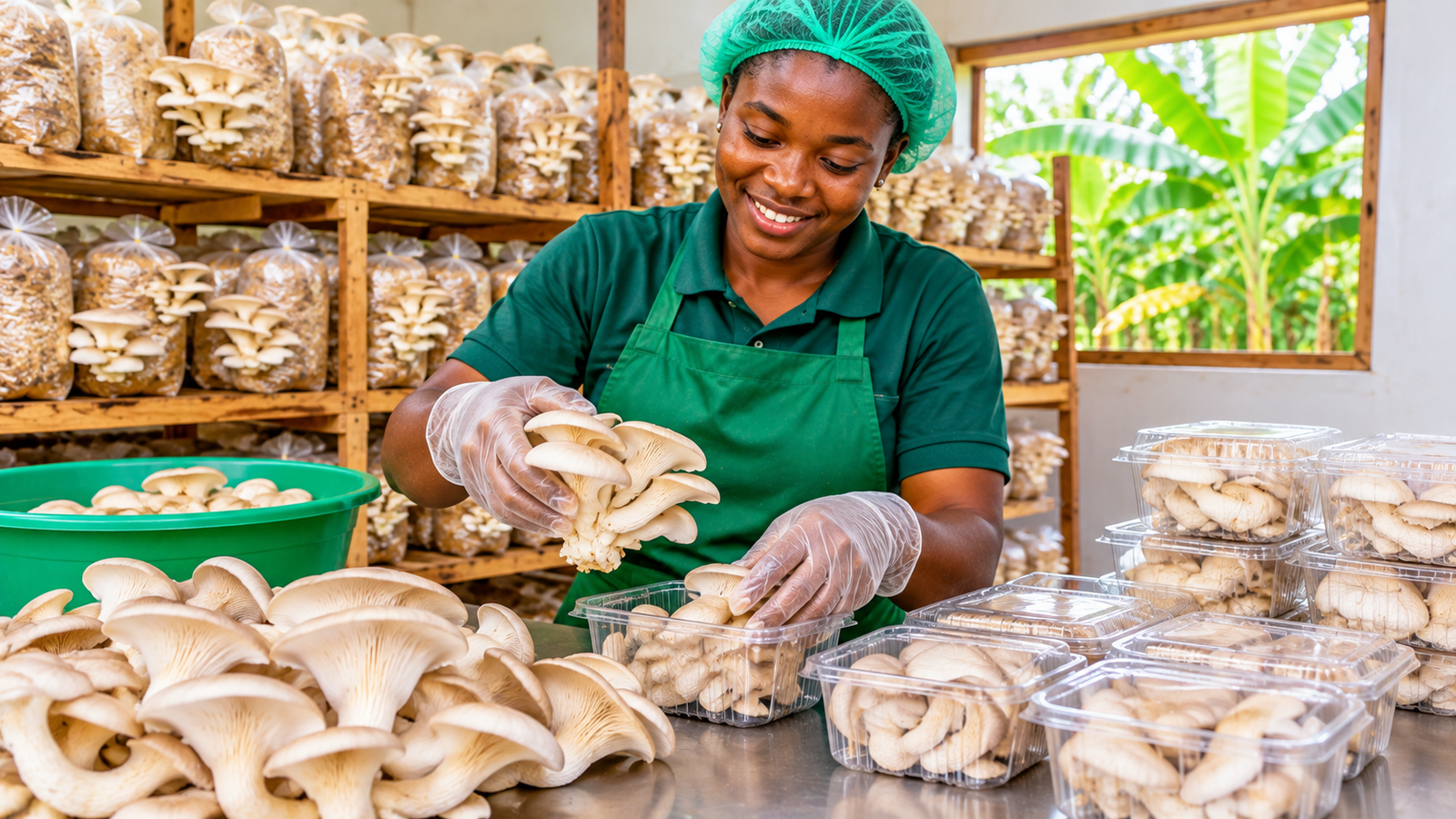
Packaging should protect mushrooms from physical damage while allowing appropriate handling and, where necessary, ventilation. Food-grade containers are essential.
Choose packaging sizes based on customer needs. Retail customers may prefer smaller portions, while restaurants and other bulk buyers may purchase larger quantities.
10. Finding Customers for Your Mushrooms
A mushroom business needs reliable customers. Before increasing production, identify the people and businesses that are likely to purchase your harvest.
Households
Households may purchase mushrooms for everyday cooking. Smaller packaging sizes and convenient availability can make your product more accessible.
Restaurants and hotels
Restaurants and hotels may provide repeat orders if they use mushrooms regularly. Approach chefs and purchasing managers with samples, clear pricing and information about your supply capacity.
Food retailers
Grocery shops and supermarkets may offer access to more customers, but they can have specific packaging, labelling, quality and delivery requirements.
Food processors
Some food businesses may use mushrooms as ingredients in prepared foods or other products. Explore whether there are processors in your area who require regular supplies.
Promote your products
Use clear product photographs, simple price lists and consistent packaging. Social media, local business networks and direct visits to restaurants can help introduce your products to potential customers.
Do not promise quantities you cannot supply. Fresh produce businesses depend heavily on reliability, quality and timely delivery.
11. Understanding the Costs of Mushroom Farming
The cost of starting a mushroom farm depends on the size of the operation, building requirements, production method, equipment and availability of local materials.
Initial investment
- Preparation or adaptation of a growing room.
- Shelves, racks and growing containers.
- Substrate preparation equipment.
- Spawn and initial production materials.
- Humidity and temperature monitoring equipment.
- Suitable ventilation and environmental-control equipment.
- Cleaning and sanitation supplies.
- Harvesting tools and packaging equipment.
Recurring expenses
- Spawn purchases.
- Substrate materials and transport.
- Water and electricity.
- Labour.
- Packaging and labelling.
- Cleaning and maintenance.
- Refrigeration and distribution.
- Marketing and customer acquisition.
Calculate your production costs
A useful financial assessment should calculate the cost of each production batch. Record the amount spent on substrate, spawn, labour, packaging, utilities and transport.
Total sales revenue − Total production and operating costs = Profit or loss.
Do not calculate profit using the total weight of mushrooms harvested alone. Some produce may be damaged, unsuitable for sale or lost before reaching customers. Calculate revenue using the actual quantity sold and the price received.
12. How to Scale a Mushroom Farming Business
Expansion should follow proven production results rather than assumptions about market demand. A small farm that consistently produces quality mushrooms is in a better position to grow than a large operation struggling with contamination and unsold stock.
Start with a pilot production cycle
Use a manageable number of growing bags to understand the process. Record the quantity of substrate, spawn used, colonisation progress, contamination, harvest quantities and sales.
Improve production consistency
Review each batch to identify what worked and what needs improvement. Compare growing conditions, substrate preparation methods and production results.
Secure repeat customers
Build relationships with buyers before significantly increasing production. Regular orders make it easier to plan harvesting, packaging and delivery.
Invest in equipment based on real needs
As production increases, consider whether additional shelves, environmental controls, refrigeration or processing equipment will solve an actual operational problem.
13. Record-Keeping for a Mushroom Farm
Accurate records help mushroom farmers understand production performance, identify contamination patterns and calculate whether the business is making money.
Important records include:
- Production batch: Assign a unique reference to each group of growing bags.
- Substrate: Record the type and quantity of materials used.
- Spawn: Record the supplier, type and quantity used.
- Preparation: Record substrate-treatment dates and methods.
- Inoculation: Record the date each batch was inoculated.
- Growing conditions: Record relevant temperature and humidity observations.
- Contamination: Track affected bags and suspected causes.
- Harvest: Record harvest dates and quantities.
- Inventory: Record available packaging and production supplies.
- Sales: Record quantities sold, prices and customer payments.
- Expenses: Track production, labour, utilities and delivery costs.
These records make it easier to compare batches and identify whether changes in substrate, spawn or environmental conditions affect production.
A notebook or spreadsheet may be sufficient for a small pilot farm. As operations grow, digital farm-management tools can help organise production activities, inventory, expenses and sales.
14. Common Mistakes to Avoid
Using unsuitable substrate materials
Not every agricultural waste material is appropriate for mushroom cultivation. Choose materials recommended for your mushroom variety and ensure they are clean and properly prepared.
Buying poor-quality spawn
Cheap spawn from an unreliable supplier can lead to poor colonisation and contamination. Evaluate suppliers carefully and prioritise quality.
Ignoring hygiene
Dirty tools, surfaces and growing areas increase the risk of contamination. Make sanitation part of the daily production routine.
Failing to monitor growing conditions
Temperature, humidity and ventilation influence mushroom development. Learn the requirements of your chosen variety and monitor the growing environment.
Producing more than the market can absorb
Mushrooms are perishable. Expanding production without reliable buyers can result in spoilage and financial losses.
Ignoring post-harvest handling
A good harvest can lose value through poor sorting, packaging, cooling and transportation. Plan these activities before the first mushrooms are ready.
15. Practical Checklist for Starting a Mushroom Farm
- Research mushroom demand in your local market.
- Select a mushroom variety suitable for your conditions.
- Identify a reliable spawn supplier.
- Find suitable substrate materials.
- Prepare a clean and appropriate growing facility.
- Obtain the necessary preparation and monitoring equipment.
- Learn the correct substrate treatment and inoculation procedures.
- Start with a manageable pilot batch.
- Monitor temperature, humidity and ventilation.
- Establish a contamination-management routine.
- Identify customers before increasing production.
- Prepare suitable packaging and storage arrangements.
- Keep production, harvest, expense and sales records.
Frequently Asked Questions About Mushroom Farming
1. Can I grow mushrooms without farmland?
Yes. Many cultivated mushrooms can be grown indoors in suitable rooms using shelves, growing bags or containers. The facility still needs appropriate environmental conditions, cleanliness and space for handling materials.
2. Which mushroom is best for beginners?
Oyster mushrooms are commonly considered a practical starting point because they can grow on suitable plant-based substrates and have established cultivation methods. Beginners should still obtain proper training and reliable spawn.
3. Do mushrooms need sunlight to grow?
Mushrooms do not require sunlight for photosynthesis like green plants. However, some cultivated varieties need appropriate indirect light during fruiting. Their environmental requirements depend on the species and growth stage.
4. How long does it take to grow mushrooms?
The time varies according to the mushroom variety, spawn, substrate, growing conditions and production method. Mycelium colonisation and fruiting take different amounts of time, so follow the guidance for your selected strain.
5. Can I use agricultural waste for mushroom farming?
Some agricultural by-products, including suitable straw and sawdust, can be used as mushroom substrates. Materials must be appropriate for the mushroom species and properly prepared before inoculation.
6. Why do mushroom growing bags become contaminated?
Contamination can result from poor-quality spawn, insufficient substrate treatment, dirty equipment, unsuitable handling or poor environmental conditions. Maintaining hygiene and following a tested preparation procedure can reduce the risk.
7. How should fresh mushrooms be stored?
Fresh mushrooms should be handled gently, cooled promptly and stored under suitable refrigeration conditions. They are perishable, so producers should plan packaging and distribution carefully.
8. Who can buy mushrooms from a small farm?
Potential customers include households, restaurants, hotels, grocery shops, supermarkets and food processors. Research local demand and confirm buyer requirements before expanding production.
9. Is mushroom farming profitable in Africa?
It can be profitable where production is reliable, costs are controlled and buyers are available. Profitability depends on local input prices, growing conditions, harvest quality, spoilage, selling prices and market access.
Build a Better-Managed Farm Business with LazAgro
Successful farming requires more than production. Understanding your expenses, inventory, purchases, sales and daily activities helps you make better business decisions.
LazAgro helps farmers and farm teams organise their farm operations and maintain important records, even when internet connectivity is unreliable.
Discover LazAgroEditorial note: Mushroom cultivation requirements vary by species, strain and production method. Consult experienced mushroom producers or agricultural extension specialists in your area before investing in commercial production. Follow applicable food-safety, handling and business regulations.