 LazAgro
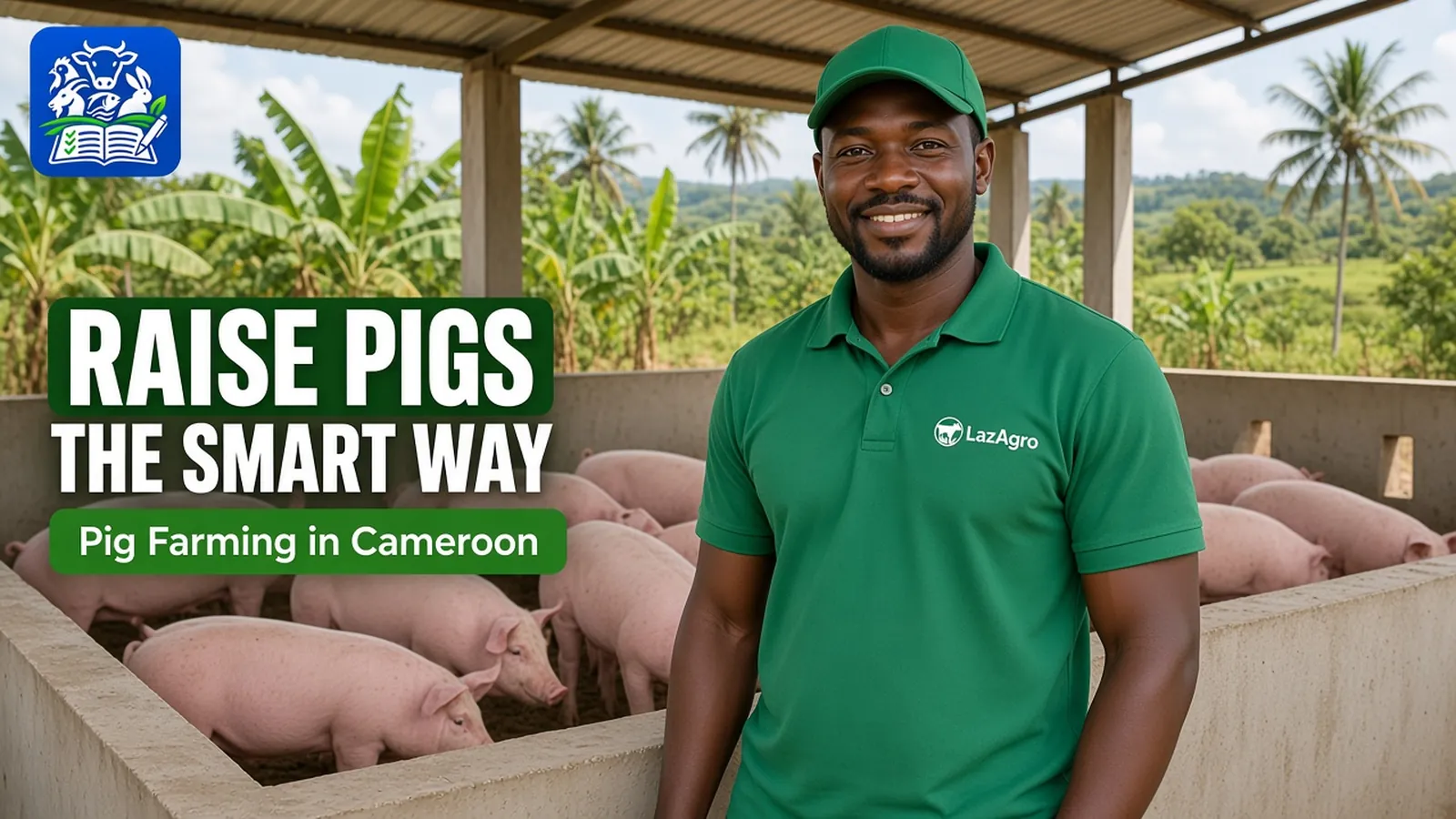
Pig farming in Cameroon has a reputation that cuts both ways. Ask around in Bafoussam, Mbouda or Bamenda and you will hear about farmers who paid school fees for years from a few sows. You will also hear about whole piggeries emptied in a week by African swine fever. Both stories are true, and the difference between them is rarely luck.
Pigs grow fast, they eat many feeds that other livestock refuse, and pork moves quickly in local markets, from roadside "soya" spots to bars that sell grilled pork on weekends. A sow can farrow twice a year. That combination makes pigs one of the fastest ways for a smallholder to turn feed and labour into cash.
The same speed works against you when things go wrong. Feed is the biggest cost, disease spreads quickly between crowded pens, and a single sick pig bought cheaply at the market can wipe out a farm. This guide walks through the decisions that matter most: breeds, housing, feeding, breeding, biosecurity and selling. It is written for someone starting with a handful of animals, not a commercial operation with hundreds of sows.
1. Is pig farming in Cameroon still worth it?
Pigs have been part of farming life in the Western Highlands for generations. A 2021 scientific review of African swine fever in Cameroon noted that the West Region has long held the largest share of the national pig population. Production also runs through the North West, Centre, Littoral and South West, often in backyard units of five to twenty animals.
Demand is steady. Pork is usually cheaper per kilo than beef in many towns, it is popular at celebrations, and buyers come to the farm gate. The constraint has never been demand. It is the cost of feed, the quality of the piglets people start with, and disease.
So the honest answer is yes, pig farming can pay, but only if you treat it as a business with records and rules, not as a place to dump kitchen scraps and hope.
Who does well with pigs?
- Farmers who can source maize, bran, soybean cake or brewery by-products at a reasonable price, or grow some of their own feed.
- People who live on or near the farm and can check animals twice a day.
- Farmers with reliable water. Pigs drink a lot, and pens need washing.
- Anyone willing to say "no" to visitors walking into the pens, even friends and family.
2. Choosing breeds and buying your first pigs
Most commercial piggeries in Cameroon work with improved breeds and their crosses, mainly Large White, Landrace and Duroc. Local pigs are smaller and slower growing, but they are hardy and cope with poorer feed. Many smallholders end up with crossbreds, which is often a sensible middle ground.
| Type | Strengths | Watch out for |
|---|---|---|
| Large White | Good mothers, large litters, fast growth | Sensitive to heat and sunburn; need good feed |
| Landrace | Long body, good litter size, popular for crossing | Same heat sensitivity; weak legs if floors are rough |
| Duroc | Hardy, muscular, often used as a terminal sire | Smaller litters than Large White or Landrace |
| Local / crossbred | Tolerant of rough conditions and lower-quality feed | Slower growth, lighter carcass at the same age |
How many to start with
For a first cycle, many experienced farmers advise starting with fatteners (weaners bought at around two months) rather than breeding stock. You learn feeding, cleaning and selling in four to six months with less money tied up. Once you have run one or two batches, you can add two or three gilts and a boar, or arrange access to a boar on a nearby farm you trust.
What to check before paying for a piglet
- Where it comes from. Buy from a farm, not from a roadside trader who cannot tell you the source. Ask whether there has been any sudden death on that farm recently.
- Body condition. Bright eyes, smooth skin, no cough, no diarrhoea staining around the tail.
- Walk and appetite. Healthy piglets are curious and move freely. Watch them eat if you can.
- Records. Good breeders know the birth date, deworming and iron injection history.
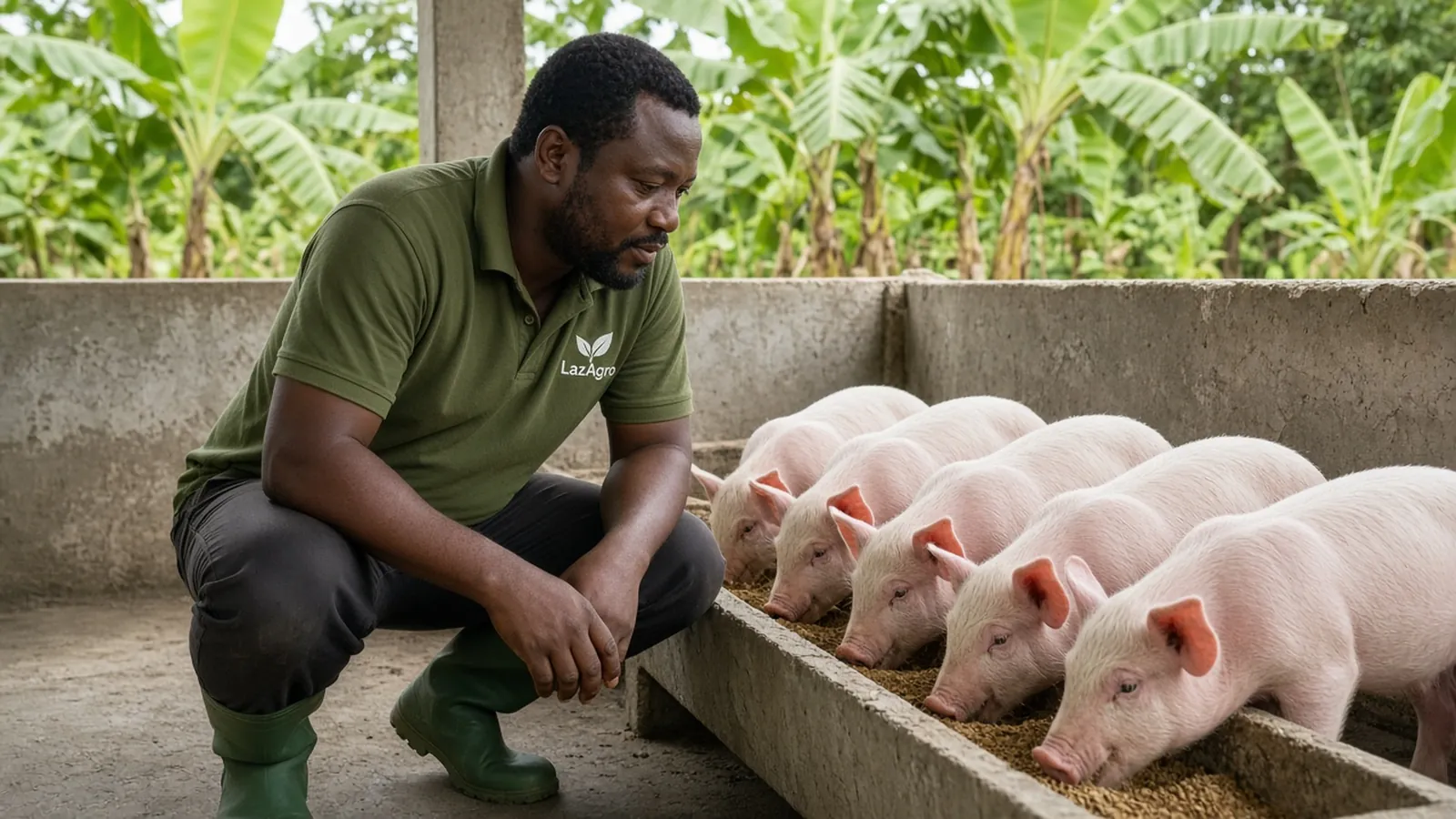
3. Building a pig pen that stays clean and cool
A pig house in a humid tropical climate has two jobs: keep pigs cool and keep the floor dry. Most problems with smell, lameness and diarrhoea come from wet, dirty floors and hot, stuffy pens.
Site
Choose ground that drains well and sits away from your own house, streams and neighbours' pens. A gentle slope helps wash water run off. Make sure a truck or at least a motorbike can reach the gate, because you will move feed in and pigs out.
Floor and drainage
A concrete floor with a slight fall (roughly 2–3%) toward a drain channel is the standard for good reason. It can be washed, it dries fast, and it does not turn to mud in the rainy season. The surface should be rough enough to stop slipping but not so rough that it tears hooves. Drain the dirty water to a soak pit or a manure pit, not straight onto the next field or into a stream.
Roof, walls and airflow
Use half walls, around one metre high, with open space above for air. Long roof overhangs keep driving rain and afternoon sun out of the pen. Aluminium or zinc sheets get very hot, so a higher roof, insulation underneath or shade trees nearby make a noticeable difference. Many of the same principles in our guide to building a poultry house in a tropical climate apply to pig housing too: orientation, overhangs and ventilation.
Space and separate pens
Plan separate areas for sows with litters, weaners, growers and the boar. Overcrowding causes fighting, tail biting and slower growth. Leave one pen empty if you can, as an isolation pen for new or sick animals. That one empty pen is some of the cheapest disease insurance you can buy.
4. Feeding pigs without wasting money
Feed is where most pig farms make or lose their profit. Pigs eat a lot, and grain prices in Cameroon move with the seasons and with import costs. Two habits protect you: feeding the right ration for each stage, and measuring what you give.
Feed by stage
- Creep feed for piglets, offered from the second or third week, to get them used to solid feed before weaning.
- Weaner and grower rations, higher in protein to build frame and muscle.
- Finisher ration, more energy, a little less protein.
- Sow rations, controlled during pregnancy so sows do not get fat, then generous during lactation.
Common ingredients include maize, wheat bran, soybean cake, cottonseed cake in the north, fish meal, palm kernel cake, brewery spent grain, and a mineral-vitamin premix. Unless you are confident with ration formulation, buy a concentrate or premix from a reputable feed mill and follow its mixing instructions. Badly balanced home mixes are a common reason pigs grow slowly.
Kitchen and market waste
Many backyard farmers feed swill from restaurants, markets and households. It cuts costs, but it carries a serious risk: if the waste contains pork from an infected animal, it can carry African swine fever into your herd. If you use food waste at all, boil it thoroughly, and never feed scraps that may contain pork.
Our guide to livestock feed management and reducing feed waste goes deeper into storage, troughs and tracking consumption by batch.
Water
Clean water should always be available. Lactating sows and growing pigs drink much more than people expect, and a pig short of water also eats less. Nipple drinkers save water and stay cleaner than open troughs.
5. Breeding: from service to weaning
Gestation in pigs lasts about 114 days, often remembered as "three months, three weeks and three days". Write the service date down the day it happens and count forward. Guessing is how sows farrow in the wrong pen with no preparation.
Before farrowing
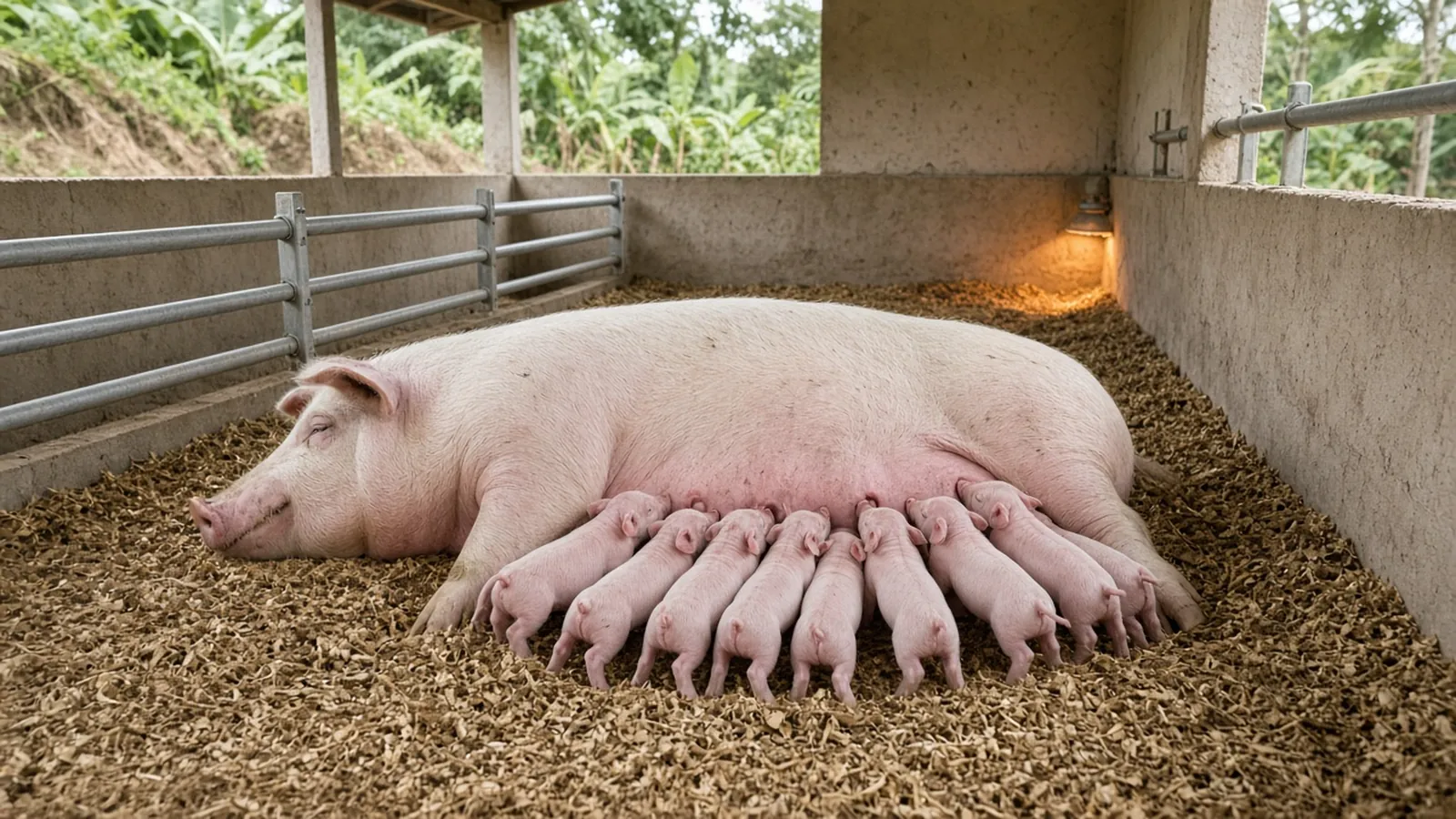
- Move the sow to a clean, disinfected farrowing pen about a week before her date.
- Fit a farrowing rail or creep area so piglets can escape being crushed.
- Provide dry bedding and a warm corner, especially in cold highland nights in places like Dschang or Bamenda.
The first days of a litter
Piglets must suckle colostrum in the first hours. They are born with low iron reserves, so an iron injection in the first days of life is common practice on improved farms; ask your veterinarian about the product and timing. Check the litter several times a day. Most piglet deaths happen in the first week, from crushing, chilling or starvation.
Weaning
Smallholders commonly wean between four and eight weeks. Earlier weaning gets the sow back into breeding sooner but demands good creep feed and clean, warm housing for the weaners. Move weaners in groups of similar size to reduce fighting.
6. African swine fever and everyday biosecurity
African swine fever (ASF) is the disease every pig farmer in Cameroon needs to understand. It was first reported in the country in 1982, in the Littoral Region. The 2021 review of ASF in Cameroon describes how it spread through the southern pig-producing regions within months. It reached the North and Far North in 2010, and outbreaks have kept returning since. FAO's ASF contingency planning manual lists Cameroon among the countries where the disease is endemic.
ASF does not affect people, but it kills pigs quickly, and there is no treatment. Control rests entirely on keeping the virus out.
Signs that should alarm you
- Several pigs suddenly off feed with high fever, lying together.
- Red or purple blotches on ears, belly and legs.
- Sudden deaths, sometimes with bloody discharge.
- Abortions in pregnant sows.
If you see these signs, stop all movement of pigs, people and equipment off the farm and call the veterinary services of MINEPIA (the Ministry of Livestock, Fisheries and Animal Industries) or your nearest veterinary post. Do not sell sick or dead pigs. Do not throw carcasses into the bush or a stream.
Biosecurity rules that actually get followed
- One gate in, with a footbath you actually refill.
- Dedicated boots and clothes for the piggery.
- No visitors in the pens, especially pig traders, butchers and other farmers.
- New animals stay in isolation for at least two to three weeks before joining the herd.
- No pork scraps or unboiled swill as feed.
- Fence the farm so free-roaming village pigs cannot make contact with yours.
- Clean and disinfect pens between batches and leave them empty for a few days.
Other health routines
Beyond ASF, the everyday problems are worms, mange, diarrhoea in piglets and respiratory disease in damp, stuffy pens. Agree a deworming and parasite control schedule with a veterinarian, and keep a record of every treatment, the product used and the withdrawal period before sale.
7. Records: the difference between a hobby and a business
If you cannot answer "how much did it cost to produce one pig?" you cannot set a fair price or know whether to expand. At minimum, record:
- Service dates, farrowing dates, number born alive, number weaned.
- Feed bought and fed, by pen or batch.
- Treatments, vaccines and dewormers.
- Deaths, with a likely cause.
- Sales: date, weight or price, buyer.
Our step-by-step guide on how to keep livestock farm records covers what to write and how often. The LazAgro app lets you log feed, treatments, deaths and sales for each batch on your phone, even with no network at the farm, and it syncs when you are back in range.
8. Costs to plan for
Prices for pens, piglets and feed vary widely between regions and change through the year, so treat any number you hear as a starting point, not a promise. Plan your budget around these categories:
| Start-up costs | Running costs |
|---|---|
| Pen construction: cement, blocks, roofing, drains | Feed (usually the largest share by far) |
| Water supply: tank, pipes, drinkers | Veterinary care, dewormers, disinfectant |
| Feeders and troughs | Labour, if you hire help |
| First animals: weaners or gilts and boar | Transport of feed and pigs |
| Footbath, boots, isolation pen | Repairs, bedding, water and electricity |
Before buying a single pig, get current prices for feed and weaners from two or three suppliers near you. Work out the feed cost for one fattener from weaning to sale, add a share of the other costs, and compare that with what buyers in your area pay. If the margin is thin on paper, it will be thinner in real life.
9. Selling pigs at a fair price
Many farmers sell to traders who come to the farm and price pigs "by eye". That usually favours the trader. A few habits help:
- Know the weight. A weighing scale or even a weigh band gives you a number to negotiate with.
- Plan for demand peaks. End-of-year festivities and other celebrations tend to push demand up. Time a batch so it is ready then.
- Build direct buyers. Pork joints, restaurants and butchers who buy regularly will pay more for consistent, healthy animals.
- Sell only healthy animals. Respect drug withdrawal periods, and never sell a pig that died or looked sick.
10. Common mistakes new pig farmers make
- Starting with too many animals before learning the basics.
- Building pens with earth floors that turn to mud from March onward.
- Buying piglets from unknown sources because they were cheap.
- Mixing home feed without a balanced concentrate or premix.
- Not recording service dates, then being surprised by farrowing.
- Letting traders, neighbours and children walk freely through the pens.
Frequently asked questions about pig farming in Cameroon
1. How long does it take to raise a pig for sale?
Growth depends on breed, feed and housing. Improved breeds on a balanced ration usually reach common market weights within several months after weaning. Local pigs on poorer feed take noticeably longer.
2. Is there a vaccine for African swine fever in Cameroon?
No ASF vaccine is available to farmers in Cameroon, and there is no treatment. Prevention through strict biosecurity is the only protection. Report suspected cases to MINEPIA veterinary services.
3. How many piglets does a sow have?
Litter size varies with breed, age and nutrition. Improved breeds like Large White and Landrace usually produce larger litters than local pigs. What matters most is how many you wean, so focus on the first week of care.
4. Can I feed my pigs only kitchen waste?
Kitchen waste alone rarely gives a balanced diet, and unboiled waste containing pork can spread African swine fever. Use a balanced feed as the base and treat any boiled, pork-free waste as a supplement.
5. Where is the best place in Cameroon to start a piggery?
Pig farming is practised across much of the south and the Western Highlands. The best site is one with reliable water, good drainage, access for vehicles, affordable feed nearby and enough distance from other piggeries to reduce disease risk.
Final thoughts
Pig farming in Cameroon rewards discipline more than capital. A small, clean unit with good records and strict biosecurity will usually do better than a large, crowded one run on hope. Start with a batch of fatteners, learn what a pig really costs you to produce, and grow from there.
Keep every litter, bag and sale on record
LazAgro helps you track batches, feed, treatments, deaths and sales on your phone, online or offline, so you always know what your pigs are costing and earning.
Discover LazAgro