 LazAgro
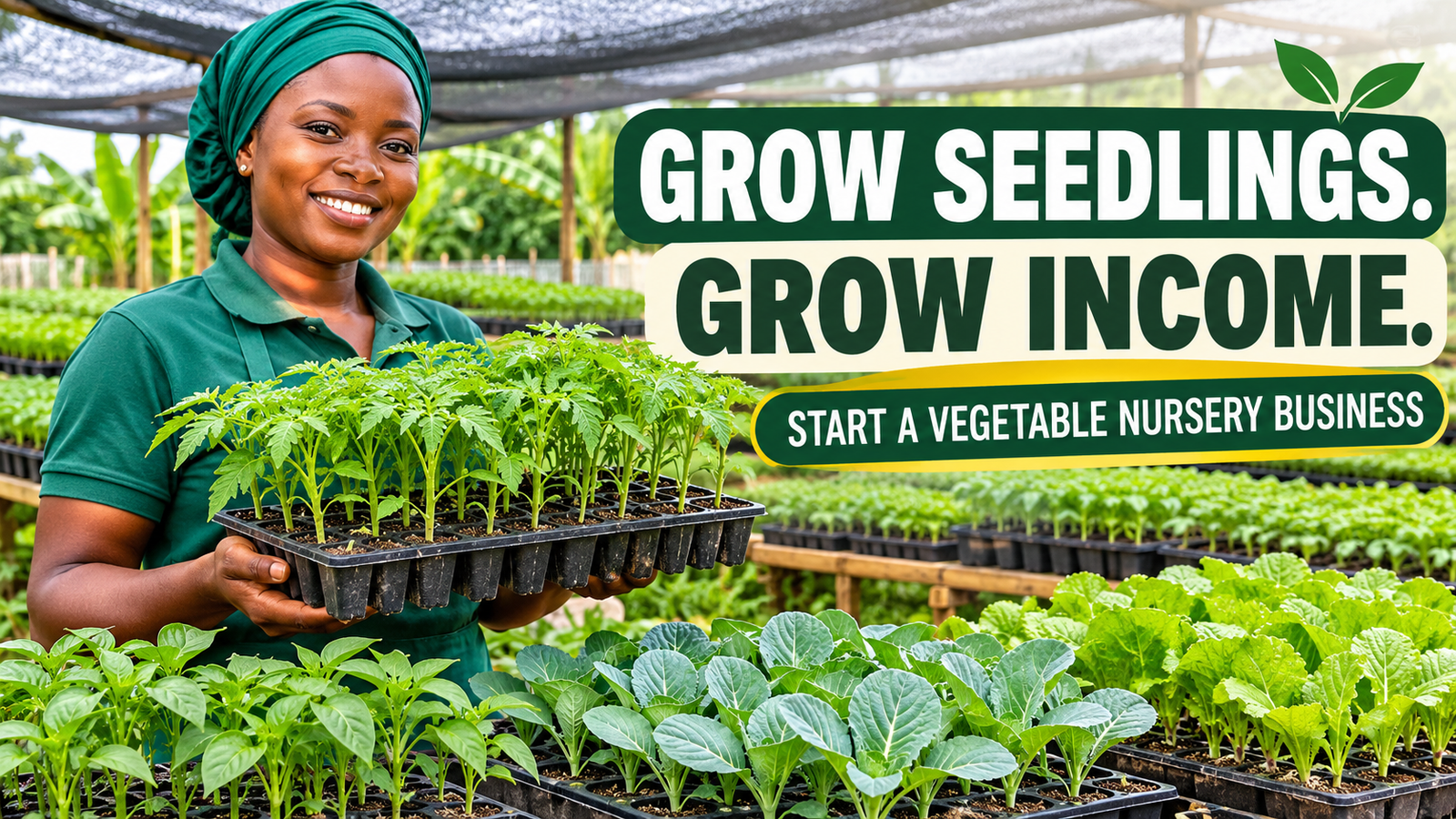
A vegetable farmer's success often begins before the plants reach the field. Healthy, well-developed seedlings give crops a stronger start and help farmers establish more uniform plantations. This creates an opportunity for entrepreneurs who specialise in producing seedlings and supplying them to other growers.
A vegetable seedling nursery is a business that raises young plants from seeds until they are ready for transplanting. Instead of growing vegetables all the way to harvest, the nursery operator focuses on producing strong, healthy planting materials for farmers, gardeners and commercial producers.
Tomatoes, peppers, cabbage, lettuce and other vegetables are commonly established from seedlings. Farmers who lack the time, space or facilities to raise their own plants may prefer to purchase ready-to-transplant seedlings from a reliable nursery.
This guide explains how to establish a vegetable seedling nursery, select seeds, prepare growing media, manage seedlings and build a customer base.
1. Why Start a Vegetable Seedling Nursery?
Vegetable production depends on reliable planting materials. Poor-quality seedlings can result in uneven crop establishment, weak plant growth and additional replacement costs for farmers.
A well-managed nursery can help address this problem by supplying uniform seedlings of known varieties at the right stage for transplanting.
Potential advantages of the business
- Limited land requirement: Seedlings can be raised in a relatively small, organised space.
- Multiple crop varieties: A nursery can produce seedlings for different vegetable markets.
- Repeat customers: Farmers may purchase new batches for successive planting seasons.
- Flexible production: Operators can plan production around customer orders and local planting calendars.
- Value addition: Quality seeds, careful nursery management and good handling are turned into ready-to-plant products.
However, seedlings are living products. They require attention, and delays in selling them can result in overgrown or damaged plants. A nursery must therefore coordinate production with actual demand.
2. Choosing Which Vegetable Seedlings to Produce
Do not begin by growing every vegetable variety you can find. Start with crops that are commonly cultivated in your area and for which farmers have a clear need for reliable planting materials.
Tomato seedlings
Tomatoes are widely grown for household consumption and commercial markets. Farmers may need varieties suited to fresh consumption, processing or particular growing conditions.
Research which tomato varieties are preferred by local growers. Consider maturity, disease resistance, fruit characteristics and suitability for the intended production environment.
Pepper seedlings
Hot and sweet peppers can provide opportunities for nurseries supplying vegetable producers. Demand varies by location, market preference and planting season.
Cabbage seedlings
Cabbage is often established from nursery-raised seedlings before transplanting. Uniform seedlings can help farmers establish more consistent crop stands.
Lettuce seedlings
Lettuce may be suitable for nurseries serving vegetable growers, restaurants, hotels and urban markets. Because it can be sensitive to heat and handling, understand the requirements of the varieties you intend to raise.
Other potential crops
- Eggplant.
- Broccoli.
- Cauliflower.
- Onions, where the chosen production method uses nursery transplants.
- Selected local leafy vegetables that are commonly transplanted.
The best crop mix depends on local demand. Speak to farmers, agricultural cooperatives, input dealers and produce traders before choosing your initial varieties.
| Seedling type | Potential customer | Important consideration |
|---|---|---|
| Tomato | Commercial and small-scale vegetable farmers | Variety selection and seed quality |
| Pepper | Vegetable growers and market gardeners | Germination and seedling development |
| Cabbage | Farmers producing heads for market | Uniformity and transplanting stage |
| Lettuce | Market gardeners and fresh-produce suppliers | Temperature and careful handling |
| Eggplant | Vegetable farmers and mixed-crop growers | Variety and local demand |
3. Selecting Quality Seeds
The quality of the seeds you purchase influences the quality of the seedlings you produce. A nursery cannot consistently supply good planting materials if it starts with poor-quality or unsuitable seed.
Buy from reliable suppliers
Purchase seeds from reputable agricultural input dealers, authorised distributors or established seed companies. Ask for information about the variety, germination characteristics, storage and recommended growing conditions.
Check the seed packaging
Inspect packaging before purchasing. Check the variety name, batch or lot information, expiry or validity details where applicable, and the supplier's information.
Avoid damaged, poorly stored or suspiciously repackaged seeds. Keep purchase records so you can identify the supplier and seed batch if germination problems occur.
Choose varieties that farmers actually want
A variety may have excellent characteristics but still be difficult to sell if farmers in your area do not grow it. Ask prospective customers what they currently plant and what they would like to purchase.
Test unfamiliar seed batches
When introducing a new variety or supplier, consider a small germination test before committing a large quantity of growing space. Record how many seeds germinate under the test conditions.
4. Choosing a Suitable Nursery Location
The nursery location influences the quality of seedlings, ease of management and cost of production. A good site should provide suitable light, water, drainage, protection and access.
Choose a location with reliable water
Seedlings need consistent moisture, particularly during germination and early growth. Select a site where clean water is readily available.
Water availability should be dependable throughout the intended production period. Interruptions can quickly affect young plants.
Consider shade and sunlight
The amount of sunlight required changes as seedlings develop. Germinating seeds and young plants may need protection from intense direct sunlight, while growing seedlings need adequate light to develop properly.
A shade-net structure can help regulate light exposure, but the shading level must suit the crops being produced. Excessive shade can lead to weak, elongated seedlings.
Provide good drainage
Avoid sites where water collects around trays or beneath nursery structures. Poor drainage can contribute to root problems and create conditions that encourage disease.
Protect seedlings from damage
The nursery should be protected from livestock, rodents, heavy rain, strong winds and unnecessary human disturbance. Physical barriers and organised access can reduce avoidable losses.
Make the nursery accessible
Customers and delivery workers should be able to reach the nursery easily. You will also need space to receive supplies, prepare growing media, move trays and load seedlings for delivery.
5. Preparing the Growing Medium and Seedling Trays
A growing medium provides physical support, moisture and air around developing roots. It should be suitable for seed germination and early seedling growth.
What makes a suitable growing medium?
A good growing medium should generally be:
- Clean and free from harmful contaminants.
- Loose enough to allow root development.
- Capable of retaining suitable moisture.
- Well-drained and sufficiently aerated.
- Appropriate for the crop and seedling production method.
Materials used in growing media
Depending on local availability and the production system, growing media may include suitable combinations of:
- Clean composted organic material.
- Coco coir.
- Suitable prepared soil components.
- Clean, appropriately processed organic growing materials.
- Commercial horticultural growing-media products.
Do not assume that ordinary field soil or fresh manure is suitable for filling seedling trays. Poorly prepared materials can contain weed seeds, pests, pathogens or excessive nutrients.
Select appropriate seedling trays
Propagation trays contain individual cells that allow seedlings to develop separately. Their size should reflect the crop, expected nursery period and root development requirements.
Smaller cells can save space and growing medium, but seedlings may become root-bound if held too long. Larger cells may be more appropriate for crops that remain in the nursery longer.
Clean trays before reuse
Reusable trays should be cleaned and sanitised using an appropriate procedure before being used for another production batch. Residues and contaminated materials can carry problems from one crop cycle to the next.
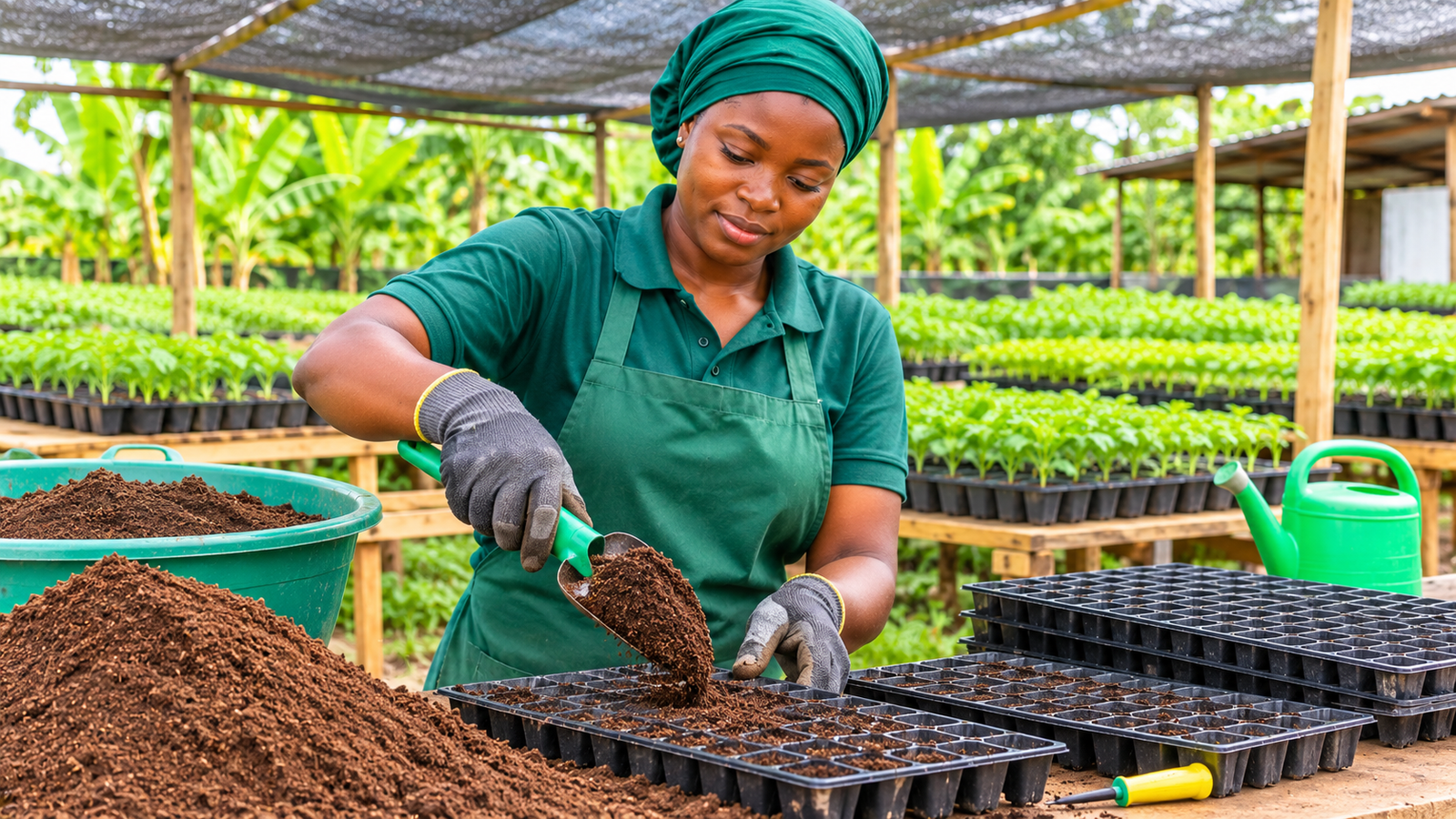
Consistent growing-medium preparation and clean trays help provide a suitable start for young plants.
6. Sowing Seeds Correctly
Seed sowing requires attention to depth, spacing, moisture and the specific requirements of each vegetable. Incorrect sowing can reduce germination and produce uneven trays.
Fill the trays evenly
Fill each cell with the prepared growing medium without compacting it excessively. The medium should provide enough support while maintaining space for water and air movement.
Follow the recommended sowing depth
Different seeds require different sowing depths. Small seeds generally need shallower placement than larger seeds, but follow the seed supplier's instructions for each variety.
Label every production batch
Use durable labels to identify the crop, variety, seed batch and sowing date. This helps prevent different varieties from being mixed up and makes production planning easier.
Maintain appropriate moisture
Water gently to avoid displacing seeds or washing growing medium out of the cells. The objective is to maintain suitable moisture without waterlogging.
Monitor germination
Observe trays regularly and record germination progress. If a batch performs poorly, investigate the seed quality, sowing depth, moisture and environmental conditions before repeating the same procedure.
7. Managing Seedlings During Growth
Once seeds germinate, the nursery operator must maintain suitable conditions while the plants develop strong stems and healthy roots.
Provide adequate light
Insufficient light can produce tall, weak seedlings with elongated stems. Excessive exposure to harsh conditions may also damage young plants.
Adjust shade and exposure as seedlings develop, taking account of the crop and local weather.
Water appropriately
Water requirements vary according to crop, tray size, growing medium, temperature and stage of development. Check the moisture in the growing medium rather than following a rigid watering schedule without considering conditions.
Overwatering can restrict oxygen around roots and increase disease risk. Underwatering can cause wilting and uneven growth.
Maintain good airflow
Good airflow helps the nursery environment remain suitable for plant development. Avoid overcrowding trays or allowing stagnant, excessively humid conditions to persist.
Monitor nutrient requirements
Seedlings need appropriate nutrients, but excessive fertiliser can damage young roots or cause weak growth. Use a suitable nursery fertilisation programme based on the growing medium and crop requirements.
Do not apply fertiliser randomly. Follow product instructions and seek technical guidance when developing a nutrient-management programme.
Inspect seedlings regularly
Look for signs of insect damage, discolouration, wilting, poor root development and abnormal growth. Identify problems early and use appropriate management methods.
Separate unhealthy trays
Where disease or contamination is suspected, isolate affected trays to reduce the risk of spreading problems to healthy seedlings. Seek appropriate advice before applying crop-protection products.
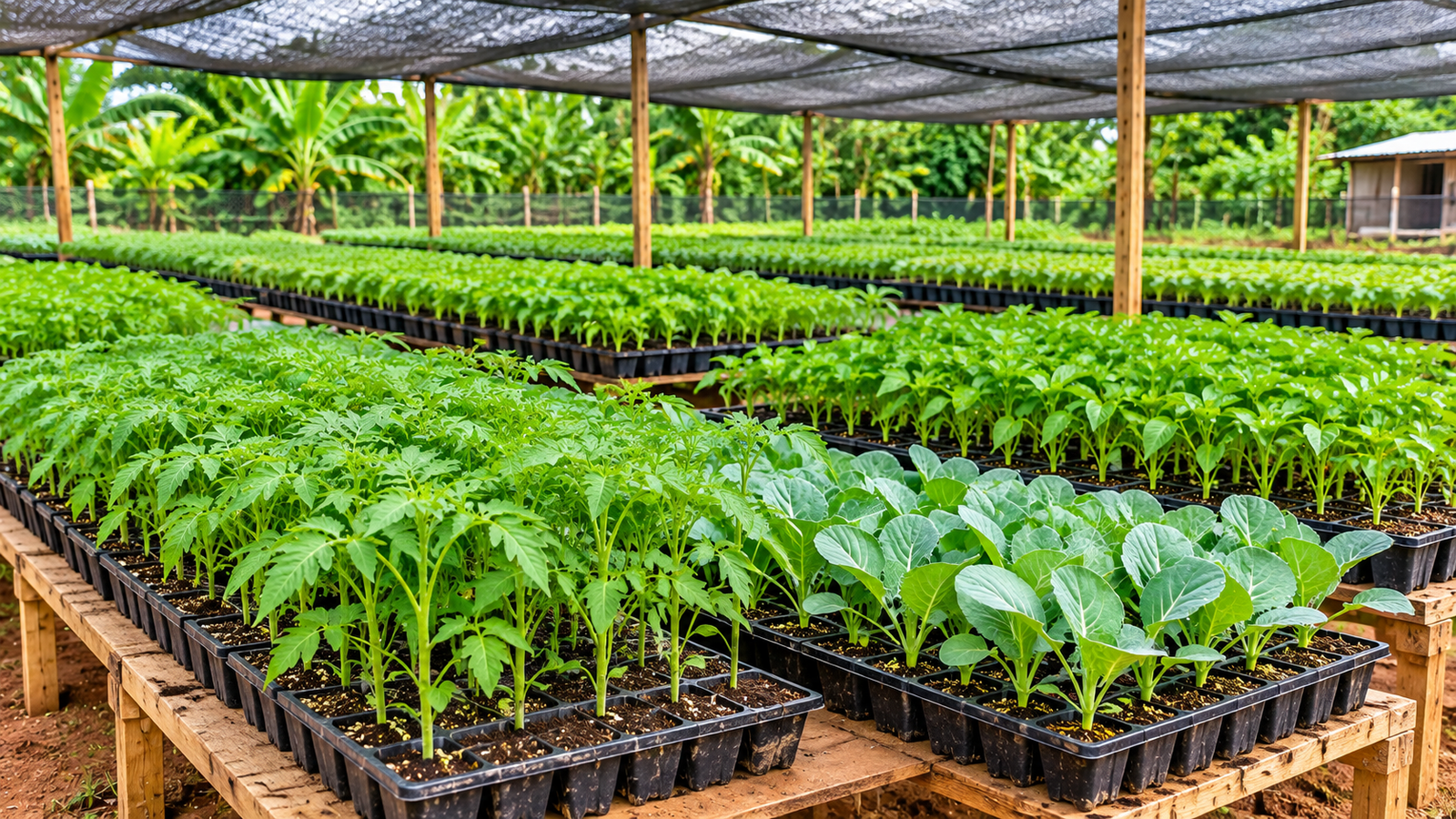
Regular monitoring helps nursery operators maintain uniform, healthy seedlings ready for transplanting.
8. Hardening Seedlings Before Sale
Seedlings raised in a protected nursery may experience stress when moved directly into open-field conditions. Hardening is the process of gradually preparing young plants for the environment they will experience after transplanting.
Why hardening matters
A sudden change in sunlight, wind, temperature and water availability can damage seedlings that have been grown under sheltered conditions.
Appropriate hardening helps reduce transplant shock and prepares seedlings for field conditions.
How to harden seedlings
- Gradually increase exposure to outdoor conditions where appropriate.
- Adjust watering carefully without allowing seedlings to wilt severely.
- Avoid exposing delicate plants suddenly to intense sunlight or strong winds.
- Monitor the plants for stress during the hardening period.
- Follow crop-specific recommendations rather than applying one procedure to every variety.
Know when seedlings are ready for sale
Seedlings should be sold at a suitable stage for transplanting. They should generally have healthy leaves, firm stems and a well-developed root system appropriate for the crop.
Avoid holding seedlings for too long. Overgrown, root-bound or stressed plants may be less attractive to buyers and can establish poorly after transplanting.
9. Finding Customers and Selling Your Seedlings
A nursery can produce excellent seedlings and still struggle financially if it cannot find reliable buyers. Marketing and customer relationships should therefore be part of the business plan from the beginning.
Sell to small-scale farmers
Small-scale farmers may purchase seedlings when they want to avoid the work of raising their own plants or need a reliable source of planting materials.
Supply commercial vegetable farms
Larger growers may require substantial quantities of uniform seedlings. These customers may provide repeat business if your nursery can meet their delivery schedule and quality requirements.
Work with agricultural cooperatives
Cooperatives and farmer groups can help you reach several growers through a single relationship. Group orders may also make production planning easier.
Supply home gardeners
Households and urban gardeners may purchase smaller quantities of vegetable seedlings. Consider offering convenient quantities and clear planting instructions.
Build relationships with agricultural input shops
Some agricultural retailers may be interested in distributing seedlings or referring customers to a nearby nursery. Discuss quality control, handling and arrangements for unsold plants before entering into a supply agreement.
Use social media and local promotion
Share photographs of available varieties, expected availability dates and prices. Use local farming groups and business networks to reach potential customers.
Always provide accurate information about the crop variety and condition of your seedlings. Avoid promising yields or disease resistance that you cannot substantiate.
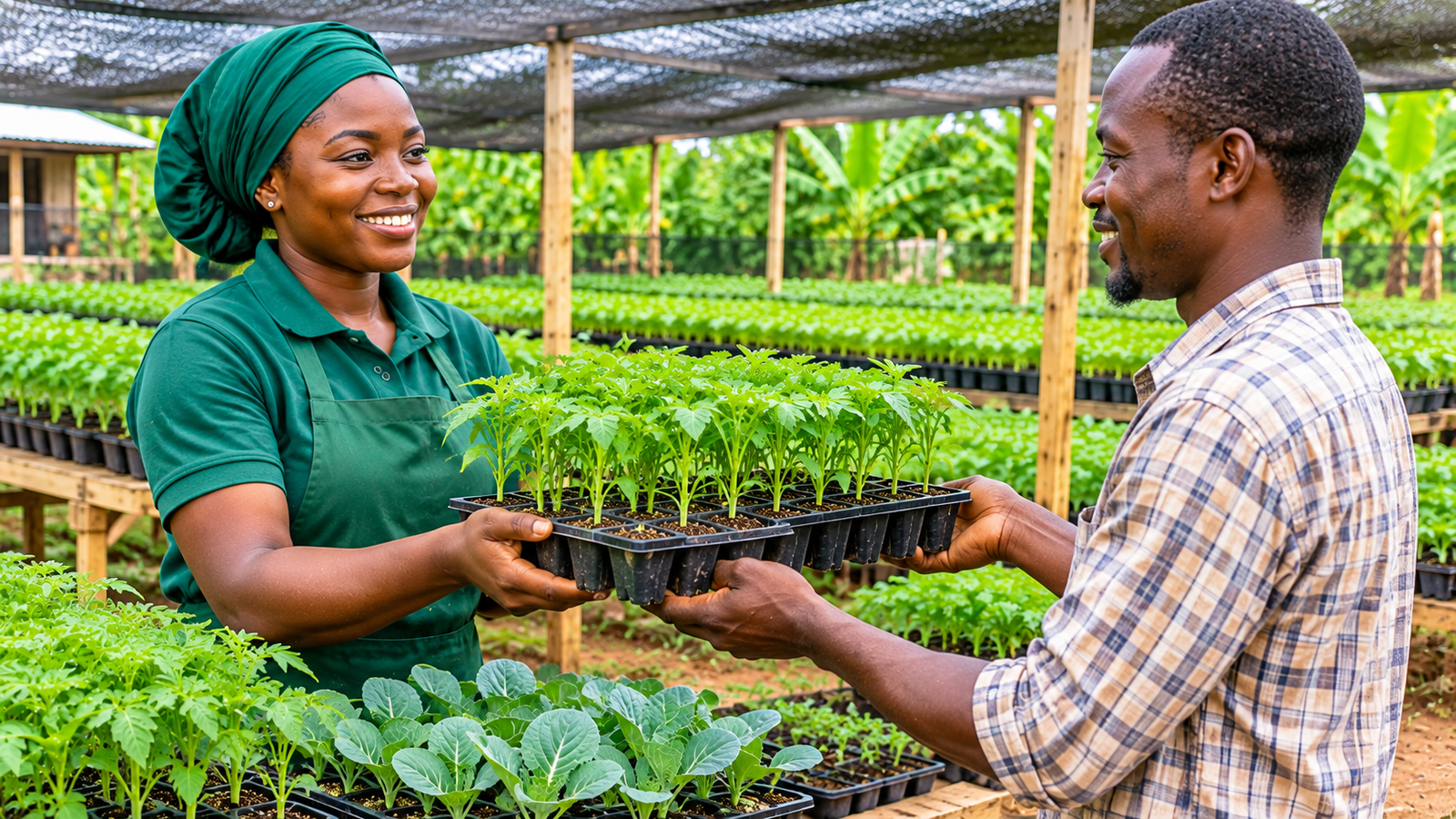
A reliable nursery connects quality seedling production with farmers who need healthy planting materials.
10. Pricing Your Seedlings
Seedling prices should reflect the cost of production, the quality of the plants and what customers are willing to pay.
Calculate your production costs
Include the cost of:
- Seeds and seed transport.
- Growing medium and preparation.
- Seedling trays and replacement materials.
- Water and electricity where applicable.
- Fertiliser and crop-protection inputs.
- Labour.
- Packaging and labelling.
- Transport and delivery.
- Losses from poor germination, disease or unsold seedlings.
Set a price that supports the business
Calculate the cost of producing saleable seedlings rather than dividing expenses by the number of seeds initially sown.
Total production cost ÷ Number of saleable seedlings = Cost per saleable seedling.
Your selling price must account for this cost and provide a reasonable margin while remaining competitive in your market.
Compare prices from other nurseries, but do not compete only by being the cheapest. Consistent germination, healthy plants, correct varieties and dependable delivery can justify a stronger price.
11. Managing Orders and Production Planning
Seedlings are time-sensitive products. Producing too early can leave you with overgrown plants, while producing too late may cause you to miss customers' planting schedules.
Collect orders in advance
Ask farmers which crops and varieties they intend to plant, how many seedlings they require and when they expect to transplant.
Prepare a sowing calendar
Use customer orders and local planting calendars to estimate when each batch should be sown. Account for the expected germination and nursery period of each crop.
Track each batch separately
Assign a batch reference to each sowing group. Record the variety, seed source, sowing date, quantity and expected availability.
Plan for unsold seedlings
Some customers may delay or cancel orders. Avoid producing far beyond confirmed demand unless you have a realistic alternative market.
12. Common Problems in Vegetable Seedling Nurseries
Poor germination
Poor germination may result from low-quality seed, incorrect sowing depth, unsuitable moisture, poor storage or inappropriate temperatures. Investigate the cause before repeating a batch.
Weak and elongated seedlings
Insufficient light, overcrowding and inappropriate growing conditions can produce weak plants. Improve spacing and adjust the growing environment.
Root problems
Poor drainage, excessive watering and unsuitable growing media can affect root development. Review the moisture and physical structure of the medium.
Seedling diseases
Damping-off and other seedling diseases can cause plants to collapse or die. Clean trays, suitable growing media, proper watering and good airflow help reduce risk.
Insect damage
Insects may feed on leaves or damage young plants. Inspect seedlings regularly and use appropriate integrated pest-management methods.
Unreliable customer demand
Production without a clear market can result in unsold seedlings. Build relationships with growers and use orders to guide sowing decisions.
13. Record-Keeping for a Seedling Nursery
Accurate records help nursery operators understand production performance and calculate the true cost of supplying seedlings.
Consider recording:
- Seed purchases: Supplier, variety, quantity, batch and purchase cost.
- Sowing: Date, crop, variety and quantity sown.
- Germination: Number of seedlings that successfully emerge.
- Production batches: Tray references, location and expected availability.
- Inputs: Growing medium, fertiliser and other materials used.
- Crop health: Disease, pest problems and corrective actions.
- Sales: Customer, quantity, variety, price and payment status.
- Inventory: Available trays, seeds and growing materials.
- Losses: Damaged, dead, unsold or rejected seedlings.
- Expenses: Labour, water, electricity, transport and maintenance.
These records help you identify which varieties sell well, which seed suppliers perform reliably and where production losses are occurring.
A simple notebook or spreadsheet may be enough for a small nursery. As the business grows, digital farm-management tools can help organise production batches, inventory, expenses and customer sales.
14. A Practical Checklist for Starting Your Nursery
- Research the vegetable varieties farmers in your area prefer.
- Identify potential customers before production begins.
- Choose a suitable nursery location.
- Arrange a reliable source of clean water.
- Obtain quality seeds from reputable suppliers.
- Prepare suitable growing media.
- Purchase appropriate seedling trays.
- Clean and organise the nursery facility.
- Develop a sowing and production calendar.
- Monitor germination and seedling development.
- Establish a hygiene and pest-management routine.
- Harden seedlings before transplanting where appropriate.
- Set prices using actual production costs.
- Arrange suitable packaging and delivery.
- Maintain records of production, inventory and sales.
15. Is a Vegetable Seedling Nursery a Good Agribusiness?
A vegetable seedling nursery can be a useful agribusiness for entrepreneurs who understand local crop production and can supply farmers with healthy planting materials at the right time.
Its success depends on more than the number of trays in the nursery. Seed quality, production hygiene, suitable growing conditions, customer demand and delivery reliability all influence the business.
A good starting strategy is to choose a few locally demanded crops, produce a small batch, monitor germination and survival, and build relationships with farmers before expanding.
Over time, a well-managed nursery can become a dependable supplier of planting materials while helping other farmers establish their crops more effectively.
Frequently Asked Questions About Vegetable Seedling Nurseries
1. What is a vegetable seedling nursery?
It is a facility where vegetable plants are raised from seeds until they reach a suitable stage for transplanting into fields, gardens or production beds.
2. Which vegetables can I raise in a nursery?
Common options include tomatoes, peppers, cabbage, lettuce, eggplant and selected other vegetables that are normally established through transplanting.
3. How much space do I need to start a nursery?
The required space depends on the number of seedlings, tray sizes, access paths, working areas and the type of nursery structure. A small pilot operation can begin in a relatively compact, suitable space.
4. What is the best growing medium for seedlings?
A suitable growing medium should be clean, well-drained, sufficiently aerated and able to retain appropriate moisture. Its composition depends on the crop and production system.
5. How long do vegetable seedlings stay in a nursery?
The nursery period varies by crop, variety, temperature, growing conditions and tray size. Follow crop-specific recommendations and sell seedlings at a suitable transplanting stage.
6. Why are my seedlings growing tall and weak?
Insufficient light, overcrowding and unsuitable environmental conditions can contribute to elongated, weak seedlings. Review light exposure, spacing and growing conditions.
7. Can I make money selling vegetable seedlings?
Yes, a nursery can generate income when it produces quality seedlings at a cost that allows a suitable selling margin and has access to reliable customers. Actual profitability depends on production losses, input costs and local demand.
8. How can I find customers for my seedlings?
Potential customers include small-scale farmers, commercial vegetable growers, cooperatives, home gardeners and agricultural retailers. Local farming groups and direct relationships can help build demand.
Manage Your Farm Business with Better Records
Whether you produce vegetables, raise seedlings or manage livestock, accurate records help you understand production, expenses, inventory and sales.
LazAgro helps farmers and farm teams organise their farm operations and keep important records accessible, even when internet connectivity is unreliable.
Discover LazAgroEditorial note: Seedling production requirements vary by crop, variety and local growing conditions. Consult agricultural extension specialists and seed suppliers for crop-specific recommendations. Follow applicable seed, nursery and plant-health regulations in your country.