 LazAgro
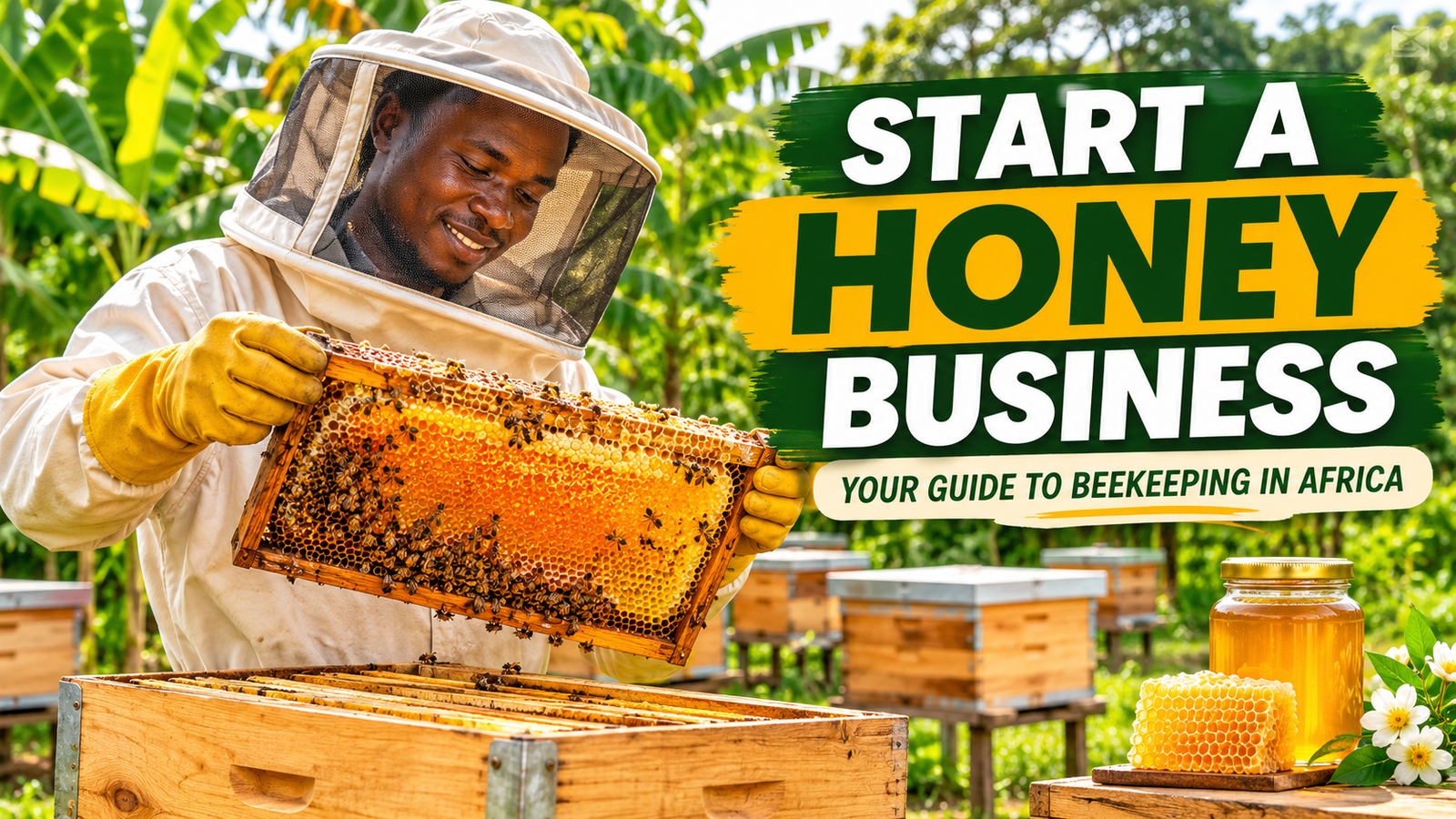
Beekeeping is an agricultural activity with the potential to generate income from honey, beeswax and other hive products while supporting the pollination of crops and wild plants. Across Africa, farmers and entrepreneurs can explore beekeeping as a small-scale or commercial enterprise without necessarily needing large areas of farmland.
However, successful beekeeping is not simply a matter of placing a hive in a field and waiting for honey. It requires knowledge of bee behaviour, suitable hive selection, colony management, harvesting techniques, hygiene and marketing.
Whether you are a farmer looking to diversify your income or an aspiring agripreneur interested in honey production, this guide explains how to establish an apiary, manage bee colonies and develop a sustainable honey business.
1. Why Consider Beekeeping in Africa?
Many African environments offer opportunities for beekeeping because of their diverse vegetation, flowering plants, forests, farms and natural habitats. The suitability of any particular location depends on local bee populations, available forage, climate, water sources, pesticide exposure and access to markets.
One attraction of beekeeping is that it can complement other agricultural activities. An apiary may occupy relatively little ground compared with many conventional livestock enterprises, although the beekeeper must still provide adequate space, safe access and suitable surroundings.
Potential income sources
- Honey: The principal product for many beekeeping businesses. It can be sold in bulk or packaged for consumers.
- Beeswax: Wax recovered from suitable combs can be processed for candles, cosmetics and other products.
- Propolis: A resinous material collected by bees, which has commercial uses in some markets.
- Pollination services: In appropriate agricultural settings, managed colonies may provide pollination services for crop producers.
Not every apiary will generate all these income streams. Start by understanding which products have actual buyers in your area before investing in equipment or production capacity.
2. Understanding How a Honeybee Colony Works
A honeybee colony functions as a highly organised social unit. Each colony contains different types of bees with specialised roles. Understanding these roles helps a beekeeper recognise normal colony activity and identify possible problems.
The queen
The queen is the primary reproductive female in a normally functioning colony. Her main role is laying eggs. A productive queen helps maintain the colony's population, but the health of the colony also depends on food availability, worker bees, suitable conditions and the absence of serious pests or diseases.
Worker bees
Worker bees are female bees that perform most colony activities. Depending on their age and the colony's needs, they may clean cells, feed developing larvae, build comb, guard the entrance, regulate the hive environment or collect nectar, pollen, water and other materials.
Drones
Drones are male bees. Their principal reproductive role is mating with queens. They do not perform the same range of hive-maintenance and foraging duties as worker bees.
A beekeeper does not need to handle every bee individually. Instead, colony management involves observing activity at the entrance, checking hive condition when appropriate, monitoring food availability and identifying signs that a colony may be weak or under stress.
3. Choosing a Suitable Location for Your Apiary
The location of an apiary influences colony health, honey production, safety and the amount of work required to manage the hives. A poor site can expose colonies to excessive disturbance, flooding, pesticide contamination or inadequate food resources.
Look for reliable flowering vegetation
Honeybees collect nectar and pollen from flowering plants. A suitable apiary should be within reach of a variety of flowering trees, shrubs, crops and other vegetation across different periods of the year.
Do not evaluate a location only by how green it looks. What matters is whether suitable plants flower at useful times and provide adequate forage for the bees. Study the local flowering calendar and ask experienced beekeepers about seasonal gaps.
Choose a site protected from flooding
Avoid low-lying locations where water collects during heavy rainfall. Hive stands should be stable, and the surrounding ground should allow safe movement during inspections and harvesting.
Consider shade, wind and ventilation
In hot tropical environments, excessive direct sunlight can create challenging conditions inside hives. Some protection from intense afternoon heat may be beneficial, but the site should not be so enclosed that it becomes damp or poorly ventilated.
Keep the apiary away from unnecessary disturbance
Place hives away from busy paths, children's play areas, livestock movement routes and crowded residential spaces. Consider neighbours, visitors and anyone who may accidentally approach or disturb the colonies.
Assess pesticide exposure
Agricultural chemicals can pose risks to foraging bees. Before establishing an apiary near crop fields, understand the pesticides used in the area and discuss bee-safe application practices with neighbouring farmers. Avoid placing colonies where exposure cannot be reasonably managed.
Make sure the site is accessible
You will need to transport hive equipment, protective clothing, harvesting tools and containers. A site that is difficult to reach can increase labour costs and make routine management less consistent.
4. Choosing the Right Beehive for Your Farm
The hive is one of the most important decisions when starting a beekeeping operation. Different hive designs have different construction costs, management requirements, harvesting methods and suitability for local conditions.
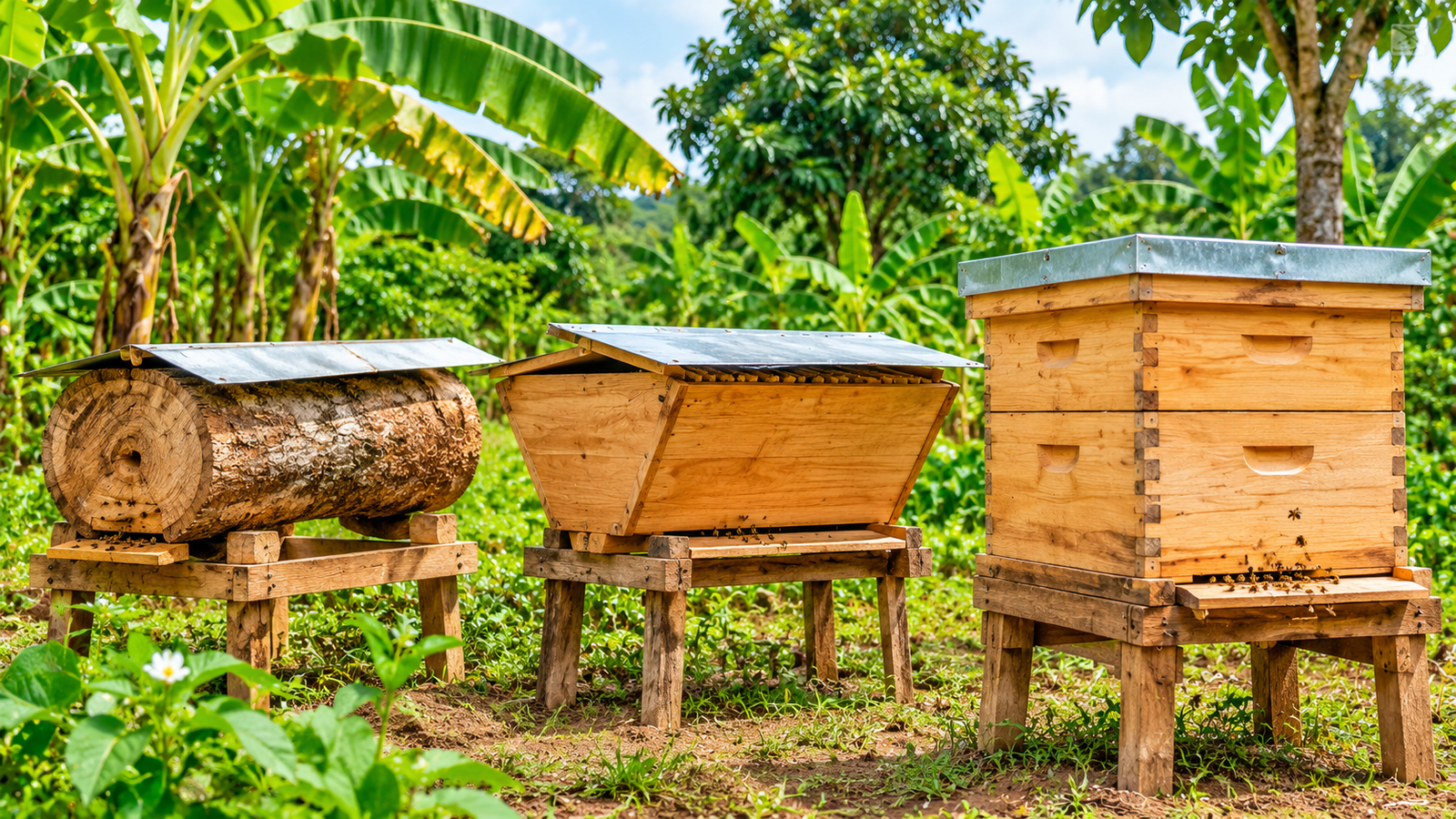
Traditional log hives
Traditional hives are often made from locally available materials and may be relatively inexpensive to construct. They are used in various African beekeeping systems.
Their disadvantages can include limited access to the internal colony, less convenient inspection and harvesting, and difficulty managing comb structure. Their performance depends heavily on local design and management practices.
Top-bar hives
Top-bar hives use individual bars from which bees build comb. They can offer a practical intermediate option for small-scale beekeepers who want more access to the colony than many traditional designs provide.
They are often attractive to new beekeepers because construction can be relatively straightforward. However, correct dimensions, careful handling and appropriate management are important.
Langstroth hives
Langstroth hives use standardised movable frames arranged in boxes. They are widely used in modern beekeeping and can support systematic inspections and honey harvesting.
Their advantages include movable frames, the possibility of adding supers and easier access to individual combs. They generally require suitable equipment, more initial investment and knowledge of frame-based colony management.
Which hive should a beginner choose?
There is no single hive design that is best for every African beekeeper. Your decision should reflect your budget, access to equipment, local bee species, available training and the market you intend to serve.
| Hive type | Potential advantage | Consideration |
|---|---|---|
| Traditional log hive | May use locally available materials | Inspection and harvesting may be less convenient |
| Top-bar hive | Movable bars and relatively accessible design | Requires correct construction and careful handling |
| Langstroth hive | Movable frames and expandable design | Higher equipment and management requirements |
5. Equipment Needed to Start Beekeeping
Starting an apiary requires more than buying hives. Appropriate protective clothing and basic management equipment help reduce risks and make inspections and harvesting more manageable.
Essential protective equipment
- Bee suit: Protective clothing that covers the body.
- Veil: Protects the face and neck from stings.
- Gloves: Provide additional hand protection.
- Suitable footwear: Boots help protect the feet and lower legs.
Hive management equipment
- Smoker: Used appropriately by trained beekeepers to help manage bee behaviour during hive work.
- Hive tool: Helps separate hive components and handle frames or bars.
- Bee brush: May be used gently when moving bees from equipment.
- Hive stand: Provides stable support and helps keep the hive away from direct ground contact.
- Inspection notebook: Used to record observations, colony condition and management activities.
Harvesting and processing equipment
- Clean food-grade collection containers.
- Appropriate honey straining or filtering equipment.
- A suitable honey extractor if using compatible movable-frame hives.
- Clean storage containers with secure lids.
- Packaging materials and food-safe jars or bottles.
Purchase equipment according to the hive system you intend to use. A beekeeper using a traditional hive may not need the same extractor and frame-handling equipment as someone managing Langstroth hives.
6. How to Establish Your First Bee Colonies
A hive without a colony cannot produce honey. One of the most important early decisions is how to obtain healthy colonies and establish them successfully.
Learn from experienced local beekeepers
Before acquiring colonies, seek practical instruction from an established beekeeper, agricultural extension worker or recognised beekeeping organisation. Local experience is valuable because bee behaviour, seasonal conditions and suitable management practices can vary between regions.
Obtain bees through appropriate local methods
Depending on the local beekeeping system, colonies may be established through natural occupation of prepared hives, colony division or other locally accepted methods.
Beginners should not attempt risky or poorly understood colony transfers. Use a trained beekeeper when handling occupied colonies, and comply with local wildlife and environmental rules.
Position and prepare the hive correctly
Ensure the hive is stable, appropriately sheltered and positioned with a suitable entrance. Avoid unnecessary disturbance after installation, particularly while a newly established colony is settling.
Allow colonies to establish
A new colony needs time to build comb, raise brood and develop its population. Harvesting too early can weaken or destroy the colony's ability to survive.
7. Managing Your Bee Colonies Throughout the Year
Beekeeping is not a one-time installation activity. Colonies require observation and appropriate management throughout the year, even during periods when no honey is being harvested.
Monitor colony activity
Observe activity around the hive entrance. Changes in bee traffic, unusual behaviour, visible dead bees or signs of disturbance may indicate a problem. These observations should be considered alongside the season and local environmental conditions.
Inspect colonies appropriately
Periodic inspections can help assess colony development, brood condition, available food stores, comb condition and signs of pests or disease. The frequency and method of inspection should suit the hive type and local conditions.
Avoid opening hives unnecessarily. Excessive disturbance can interfere with colony activity and increase stress.
Understand seasonal changes
The availability of nectar and pollen changes with flowering seasons, rainfall and vegetation patterns. A colony may build strongly during a period of abundant flowering but face food shortages when flowers become scarce.
Develop a local seasonal calendar to anticipate periods of abundance and scarcity. Ask experienced beekeepers which plants provide important forage and when they flower.
Watch for pests and diseases
Honeybee colonies can be affected by pests, parasites, diseases and environmental stress. Learn the signs of common problems in your area and seek qualified advice when symptoms appear.
Do not apply pesticides, veterinary products or improvised chemical treatments inside a hive without appropriate guidance. Incorrect treatment can harm bees and contaminate honey.
Protect colonies from predators and theft
Depending on the location, colonies may face disturbance from ants, other insects, animals, people or thieves. Suitable hive stands, site management, fencing where appropriate and regular observation can help reduce risks.
8. Harvesting Honey Without Damaging the Colony
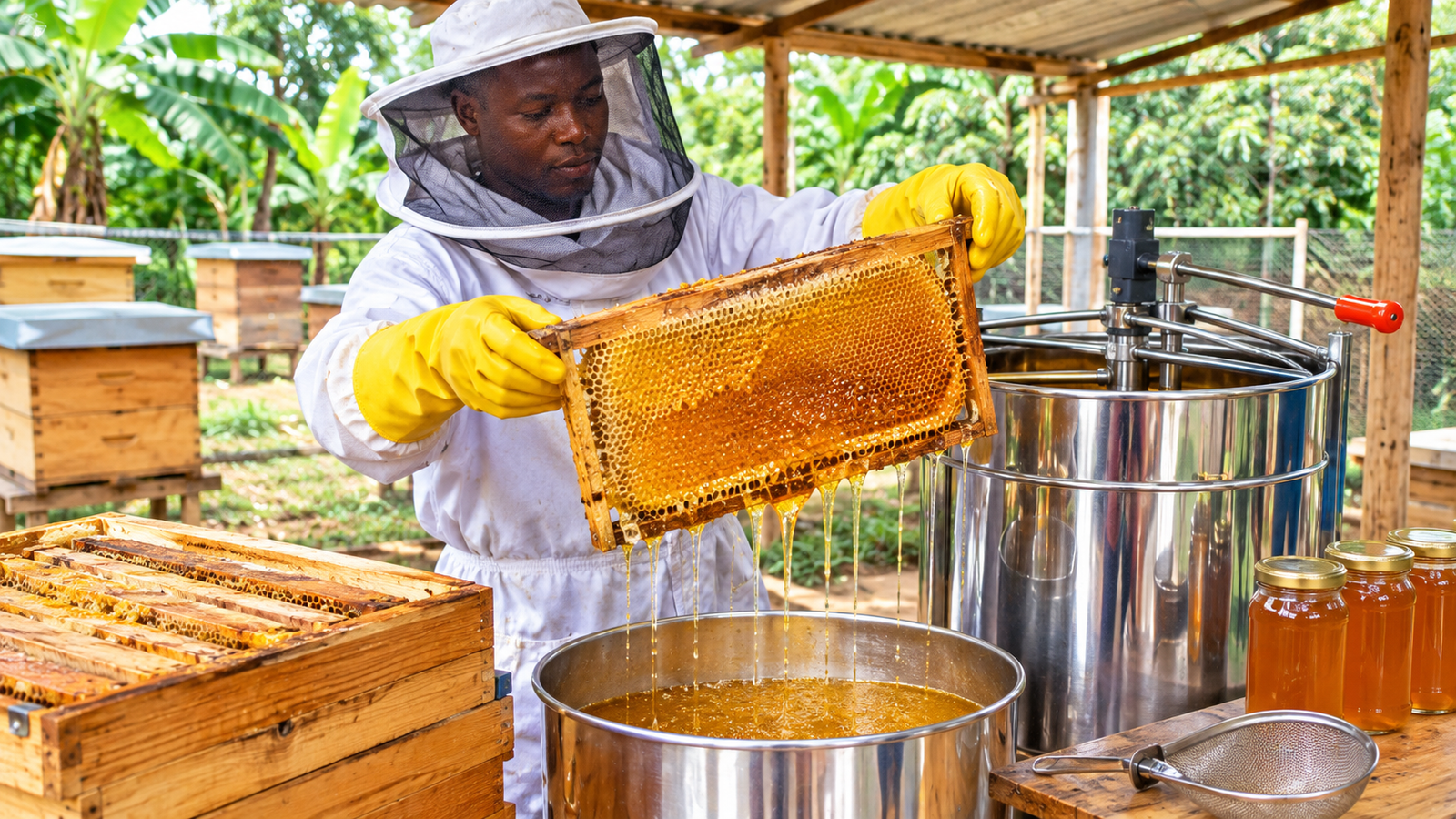
Honey harvesting is one of the most important stages of the business. Poor harvesting practices can contaminate honey, damage combs and leave colonies without sufficient food.
Harvest only when the honey is ready
The appearance of honey alone does not always indicate that it is ready for harvesting. In frame-based systems, experienced beekeepers assess capped honey and other signs of maturity. Harvesting decisions should account for local conditions and the hive design.
Avoid taking all available honey. Colonies need adequate food reserves to survive periods when nectar and pollen are scarce.
Use suitable protective equipment
Wear appropriate protective clothing and use safe handling practices. Work calmly, avoid sudden movements and follow established procedures for the type of hive you manage.
Handle honeycombs carefully
Harvested combs should be protected from dust, dirt, moisture, insects and other contaminants. Keep them away from chemicals, fuel, livestock waste and strong-smelling materials.
Extract and strain honey hygienically
Use clean equipment suitable for food processing. Where movable frames are used, an appropriate extractor can separate honey from the comb. Other hive systems may require different harvesting and processing methods.
Straining helps remove larger particles such as wax fragments. It does not make contaminated or poorly handled honey safe, so hygiene must be maintained throughout the process.
Pay attention to moisture content
Honey with excessive moisture may ferment during storage. A refractometer designed for honey can help producers measure moisture content more reliably than judging it by appearance.
Follow applicable food standards and buyer requirements for moisture content, processing and storage. Do not assume that filtering alone makes honey ready for long-term storage.
9. Packaging, Branding and Selling Your Honey
Producing honey is only one part of the business. To earn consistent revenue, you must package the product appropriately, maintain quality and develop access to customers.
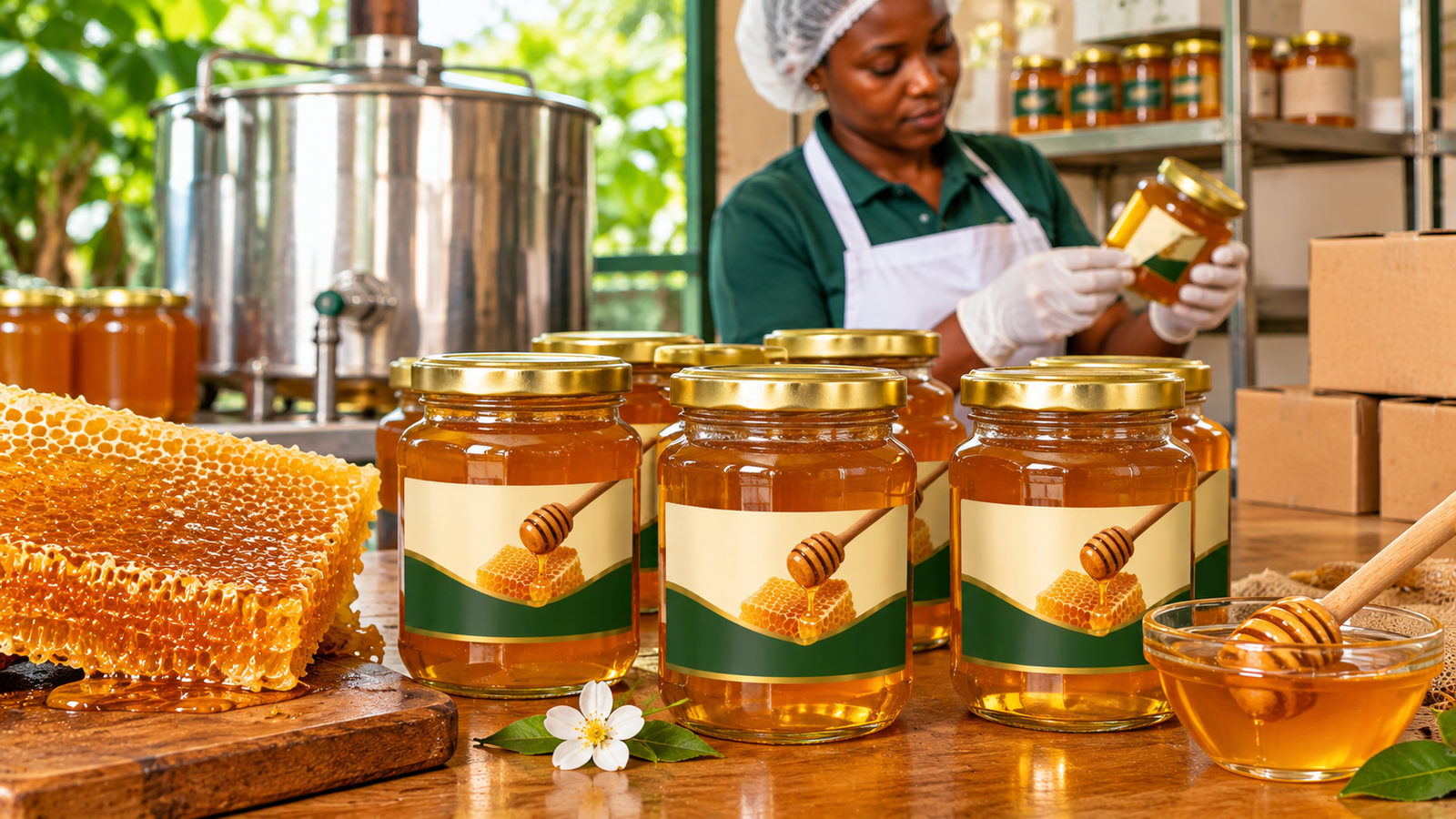
Choose suitable packaging
Honey can be packaged in food-grade glass jars or suitable food-grade plastic containers. Packaging should be clean, properly sealed and appropriate for the intended market.
Choose sizes based on customer preferences and your cost structure. Smaller containers may appeal to household buyers, while larger containers may suit restaurants, retailers or bulk customers.
Develop a recognisable brand
A professional label helps customers identify your product and understand what they are buying. Depending on local labelling requirements, it may need to include:
- Product name.
- Net weight or volume, as applicable.
- Producer or business name and contact details.
- Batch or lot identification.
- Production or packaging information where required.
- Any legally required declarations and storage instructions.
Avoid making unverified medical claims about honey. Present it honestly as a food product and follow the labelling laws applicable in your market.
Identify your customers
Potential customers may include:
- Households and individual consumers.
- Grocery shops and supermarkets.
- Hotels, restaurants and bakeries.
- Food processors and other businesses that use honey.
- Wholesalers and distributors.
Talk to potential buyers before increasing production. Ask about preferred packaging sizes, quality expectations, purchase volumes and payment terms.
Build trust through consistent quality
Customers are more likely to return when the honey they purchase is clean, properly packaged and consistent. Keep records of harvesting dates, processing batches, packaging and sales so that you can investigate quality complaints and trace products when necessary.
10. Understanding the Costs of Starting an Apiary
The amount required to start beekeeping varies considerably by country, location, hive design, equipment quality and the number of colonies. A small pilot apiary will have different financial requirements from a commercial honey operation.
Rather than relying on a generic startup figure, prepare a budget using actual local prices.
Initial investment categories
- Purchase or construction of hives.
- Hive stands and site preparation.
- Protective clothing and safety equipment.
- Hive tools and inspection equipment.
- Colony acquisition or establishment costs.
- Harvesting and processing equipment.
- Food-grade containers and packaging.
- Transport and initial marketing expenses.
Recurring operating costs
- Equipment repairs and replacement.
- Transport for inspections and harvesting.
- Packaging and labelling materials.
- Training and professional advice.
- Appropriate pest and disease management.
- Storage and distribution.
Calculate whether the business is profitable
A basic financial assessment should compare revenue with all production and operating costs.
Total revenue − Total business costs = Profit or loss.
For a more useful estimate, calculate expected saleable honey rather than assuming that every colony will produce the same quantity. Production varies with colony strength, forage availability, weather, management and harvesting decisions.
You should also account for unsold stock, damaged packaging, transport, marketing and the time spent managing the apiary. A business may generate sales while still making little or no profit if these costs are ignored.
11. Common Mistakes New Beekeepers Should Avoid
Starting with too many hives
A large number of hives may look impressive, but it can create management problems for someone without sufficient experience. Begin at a scale you can inspect and maintain properly. Expand as your knowledge and resources improve.
Harvesting too much honey
Taking excessive honey can leave colonies without sufficient food. This may weaken them or contribute to colony loss, particularly when natural forage becomes scarce.
Ignoring local bee behaviour
Bee species and local populations can differ in behaviour and management requirements. Do not assume that techniques used in another country or region will work exactly the same way in your apiary.
Using poor harvesting hygiene
Dirty containers, unsuitable equipment and careless handling can damage product quality. Hygiene should be treated as a business requirement, not an optional finishing step.
Failing to plan for the market
Producing honey without understanding who will buy it can lead to unsold stock. Research customers, packaging preferences and prices before expanding production.
Neglecting records
Without records, it becomes difficult to identify which colonies perform well, when inspections took place, how much honey was harvested and whether the operation is financially sustainable.
12. Keeping Records for a Better-Managed Apiary
Accurate records help beekeepers make better decisions. Even a small operation benefits from recording important management activities.
Consider maintaining records for:
- Hive identification: Give each hive a unique reference.
- Colony establishment: Record when a colony was installed or established.
- Inspections: Record dates and important observations.
- Colony condition: Note population strength, brood observations and food availability.
- Management activities: Record repairs, treatments and other actions.
- Harvests: Record harvesting dates and quantities.
- Processing batches: Track extraction, handling and packaging information.
- Sales: Record quantities sold, prices, customers and payment status.
- Expenses: Track equipment, packaging, transport and operating costs.
These records allow you to compare performance between colonies and seasons. They also help you identify changes in production, calculate costs and maintain traceability for customers.
A simple notebook or spreadsheet can be enough when starting. As your operation grows, digital farm-management tools can make it easier to organise activities, inventory, expenses and sales.
13. A Practical Checklist for Starting Your Apiary
- Research local beekeeping conditions and regulations.
- Find an experienced beekeeper or suitable training programme.
- Identify a safe apiary location with reliable flowering vegetation.
- Assess pesticide exposure and potential disturbances.
- Choose a hive type suited to your budget and management skills.
- Purchase appropriate protective clothing and tools.
- Establish healthy colonies using suitable local methods.
- Develop a seasonal inspection and management plan.
- Identify potential buyers and packaging requirements.
- Prepare a realistic startup and operating budget.
- Set up records for inspections, harvesting, expenses and sales.
14. Is Beekeeping a Good Business for Small Farmers?
Beekeeping can be a useful enterprise for small farmers when local conditions are suitable and the beekeeper has access to practical knowledge, healthy colonies and a market for honey.
It may complement crop production and other farm activities, but it is not a guaranteed source of income. Weather, forage availability, colony health, theft, pests, processing quality and market access all influence business performance.
The most sensible approach for a beginner is to start with a manageable number of colonies, learn proper management techniques, maintain accurate records and evaluate actual results before investing in expansion.
A successful apiary is built through consistent colony care, responsible harvesting, good hygiene and a clear understanding of the market.
Frequently Asked Questions About Beekeeping in Africa
1. Is beekeeping suitable for beginners in Africa?
Yes. Beginners can start beekeeping in suitable African environments, provided they receive practical training, choose an appropriate hive system and understand local bee behaviour and safety requirements.
2. How many beehives should a beginner start with?
There is no universal number. Start with a manageable pilot operation that allows you to learn colony management and harvesting without exceeding your available time, budget or experience.
3. How long does it take for a new beehive to produce honey?
The timing varies according to colony strength, hive occupation, flowering seasons, local climate and management. A newly established colony may need time to build its population and comb before it can provide a sustainable surplus for harvesting.
4. Which beehive is best for African conditions?
Traditional log hives, top-bar hives and Langstroth hives are all used in different African settings. The best choice depends on local conditions, construction quality, budget, access to equipment and the beekeeper's experience.
5. Can beekeeping be combined with crop farming?
Yes. Beekeeping can complement some crop-farming operations because honeybees visit flowering plants and may contribute to pollination. However, farmers must manage pesticide risks and avoid exposing colonies to harmful agricultural chemicals.
6. What products can be obtained from a beehive?
Common hive products include honey, beeswax and propolis. In some agricultural systems, managed colonies may also provide pollination services.
7. Is beekeeping expensive to start?
Startup costs depend on the number and type of hives, protective equipment, harvesting tools, colony establishment and packaging. Starting small and using locally available suitable equipment can help control initial investment.
8. How can I sell honey from my apiary?
Potential customers include households, grocery shops, supermarkets, restaurants, food processors and wholesalers. Research local demand, maintain hygienic processing practices and package honey according to applicable food and labelling requirements.
Manage Your Agricultural Business with Better Records
Whether you manage an apiary, livestock operation or crop farm, keeping accurate records helps you understand production, expenses, inventory and sales. Good farm management starts with knowing what happens on your farm.
Discover LazAgro, a farm-management platform designed to help farmers and farm teams organise their operations and keep important records accessible, even when internet connectivity is unreliable.
Discover LazAgroEditorial note: Beekeeping practices and legal requirements vary across African countries and regions. Consult local agricultural extension services, experienced beekeepers and relevant food-safety authorities before establishing an apiary or selling honey commercially.