 LazAgro
The Complete Guide to Fish Farming in Africa: How to Start and Manage a Successful Fish Farm
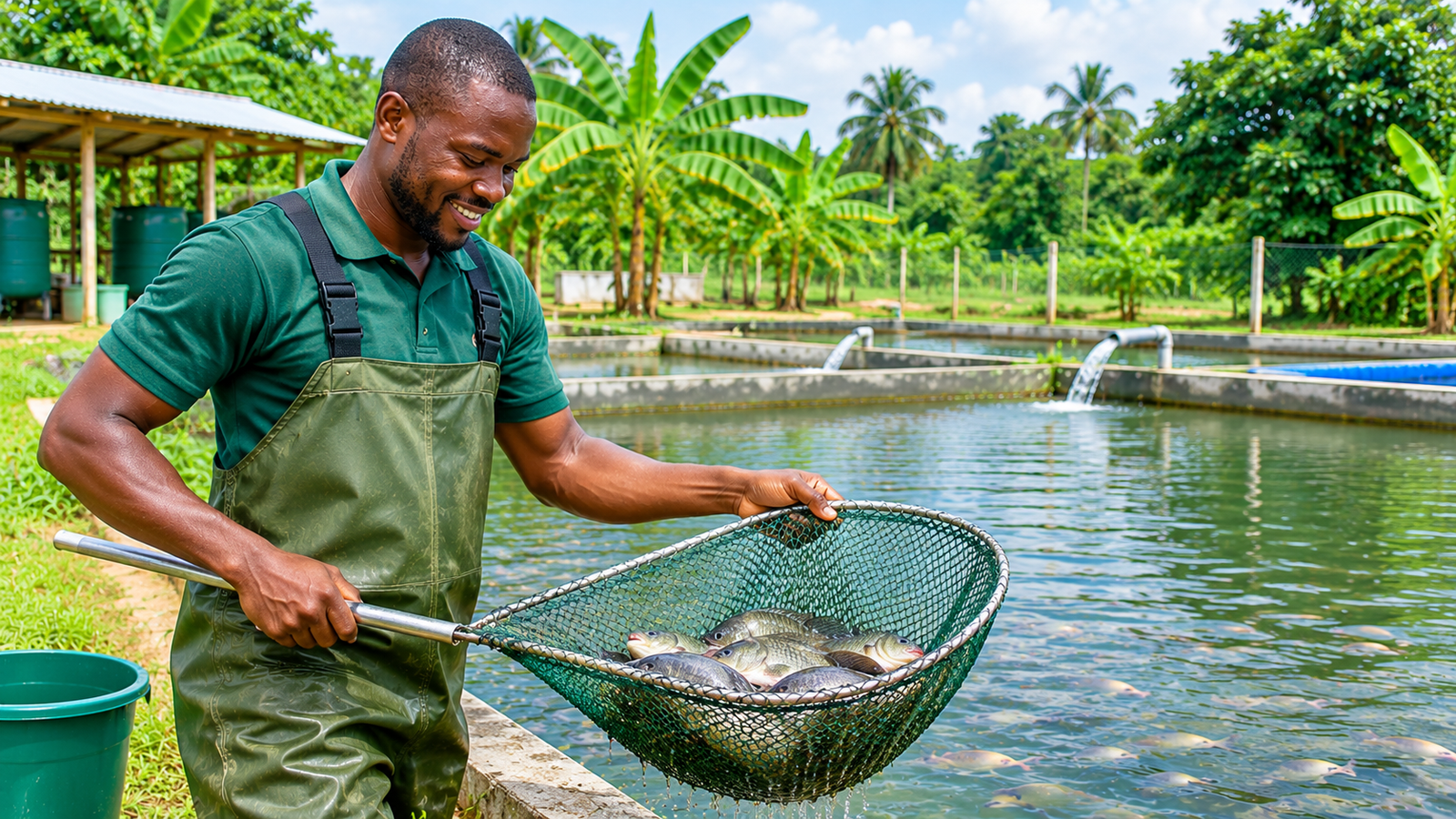
Fish farming is becoming an increasingly important part of food production and agribusiness across Africa. For entrepreneurs, farmers and young people interested in agriculture, aquaculture can provide an opportunity to produce fish for local markets while building a structured agricultural business.
However, starting a successful fish farm involves much more than digging a pond and buying fingerlings. Water quality, species selection, stocking decisions, feeding, disease prevention, harvesting and access to buyers all influence the outcome.
This guide explains the major decisions involved in starting and managing a fish farm, with practical considerations for African farming conditions.
1. Understanding Fish Farming and Aquaculture
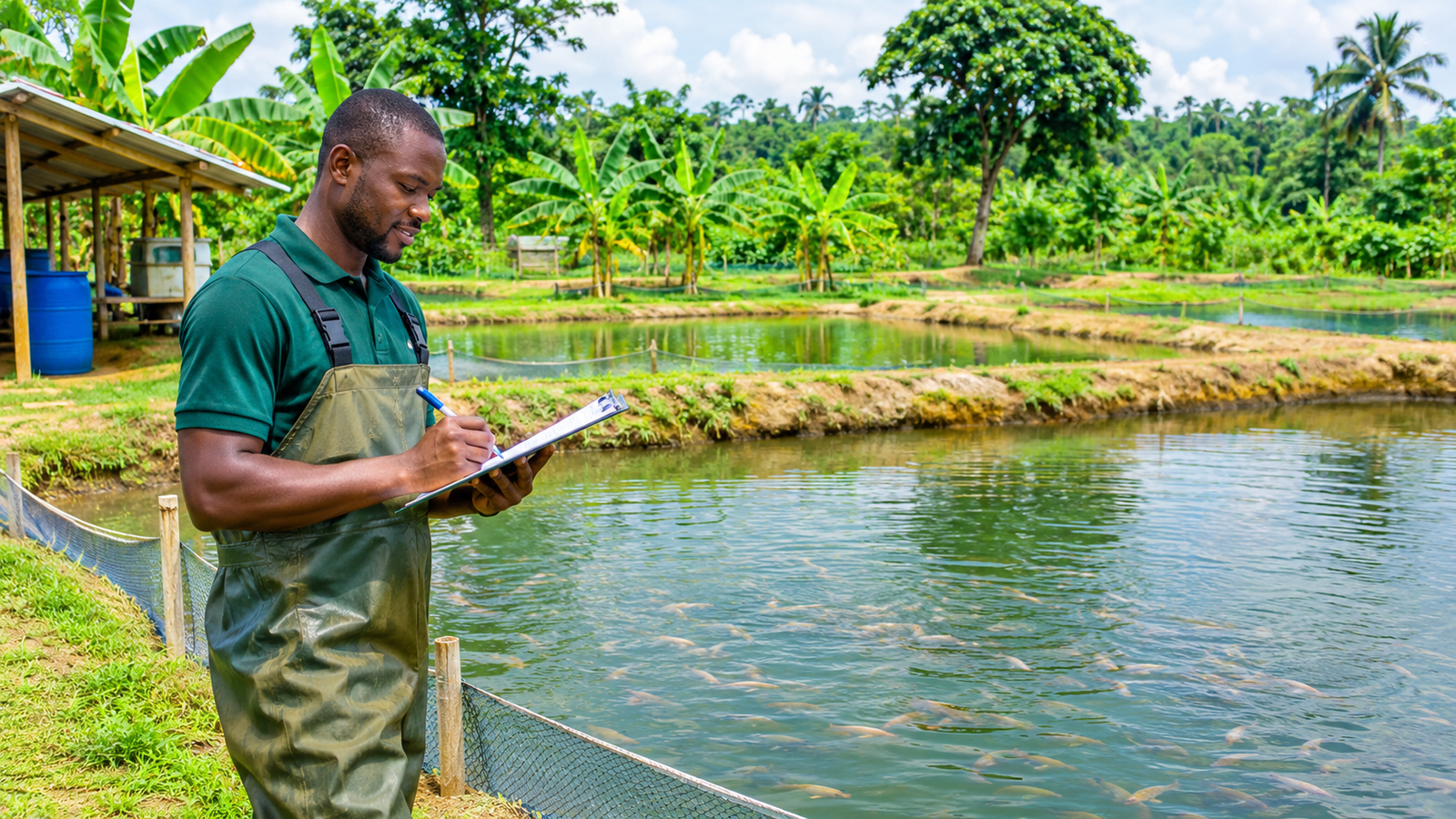
Fish farming, also known as aquaculture, is the controlled production of fish in managed environments. Instead of relying entirely on fish caught from rivers, lakes and oceans, farmers raise fish in ponds, tanks, cages or other suitable systems.
Aquaculture allows farmers to plan production, monitor fish growth and organise harvesting according to market demand. The level of control depends on the farming system, available equipment, water supply and management practices.
Fish farming can be operated at different scales. A smallholder may begin with a few ponds, while a commercial producer may operate several production units with dedicated water systems, staff and processing arrangements.
Why fish farming is attracting interest
- Food production: Farmed fish can contribute to the supply of animal protein in communities where demand is strong.
- Business opportunities: Fish can be sold fresh, smoked, dried or processed, depending on local consumer preferences and regulations.
- Production planning: Farmers can organise stocking and harvesting cycles rather than depending entirely on wild catches.
- Use of suitable land and water resources: Some properties that are not ideal for conventional crop production may support aquaculture, subject to environmental and technical assessments.
- Employment: Fish farms can create work in pond preparation, feeding, harvesting, transportation and processing.
These opportunities do not mean every fish farm will be profitable. The business must be designed around local demand, production costs, water availability and the farmer's technical ability.
2. Choosing the Right Fish Species
Species selection is one of the first major decisions when planning an aquaculture business. The best species depends on local consumer preferences, water conditions, fingerling availability, production expertise and the farming system.
Two commonly farmed groups in many African markets are catfish and tilapia. They have different production requirements and market characteristics.
Catfish farming
African catfish, particularly Clarias gariepinus, is an important aquaculture species in several African countries. It is popular in many markets and is commonly raised in ponds and tanks.
Potential advantages include:
- Strong consumer demand in some local markets.
- Suitability for several managed production systems.
- Availability of established farming knowledge in many regions.
- Potential to sell fish fresh, smoked or through other locally accepted channels.
Catfish production still requires careful management. Farmers must pay attention to fingerling quality, grading, stocking density, water conditions, feeding and size variation. Poor management can result in uneven growth, injuries and losses.
Tilapia farming
Tilapia is another widely farmed fish group. Nile tilapia (Oreochromis niloticus) is an important aquaculture species in suitable environments.
Potential advantages include:
- Recognition and demand in many fish markets.
- Compatibility with several pond and tank production approaches.
- Established knowledge and technical resources in many aquaculture regions.
- Opportunities to supply fresh fish markets and food businesses.
Tilapia production requires careful attention to reproduction, stocking composition, water quality and growth management. Uncontrolled breeding in some production systems can lead to overcrowding and a wide range of fish sizes.
Catfish versus tilapia: what should you choose?
| Consideration | Catfish | Tilapia |
|---|---|---|
| Market preference | Popular in many local markets, depending on the region. | Popular in many fresh fish markets and food businesses. |
| Production systems | Ponds and suitable tank systems. | Ponds, tanks and suitable cage systems. |
| Key management concerns | Grading, feeding, water conditions and size variation. | Breeding control, stocking composition and water quality. |
| Market research | Check demand for the preferred selling size and fresh or smoked products. | Check preferred market size, fresh fish demand and competing supply. |
3. Choosing the Right Fish Farming System
Your farming system determines how fish are housed, how water is supplied and removed, how production is monitored and how much equipment is needed.
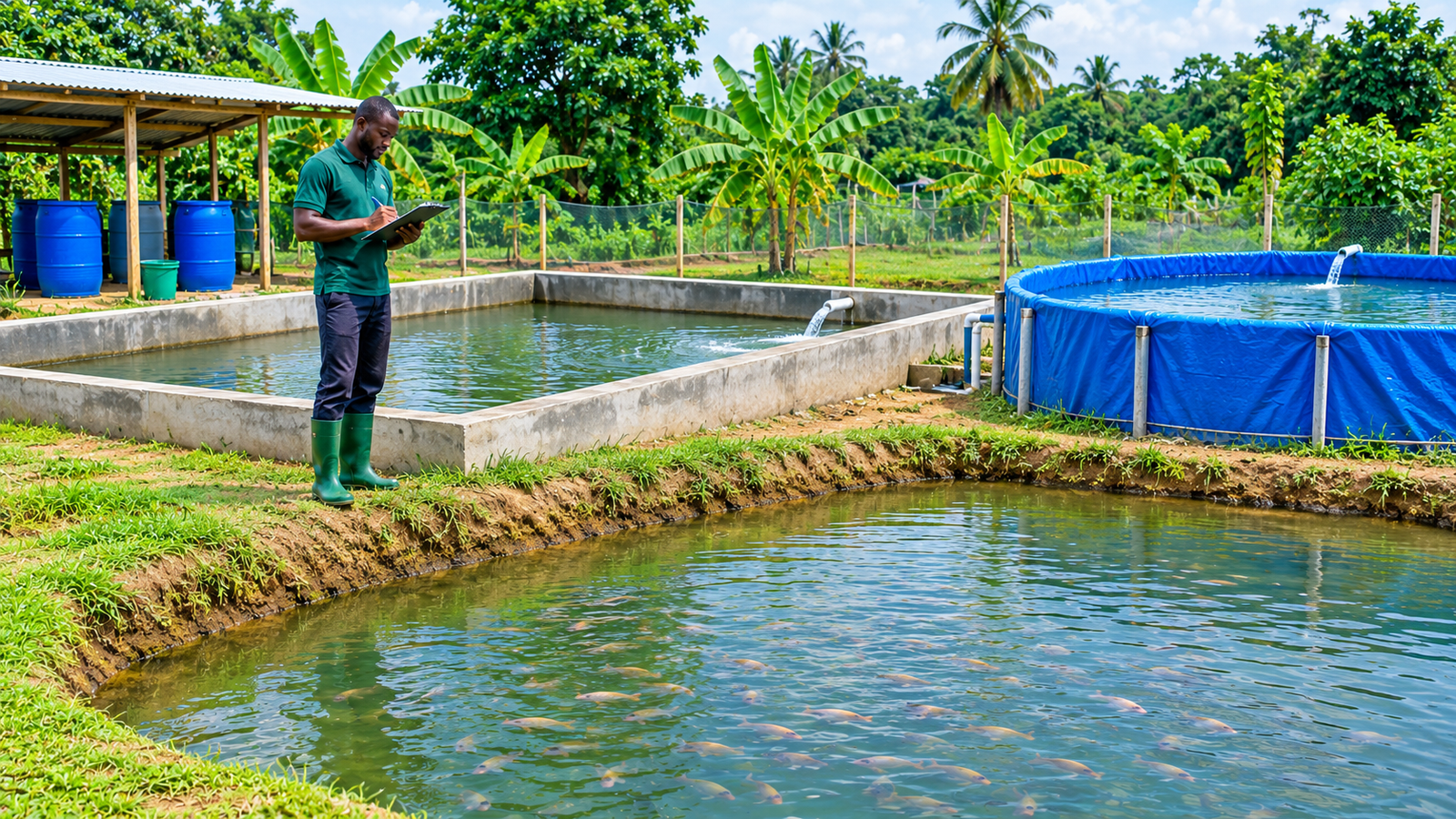
Earthen ponds
Earthen ponds are excavated water bodies designed for fish production. They can be suitable where the soil retains water, the site has appropriate drainage and a reliable water source is available.
Before constructing an earthen pond, assess:
- Soil composition and its ability to retain water.
- Ground slope and the direction of natural drainage.
- Flooding risks during heavy rainfall.
- Water availability throughout the production cycle.
- Access for harvesting, feeding and transportation.
Poor site selection can result in water leakage, flooding, difficult harvesting and expensive repairs.
Concrete ponds
Concrete ponds provide a more structured production environment. They may be useful where land is limited or where farmers want a more controlled pond layout.
Their design should provide suitable water inlets, outlets, drainage and access for cleaning. Poorly designed concrete ponds can create water circulation problems and make waste removal difficult.
Plastic and tarpaulin tanks
Tarpaulin and other lined tanks can provide a compact option for farmers who cannot construct large earthen ponds. They are also used in some intensive production arrangements.
These systems require dependable water management, careful stocking decisions and suitable equipment. Their relatively small water volume can make conditions change quickly when management is poor.
Floating cage systems
Cage aquaculture involves raising fish inside enclosed net structures placed in suitable natural water bodies. It can make use of existing lakes or reservoirs, but it is not a system that farmers can establish anywhere.
Cage farming requires permission from the relevant authorities, suitable water conditions, environmental assessment, secure equipment and ongoing monitoring. Farmers must also consider the effects of waste and escaped fish on the surrounding ecosystem.
4. Selecting a Suitable Fish Farm Location
A good location can make fish farming easier to manage and less expensive to operate. A poor location can create problems that remain throughout the life of the business.
Water availability
Water is the foundation of aquaculture. Before construction, determine where the water will come from and whether it will remain available throughout the year.
Possible sources include boreholes, wells, rivers, streams and other approved water sources. Each source should be assessed for reliability, quality, contamination risks and suitability for the intended species.
Soil and drainage
For earthen ponds, soil testing is important because not all soils retain water effectively. Drainage should also be considered so ponds can be emptied and cleaned without causing erosion or flooding neighbouring properties.
Road access and market distance
Fish is a perishable product. A farm located far from buyers may face additional transportation, preservation and handling costs.
Consider the distance to:
- Fish markets and wholesalers.
- Restaurants, hotels and food businesses.
- Fingerling suppliers.
- Feed suppliers.
- Ice, cold storage and processing facilities.
Security and expansion
The location should allow the farmer to protect fish, equipment and water infrastructure. It is also worth considering whether there is room for additional ponds, storage facilities or processing areas if the business expands.
5. Designing and Constructing Fish Ponds
Pond construction should be based on the species, production system, site conditions and expected harvest volume. There is no single pond design that is appropriate for every farm.
An experienced aquaculture technician or engineer can help determine suitable dimensions, water depth, embankment design, inlet arrangements and drainage requirements.
Important pond design features
- Water inlet: A controlled inlet allows the farmer to introduce water without causing unnecessary disturbance.
- Water outlet: The outlet should support controlled water removal and help prevent fish from escaping.
- Drainage: The pond should be designed so it can be drained when required.
- Embankments: Pond walls must be stable enough to withstand the water pressure and local weather conditions.
- Protection: Appropriate screening and barriers can reduce the risk of predators and unwanted fish entering the pond.
- Access: Farmers need safe access for feeding, monitoring, sampling and harvesting.
6. Understanding Water Quality
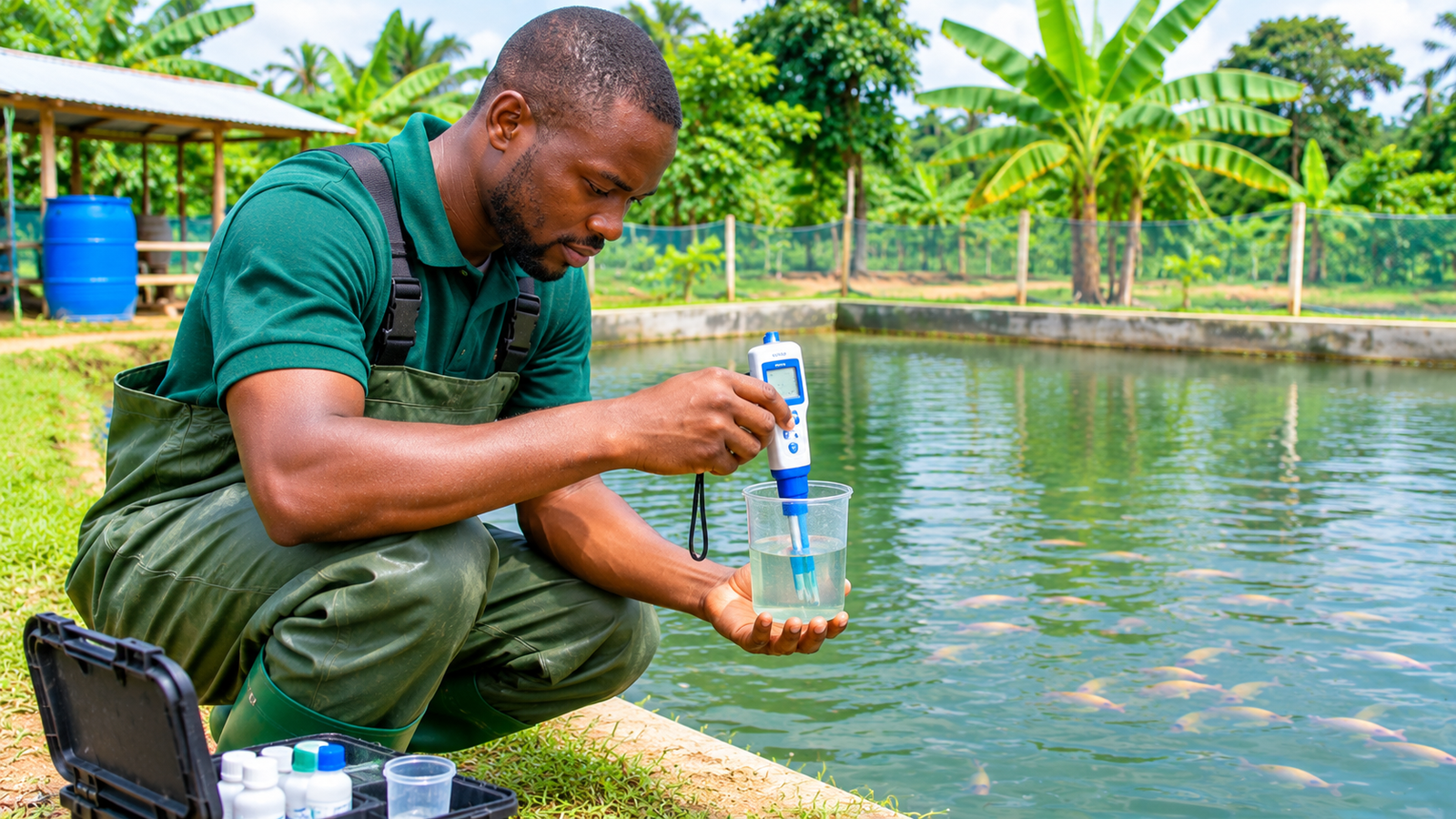
Water quality is one of the most important factors in fish production. Fish depend on their aquatic environment for oxygen, waste removal and normal biological functions.
Water that looks clean is not necessarily suitable for fish. Some harmful conditions are not visible without testing.
Important water quality factors
Dissolved oxygen
Fish need dissolved oxygen for respiration. Low oxygen levels can cause stress, poor feeding, slow growth and fish deaths. Oxygen conditions may become particularly challenging during hot weather, cloudy periods or when organic waste accumulates.
Farmers should understand the oxygen requirements of their species and production system. Aeration may be necessary, especially in intensive systems.
Water temperature
Temperature affects fish metabolism, feeding and growth. Each species has a suitable temperature range, and sudden changes can create stress.
Farmers should monitor temperature and avoid introducing fish into water with conditions that differ sharply from the water in which they were transported.
pH level
Water pH measures how acidic or alkaline the water is. Conditions outside the suitable range for a particular species can affect fish health and the toxicity of certain substances.
Ammonia and other waste products
Uneaten feed, fish waste and decomposing organic matter can contribute to harmful water conditions. Ammonia is particularly important because its toxicity depends partly on water pH and temperature.
Regular testing and sensible feeding practices help farmers detect problems before they become severe.
Water testing routine
- Test the water before stocking fish.
- Monitor temperature and other important parameters regularly.
- Increase monitoring when fish behaviour changes or feeding declines.
- Record test results so changes can be identified over time.
- Seek technical guidance when readings fall outside species-specific recommendations.
7. Buying Healthy Fingerlings
Fingerlings are young fish purchased for stocking. Their quality can influence survival, growth consistency and the overall performance of a production cycle.
Buying cheap fingerlings from an unreliable supplier can create expensive problems later. Fish may arrive stressed, weak, diseased or poorly sorted.
What to check before buying
- Purchase from a reputable hatchery or established supplier.
- Ask about the species and the source of the stock.
- Check whether fish are active and appear healthy.
- Look for reasonably consistent sizes where the production plan requires uniform stocking.
- Ask about recent health problems and any relevant treatment history.
- Confirm that transportation arrangements will minimise stress.
Acclimatising fish after transportation
Fish can experience stress during transportation because of changes in temperature, oxygen and water conditions. Introducing them directly into a pond without suitable acclimatisation can increase the risk of losses.
Follow the supplier's and aquaculture technician's guidance on acclimatisation. Avoid sudden changes in water conditions, and monitor fish closely after stocking.
8. Stocking Density: Why More Fish Does Not Always Mean More Profit
Stocking density refers to the number or biomass of fish kept within a given water volume or pond area. It is a major production decision.
Some new farmers assume that stocking more fish will automatically produce a larger harvest. In reality, excessive stocking can increase competition for oxygen, reduce water quality, increase stress and make disease problems harder to manage.
Suitable stocking density depends on:
- Fish species and size.
- Pond or tank design.
- Water exchange and aeration capacity.
- Feeding and waste management practices.
- Available equipment and labour.
- The farmer's ability to monitor the system.
9. Feeding Fish for Healthy Growth
Feed is one of the major operating costs in many fish farms. Feeding decisions affect growth, production time, water quality and the amount of money required to complete a production cycle.
Choose appropriate fish feed
Fish require a suitable balance of nutrients, including protein, energy, fats, vitamins and minerals. The appropriate feed depends on species, age, size and production conditions.
Buy feed from reliable suppliers and check that it is intended for the species and stage of growth being raised.
Feed according to fish size and biomass
Feeding requirements change as fish grow. Farmers should estimate fish biomass through periodic sampling and use suitable feeding guidance to determine daily feed requirements.
A fixed feeding quantity that is appropriate for small fish may become inadequate or excessive as the population changes.
Avoid overfeeding
Uneaten feed decomposes and contributes to water pollution. Excessive feeding also wastes money and can create conditions that stress fish.
Observe feeding behaviour and adjust the feeding programme according to fish size, appetite, water conditions and professional guidance.
Store feed properly
- Keep feed dry and protected from rain.
- Store bags away from direct contact with the floor.
- Protect feed from rodents, insects and other pests.
- Use older suitable stock before newer stock.
- Do not feed fish mouldy or visibly spoiled feed.
10. Fish Health, Biosecurity and Disease Prevention
Disease can cause significant losses in aquaculture. However, not every fish health problem is caused by an infectious disease. Poor water quality, unsuitable feeding, overcrowding, injuries and transportation stress can also affect fish health.
Recognising possible warning signs
Watch for changes such as:
- Fish refusing food or feeding less than usual.
- Unusual swimming patterns or loss of balance.
- Fish gathering near water inlets or the surface.
- Visible wounds, abnormal colour or unusual growths.
- Unexpected mortality.
These signs do not identify a specific disease by themselves. Check water conditions immediately and seek help from a qualified aquaculture professional or aquatic animal health specialist.
Practical biosecurity measures
- Buy fish from reliable suppliers.
- Do not introduce new fish without considering appropriate quarantine procedures.
- Clean and maintain nets, buckets and other equipment.
- Prevent visitors and equipment from moving freely between production units.
- Remove dead fish promptly and dispose of them safely according to local guidance.
- Monitor water quality and avoid unnecessary handling.
- Keep records of unusual symptoms, treatments and mortality.
11. Managing Fish Farm Operations
A fish farm is a production business, not simply a pond containing fish. Successful operations require consistent daily management and accurate information about what is happening across each production cycle.
Farmers should establish routines for:
- Checking fish behaviour and feeding response.
- Inspecting pond water and equipment.
- Recording feed consumption.
- Monitoring fish growth through sampling.
- Recording mortality and unusual events.
- Tracking purchases, labour and operating expenses.
- Planning harvests and communicating with buyers.
Why production records matter
Without reliable records, farmers may struggle to determine how much they have spent on a production cycle, how much feed was used, whether fish losses are increasing or whether one pond is performing better than another.
Useful records include stocking dates, initial quantities, supplier details, feed purchases, feeding activities, mortality, sampling results, treatments, operating expenses and sales.
These records help farmers compare production cycles and make better decisions when planning future stocking.
12. Harvesting and Selling Your Fish
Harvesting should be planned around fish size, buyer requirements, market demand and the condition of the production system.
Know your target market before harvesting
Buyers may prefer different fish sizes and product forms. A restaurant may have different requirements from a household retailer, wholesaler or smoked-fish processor.
Speak with potential buyers before the harvest period and establish:
- Preferred fish species.
- Preferred selling size.
- Expected quantities.
- Packaging and delivery requirements.
- Payment arrangements.
- Seasonal demand patterns.
Handle harvested fish carefully
Fish quality can deteriorate quickly after harvesting if handling and temperature control are poor. Prepare suitable containers, clean handling equipment and an appropriate preservation or delivery arrangement before harvesting begins.
Depending on the market and local regulations, fish may be sold fresh, chilled, frozen, smoked or processed.
Plan harvesting in stages where appropriate
Some production systems allow partial harvesting, while others are better suited to complete harvesting. The approach should be determined by species, pond design, market requirements and the effect harvesting has on the remaining fish.
13. Calculating the Cost of Starting a Fish Farm
There is no universal cost for starting a fish farm. Investment depends on the country, location, production system, construction materials, pond size, water infrastructure, equipment and production target.
A responsible business plan should separate initial investment from recurring operating expenses.
Initial investment costs
- Land purchase or preparation.
- Site assessment and pond design.
- Excavation or construction.
- Water supply and drainage infrastructure.
- Pumps, aerators and other necessary equipment.
- Storage and handling facilities.
- Security and access improvements.
Recurring operating costs
- Fingerlings.
- Fish feed.
- Electricity or fuel.
- Water management and maintenance.
- Labour.
- Health monitoring and professional services.
- Transportation, preservation and marketing.
- Equipment repairs and replacements.
How to estimate whether the business can make money
A useful financial projection should estimate the number of fish stocked, expected survival, expected harvest size, selling price and total production costs.
For example, the basic calculation for estimated saleable harvest is:
Number of fish stocked × expected survival rate = estimated number of fish harvested.
Estimated harvest weight
Estimated number harvested × average harvest weight = estimated total harvest weight.
Estimated sales revenue can then be calculated by multiplying the expected saleable weight by the realistic selling price per unit of weight.
Subtract all relevant costs to estimate the production margin. Remember to account for infrastructure depreciation, financing costs, unexpected losses and the value of your own labour when preparing a serious business plan.
14. Common Mistakes New Fish Farmers Should Avoid
Many fish farming problems can be reduced through better planning and consistent monitoring. Some common mistakes include:
- Constructing ponds before checking the site: Poor soil, drainage or flood exposure can lead to expensive problems.
- Choosing a species without market research: Producing fish that buyers do not want in the required size can delay sales.
- Buying poor-quality fingerlings: Unreliable stock can undermine an entire production cycle.
- Stocking too many fish: Overstocking can exceed the water system's capacity.
- Ignoring water quality: Problems may develop before they become visually obvious.
- Feeding without monitoring: Excessive or inadequate feeding can damage production performance.
- Ignoring biosecurity: Poor hygiene and uncontrolled movement of fish or equipment can introduce health risks.
- Failing to calculate operating costs: Sales revenue alone does not reveal whether the farm is profitable.
- Waiting until harvest to find buyers: A market plan should exist before fish reach selling size.
- Keeping no reliable records: Poor records make it difficult to identify problems and improve future cycles.
15. A Practical Checklist Before Starting Your Fish Farm
Before spending money on construction or purchasing fish, work through the following checklist.
- Identify the fish species that local buyers prefer.
- Research the market price and preferred selling size.
- Identify reputable fingerling suppliers.
- Confirm that water is available throughout the production cycle.
- Test water and assess its suitability.
- Assess soil, drainage and flooding risks.
- Choose a production system suited to your resources.
- Obtain a suitable pond or tank design.
- Calculate construction and operating costs.
- Plan stocking, feeding and water monitoring.
- Arrange access to technical and fish-health support.
- Identify buyers and plan harvesting logistics.
- Prepare a record-keeping system for the business.
16. Using Digital Tools to Manage a Fish Farming Business
As an aquaculture operation grows, managing information with notebooks, loose receipts and memory becomes increasingly difficult. This is especially true when several ponds, production cycles, workers and suppliers are involved.
Digital farm management tools can help organise operational information, purchases, sales, stock and production activities in one place.
For farmers managing multiple agricultural activities, a platform such as LazAgro can support broader farm organisation through farm and batch management, activity records, purchases, sales and inventory tracking.
LazAgro is designed with offline-first operation in mind. This is useful in farming environments where internet connectivity is unreliable: records can be saved on the device and synchronised when connectivity becomes available again.
Digital records do not replace water testing, technical knowledge or daily observation. They help farmers organise the information needed to manage their operations and review business performance.
17. Is Fish Farming a Good Business to Start in Africa?
Fish farming can be a worthwhile agricultural business where the farmer has access to suitable water, reliable fingerlings, appropriate feed, technical support and a dependable market.
However, aquaculture is not a guaranteed source of quick income. Fish require continuous care, and production costs can accumulate before the first harvest. Water quality failures, disease, feed price increases and poor market planning can affect the financial outcome.
New entrants should consider starting with a manageable pilot operation, learning the production process and keeping detailed records before expanding.
A carefully managed small operation can provide valuable experience and reveal the real costs and market opportunities in a particular location. Expansion should follow evidence of reliable production and sales, not assumptions.
Frequently Asked Questions About Fish Farming
1. Which fish is best for farming in Africa?
Catfish and tilapia are important aquaculture options in many African markets. The right choice depends on local consumer demand, water conditions, fingerling availability, production expertise and the farming system.
2. Can I start fish farming with a small amount of land?
Yes. Some farmers use compact concrete ponds or lined tanks where space is limited. However, a small footprint does not eliminate the need for suitable water supply, drainage, oxygen management and technical supervision.
3. Is fish farming possible without a river or stream?
It may be possible using a reliable borehole, well or another suitable water source. The source must provide adequate water of suitable quality, and the farm must have a responsible water management plan.
4. How much does it cost to start fish farming?
Costs vary significantly depending on location, construction, production capacity, equipment and water infrastructure. Prepare a site-specific budget rather than relying on a general online estimate.
5. What is the most important factor in fish farming?
There is no single factor that guarantees success, but suitable water quality is fundamental. Species selection, healthy fingerlings, feeding, stocking decisions, fish health and market planning are also essential.
6. Can fish farming be done in tanks instead of ponds?
Yes. Fish can be raised in suitable concrete, plastic or lined tanks. Tank farming requires effective water management and may need additional equipment, depending on stocking intensity and the production design.
7. How can I prevent fish from dying in my pond?
Monitor water conditions, avoid excessive stocking, buy healthy fingerlings, feed appropriately and maintain good biosecurity. If fish show unusual behaviour or mortality, investigate water quality immediately and seek qualified technical assistance.
8. Is fish farming profitable in Cameroon?
Fish farming can offer business opportunities in Cameroon, but profitability depends on local demand, feed and fingerling prices, water availability, production performance, transportation and selling prices. Conduct market research in your intended selling area before investing.
9. Should I start with catfish or tilapia?
Compare local demand, the cost and availability of quality fingerlings, technical support and the suitability of your water and production system. Speak with established farmers and potential buyers before deciding.
10. Why should fish farmers keep production records?
Records help track stocking, feeding, mortality, purchases, operating costs and sales. They also make it easier to compare production cycles, identify recurring problems and estimate the financial performance of the business.
Manage Your Farm With Better Information
Whether you manage one farm or several agricultural operations, organised records can help you understand costs, monitor activities and make better business decisions.
Discover LazAgroFinal Thoughts
Fish farming offers opportunities for African farmers and agricultural entrepreneurs, but successful production requires preparation, technical knowledge and consistent management.
Start by understanding your market, selecting a suitable species, assessing your water source and choosing a production system you can manage properly. Build a realistic budget, obtain healthy fingerlings and establish routines for feeding, water monitoring and fish health.
Most importantly, learn from each production cycle. Monitor results, understand your costs and make improvements before expanding. A well-planned fish farm is built through informed decisions and disciplined management, not simply by increasing the number of fish in a pond.