 LazAgro
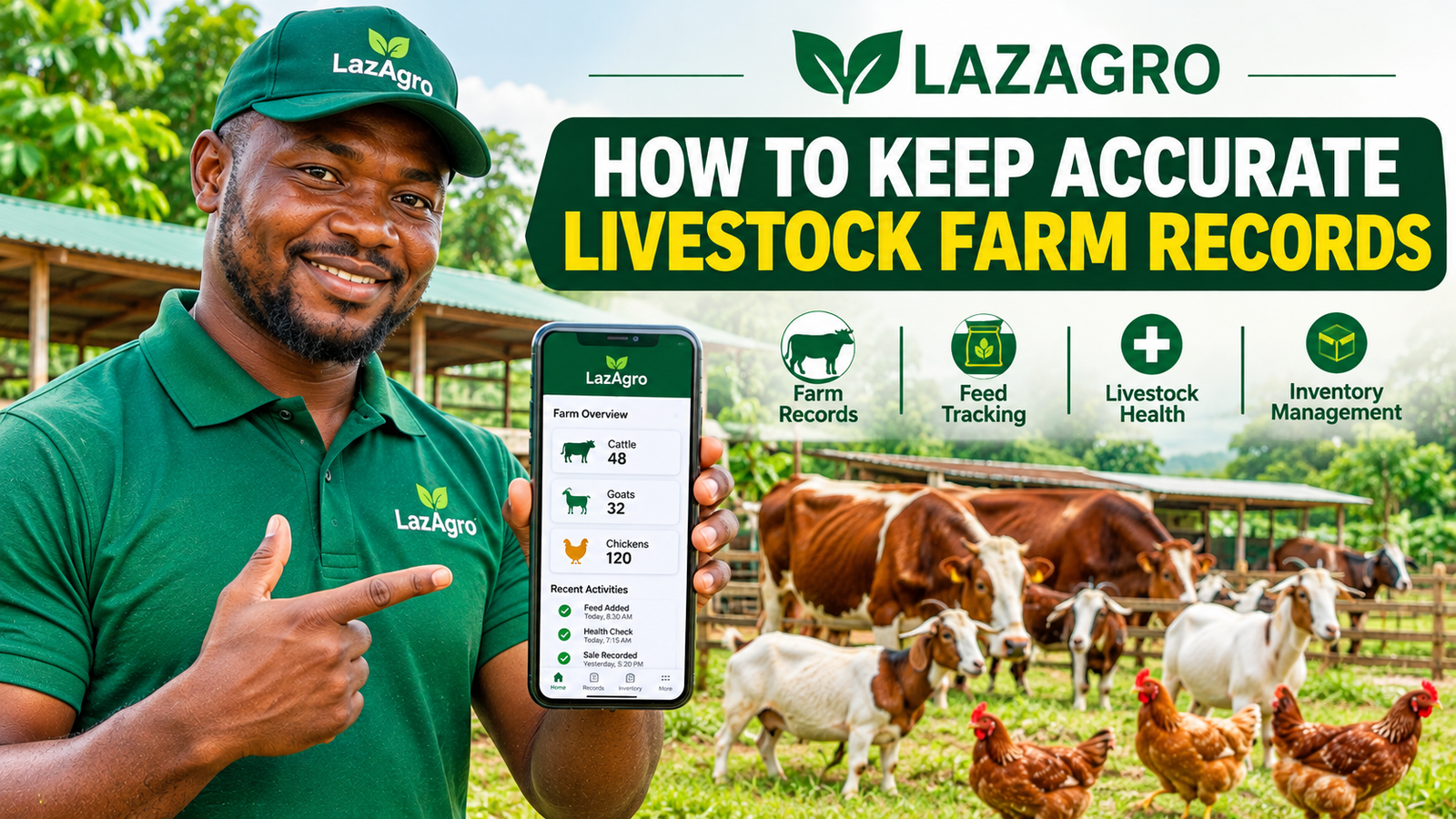
Running a livestock farm involves much more than feeding animals and making sure they are healthy. Every day, farmers make decisions about feed purchases, medication, animal movements, sales, expenses, and production. Without proper records, it becomes difficult to know whether a farm is growing, losing money, or operating efficiently.
Whether you manage a small poultry farm, a cattle operation, a goat farm, or several livestock production units, keeping accurate records can make a significant difference.
The good news is that farm record keeping does not have to be complicated. With a consistent routine and the right tools, you can understand what is happening on your farm and make better decisions.
- Which livestock farm records you should maintain.
- How to track feed, animal health, mortality, purchases, and sales.
- Why accurate farm records improve profitability.
- How to avoid losing important farm information.
- How digital farm management tools can simplify the process.
1. Start by Recording Your Livestock Numbers
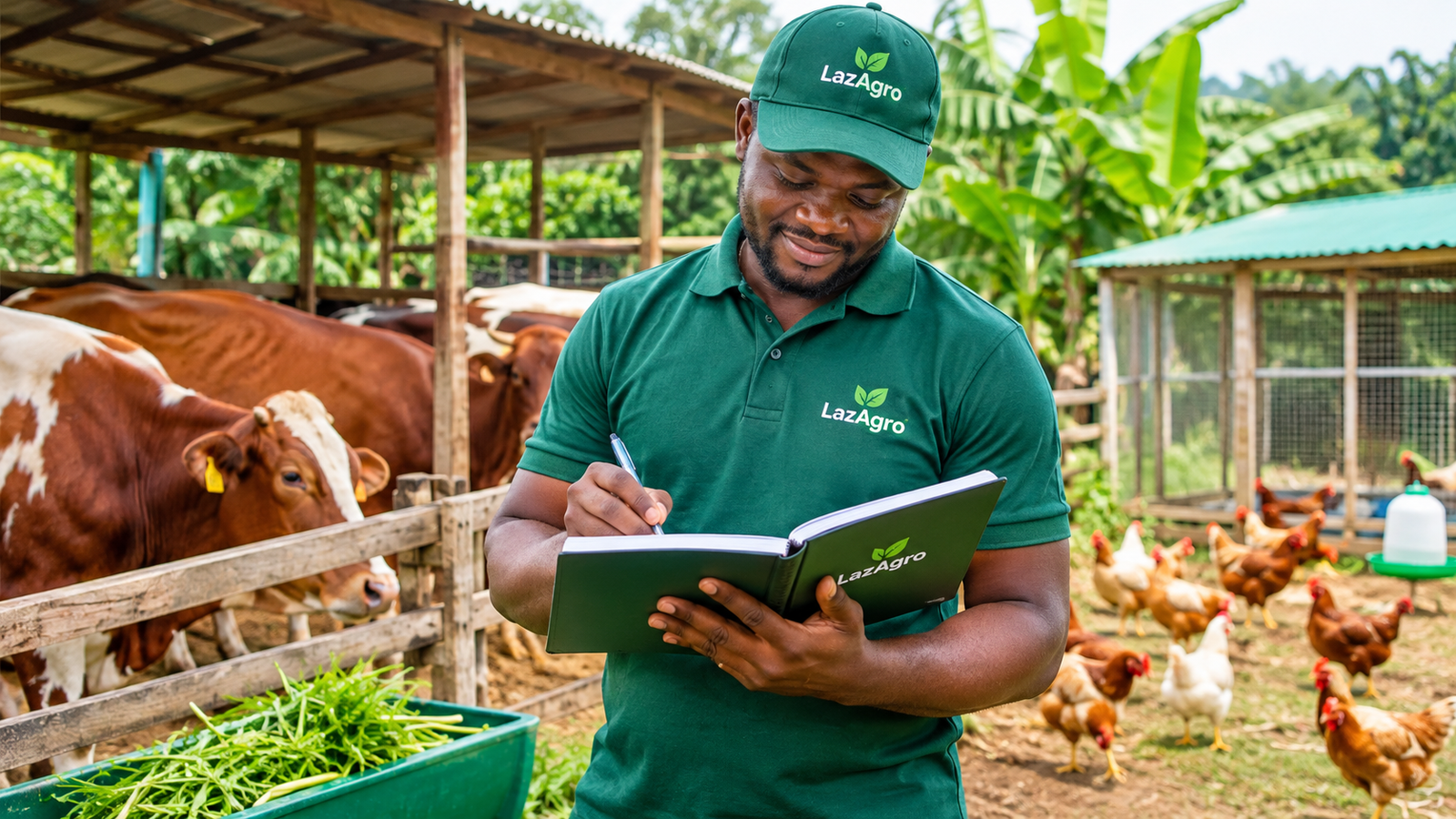
One of the most important things to know about your farm is how many animals you currently have. You cannot properly measure production, mortality, or growth if you do not know your starting numbers.
For every livestock batch, record:
- The type of animal, such as broilers, layers, goats, sheep, or cattle.
- The date the batch was started or acquired.
- The initial number of animals.
- The source or supplier.
- The current number of animals.
- Any additions, transfers, or losses.
For example, if you start a broiler batch with 500 chicks, you should be able to determine how many remain after two weeks, how many have died, and how many have been sold or transferred.
Recording these changes consistently helps you identify unusual losses and understand how each production cycle performs.
2. Keep Track of Feed Consumption and Expenses
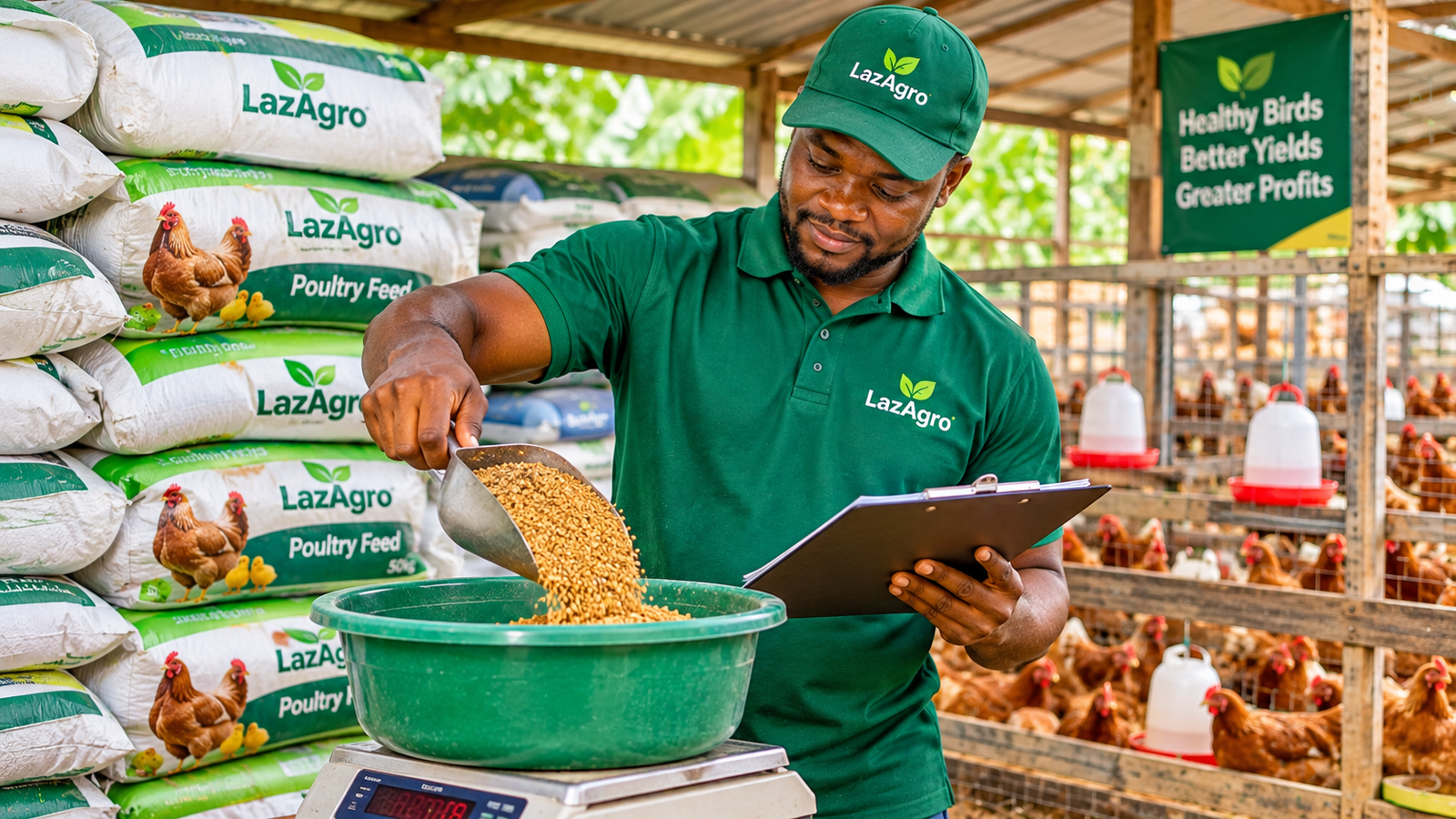
Feed is a major operating expense in many livestock businesses. Yet some farmers only record how much feed they purchase without tracking how much is actually used.
These are two different things. Knowing your purchases helps you understand spending, while monitoring consumption helps you understand how efficiently your farm uses its resources.
Record information such as:
- Feed type and quantity purchased.
- Purchase date and supplier.
- Amount issued to each batch.
- Daily or weekly feed consumption, where practical.
- Remaining feed stock.
- Total amount spent on feed.
These records can help you identify waste, monitor stock levels, compare feed costs between production cycles, and plan future purchases.
Do not wait until the feed store is empty before recording stock usage. Update your records whenever feed is received or issued.
3. Document Animal Health and Treatments
Health records are essential for understanding the medical history of your livestock. When treatments are not documented, it becomes difficult to know which animals or batches received medication, when treatment was administered, and whether follow-up action is needed.
Your health records should include:
- Date of treatment.
- Animal or batch receiving treatment.
- Reason for treatment.
- Medication or vaccine administered.
- Dosage and quantity, as directed by a qualified animal health professional.
- Name of the person responsible for administering it.
- Follow-up observations.
Keep vaccination and treatment records organized. They can be particularly useful when consulting a veterinarian, reviewing recurring health problems, or preparing animals for sale.
4. Record Mortality and Animal Losses
Animal mortality is an important indicator of farm performance. However, simply knowing that some animals died is not enough. You should also record when the losses occurred and which batch was affected.
For every mortality event, document:
- Date of the loss.
- Number of animals lost.
- Animal type and affected batch.
- Suspected cause, if known.
- Action taken.
Regularly reviewing mortality records can help you identify patterns. For instance, if losses repeatedly increase during a particular stage of production, you may need to investigate housing, sanitation, nutrition, disease prevention, or other management conditions.
Do not guess causes of death when they are unknown. Record observations and seek appropriate veterinary advice where necessary.
5. Track Every Purchase and Sale
A farm can appear busy while still making very little profit. This often happens when purchases, sales, and operating expenses are not properly recorded.
Every purchase should have a record showing what was purchased, the quantity, date, supplier, and amount paid.
For sales, record the product or animals sold, quantity, selling price, date, and customer information where appropriate.
Common transactions to monitor include:
- Livestock purchases.
- Feed and veterinary supplies.
- Equipment and farm materials.
- Animal sales.
- Eggs, milk, and other farm produce sales.
- Transportation and other operating expenses.
These records give you a clearer picture of where your money goes and where your farm generates revenue. They also make it easier to prepare financial reports and compare production cycles.
6. Monitor Inventory and Stock Levels
Running out of essential supplies can disrupt farm operations. Overstocking can also tie up money that could be used elsewhere.
Maintain records of items such as:
- Animal feed.
- Veterinary products and approved treatments.
- Farm equipment.
- Cleaning and sanitation materials.
- Packaging and other production supplies.
For each item, track quantities received, quantities used, and the remaining balance. Set practical reorder levels for essential supplies so that you have time to restock before they run out.
7. Organize Your Farm Records by Batch
When a farm has multiple flocks, herds, or production cycles, mixing all records together creates confusion.
Imagine managing three broiler batches started at different times. Each batch may have different feed consumption, health treatments, mortality figures, and selling dates.
If you combine all their information into one general notebook, identifying which batch performed best becomes difficult.
Instead, assign each batch a name or reference and keep its records organized separately. This makes it easier to compare performance, monitor expenses, and identify problems.
8. Use Digital Tools to Simplify Farm Record Keeping
Paper notebooks can be useful, especially for farmers who are just starting. However, as operations grow, maintaining several notebooks and manually calculating information can become time-consuming.
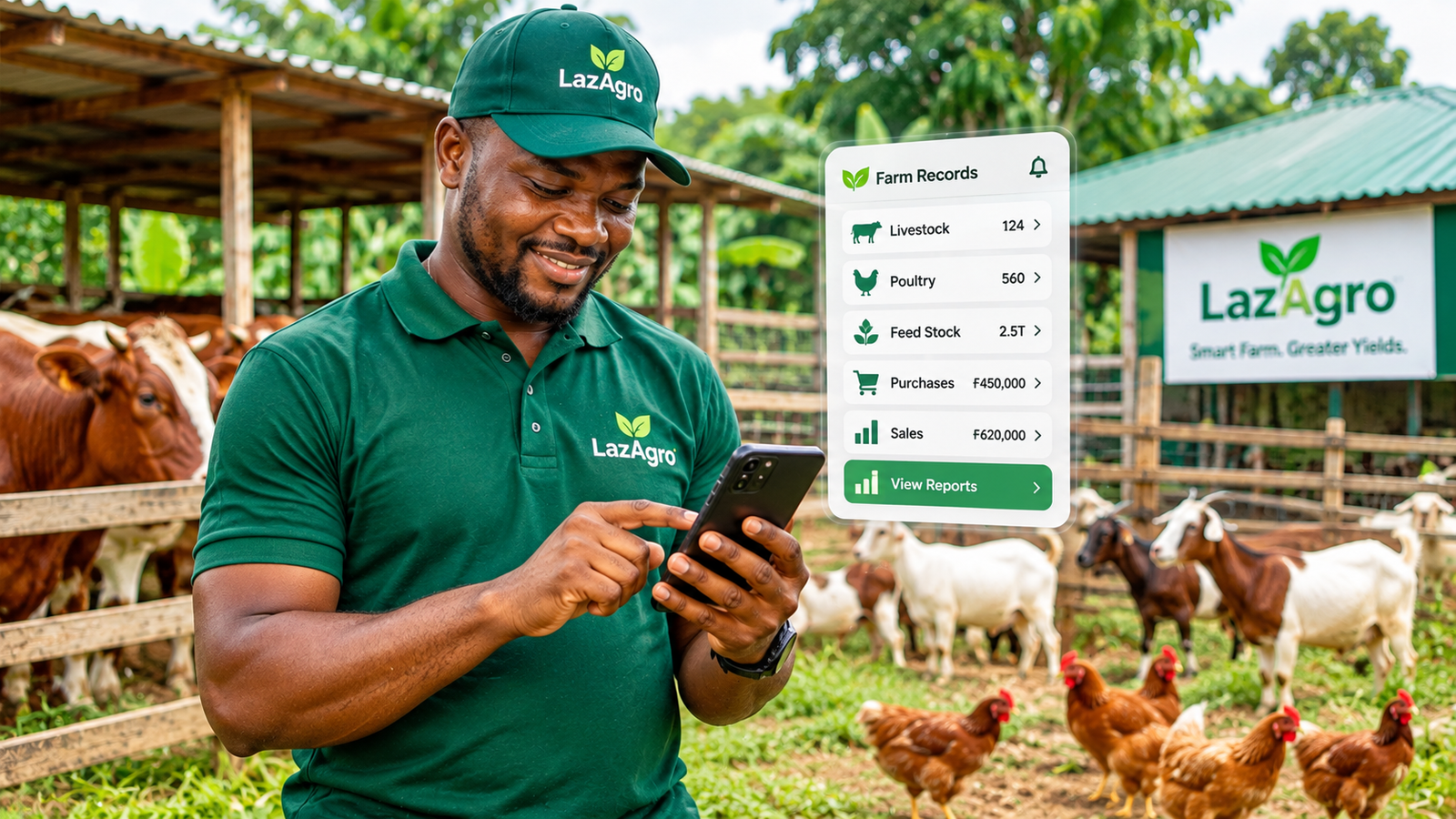
Digital farm management tools offer a more organized way to record and retrieve information. Depending on the features available, farmers can manage multiple farms, organize production batches, record transactions, monitor inventory, and review their farm activities from one application.
For farmers working in areas with unreliable internet connectivity, offline functionality is particularly important. A farm management application that saves supported records locally and synchronizes them when connectivity returns can help reduce interruptions during fieldwork.
This is one of the reasons we built LazAgro.
9. How LazAgro Helps Farmers Manage Farm Records
LazAgro is an offline-first farm management application designed for individual farmers and small-to-medium farm teams.
Instead of depending on a constant internet connection, LazAgro allows supported farm records to be saved on your phone first. When you reconnect to the internet, pending records can synchronize automatically.
With LazAgro, you can:
- Manage multiple farms: Organize different farms under your organization.
- Track livestock batches: Manage flocks, herds, and production cycles.
- Record feed and health activities: Keep track of feed usage and health treatments.
- Monitor mortality: Record animal losses and maintain batch activity history.
- Manage purchases and sales: Keep organized records of farm transactions.
- Track inventory: Monitor stock levels and farm supplies.
- Work offline: Save supported records on your device and synchronize when you are back online.
Your Farm Deserves Better Records
Spend less time searching through notebooks and more time understanding and managing your farm. Keep your farm activities organized with LazAgro, even when your internet connection is unreliable.
Discover LazAgro →10. Make Farm Record Keeping a Daily Habit
The biggest challenge with farm records is not necessarily knowing what to record. It is remembering to record it consistently.
Develop a simple daily routine:
- Record new purchases and supplies received.
- Update feed issued to livestock batches.
- Document health treatments and observations.
- Record mortality and other significant events.
- Update sales and other transactions.
- Review stock levels and outstanding activities.
- Check that digital records have synchronized when internet access is available.
Even a few minutes of organized record keeping each day can save hours of searching and correcting information later.
Frequently Asked Questions About Livestock Farm Records
What records should every livestock farmer keep?
At a minimum, farmers should maintain livestock inventory, batch records, feed consumption, animal health and treatment history, mortality, purchases, sales, and stock records.
Why are farm records important?
Farm records help farmers monitor production, control expenses, identify recurring problems, manage inventory, understand financial performance, and make informed operational decisions.
Can I manage a livestock farm without internet?
Yes. You can maintain paper records or use an application with offline functionality. LazAgro is designed to let users save supported farm records on their devices and synchronize pending information when internet connectivity returns.
Is a notebook enough for managing a livestock farm?
A notebook can work for a small operation. However, as the farm grows and records increase, a digital management system can make organizing, searching, and reviewing information easier.
How often should farm records be updated?
Important activities should be recorded as they happen or as soon as practical. Regular updates make records more accurate and reduce the risk of forgotten information.
Final Thoughts
Good livestock management starts with knowing what is happening on your farm. You need to understand your animal numbers, feed consumption, health activities, mortality, expenses, sales, and available stock.
Keeping these records does not have to be difficult. Start with the essential information, update it consistently, and use tools that make the process easier as your farm grows.
Whether you manage one small farm or coordinate several production units, accurate records can help you make more informed decisions.
LazAgro — Never lose field data again.