 LazAgro
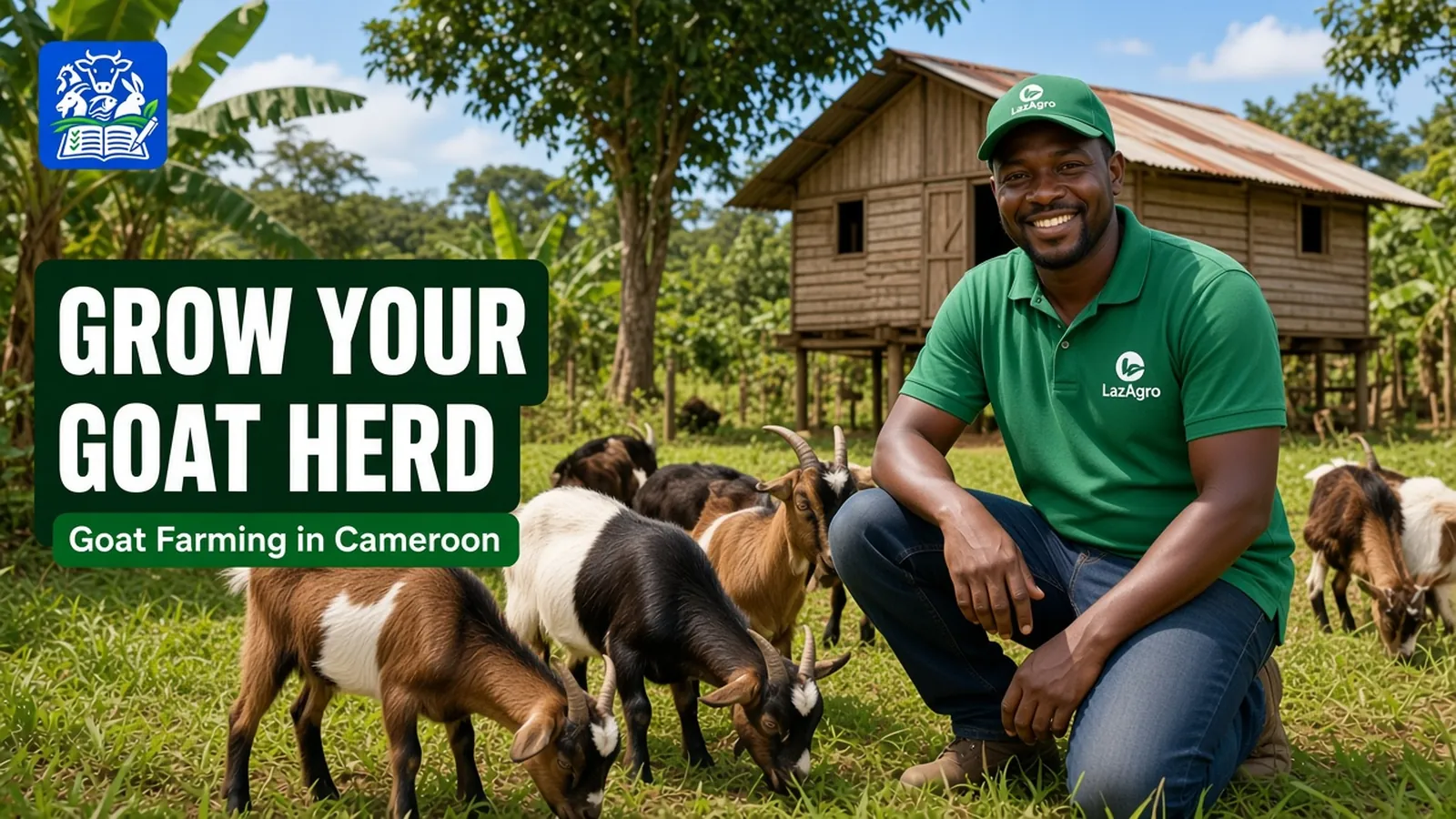
Almost every village in Cameroon has goats. They wander the compounds of the South West, browse the hillsides of the North West, and move with herders across the plains of the North and Far North. Yet very few of those goats are farmed with a plan. Goat farming in Cameroon done deliberately, with good housing, feeding and health care, can turn an animal that "takes care of itself" into a reliable source of income.
Goats are often called the smallholder's savings account. They reproduce quickly, eat browse and crop residues that other animals ignore, and can be sold whenever cash is needed, for school fees, hospital bills or a celebration. Demand peaks around Christmas, New Year, Tabaski and other festivals, and the market for live goats and goat meat runs all year.
This guide covers breed choice for each part of the country, housing, feeding, breeding and kidding, the diseases that kill most goats (PPR and worms), and how to sell well.
1. Choosing goat breeds for your zone
| Breed type | Where it fits | Strengths | Limits |
|---|---|---|---|
| West African Dwarf (WAD) | Humid south: Centre, South, East, Littoral, South West, parts of the West | Hardy in humid forest, tolerant of trypanosomes, often twins, good meat | Small body size, so lower weight per animal |
| Sahelian and northern goats (including Kirdi types) | North, Far North, Adamawa | Taller, larger, suited to dry savannah and long walking | Do poorly in the very humid south |
| Boer and other exotic crosses | Commercial farms with good feed and care | Larger, faster-growing kids | Need better feed and health management; expensive |
For most beginners in southern Cameroon, the West African Dwarf goat is the safest start. It survives humid conditions that kill many larger breeds. Crossing with larger bucks can improve size, but only if you can feed and manage the crosses properly.
Choosing your first animals
- Buy from known farms, not unknown market sellers.
- Bright eyes, clean nose, smooth coat, no cough or diarrhoea.
- Pink inner eyelids, not pale (pale can mean worm anaemia).
- Good teeth for age and a sound udder on does.
- Ask for vaccination records, especially PPR.
- An unrelated buck for your does.
Quarantine all new goats for at least two to three weeks before mixing them with your herd. Many PPR outbreaks begin with a new animal bought at the market.
2. Housing goats: raised, dry and airy
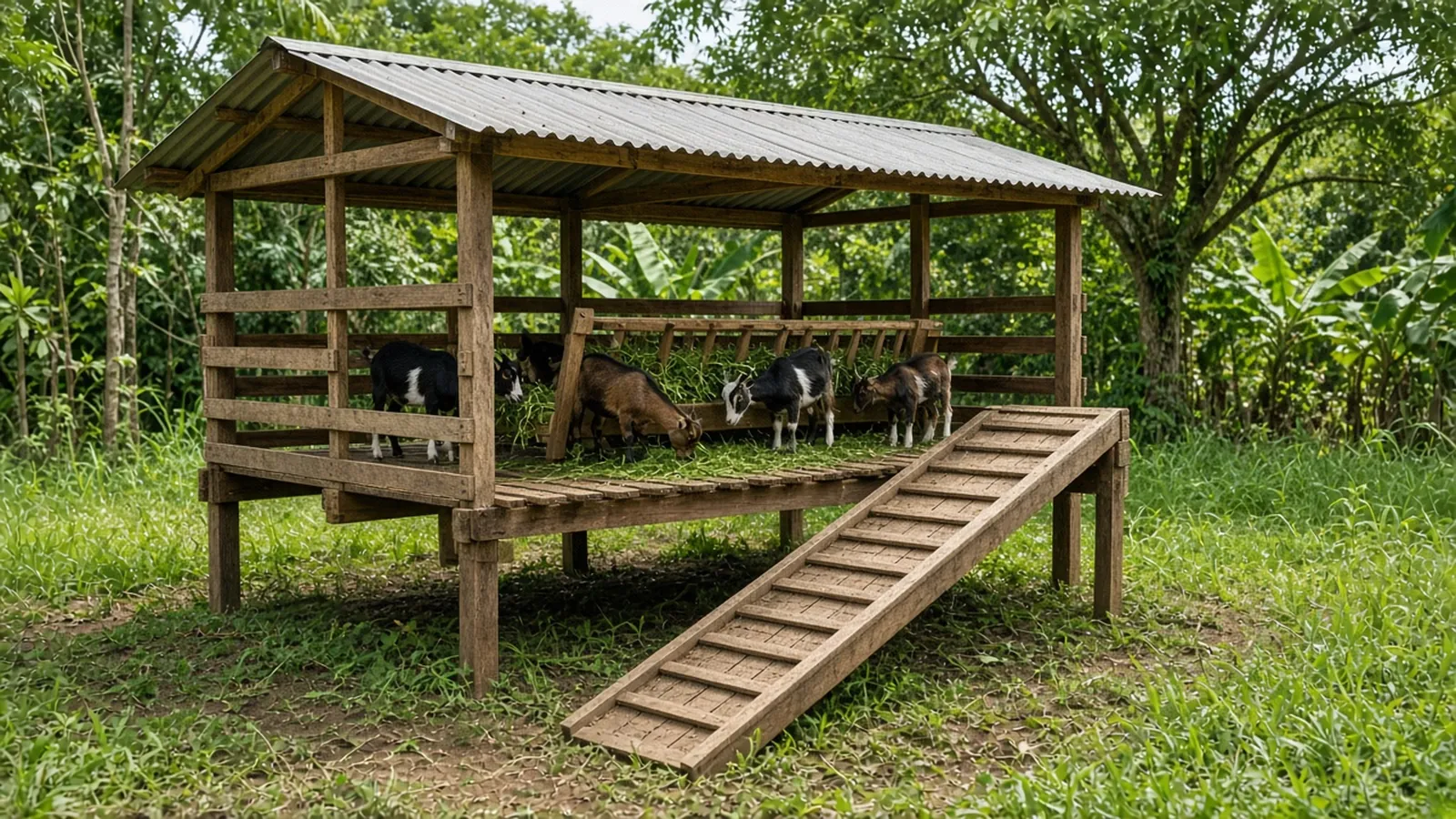
Goats hate wet ground. Damp, muddy housing leads to pneumonia, foot rot and worms. In the humid south and highlands, a raised goat house is one of the best investments you can make.
Design features
- Raised slatted floor about 60 cm to 1 m above ground, with gaps that let droppings fall through but do not trap hooves.
- Roof with overhangs to keep driving rain out.
- Walls open above waist height for airflow, with some protection on the windward side.
- Separate pens for the buck, pregnant and kidding does, kids, and sick animals.
- Feed racks raised off the floor, so goats do not trample and soil their forage.
- Easy cleaning under the floor to collect manure.
In the north, where it is dry, simpler shaded enclosures with good fencing may be enough, but goats still need shelter from rain and cold nights.
3. Feeding goats
Goats are browsers. They prefer leaves, shrubs and tree branches to short grass, and they pick the best parts first. A good feeding plan uses this behaviour.
Forage and browse
- Grasses: elephant grass (Pennisetum), Guinea grass (Panicum), Brachiaria.
- Legume trees and shrubs: leucaena, gliricidia, calliandra, and others planted as fodder banks or hedges. These are rich in protein.
- Crop residues: groundnut haulms, bean and cowpea residues, maize leaves, sweet potato vines, cassava leaves (wilted, in moderation), plantain and banana leaves and peels.
Supplements
Pregnant and nursing does, growing kids and animals being fattened for sale benefit from some concentrate: maize bran, wheat bran, cottonseed cake (common in the north), palm kernel cake or a commercial supplement. Provide a mineral lick or salt block at all times.
Water
Clean water every day. Lactating does need much more.
Planning for the dry season
The dry season is when goats lose weight, especially in the north and the Western Highlands. Store groundnut haulms and other residues under cover after harvest, plant fodder trees that stay green longer, and keep some supplement in stock. Our guide on livestock feed management covers storage and tracking.
4. Grazing, tethering or zero grazing?
- Free roaming costs nothing but leads to crop damage, theft, conflicts with neighbours, accidents and uncontrolled breeding. It also spreads disease.
- Tethering is common in the south. Move goats often, provide shade and water, and bring them in at night and in heavy rain.
- Herded grazing works where land is available and someone can watch the goats.
- Zero grazing (cut and carry) means bringing all feed to the house. It takes more labour but gives the best control over feed, worms and breeding, and suits peri-urban farms.
Many farmers combine methods: grazing or tethering during the day, then housing at night with extra forage and supplements.
5. Breeding and kidding
Breeding management
- Use one good buck for a group of does. Replace or exchange bucks every couple of years to avoid inbreeding.
- Avoid breeding very young or underweight does. Let them grow first.
- Record mating dates. Goat gestation is about five months, roughly 150 days.
- Time matings so kids are born when feed is more plentiful, if you can.
Kidding
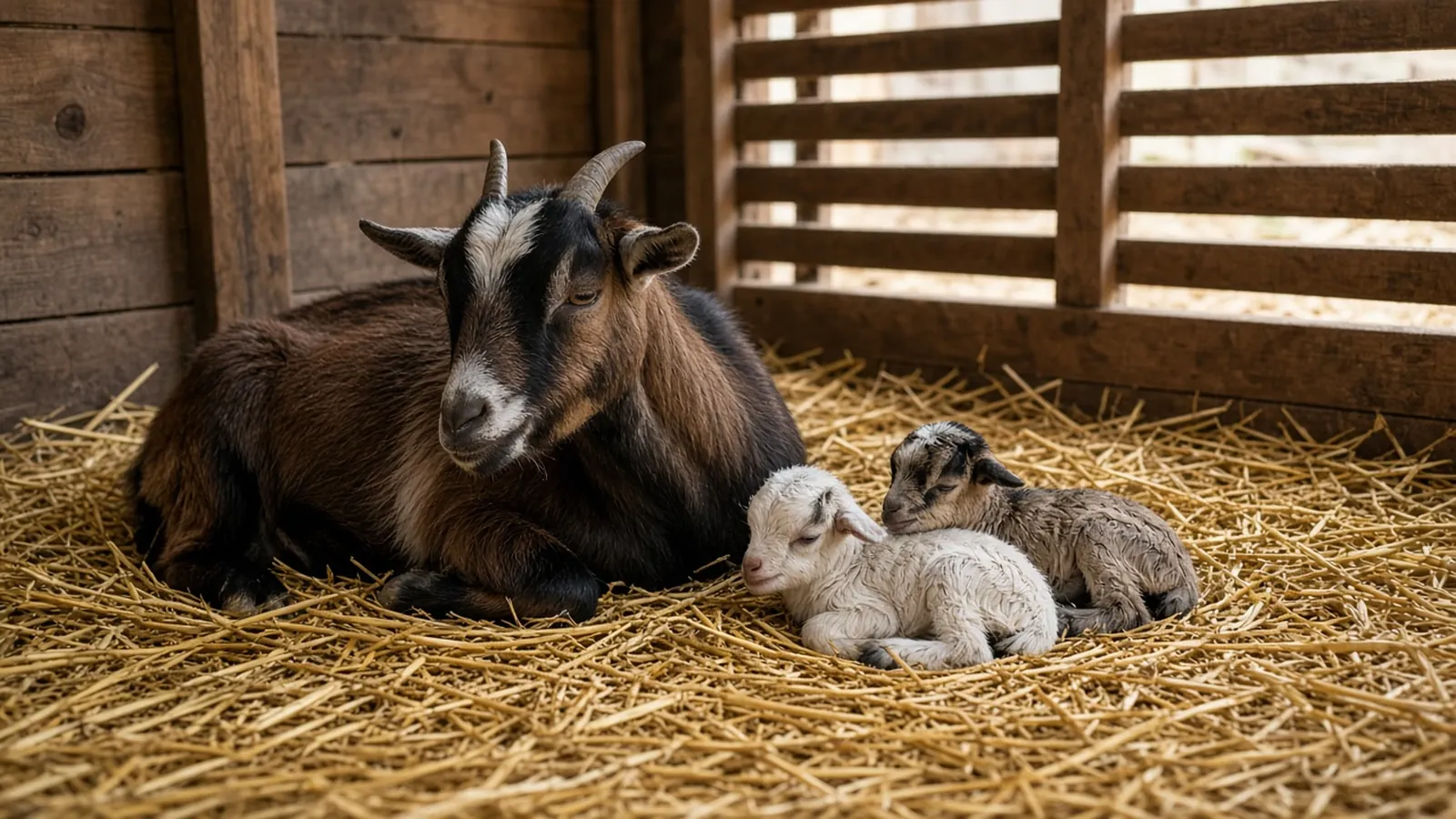
- Move does to a clean, dry kidding pen with bedding before their due date.
- Most does kid without help. Call for help if labour drags on or a kid is stuck.
- Make sure kids suckle colostrum within the first hours.
- Dip navels in iodine where available to prevent infection.
- Keep kids warm and dry. Cold, wet nights kill newborns.
Weaning
Kids are commonly weaned around three to four months. Separate weaned males from females to prevent early, unplanned breeding.
6. PPR: the disease every goat farmer must prevent
Peste des petits ruminants (PPR), sometimes called "goat plague", is a viral disease of goats and sheep that can kill a large share of a herd. It is present in Cameroon, and the government has a national strategy for its prevention and control.
Signs
- High fever and dullness.
- Discharge from eyes and nose, becoming thick and crusty.
- Sores in the mouth, bad breath.
- Severe diarrhoea.
- Coughing and laboured breathing.
- Death within days in many cases.
Prevention
A PPR vaccine is available and effective. Research by IRAD in North Cameroon, published on HAL, found that vaccinated goats kept protective antibody levels at 12 months after vaccination. Contact MINEPIA veterinary services or a veterinarian about vaccination campaigns and the right age to vaccinate kids in your area. Combine vaccination with quarantine for new animals and keeping your herd away from goats of unknown health status.
If you suspect PPR, isolate sick animals immediately, stop all movements in and out, and call the veterinary services.
7. Worms and other common health problems
Internal parasites
Worms, especially blood-sucking stomach worms, are a major cause of weight loss and death, particularly in the rainy season. Signs include pale eyelids and gums, weakness, swelling under the jaw ("bottle jaw"), rough coat and diarrhoea.
- Check inner eyelid colour regularly. Pale or white is a warning sign.
- Deworm based on need and veterinary advice, not randomly. Overuse of dewormers creates resistance.
- Raised floors, rotational grazing and cut-and-carry feeding reduce worm exposure.
- Avoid grazing on wet, short grass early in the morning, when worm larvae are most active.
Other problems
- Pneumonia: common in cold, damp, crowded housing.
- Foot rot: lameness from wet, dirty ground.
- Mange and lice: itching, hair loss, scabs.
- Orf: scabby sores on lips, especially in kids.
- Trypanosomiasis: a risk in tsetse areas; WAD goats are relatively tolerant.
Record every treatment with date, product and dose, and respect withdrawal periods before sale.
8. Selling goats well
- Time sales for festive demand. Christmas, New Year, Tabaski and other celebrations raise demand and prices. Plan breeding and fattening around these dates.
- Fatten before selling. A few weeks of good feed and supplements before a festive season can improve weight and price.
- Know your goats' value. Ask about prices in your nearest livestock market before buyers arrive.
- Sell breeding stock. Healthy, vaccinated does and good bucks with records sell well to new farmers.
- Use the manure. Goat droppings are excellent for gardens and compost.
9. Records for a goat herd
With goats, it is easy to lose track: who is pregnant, which doe lost her kids, when the last deworming was. Give each goat an ear tag or name and record matings, kiddings, kids weaned, treatments, vaccinations, deaths and sales. Our guide on keeping livestock farm records explains the basics. The LazAgro app keeps these records on your phone, even where there is no network, and syncs later.
10. Common goat farming mistakes
- Buying goats at the market and mixing them with the herd straight away.
- Keeping goats on muddy floors in the rainy season.
- Skipping PPR vaccination to save money.
- Deworming the whole herd every month whether needed or not.
- Using the same buck for years, breeding his own daughters.
- Letting goats roam freely into neighbours' farms.
11. Planting a fodder bank for your goats
The cheapest goat feed is the feed you grow yourself. A fodder bank is a small, dedicated area of grasses and legume shrubs that you cut regularly for your goats. It reduces how far you walk to find forage, keeps feed available in the dry season and lets you move towards cut-and-carry feeding.
How to set one up
- Choose productive species: a mix of tall grasses like elephant grass or Guinea grass and protein-rich shrubs like leucaena, gliricidia or calliandra, depending on what grows well in your area.
- Plant along boundaries and contours: fodder hedges on slopes also slow runoff and hold soil, as described in our guide on soil erosion prevention.
- Feed the fodder bank: spread goat manure or compost on it after cutting. Our guide on how to make compost on the farm shows how to turn droppings into rich compost.
- Cut in rotation: harvest one section at a time so the rest can regrow.
- Mix the diet: combine grass with legume leaves rather than feeding one plant alone.
Even a small plot of fodder close to the goat house can make a noticeable difference in body condition during the hardest weeks of the dry season, when animals that depend only on roadside grazing lose weight fast.
Frequently asked questions about goat farming in Cameroon
1. Which goat breed is best for southern Cameroon?
The West African Dwarf goat is the most reliable choice for the humid south because it tolerates humidity and some diseases better than larger breeds.
2. How long is a goat pregnant?
About five months, roughly 150 days. Record mating dates so you can prepare a kidding pen in time.
3. How can I prevent PPR in my goats?
Vaccinate through MINEPIA or a veterinarian, quarantine new goats, and avoid contact with goats of unknown health status. Report suspected cases immediately.
4. Why are my goats' eyelids pale?
Pale eyelids often mean anaemia, commonly from blood-sucking worms. Consult a veterinarian about deworming and reduce exposure with dry housing and better grazing management.
5. Is goat farming profitable in Cameroon?
It can be, especially when kid losses are low, feed costs are kept down with forage and residues, and sales are timed for festive demand. Records show your real numbers.
Final thoughts
Goats will survive on neglect, but they only pay well with care. Keep them dry, feed them through the dry season, vaccinate against PPR, manage worms sensibly and know every animal's history. A small, well-managed herd can grow steadily from its own kids year after year.
Know every goat's story
LazAgro helps you record breeding, treatments, deaths and sales for your herd, online or offline.
Discover LazAgro