 LazAgro

In Cameroon, grasscutter goes by many names: cane rat, "hérisson", aulacode. Whatever you call it, it is one of the most prized meats in the country, and most of it still comes from hunters. Grasscutter farming offers another path: raising the animal in pens, legally and predictably, for a market that already exists and keeps growing.
Interest in grasscutter farming has been growing across West and Central Africa for decades, partly to reduce pressure on wildlife and partly because the meat sells well. Development projects and research stations, including the CIPCRE breeding station in Bafoussam, have shown that the animal can be bred in captivity with good results. It is not a fast business, and it does not suit everyone. But for patient farmers with a steady supply of fresh grass, it can become a valuable side activity.
This guide covers getting domesticated breeding stock, housing, a grass-based diet, breeding groups, the long gestation, weaning, health and selling.
1. Why consider grasscutter farming?
- Strong demand and high value. Grasscutter meat is a delicacy in restaurants, at celebrations and in many homes.
- Grass-based diet. Most of what grasscutters eat is forage, which many farmers can cut for free.
- Little space. A small unit fits in a backyard shed.
- Quiet and clean when well managed.
- Supports conservation by offering farmed meat instead of hunted bushmeat.
The realities
- Gestation is long, around five months, so herd growth is slow.
- Good breeding stock can be hard to find and costly.
- The animals are easily stressed and can injure themselves if handled badly.
- Daily grass cutting takes time and labour.
Who grasscutter farming suits
It tends to work best for people who live on or near the farm, have easy access to fresh grass all year, and can wait a year or more before selling meat animals. Retired workers, families already keeping rabbits or poultry, and farmers with forage on their land often fit this profile. It is a poor match for someone who needs quick returns or who will be away for long periods, because pregnant and nursing females need calm, daily care.
2. Getting breeding stock
Buy from established grasscutter breeders, training centres or projects. Ask about the animals' age, parents, weights and health history.
- Animals born in captivity, calm when approached.
- Healthy coat, bright eyes, no wounds or limping.
- Strong, well-aligned front teeth. Broken or overgrown teeth make eating difficult.
- Females of similar weight, so they live together without fighting.
- A male slightly heavier than the females and not related to them.
A common breeding unit is one male with several females. The CTA guide Rearing grasscutters recommends selecting by weight, keeping females within about 500 g of each other, and choosing a male 0.5 to 1 kg heavier than them.
Permits and rules
Grasscutters are wild animals in law as well as in the bush. Before starting, check with MINEPIA and MINFOF (the Ministry of Forestry and Wildlife) offices in your area about any registration or permits for rearing and selling them. Buying farmed stock with proof of origin protects you.
3. Housing grasscutters
Grasscutters need secure, cool, shaded housing. They are strong chewers and can escape through weak materials.
The building
- A roofed shed with good ventilation, shaded from the afternoon sun.
- Walls and doors that keep out dogs, cats, snakes and thieves.
- A floor that is easy to clean and dries quickly.
Cages and pens
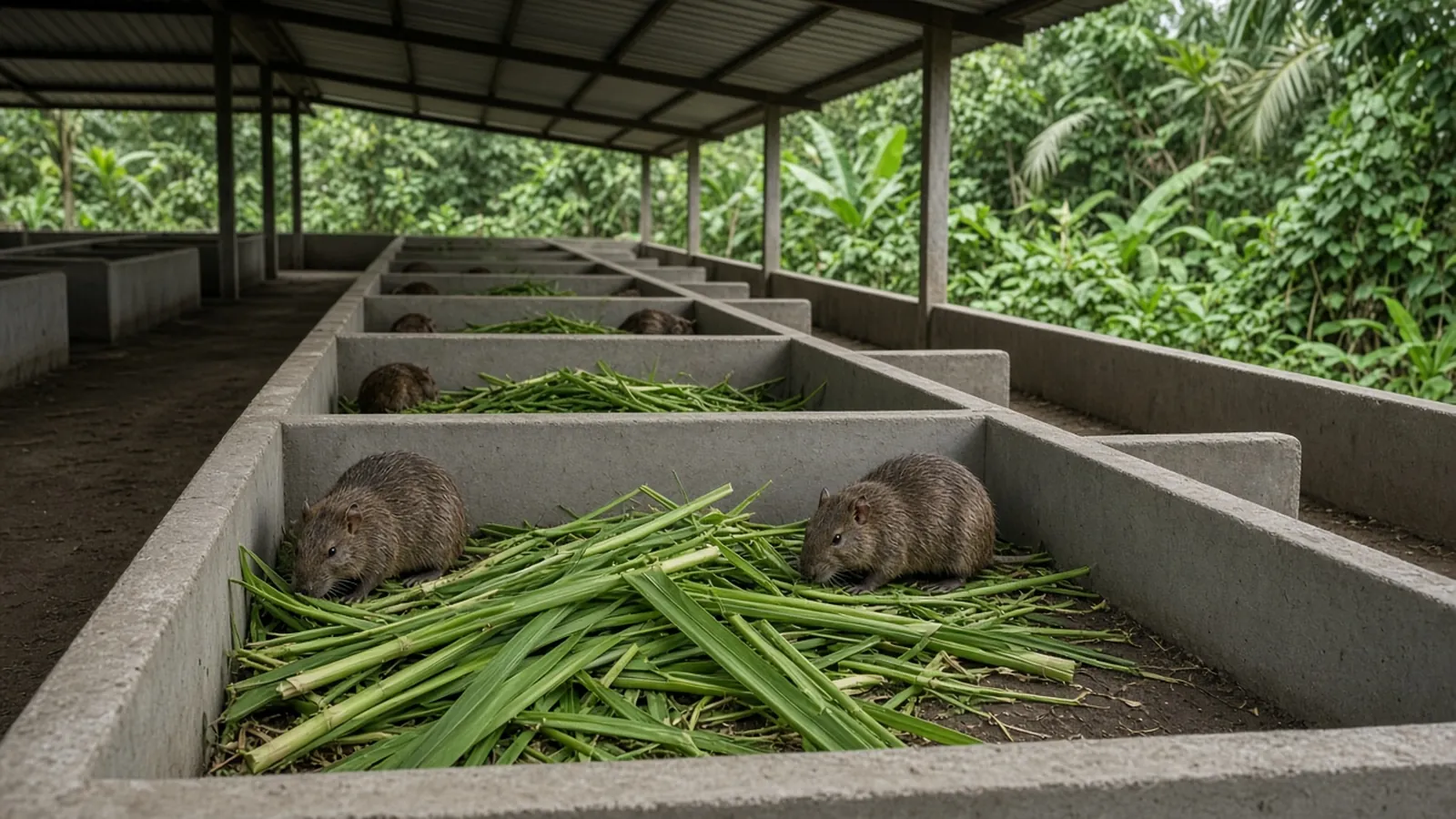
- Block or concrete pens with a solid floor, often divided into compartments, last long and resist chewing.
- Metal cages work well for small units and fattening.
- Avoid wooden cages unless lined; grasscutters chew through wood.
- Use separate units for breeding groups, pregnant females, mothers with young, weaners and fattening animals.
- Provide a hiding box or shelter area in each pen to reduce stress.
4. Feeding grasscutters
Grasscutters are herbivores. In the wild they eat grasses and stems. On farms, fresh forage makes up most of the diet, supplemented with energy and minerals.
Forage
- Elephant grass (Pennisetum), Guinea grass (Panicum) and other thick-stemmed grasses are favourites.
- Sugarcane stems, maize stalks and leaves.
- Legume leaves such as leucaena, gliricidia or groundnut haulms add protein.
Supplements
- Grains and by-products such as maize, wheat bran or a pelleted feed.
- Root crops like cassava (peeled, sliced and dried or in moderation) and sweet potato.
- A mineral or salt source.
Water
Grasscutters get much of their water from fresh forage, but provide clean water in heavy, stable containers, especially in the dry season and for nursing females.
Feeding tips
- Cut forage from clean areas, not sprayed fields or polluted roadsides.
- Feed fresh forage daily; remove stale, mouldy or soiled leftovers.
- Change diets gradually to avoid digestive problems.
- Plant your own forage plot near the shed so feed is always available. Grass strips on sloping land can double as forage and erosion control, as explained in our guide on soil erosion prevention.
For storage and stock control of supplements, our guide on livestock feed management is a useful reference.
5. Breeding grasscutters
Reproduction is slower than in rabbits, so breeding management matters a lot.
Age and weight at first breeding
The study at the CIPCRE station in Bafoussam, published in the Archivos de Zootecnia, put females into breeding at 6 to 7 months and around 1,500 g, and males at 7 to 8 months and around 2,000 g. The CTA guide gives similar guidance, with slightly higher minimum weights.
Breeding groups
Grasscutters are commonly kept in polygamous groups of one male with several females. The Bafoussam station used one male for 2 to 5 females.
Gestation and litters
| Measure | Recorded figure | Source |
|---|---|---|
| Gestation | About 158 days (±6) | CIPCRE station, Bafoussam |
| Gestation (general guidance) | About 5 months | CTA, Rearing grasscutters |
| Average litter size | About 4.4 young | CIPCRE station, Bafoussam |
| Litters per year | Up to about 2 | CTA, Rearing grasscutters |
| Weaning age | About 40–42 days | CTA; CIPCRE station |
Checking pregnancy
The CTA guide describes a simple swab test a few weeks after mating: a cotton bud gently inserted at the vaginal opening that comes out reddish-brown suggests pregnancy. Learn this from an experienced breeder before trying it.
Before and after birth
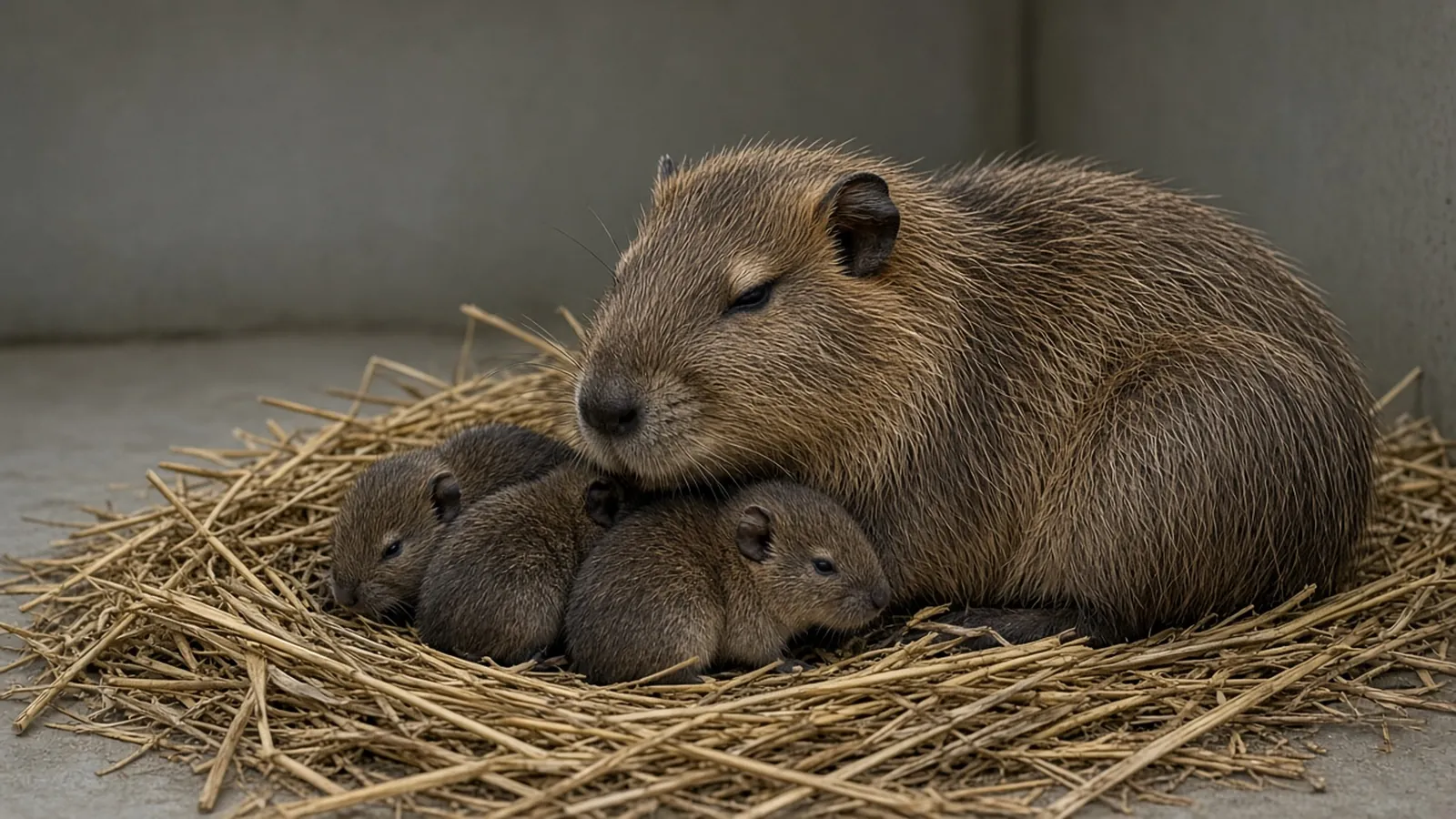
- Move pregnant females to a quiet individual pen about two weeks before the expected date.
- Many births happen at night. Avoid disturbing the mother.
- Young grasscutters are born furred, with open eyes, and move within hours.
- Give the mother plenty of good feed and water to support milk production.
6. Weaning and fattening
- Wean at around six weeks.
- Separate young males from females, as the CTA guide recommends, and group by similar weight.
- Move weaners to fattening pens with plenty of forage and some supplement.
- Avoid overcrowding, which causes fighting and injuries.
- Select the best young females to expand your breeding stock.
7. Handling and health
Handling
Grasscutters panic when grabbed roughly and can break their tails, injure their spines or bite. Learn proper handling from a breeder. Handle calmly, support the body and avoid lifting by the tail.
Common problems
In the Bafoussam study, the main causes of illness and death were respiratory problems, digestive disorders and accidents, which together made up most of the losses. That points directly to prevention:
- Respiratory problems: avoid draughts, damp and dusty pens.
- Digestive problems: avoid mouldy feed, sudden diet changes and contaminated water.
- Accidents: gentle handling, secure pens, no overcrowding, avoid sudden noise.
- Skin problems and parasites: keep pens clean and dry, and consult a veterinarian.
- Clean pens regularly and remove old feed daily.
- Quarantine new animals before mixing.
- Keep visitors out of the shed.
- Record every illness, treatment and death.
8. Selling grasscutters
- Restaurants and "bushmeat" spots that want a steady, legal supply.
- Households buying for celebrations, holidays and special visitors.
- Breeding stock for new farmers, often at higher prices than meat animals.
- Smoked meat for longer storage, if processing is hygienic.
Because farmed supply is still limited, buyers who know you have clean, healthy animals often come back. Build those relationships early, even before you have animals to sell.
9. Planning and records
With a long gestation and slow herd growth, records are what let you plan. For each female, track mating dates, pregnancy tests, birth dates, number born and weaned, and weights. Also track feed costs, deaths and sales.
Our guide on keeping livestock farm records explains what to track. The LazAgro app records batches, feed, treatments, deaths and sales on your phone, even without network.
10. Common grasscutter farming mistakes
- Starting with wild-caught animals.
- Building wooden cages that animals chew through.
- Feeding mouldy or sprayed grass.
- Grabbing animals by the tail.
- Disturbing pregnant and nursing females.
- Expecting rapid herd growth from a five-month gestation.
11. Setting up a small starter unit
A sensible first unit is one breeding group: one male and a few females, plus space for the young they will produce over the next year. Plan the building for the herd you will have in twelve to eighteen months, not just the animals you buy on day one.
What a starter unit usually includes
- One group pen for the breeding male and females.
- Two or three individual pens for pregnant females and mothers with young.
- Two weaner or fattening pens, so young males and females can be separated after weaning.
- One quarantine pen, away from the others, for new or sick animals.
- A dry store for supplements and tools, protected from rats.
- A forage plot close to the shed.
Growing your own forage
Cutting grass every day from roadsides and bush is tiring and risky, because you cannot control what was sprayed nearby. A plot of elephant grass or Guinea grass planted in strips near the shed gives you clean forage within months. Cut the strips in rotation so they keep regrowing, and spread manure or compost on them after cutting. Our guide on how to make compost on the farm shows how to turn grasscutter droppings and leftover forage into fertiliser for the plot.
Learn before you build
Spend a day or two at an established grasscutter farm or training centre before investing. Watch how animals are fed, handled and moved between pens. Ask about the problems they faced in their first year. The time you spend learning from someone else's mistakes is cheaper than making them yourself.
Frequently asked questions about grasscutter farming
1. How long is a grasscutter pregnant?
Around five months. A study at the CIPCRE station in Bafoussam recorded an average of about 158 days.
2. How many young does a grasscutter have?
Litters average about four young, with up to two litters a year under good management.
3. What do grasscutters eat?
Mainly fresh grasses like elephant grass and Guinea grass, plus sugarcane, maize stalks, legume leaves, some grains or pellets, root crops and minerals.
4. Can I start with wild grasscutters?
It is strongly discouraged. Wild-caught animals are stressed, often injure themselves and breed poorly. Start with animals born in captivity from a known breeder.
5. Is grasscutter farming profitable?
It can be, because the meat is valuable and feed is mostly grass. But herd growth is slow, so expect to build up over a few years. Start small and track your numbers.
Final thoughts
Grasscutter farming is a patient business with a valuable product. Start with domesticated stock, build strong pens, cut fresh grass every day, handle animals gently and keep careful records. Over a few years, a small unit can grow into a reliable source of income and a legal alternative to hunted bushmeat.
Plan every litter with clear records
LazAgro helps you track breeding, feed, treatments and sales for every batch, online or offline.
Discover LazAgroSources and further reading
- CTA (via CGSpace) – Rearing grasscutters
- Performances zootechniques de Thryonomys swinderianus en captivité en zone d'altitude (CIPCRE station, Bafoussam), Archivos de Zootecnia, 2009