 LazAgro
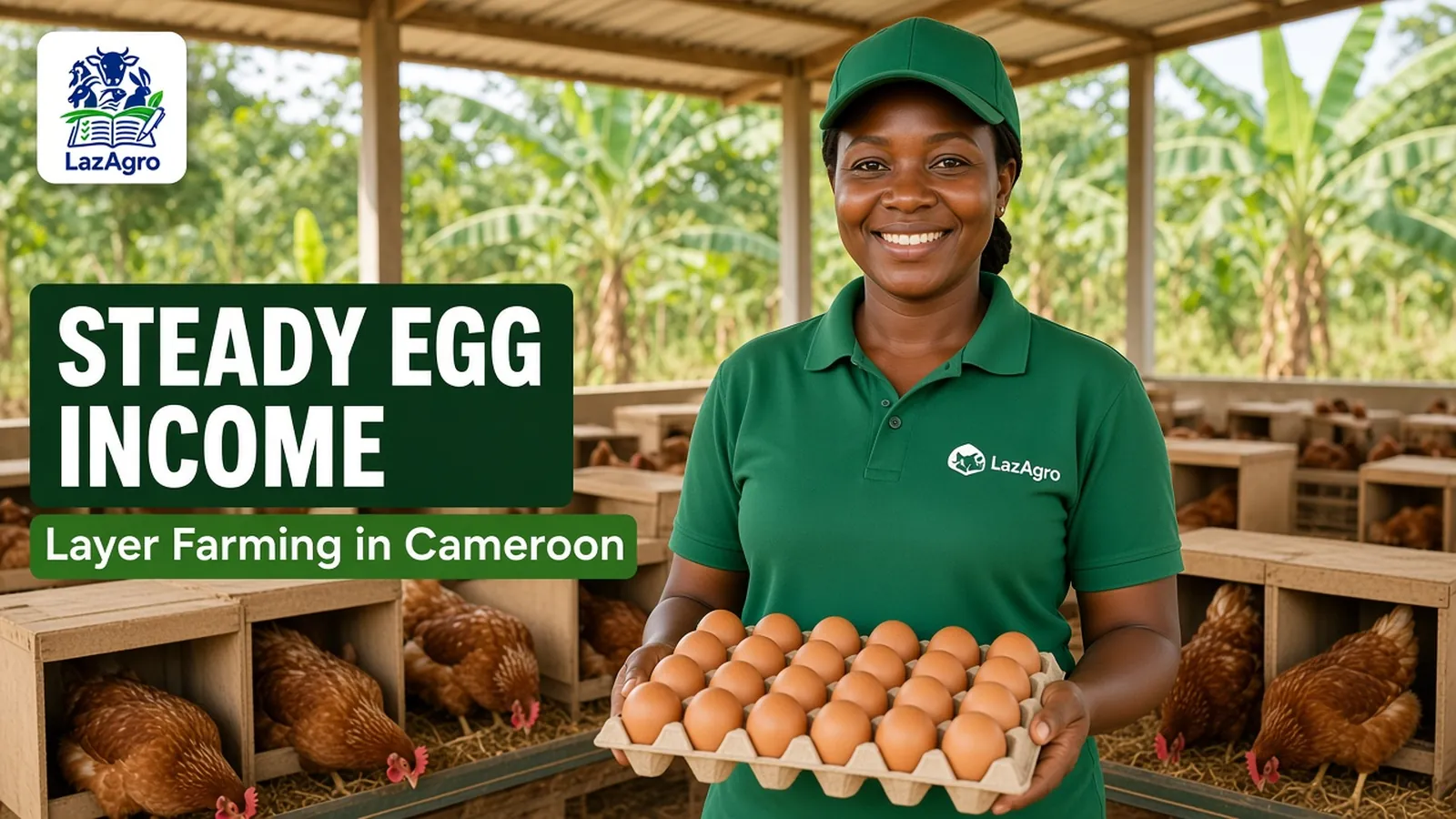
Broilers give you a lump of cash every two months. Layers give you money every single day, as long as you keep them healthy and laying. That steady income is why layer farming in Cameroon attracts so many people, from teachers with a few hundred birds behind the house to commercial farms near Yaoundé, Bafoussam and Douala that deliver eggs by the truckload.
Layer farming is also less forgiving than it looks. You feed pullets for months before they lay a single egg. A drop in production from poor feed, stress or disease costs you every day it continues. And when egg prices fall in some months, the farmer who knows their numbers survives while others sell their flocks in a panic.
This guide covers the full cycle: buying chicks or point-of-lay pullets, rearing, the laying period, feed and calcium, lighting, housing systems, egg handling, health, culling and selling.
1. Two ways to start: day-old chicks or point-of-lay pullets
| Day-old chicks | Point-of-lay pullets | |
|---|---|---|
| Purchase cost per bird | Lower | Much higher |
| Time before first eggs | Several months of rearing | Usually within weeks |
| Control over rearing | Full: you know their feed and vaccinations | Depends on the seller's honesty and skill |
| Risk for beginners | Higher: brooding and rearing mistakes | Lower, if the source is reliable |
For a first flock, many people start with point-of-lay pullets from a trusted farm, so they learn the laying phase first. Experienced farmers usually rear their own chicks to control quality and cost.
Choosing a breed or strain
Commercial layer strains, mostly brown-egg hybrids in Cameroon, are bred for high egg numbers on good feed. Ask your hatchery about the strain's expected performance and feed needs. Local and dual-purpose chickens lay far fewer eggs but are hardier; they suit free-range systems more than commercial egg production.
2. Rearing pullets: the foundation of the laying period
A hen's laying performance is largely decided before she lays her first egg. Pullets that are underweight, uneven or sick during rearing never reach their potential.
Brooding
The first weeks follow the same principles as broiler brooding: a warm, draught-free brooder, clean litter, easy access to water and feed, and close observation. Our guide to broiler farming in Cameroon covers brooding temperature and chick behaviour in detail.
Growing phase
- Feed chick, grower and pre-lay rations at the ages your feed supplier recommends.
- Weigh a sample of birds every couple of weeks and compare with the strain's target weights from the hatchery.
- Keep the flock uniform. Separate small, weak birds and give them extra attention.
- Follow a written vaccination programme agreed with a veterinarian. Layers live much longer than broilers, so their programme is longer and more complete.
- Deworm as advised, especially on deep litter.
Point of lay
Commercial layers commonly start laying somewhere around 18 to 22 weeks, depending on strain, feed and management. Move pullets into their laying house before they start laying, so the stress of moving does not interrupt early production. Switch to layer feed at the time your supplier recommends.
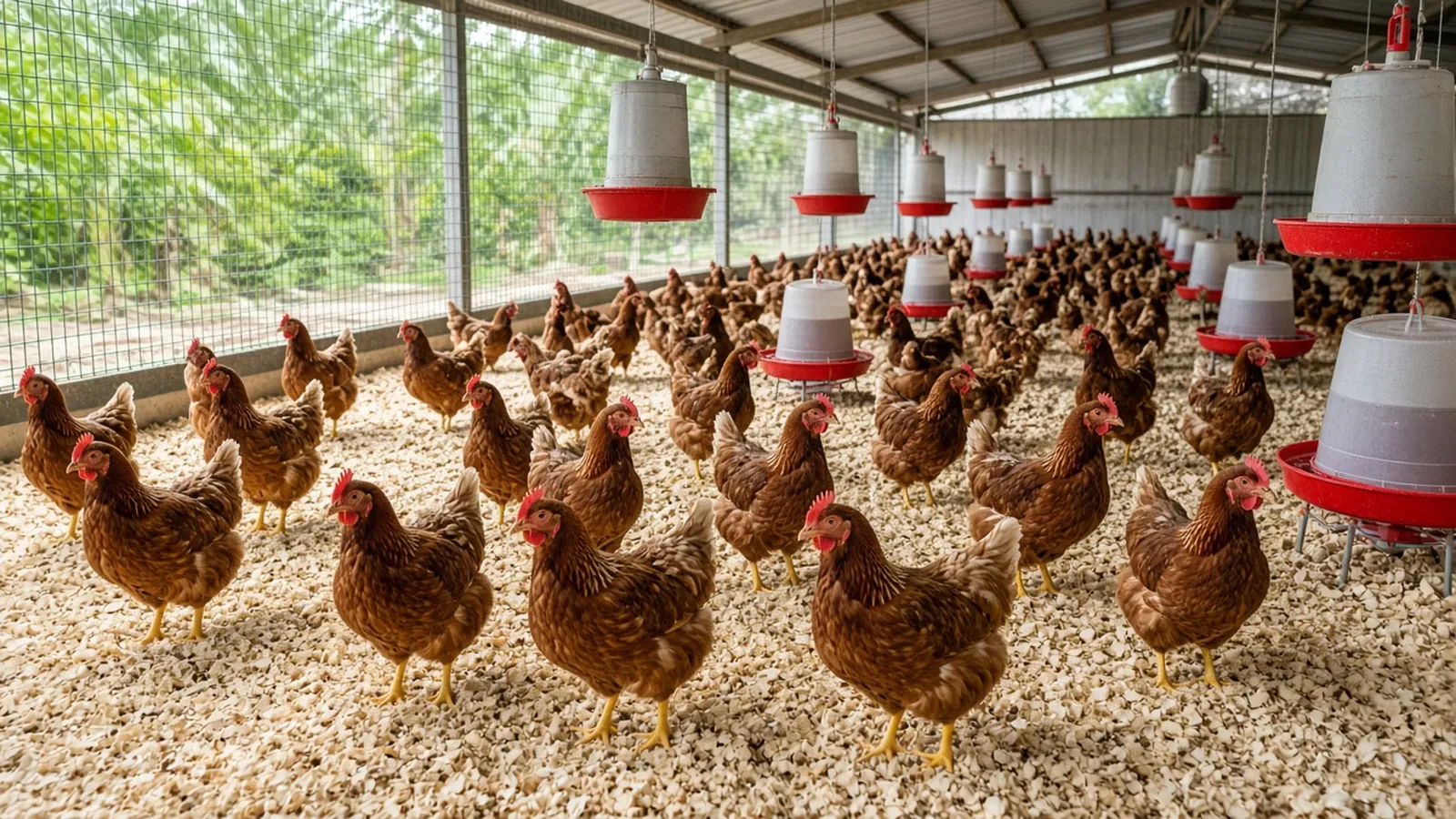
3. Housing systems: deep litter or cages
Deep litter
Birds move freely on a thick layer of wood shavings or rice husks, with nest boxes for laying.
- Lower building cost and more natural behaviour.
- More floor eggs and dirty eggs if nest boxes are poorly managed.
- Higher risk of worms and coccidiosis from contact with droppings.
- Litter must be kept dry, especially in the rainy season.
Battery cages
Birds are kept in wire cages, and eggs roll to a collection tray.
- Clean eggs, easy collection, more birds per building.
- Easier to spot non-layers and sick birds.
- Higher equipment cost and stronger welfare concerns.
- Manure collects under cages and must be removed regularly to control flies and ammonia.
Whatever system you use, the building principles are the same: good ventilation, shade, roof overhangs against rain, and drainage. Our guide on building a poultry house in a tropical climate explains the design choices.
Nest boxes for deep litter
- Provide enough boxes, commonly about one for every four to five hens.
- Place them in a darker, quieter part of the house, slightly raised.
- Use clean, dry nesting material and change it often.
- Install them before point of lay so pullets learn to use them from the first egg.
4. Feeding layers for eggs and strong shells
Feed is the largest cost in egg production. A laying hen needs energy, protein, vitamins and a lot of calcium every day. If any one of these is short, egg numbers, egg size or shell quality fall.
Layer feed
Use a complete layer feed from a reputable mill, or a balanced home mix made with a proper layer concentrate. Cheap feed with too little protein or calcium is false economy: hens eat it but lay less.
Calcium
Each eggshell is made largely of calcium carbonate. Hens with poor calcium intake lay thin-shelled or shell-less eggs and may lose bone strength. Many farmers offer oyster shell or limestone grit separately in addition to layer feed, particularly to older hens. Follow your feed supplier's guidance.
Water
Laying hens drink a lot, and egg production drops quickly if water runs short, even for a few hours. Check drinkers morning and evening, and more often on hot days.
Avoiding feed waste
- Do not overfill feeders.
- Adjust feeder height so the lip sits at the birds' back level.
- Store bags on pallets in a dry, rodent-proof store.
- Record bags used per day or per week and compare with egg output.
For more on stock control and reducing losses, see our guide on livestock feed management.
5. Light, heat and stress
Lighting
Day length influences laying. Near the equator, natural day length in Cameroon changes only a little through the year, but many commercial farms add artificial light to give layers a consistent, long day, often around 16 hours of light in total. Never reduce light hours suddenly during lay, as it can cause production to fall.
Heat
Hot afternoons, especially in lowland areas and during the dry season, reduce feed intake and egg size. Keep curtains open, give cool water, avoid overcrowding and plant shade around the house.
Stress
Sudden noise, strangers, predators at night, feed changes and rough handling all cause production dips. Keep routines steady.
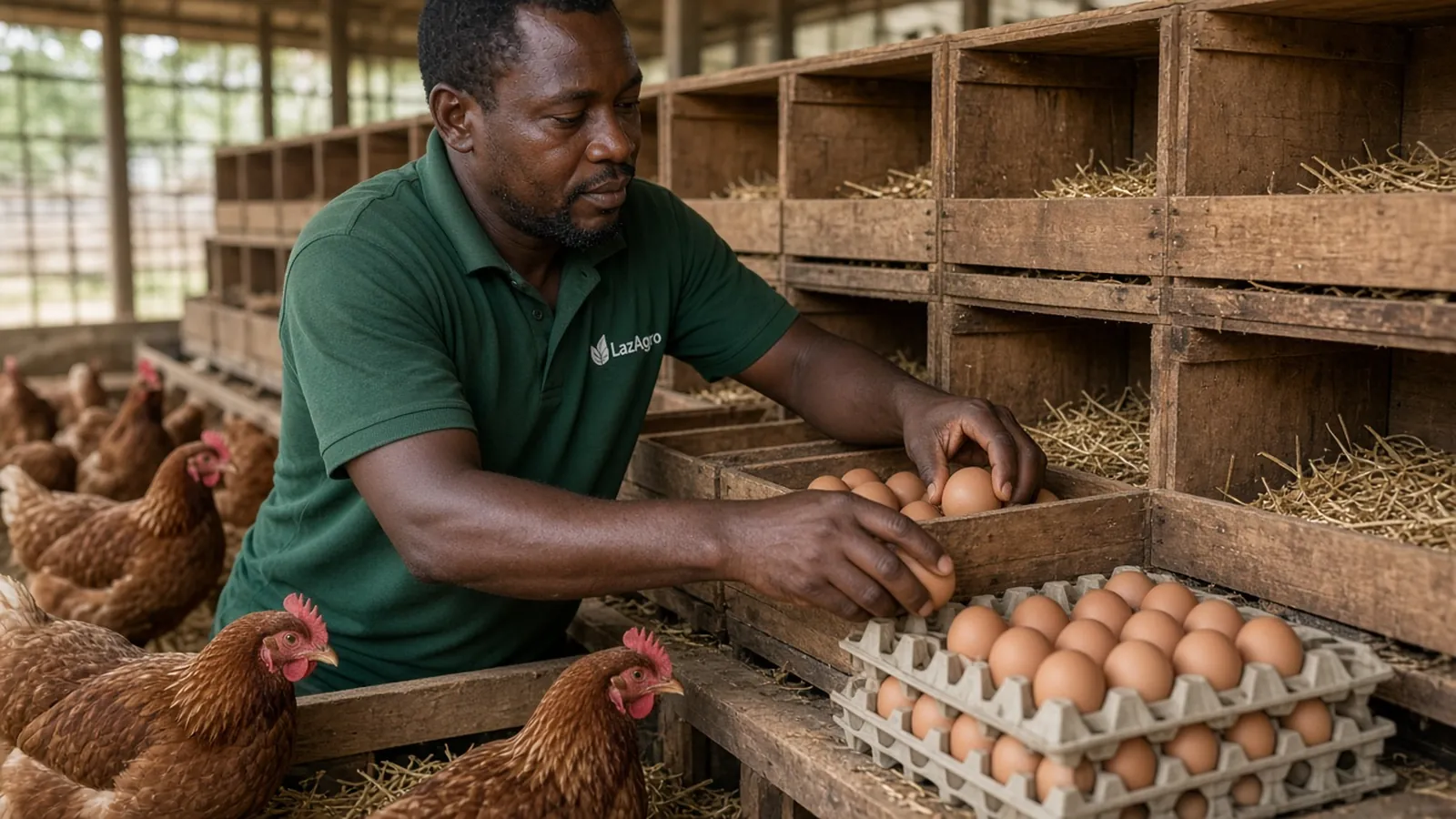
6. Collecting and handling eggs
Eggs are a food product. Clean, fresh, well-handled eggs sell faster and for better prices.
- Collect at least twice a day, three times in hot weather.
- Use clean trays and handle eggs gently.
- Separate cracked, very dirty and abnormal eggs.
- Dry-clean lightly soiled eggs. Washing with dirty water can push bacteria through the shell.
- Store eggs pointed end down in a cool, shaded, well-ventilated room.
- Sell older eggs first and keep track of collection dates.
7. Biosecurity and disease prevention
Layers stay on the farm for a long time, so one disease outbreak can wipe out months of investment. Cameroon experienced outbreaks of highly pathogenic avian influenza (H5N1) from 2016, described in this epidemiological study. The outbreaks started at a poultry complex in Yaoundé and spread to farms in several regions. Layer farms were among those affected.
- Fence the farm and control entry.
- Footbath and farm-only boots and clothing.
- No visitors in the bird houses. Egg buyers should collect from a separate point at the gate.
- Egg trays from the market can carry disease. Clean and disinfect them, or use new trays.
- Keep wild birds and rodents away from feed and water.
- Isolate and investigate sick birds quickly.
- Report sudden high mortality or sharp drops in laying to MINEPIA veterinary services.
Common health issues in layer flocks
- Newcastle disease: respiratory signs, twisted necks, sharp production drop. Prevent by vaccination.
- Worms and coccidiosis: especially on deep litter. Manage with dry litter and a deworming plan.
- Mites and lice: pale combs, restlessness, lower production. Inspect birds and housing at night.
- Egg drop and shell problems: can come from disease, poor nutrition or stress. Ask a veterinarian to help diagnose the cause.
8. Tracking production: hen-day percentage
The simplest and most useful layer record is the daily production percentage (often called hen-day production):
Also record feed used, mortality, eggs sold, cracked eggs and price per crate. Our guide on keeping livestock farm records explains the basics. The LazAgro app lets you record feed, deaths, treatments and sales per batch on your phone, even without network, so daily records do not get skipped.
9. Culling: knowing when hens stop paying
Production peaks some weeks after point of lay, then slowly declines. At some point the eggs a flock lays no longer cover the feed it eats. Many commercial farms sell their layers as "spent hens" somewhere in their second year, but the right moment depends on your production records, feed price and egg price.
- Remove non-layers early. Hens with pale, small, dry combs and a narrow pelvis are probably not laying.
- Compare income and feed cost per week. When the gap closes, plan the sale of the flock.
- Sell spent hens well. Many buyers prefer old layers for their firm meat in soups and stews.
- Plan the replacement flock so new pullets come into lay as the old flock leaves, keeping your egg customers supplied.
10. Selling eggs
Egg prices in Cameroon move with supply, feed costs and seasons. A few practices help you keep sales stable:
- Build regular buyers: bakeries, restaurants, supermarkets, schools, hotels and retail shops in your area.
- Grade eggs by size where your buyers will pay for it.
- Deliver fresh and on time. Reliability matters as much as price.
- Plan for low-price months. Know your cost per crate so you know how low you can go.
- Sell manure. Layer manure is valuable for vegetable and crop farmers, and in your own compost.
11. Common layer farming mistakes
- Buying cheap point-of-lay pullets from unknown sources.
- Underfeeding pullets during rearing to save money.
- Using cheap feed with inadequate calcium.
- Letting egg buyers walk into the bird house.
- Not recording daily egg counts, so problems are noticed late.
- Keeping old flocks too long because nobody calculated when they stopped paying.
Frequently asked questions about layer farming in Cameroon
1. At what age do layers start laying?
Commercial layers commonly start around 18 to 22 weeks, depending on strain, feed, body weight and management.
2. Why are my hens laying thin-shelled eggs?
Common causes are low calcium in the diet, heat stress, old age and some diseases. Check your feed, offer shell grit, reduce heat and consult a veterinarian if it continues.
3. How many eggs should a good flock produce?
Commercial strains in good condition can lay at high rates during peak production. Track your daily production percentage and compare it with the strain guide from your hatchery.
4. Is deep litter or cage better for layers in Cameroon?
Deep litter costs less to set up and suits small farms; cages give cleaner eggs and easier management but cost more. Choose based on budget, scale and your ability to manage hygiene.
5. When should I sell my layers?
When weekly egg income no longer clearly covers feed and other costs. Records of production, feed use and prices tell you when that point arrives.
Final thoughts
Layer farming in Cameroon is a long game. Rear pullets well, feed for shells as well as eggs, protect the flock from disease, and count eggs every day. The farmers who do these simple things consistently are the ones still selling crates when others have closed their houses.
Count every egg, every bag, every bird
LazAgro helps you record feed, mortality, treatments and sales for every flock, online or offline.
Discover LazAgro