 LazAgro
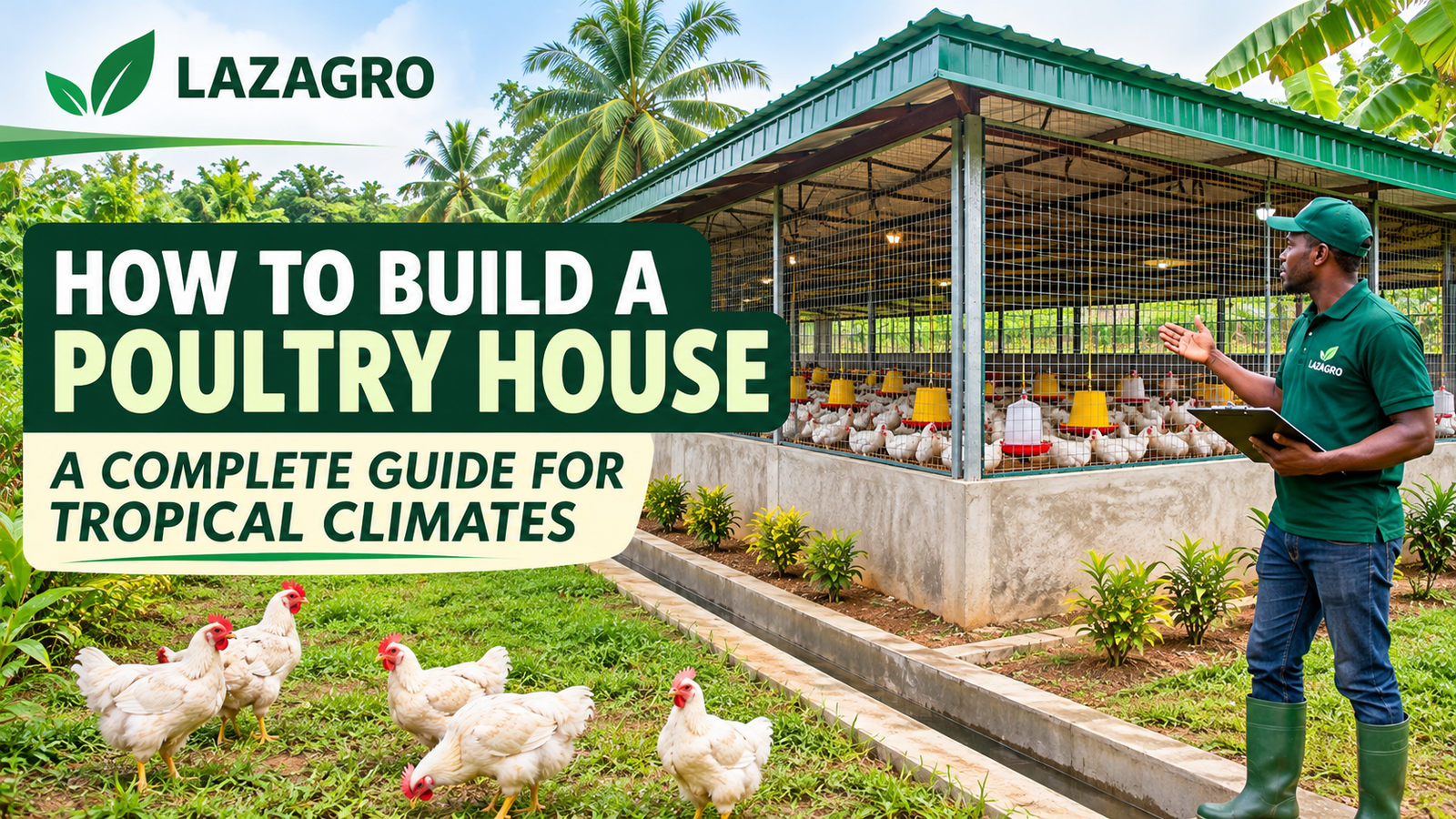
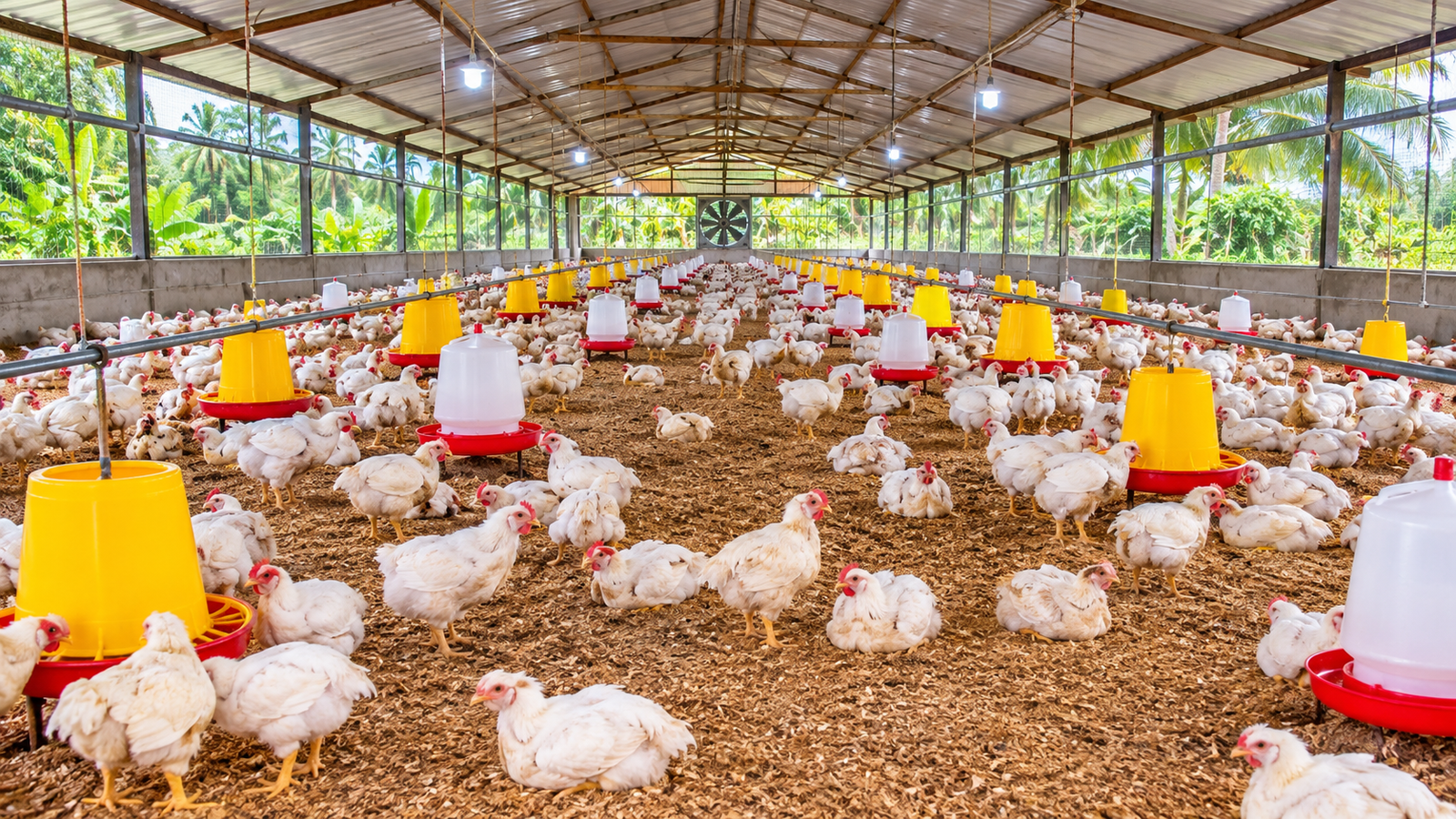
Building a poultry house is one of the most important decisions you will make when starting a chicken farming business. The building is not simply a shelter. It determines how well your birds are protected from extreme temperatures, rainfall, predators, poor ventilation, and other environmental challenges.
In tropical regions, poultry housing requires particular attention. High temperatures, humidity, heavy rainfall, and seasonal weather changes can create conditions that affect bird comfort, health, and productivity.
A poultry house that works well in a cool climate may not perform equally well in a hot and humid environment. This is why farmers should consider local weather conditions before choosing construction materials, roof designs, ventilation systems, and building orientation.
Whether you are planning a small backyard poultry operation or a commercial broiler or layer farm, understanding these construction principles can help you build a more suitable environment for your birds.
- How to select a suitable poultry farm location.
- How to plan poultry house orientation and layout.
- Roofing and building materials for tropical conditions.
- Natural and mechanical ventilation.
- Flooring, drainage, and litter management.
- Lighting, water access, and biosecurity.
- Common poultry house construction mistakes.
1. Choose the Right Location Before Building
Before purchasing cement, timber, roofing sheets, or other materials, evaluate the land where you intend to construct your poultry house.
Location affects drainage, air movement, accessibility, biosecurity, and the overall cost of maintaining the farm.
Look for a site with the following characteristics:
- Good drainage: Choose land that does not regularly collect standing water during rainfall.
- Reliable access: Vehicles and workers should be able to reach the farm, including during wet weather.
- Suitable elevation: Avoid low-lying areas that are prone to flooding.
- Natural airflow: Consider the direction of prevailing winds and nearby obstacles.
- Distance from potential contamination: Avoid placing poultry houses close to refuse dumps, polluted water sources, and other potential hazards.
- Room for expansion: If you plan to increase production, consider space for additional buildings and supporting facilities.
Also consider the distance from residential areas, neighboring farms, and other poultry operations. Local environmental, planning, and livestock regulations may specify minimum separation distances or other requirements.
A cheap piece of land can become expensive if it requires extensive drainage work, constant road repairs, or additional biosecurity measures.
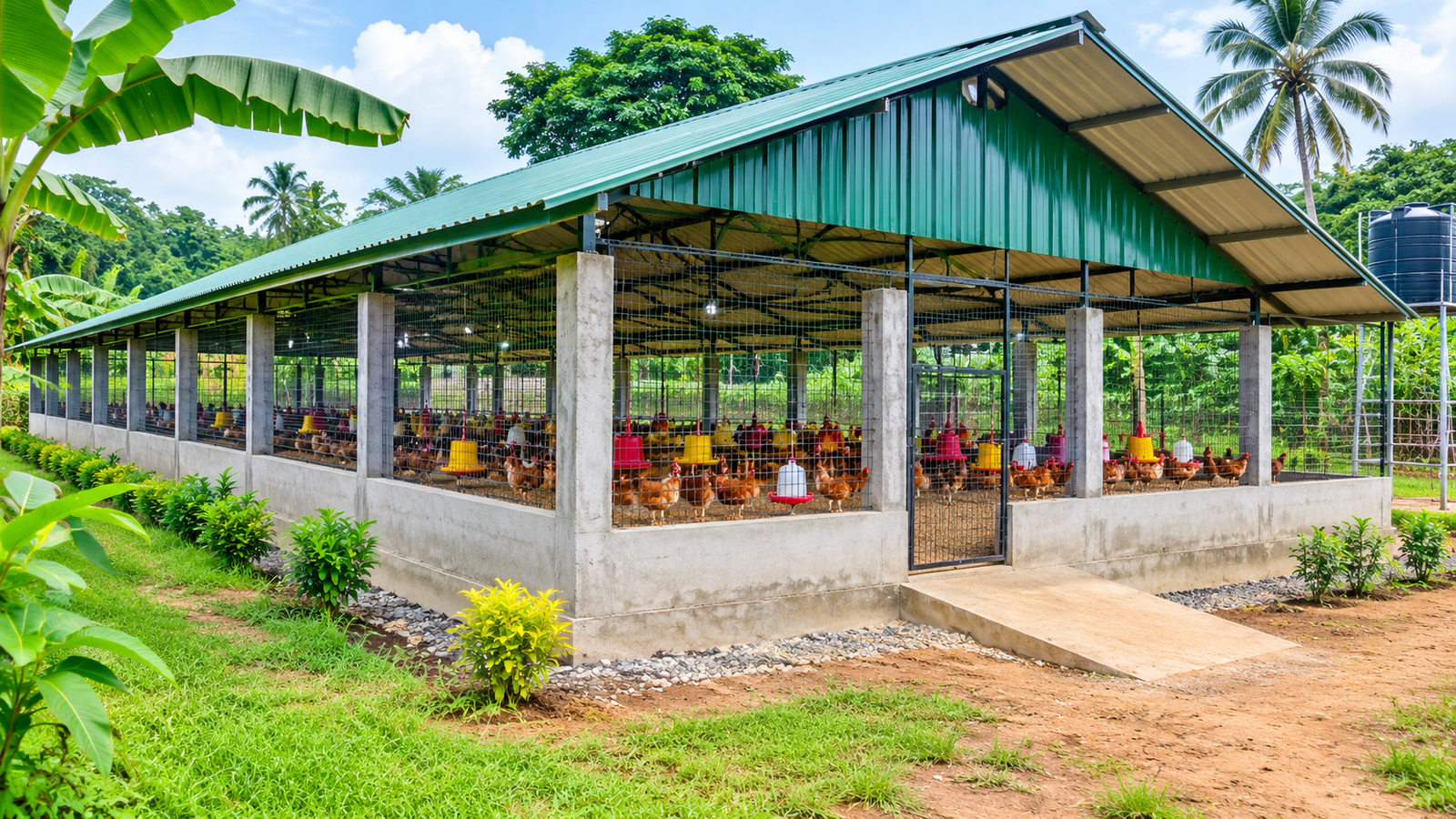
2. Plan the Direction and Orientation of the Poultry House
Building orientation can influence how sunlight and prevailing winds affect the poultry house.
In many tropical poultry housing designs, a long axis running approximately east to west is considered to help reduce direct sunlight entering through the longer side walls. However, the best orientation depends on the local sun path, prevailing wind direction, surrounding buildings, terrain, and ventilation design.
Before construction, observe the site at different times of the day.
Pay attention to:
- Where direct morning and afternoon sunlight enters.
- The direction of prevailing winds.
- Nearby trees, buildings, and other structures that may block airflow.
- Areas where rainwater flows across the land.
- Potential exposure to strong winds and storms.
Do not choose orientation based on a general rule alone. A local poultry housing specialist or agricultural extension officer can help assess the conditions on your particular site.
3. Design the Roof to Handle Heat and Heavy Rainfall
The roof is one of the most important components of a poultry house in a tropical climate. It protects the birds from rain and direct sunlight while influencing the temperature inside the building.
A poorly designed roof can allow excessive heat to accumulate, create leaks, or cause water to enter the building during heavy rainfall.
When planning your roofing system, consider these factors:
Roof height and slope
A suitable roof design should allow rainwater to drain effectively and provide adequate internal space for air movement. Roof height and slope should be selected according to the building design, roofing material, rainfall conditions, and local construction requirements.
Roof overhangs
Roof overhangs can help prevent rain from entering through open sides and reduce direct sunlight on the walls. They are especially useful in poultry houses with naturally ventilated open-sided designs.
Heat reduction
Roofing materials can become hot under direct sunlight. Depending on the budget and local availability, farmers can consider reflective roofing finishes, suitable insulation, or ventilated roof spaces to reduce heat transfer into the poultry house.
Rainwater management
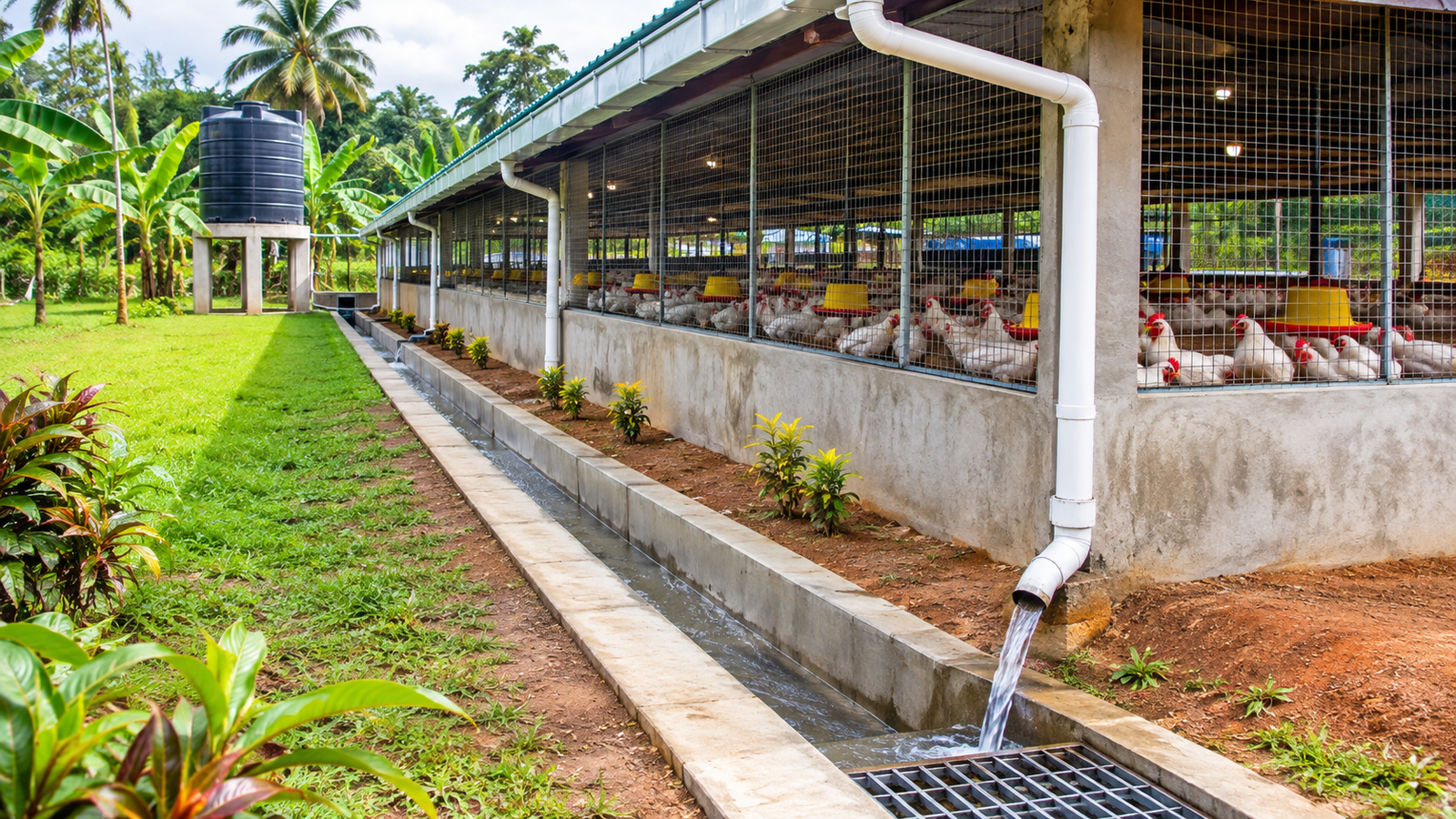
Install gutters and direct roof runoff away from the building. Water should not collect around the foundation or flow into the poultry house.
Never assume that roofing sheets alone will provide sufficient protection against tropical heat. Consider the complete roofing system, including insulation, ventilation, roof overhangs, and drainage.
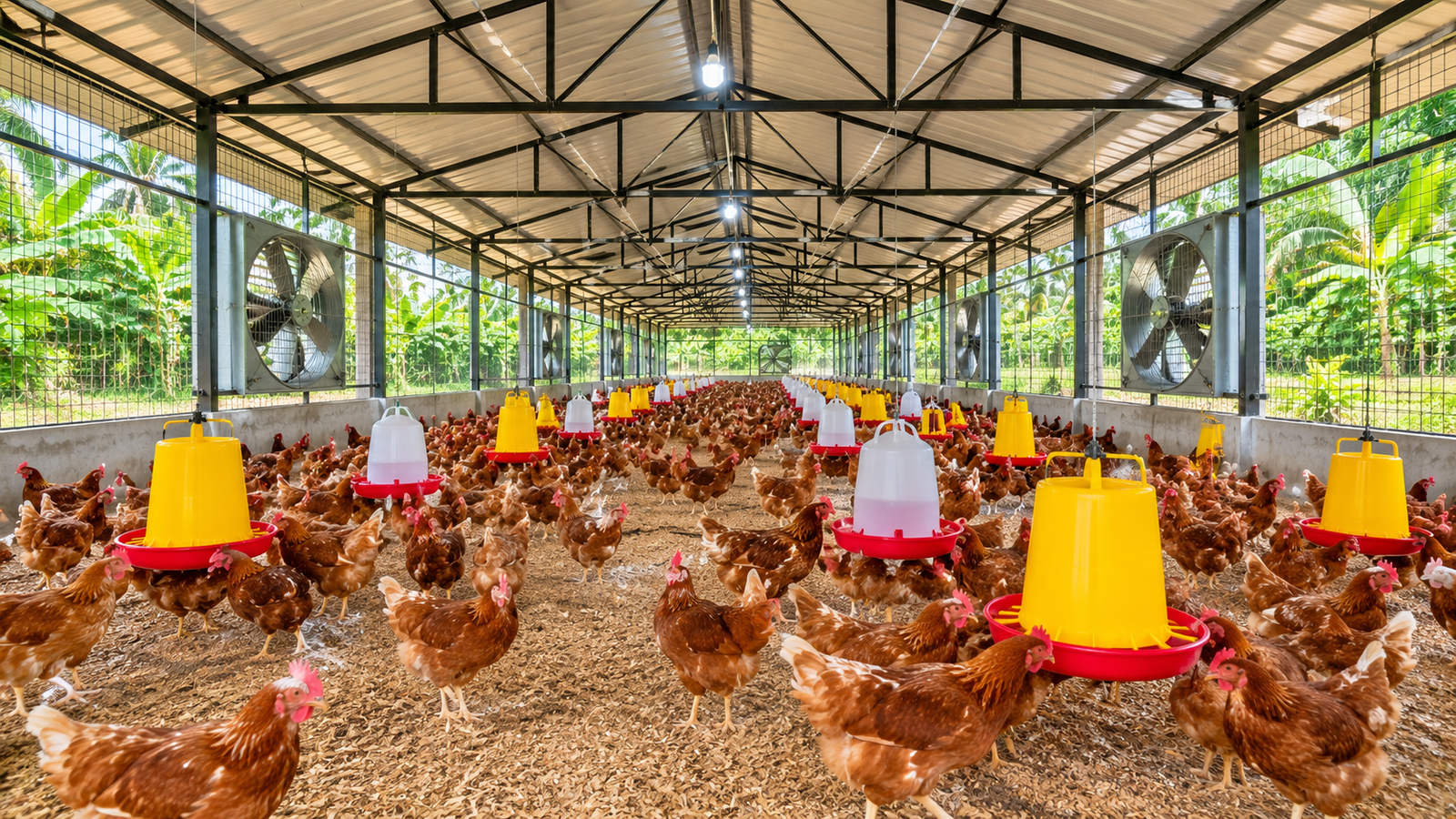
4. Prioritize Proper Ventilation
Ventilation is essential in poultry housing. Birds produce heat, moisture, carbon dioxide, and other gases through normal biological processes. Their litter can also release moisture and ammonia, particularly when it becomes wet or poorly managed.
Without adequate ventilation, these conditions can affect air quality and bird comfort.
In hot environments, ventilation also helps remove excess heat from the building.
Natural ventilation
Many small and medium-sized tropical poultry farms use naturally ventilated houses. These designs commonly have open sides protected by suitable wire mesh and curtains that can be adjusted according to weather conditions.
Effective natural ventilation depends on building orientation, side openings, roof design, wind availability, and the surrounding environment.
Mechanical ventilation
For larger operations or buildings where natural airflow is insufficient, mechanical fans may be necessary. Fan capacity and placement should be designed for the building dimensions, bird numbers, climate, and required ventilation rate.
Mechanical systems require reliable power, routine maintenance, and a backup plan for power failures.
Signs of inadequate ventilation
- Persistent ammonia smell.
- Excess moisture or condensation.
- Wet or caked litter.
- Unusual heat accumulation.
- Poor air movement at bird level.
- Birds showing signs of heat stress or respiratory discomfort.
Ventilation should be monitored at bird level, not just near the roof. If you notice concerning signs, investigate the housing conditions and seek veterinary or poultry management advice.
5. Select Suitable Flooring and Prepare the Ground
The floor should provide a stable, cleanable, and reasonably dry foundation for the poultry house.
Concrete flooring is commonly used in commercial poultry buildings because it can be cleaned and disinfected more effectively than many untreated surfaces. However, it must be properly constructed and maintained.
Important considerations include:
- Stable foundation: The building should rest on properly prepared ground.
- Moisture protection: Prevent groundwater and rainwater from entering the house.
- Appropriate surface: The floor should support the intended litter system and cleaning routine.
- Drainage: Water used during cleaning should not accumulate around the building.
- Cleanability: Surfaces should be suitable for the farm's cleaning and disinfection procedures.
For deep-litter systems, suitable bedding material is placed over the floor. The material should be clean, dry, absorbent, and appropriate for poultry production.
Wet patches should be investigated promptly because they may indicate leaking drinkers, poor drainage, or ventilation problems.
6. Provide Proper Drainage Around the Building
Heavy rainfall is a major consideration for poultry farms in tropical regions. Even a well-constructed building can develop problems if water constantly collects around its foundation.
Poor drainage can contribute to damp floors, deteriorating building materials, muddy surroundings, and increased biosecurity challenges.
Plan drainage before the construction is completed.
Consider the following:
- Grade the surrounding land so rainwater flows away from the building.
- Install suitable gutters and downpipes.
- Construct drainage channels where necessary.
- Keep entrances and walkways free from standing water.
- Prevent runoff from neighboring areas from entering poultry housing.
- Maintain drainage channels and remove blockages regularly.
Drainage should be designed to discharge water safely without causing erosion, flooding, or pollution on neighboring land.
7. Plan the Space According to the Type of Poultry
Broiler chickens, laying hens, and breeding birds do not necessarily have identical housing requirements.
The layout should reflect the production system, age of the birds, expected body size, management practices, and available equipment.
Before deciding on the building dimensions, establish:
- The type of poultry you intend to raise.
- Your planned flock size.
- The production system you will use.
- Available feeding and drinking equipment.
- Required access for workers and maintenance.
- Space for cleaning and preparation between production cycles.
Stocking density should be calculated using the applicable local welfare and production guidelines. It should also account for ventilation capacity, climate, bird size, litter condition, and access to feeders and drinkers.
Do not build a house simply because you want to accommodate a particular number of birds. First determine whether the building and management system can safely support that number.
8. Install a Reliable Water Supply
Water is essential for poultry survival, growth, and production. A poultry house should have a reliable supply of clean drinking water throughout the day.
When planning the water system, consider:
- The source and quality of the water.
- Storage capacity for periods of supply interruption.
- Suitable water distribution equipment.
- Easy access for cleaning and maintenance.
- Protection against contamination.
- Monitoring for leaks and blockages.
Water consumption can change with temperature, bird age, health, and production stage. Unexpected changes may be worth investigating.
Ensure that drinkers are correctly positioned and maintained to reduce spillage and wet litter.
9. Get the Lighting Right
Lighting plays an important role in poultry management. It influences bird activity and, particularly in laying hens, production management.
Consider the following when designing your lighting system:
- Provide adequate light distribution throughout the building.
- Position electrical fittings safely away from moisture and accidental damage.
- Use suitable lighting equipment for agricultural environments.
- Make provision for consistent lighting schedules.
- Allow appropriate dark periods according to the birds' age and production requirements.
Lighting programs should be selected for the specific poultry type and production stage. Broiler and layer management programs can differ considerably, so follow suitable breed management guidance and local professional recommendations.
10. Design for Cleaning and Biosecurity
Biosecurity begins with the design of the poultry farm. A building that is difficult to clean, disinfect, or control access to can make disease prevention more challenging.
Think about how people, equipment, vehicles, birds, and waste will move around the farm.
Useful design considerations include:
- Controlled entry points for visitors and workers.
- A designated area for changing footwear or using appropriate protective clothing.
- Facilities for cleaning and disinfecting equipment.
- Suitable storage for cleaning materials.
- Proper separation of clean and potentially contaminated areas.
- Safe collection and disposal of poultry waste and mortalities.
- Protection against wild birds and rodents.
Establish a visitor policy and avoid unnecessary movement between poultry houses. If multiple poultry houses are operated, develop a practical movement and sanitation routine for workers and equipment.
For disease prevention, consult local veterinary authorities and follow recommended vaccination, sanitation, and biosecurity procedures.
11. Avoid These Common Poultry House Construction Mistakes
Some construction decisions may look inexpensive at the beginning but become costly during daily farm operations.
Here are mistakes worth avoiding:
Building in a flood-prone location
Water entering a poultry house can damage equipment, contaminate litter, and create difficult management conditions. Evaluate drainage and flood risk before construction.
Ignoring ventilation
A building with inadequate airflow can accumulate heat and moisture. Plan ventilation before deciding on the final wall and roof design.
Choosing roofing materials without considering heat
The cheapest roofing option may not be the most suitable. Consider durability, insulation, reflectivity, and local weather conditions.
Making the building difficult to clean
Complicated layouts, inaccessible corners, and unsuitable surfaces can make sanitation more difficult. Plan for cleaning and disinfection from the beginning.
Expanding without considering farm capacity
Increasing flock size without evaluating ventilation, water supply, equipment, waste management, and labor can create serious operational problems.
Failing to plan for electricity interruptions
Where mechanical ventilation, pumps, or other essential equipment are used, consider backup power and emergency procedures.
12. Prepare the Poultry House Before Bringing in Birds
Construction is only the first stage. The building must be inspected, cleaned, prepared, and checked before a new flock arrives.
Use a preparation checklist:
- Inspect the roof for leaks.
- Check doors, windows, mesh, and structural openings.
- Confirm that drainage works properly.
- Test water distribution equipment.
- Test ventilation systems and backup power where applicable.
- Clean and disinfect the house using appropriate products and procedures.
- Prepare clean and dry bedding where required.
- Check feeding and drinking equipment.
- Ensure that pest and predator protection is in place.
- Follow the recommended preparation and downtime procedures for the next flock.
Do not introduce birds until the house is suitable for the intended production system and the necessary preparation has been completed.
13. Manage Your Poultry Farm Beyond Construction
A well-designed poultry house provides a good foundation, but successful poultry management requires consistent attention to what happens inside and around the building.
Monitor environmental conditions, bird behavior, water availability, litter quality, mortality, and other important production indicators.
It is also useful to maintain a record of when each poultry house is cleaned, disinfected, inspected, occupied, and prepared for a new production cycle.
If you operate more than one poultry house, organize the information separately so you can identify which building requires attention and when maintenance activities were last completed.
Digital farm management tools can make it easier to organize these activities alongside livestock batches, health treatments, purchases, and other farm operations.
How LazAgro Helps You Manage Your Farm Operations
Building a suitable poultry house is an important investment. Keeping track of the activities taking place inside it is equally important.
LazAgro is an offline-first farm management application built for individual farmers and small-to-medium farm teams.
It helps organize important farm activities, including:
- Managing multiple farms under one organization.
- Tracking livestock batches, flocks, and production cycles.
- Recording feed and health activities.
- Documenting mortality.
- Managing farm purchases and sales.
- Monitoring inventory and stock levels.
- Recording supported farm activities without an internet connection and synchronizing when connectivity returns.
Build a Better Farm. Manage It Smarter.
Your farm activities deserve organized records. Use LazAgro to manage your livestock operations and keep important information accessible, even when your internet connection is unreliable.
Discover LazAgro →Frequently Asked Questions About Poultry House Construction
What is the best direction to build a poultry house?
In many tropical designs, an east-west orientation is considered to reduce direct sunlight entering through the longer walls. However, the best direction depends on local wind patterns, terrain, neighboring structures, and the ventilation system.
What is the best roofing material for a poultry house?
Suitable roofing materials depend on local availability, budget, durability, rainfall, and heat conditions. Reflective finishes, insulation, adequate roof height, and proper ventilation can improve the internal environment.
Why is ventilation important in poultry housing?
Ventilation removes excess heat and moisture and helps maintain acceptable air quality. Poor ventilation can contribute to heat stress, damp litter, and ammonia accumulation.
Should a poultry house have concrete flooring?
Concrete is commonly used in commercial poultry houses because it provides a durable, cleanable foundation. The floor must be properly constructed, protected against moisture, and suitable for the intended litter system.
How do I prevent rainwater from entering a poultry house?
Choose a suitable site, prepare proper drainage, install gutters, provide appropriate roof overhangs, and ensure the surrounding ground directs water away from the building.
Can I use the same poultry house for broilers and layers?
Some buildings can be adapted for different poultry production systems, but broilers and layers have different housing, equipment, lighting, and management requirements. Any conversion should be assessed before introducing birds.
Final Thoughts
Constructing a poultry house in a tropical climate requires more than selecting a location and putting up walls and a roof. Every decision, from building orientation and ventilation to drainage, flooring, and biosecurity, contributes to the suitability of the environment.
Plan the building around the birds, the local weather, and the management system you intend to operate. Avoid cutting corners on essential features that will affect daily farm operations.
A well-planned poultry house can provide a better foundation for animal welfare, efficient management, and long-term farm development.
LazAgro — Never lose field data again.