 LazAgro
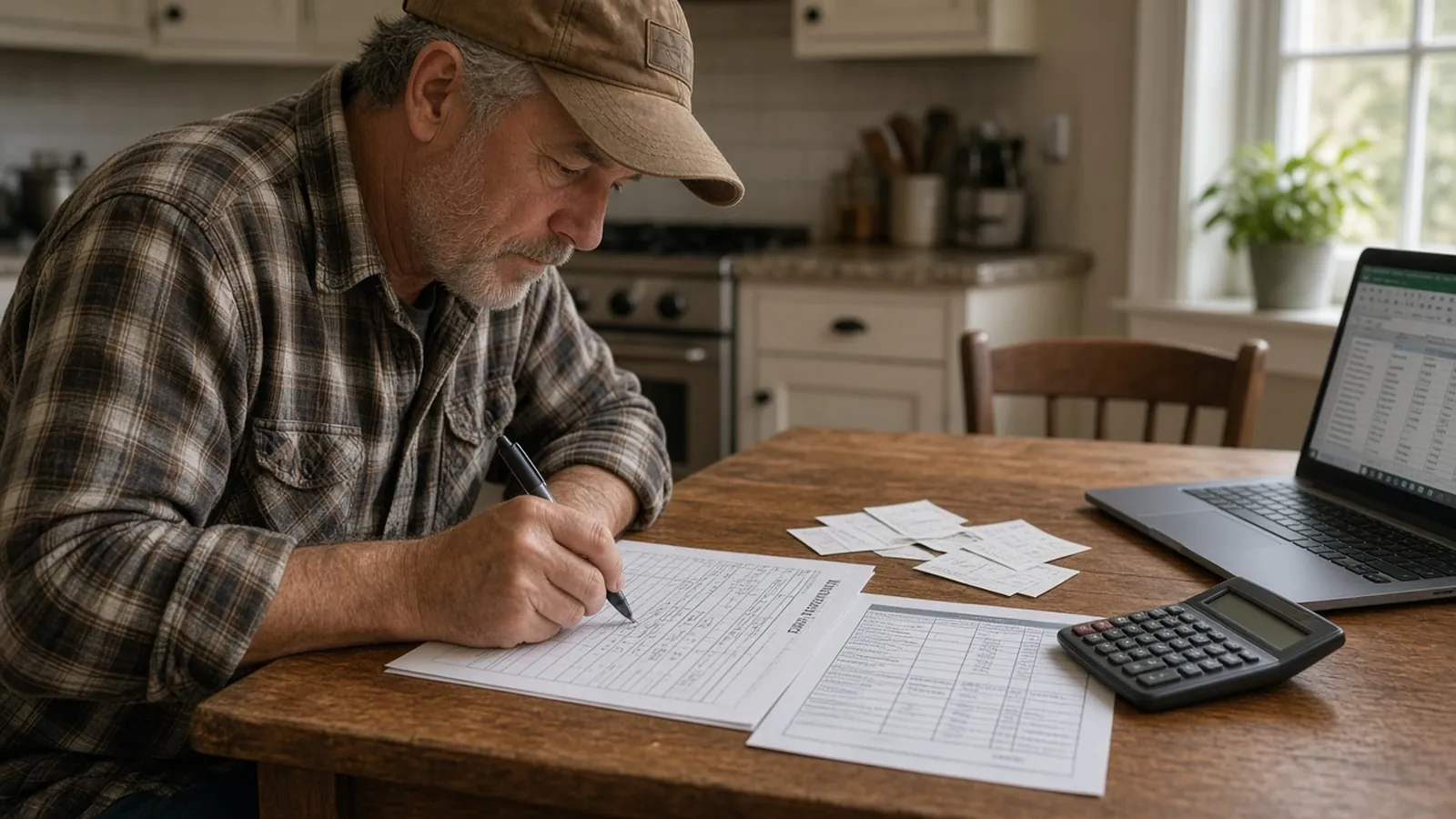
Lenders do not fund a vision board. They fund a repayment story that matches a balance sheet, a tax return and, for a farm ownership loan, a specific piece of land. The farmers who struggle with FSA and Farm Credit files are rarely short of enthusiasm. They are short of numbers that add up. This guide is about writing the plan those offices actually read, including the FSA-2037 and FSA-2038 worksheets, and about what to do when you do not yet have three years of Schedule F.
It is written for people applying to FSA or to a Farm Credit association or ag bank in the United States. The same discipline — a current balance sheet, a realistic cash-flow, and production records that match the story — is what a commercial lender in Canada, the United Kingdom or Australia will also ask for, even if the forms have different numbers on the corner.
Last checked: November 2026. Forms and handbook rules change. Use the current FSA worksheets and the instructions that go with them, and treat this as general information, not lending or financial advice.
1. What a lender-ready plan contains (and what a template usually misses)
A useful farm plan is shorter than a university business-plan packet and more specific than a blank template. It should cover, in language a loan official can check:
- who you are, and the experience, education or training that shows you can run this farm (FSA calls this managerial ability);
- what you will produce, on what land, under what lease or deed;
- who will buy it, at prices you can defend from invoices or contracts, not from a magazine;
- what you need the loan for, in dollars, and when you must close;
- a current balance sheet of what you own and what you owe;
- a projected income and expense, preferably monthly for the first year and then annually;
- a debt-repayment schedule that includes the new loan and the old ones;
- family living costs, if you are a household as well as a business;
- a brief risk note: what happens in a bad price year, a late planting, or a sick herd, and what insurance you will carry.
FSA has already decided how it wants the financial core of that story laid out. farmers.gov points applicants to form FSA-2037 (Farm Business Plan — Balance Sheet) and form FSA-2038 (Worksheet, Projected Income and Expenses). Those forms, or the same schedules inside the online loan application, are not optional colour. They are how a complete direct-loan file is built. If you are applying to Farm Credit or a bank, they may use their own spreadsheets; the content is the same. See also the FSA beginning-farmer loan guide and Farm Credit versus FSA versus a bank for which door you are walking through.
2. Mapping the plan to FSA-2037 and FSA-2038
FSA-2037 is a snapshot: cash, receivables, inventories of crops and livestock, equipment, real estate, and the debts that sit against them, today. It has to match bank statements, titles, and the FSA-2015 debt verifications. A tractor that is “worth $40,000” on the sheet and $18,000 on a conservative sale value will not survive a conversation, or an appraisal. Date the sheet, and do not mix last year’s calves with this year’s.
FSA-2038 is the movie: income and expenses for the coming year, and often a second year if the office asks. It is where beginning farmers either become believable or do not. Each income line should have a quantity, a price, and a reason. “Vegetables — $50,000” is not a line. “1,200 boxes of mixed vegetables at a $22 average, of which 800 are already promised to a CSA at $25, and 400 are planned at last year’s market average of $16” is a line a loan official can test.
The operating plan also has to show repayment ability after family living, taxes, and existing debt service. Off-farm wages belong on the sheet if they will actually be there. They are not a moral failing. Farm Aid’s sample case in the 2026 training is a beginning farmer with off-farm income, two years of Schedule F, and a modest land purchase — and the official question is still whether the cash flow, including those wages, will carry the new note.

3. Records when you have them — and when you do not
FSA’s complete-application list, and the Farm Aid deck, both look for three years of financial records and, where they exist, three years of production records. If you have Schedule F, bring it, and do not write a plan that pretends those years did not happen. If you are coming off an incubator plot, a family farm wage, or a market stall, bring invoices, harvest logs, CSA lists, and a letter from the incubator or the employer. A thin but honest file beats a thick invented one.
If you already keep livestock or crop records, use them. A notebook is acceptable; a simple digital record is better if you can back it up. Our guides to livestock farm records and to running a farm without a reliable internet connection are about that habit, not about software branding. The loan official wants to see that you know what the farm did last year.
4. A worked example (illustrative numbers only)
Example — a small vegetable operation, labelled so it is not a quote. Riley has two years of Schedule F from a 1.5-acre leased plot, with gross vegetable sales of $31,000 and $36,000, and a part-time off-farm job that nets $24,000 a year. Riley has a contract to buy 8 acres and a well for $195,000, can put down $15,000, and is asking FSA for a $180,000 ownership loan and a $25,000 operating microloan for irrigation, boxes and a used walk-behind tractor.
A lender-ready 2038 would not say “sales will rise to $90,000 because we will have more land.” It would say: last year Riley sold the equivalent of about $24,000 of produce per production acre. On 4 of the new 8 acres in vegetables in year one (the rest in cover and a lane), a cautious plan uses $20,000 an acre, or $80,000 gross, only if the market list is named — the existing CSA, a restaurant that has already written a short letter, and a Saturday market Riley already attends — and if labour is costed, including Riley’s time and a hired harvest week. Expenses would include seeds, compost, fuel, market fees, insurance, property tax, a repair reserve, family living, the new mortgage, and the microloan. If, after those lines, the year still cash-flows with the off-farm wages and a margin for a wet June, the plan is in the realm of conversation. If it only cash-flows at $40,000 an acre, it is not.
The 2037 would list the down payment cash, the vehicle, the existing tools, the student loan or credit-card balances as they really are, and then, at closing, the 8 acres and the new debts. Hiding a credit-card balance because it “is not a farm debt” is how files come back late and angry.
5. Monthly cash flow, collateral and a short risk page
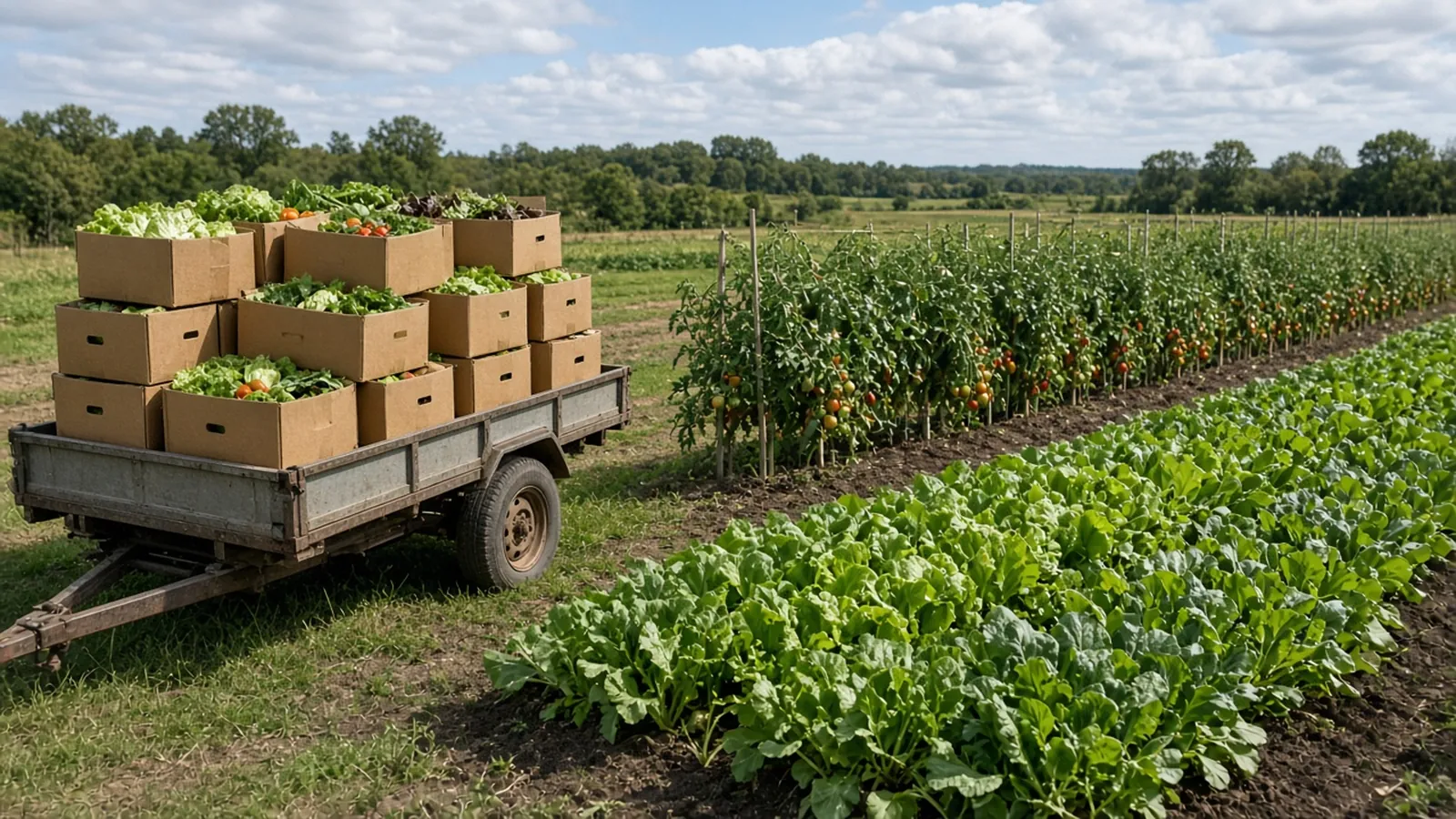
Annual totals hide a May that is all expense and a September that is all income. For an operating loan especially, sketch the year by month: when rent or a mortgage is due, when plants are bought, when the first CSA cheque arrives. FSA and Farm Credit both know that farms are seasonal. They still want to see that you know it too.
Collateral is the third leg. FSA looks for adequate security (primary security at least equal to the loan, with additional security sometimes targeted higher when other assets are available) and does not typically take a residence, retirement account or household goods. Do not offer a plan that depends on pledging things FSA will not take, and do not assume a lender will take a custom-built house as if it were a livestock barn. Describe the security honestly; the appraisal will anyway.
A one-page risk note is enough: crop insurance or NAP if it applies, liability cover if you have visitors, a line about a second market if the restaurant disappears, and what you will cut first in a bad year. “We will work harder” is not a risk plan.
6. Stress the plan, and decide who is on the note
Before you print the packet, run two dull cases on the same 2038. In one, drop the planning price or the yield by 15%. In the other, delay the first significant sales month by four weeks, which is what a late frost or a late loan closing actually does. If either case breaks the repayment, the plan is tight, and you should shrink the loan, add a genuine off-farm cushion, or wait a season and come back with more records. A loan official will often do this arithmetic anyway. Doing it yourself is how you keep the meeting short.
Who signs the note is also part of the plan. A spouse, a parent, or a partner who will own the land or guarantee the debt belongs on the balance sheet and in the entity documents, with their own debts disclosed. FSA has rules about entity composition, especially for beginning-farmer targeting: if you apply as an entity, the members and their eligibility have to fit the programme, not only the marketing name on your vegetable bags. A bank or Farm Credit association will have its own view of guarantees and of a newly formed LLC with no history. Form the entity for a reason, file the papers, and then write the plan in the name of the applicant who will actually operate the farm, not in the name of a company that does not yet exist on the day of the application.
Have one other person who is not you read the cash-flow out loud and ask “where does this number come from?” on every large line. If you cannot answer in a sentence, the line is not ready. That person can be an extension educator, a mentor, or a neighbour who already borrows. They should be kind about your goals and unkind about your prices. The time to hear that is at the kitchen table, not in a denial letter. Take notes from that review, change the sheet, and only then make copies for the office. A clean second draft, with sources in the margins, is worth more than a first draft printed in colour.
Common mistakes
- Downloading a 40-page template and leaving the numbers blank, or filling them with national averages you have never received.
- Writing a plan before there is a property, then being surprised that an FSA ownership loan cannot be finished.
- Omitting family living, income tax, or an existing car payment from the cash flow.
- Inflating equipment values and calling it “net worth.”
- Treating off-farm income as something to hide, or as something that will cover a plan that never works on its own terms.
Checklist
- The balance sheet is dated, and it matches statements and titles.
- Every major income line has a quantity, a price, and a source I can explain in a sentence.
- The first year is sketched by month, not only as an annual total.
- Family living and old debts are in the picture.
- The plan still works, or fails honestly, if price or yield is 15% worse than the planning case.
- I am using the current FSA-2037 and 2038, or the lender’s equivalent, not a random website form.
Frequently asked questions
1. Is a narrative plan enough, or do I have to use FSA’s worksheets?
For a direct FSA loan, use the Agency’s worksheets or the online application schedules. A short narrative can introduce them. It cannot replace them. A commercial lender may accept a clean spreadsheet that covers the same ground.
2. What if I have no Schedule F yet?
Bring what you have: invoices, logs, a letter from an incubator, W-2s from farm work, course certificates. Be ready for a smaller first loan, a microloan, or a request to come back after another season of recorded sales. Do not invent a tax history.
3. How optimistic can the projections be?
They can be hopeful about acres you will newly control, if the yield and the price are grounded in your own records or in a conservative local figure, and if labour is costed. They cannot be hopeful about a price you have never been paid. If the plan only works at the optimistic case, it does not work.
4. Do I need a farm identified before I write the plan?
You can draft the operating side early. For an FSA ownership loan, underwriting is tied to a specific property, so the plan has to be finished around that farm — its acres, its water, its buildings — not around “a farm somewhere in the county.”
5. How many years should the plan cover?
Have a detailed first year, a clear second year, and a simple view of how the operation looks once the loan is amortising normally. Some offices ask for five-year projections; if they do, keep years three to five boring and conservative, not a hockey stick.
6. Can someone write this for me?
An extension educator, a beginning-farmer non-profit, or a SCORE mentor can help you fill the forms. You still have to understand every line, because the loan official will ask you, not your typist, what happens if the restaurant drops the account.
Final thoughts
A lender-ready farm plan is a short, numerical argument that this household can carry this debt on this land. Use the official worksheets, tell the truth about last year’s sales, and put the uncomfortable lines — living costs, old debts, a bad weather year — on the page yourself before someone else puts them there. The file that is slightly smaller and entirely consistent is the one that gets through.
Build the records the next plan will need
LazAgro helps you keep production, input and sales notes through the year so the next FSA-2038 is not a winter of reconstruction.
Discover LazAgro