 LazAgro
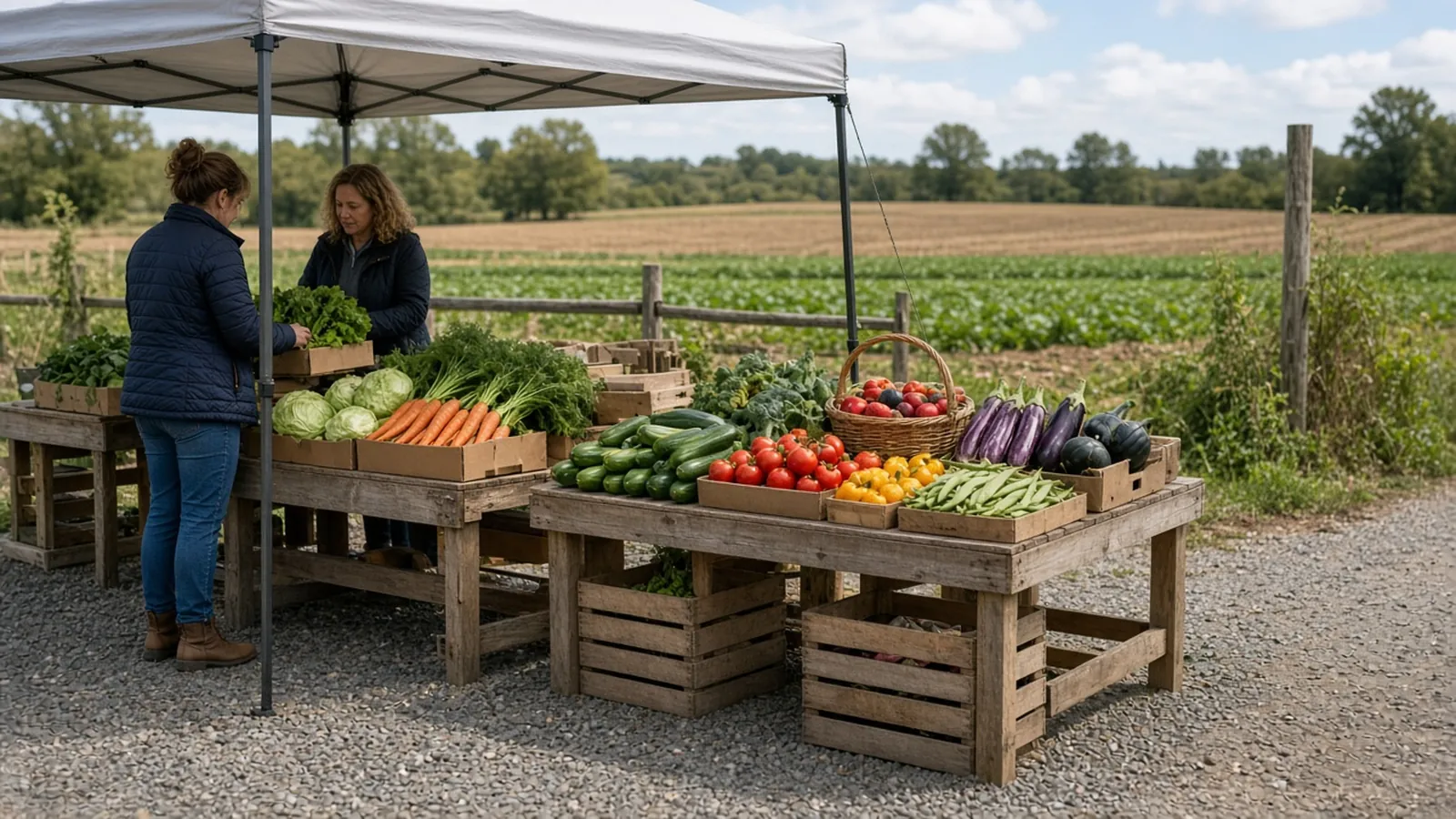
A homeowners policy is written for a house, a garage, and a family. It is not written for a farm stand, a weekend U-pick, a hired teenager, or a visitor who steps in a hole beside the high tunnel. That gap is the reason small-farm insurance threads on farming and homesteading forums sound so anxious, and it is also why premiums have been a raw subject in 2024 and 2025 as carriers have tightened farm and ranch books.
This article is for market gardeners, CSA and box-scheme growers, orchardists, homesteaders who sell food, and anyone in the United States, the United Kingdom, Canada or Australia who is trying to work out whether they still have “just a house,” or a farm that needs its own liability cover.
Last checked: November 2026. Policy wordings differ by country, state or province, and insurer. Speak to a licensed agent or broker who understands farm risks in your area, and read your own policy. This is general information, not insurance or legal advice, and it is not a recommendation of any insurer.
1. What farm liability is — and what it is not
Farm or ranch liability (sometimes sold as part of a farmowners or farm and ranch package) is third-party cover. It is there when someone else is injured, or their property is damaged, and they say you are responsible. It is not crop insurance, it is not livestock mortality, and it is not a policy that rebuilds your barn. Those are separate, and mixing them up is how people end up carefully insured for hail and completely open on a customer slip-and-fall.
A typical small-farm conversation with a broker will split the risk like this:
| Risk | Usual home for the cover | Often missed by |
|---|---|---|
| A customer is hurt at the farm stand or U-pick | Farm / premises liability; sometimes a special events or agritourism endorsement | Homeowners policies, which often exclude business and farm premises |
| You sell at a farmers’ market or through a CSA | Products liability, sometimes as part of the farm liability, sometimes needing a higher limit or a market’s vendor insurance | People who only bought “premises” cover and never mentioned off-site sales |
| A hired worker is injured | Workers’ compensation or employers’ liability, which is a legal regime, not a bolt-on to a house policy | Anyone paying cash “for a few days of help” |
| Your tractor hits a car on the road | Farm auto / mobile machinery, or a specific endorsement | Personal auto policies that exclude equipment used in a business |
| Fire in the barn, theft of a tractor | Farm property, scheduled equipment | Homeowners “other structures” sub-limits |
| A drought or a hail swath on the crop | Federal crop insurance and/or private crop-hail, in the United States | Liability policies, which do not insure your yield |
In the UK, a smallholding or farm liability policy, plus employers’ liability if you have staff (generally a legal requirement once you have employees), plays a similar role. In Canada and Australia, farm packages are sold by specialist mutuals and general insurers; the wording is local, the gap around “this is now a business” is the same idea.
2. Situations that regularly fall outside a homeowners policy
Homesteading Today and similar forums are full of versions of the same surprise: the insurer will cover the house, and then ask whether you have chickens, whether you sell anything, whether anyone comes on the property. Answer honestly. A cheap premium on a policy that would not pay is not a bargain.
Farm-gate and farm-stand sales
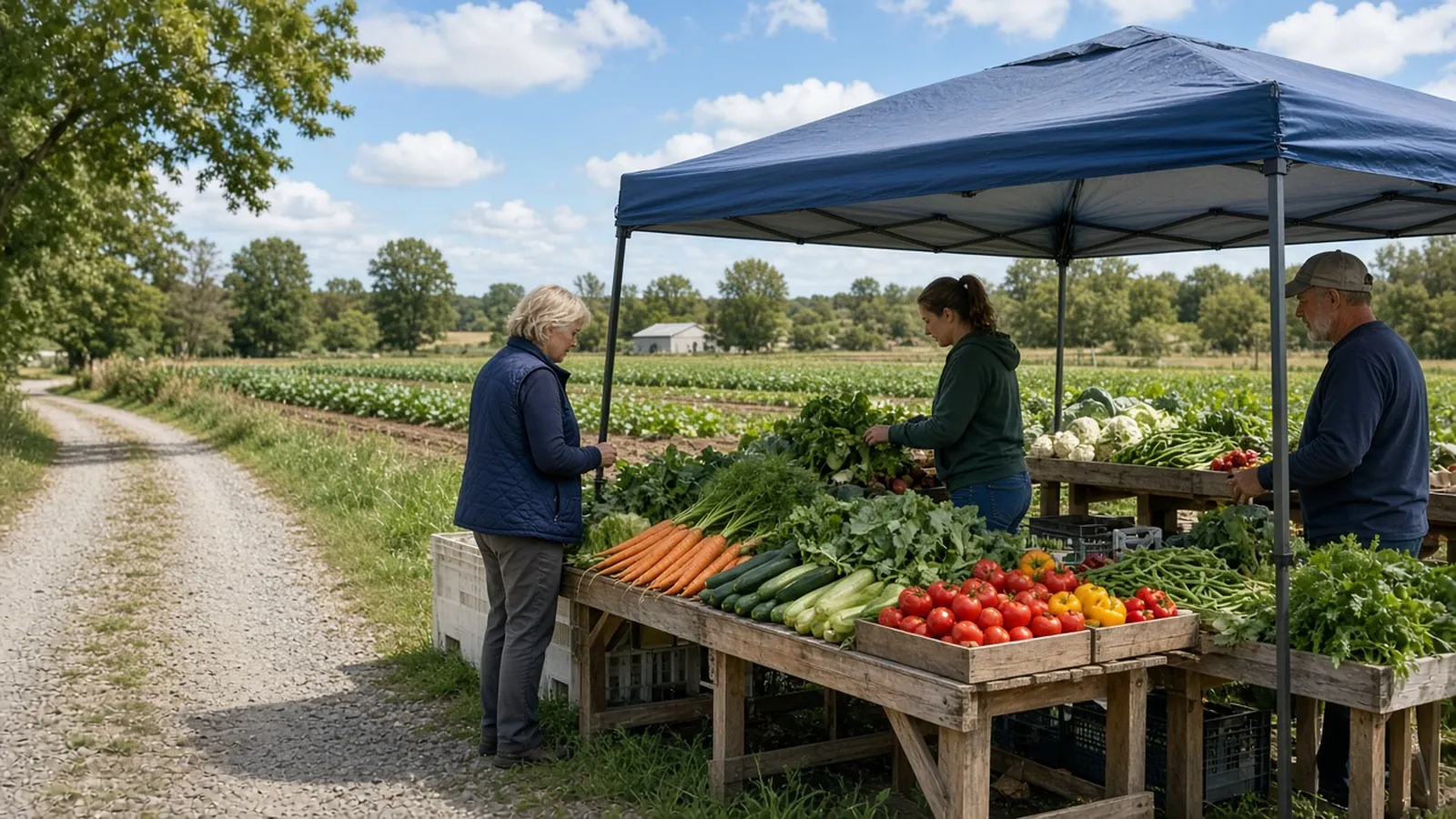
A table of tomatoes and a cash box at the end of the lane is a business use of the premises and a products risk. If a customer gets food poisoning, or trips over a crate, you want a policy that was told about the stand and that includes products liability at a limit you can live with.
U-pick, pumpkins, Christmas trees, on-farm dinners, school visits
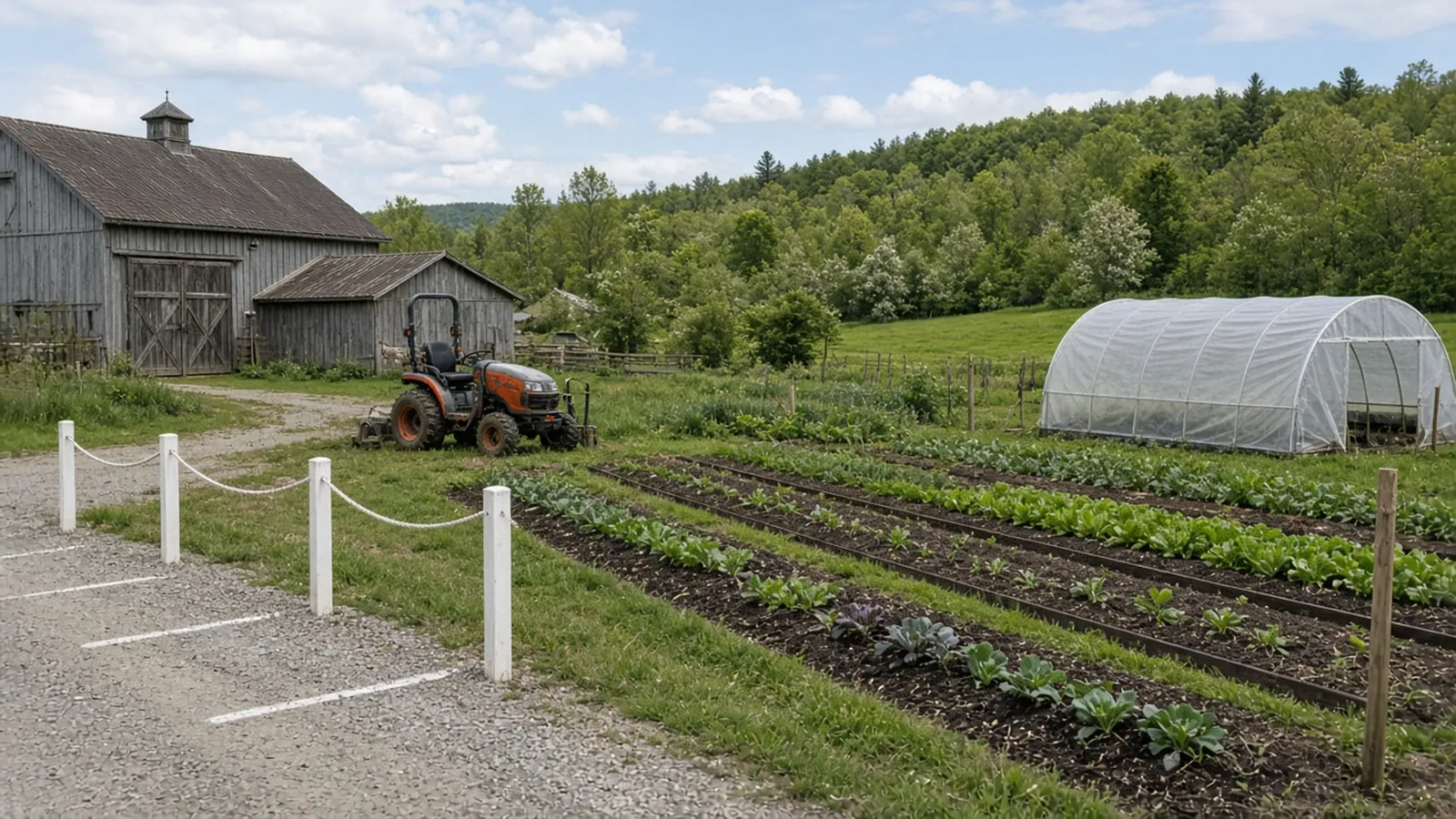
The moment you invite the public to walk your land, you have an agritourism or “invitation to the public” problem. Some farm policies absorb a modest amount of this; many want an endorsement, a higher limit, or a special events policy for a dinner or a festival. Tell the broker how many people, how often, whether you serve alcohol, and whether there is a play area or a wagon ride. Those details change the risk more than the name of the crop.
Chickens, a house cow, bees, a couple of feeder calves
Livestock and poultry are a frequent homeowners exclusion or limitation. Bees have their own questions (swarms, neighbours, allergic visitors). If you already keep bees as a small enterprise, the practical production side is covered in our beekeeping guide; the insurance question is whether the policy knows they are there and whether public access is involved.
A hired worker, even for a week
Employment law and workers’ compensation (or employers’ liability in the UK) do not care that the person is a neighbour’s son and you paid cash. A farm liability policy may defend you against some third-party claims; it will not automatically replace a workers’ compensation policy. Ask, before harvest, not after an accident.
The compact tractor, the ATV, the road
A machine that never leaves a private paddock is a different risk from one that is driven along a public road to another block. Personal auto and standard homeowners policies are a poor place to hide a compact tractor. Schedule it, and ask how road use is covered.
3. How to decide what you need, without buying the wrong package
Start with activities, not with a product name. Write down, for the next 12 months:
- what you will grow or raise;
- where you will sell it (gate, market, wholesale, online, CSA pick-up);
- who will come on the land, and why;
- who will work for you, paid or otherwise;
- what machines you will use, and whether they travel on public roads;
- whether you keep livestock, dogs used for work, or bees;
- any events, workshops or stays.
Take that list to a broker who actually writes farm business, not only house and auto. In the US, independent agents who work with farm mutuals or specialty farm carriers are often a better starting point than a website designed for urban homeowners. In the UK, a rural broker or NFU Mutual-style specialist is the usual path; in Canada and Australia, farm mutuals and rural brokers play a similar role. Ask for the exclusions in plain language, and ask what would happen in each of the situations on your list.
Limits deserve a separate question. A $300,000 liability limit looks large until a serious injury is involved. Many farms add an umbrella (an extra layer above the farm policy and the auto policy) once they have public visitors or substantial assets. There is no single correct number; it should have some relationship to what you could lose and to what a landowner or market manager requires you to carry. If you lease land, read the lease. Landlords and municipalities often specify a limit and ask to be named as an additional insured.
4. A worked example (illustrative)
Example. A couple on five acres at the edge of a US town grows vegetables for a 40-share CSA, sells surplus at a Saturday market, and invites members to a June open day. They have a compact tractor, two livestock-guardian dogs, and they hire one person for eight weeks in the summer. Their homeowners carrier has been insuring the house for years and has never been told about the CSA.
A serious review would usually move them to a farm or farmowners package that lists the acreage, the stand, the CSA and the market, includes products liability, schedules the tractor, and addresses the dogs. Separately, they would ask about workers’ compensation for the summer hire, and about whether the open day is within the policy or needs a short-term endorsement. The cheapest path — saying nothing and hoping the house policy holds — is the one most likely to fail on the only day they need it.
5. Markets, landlords and the certificates they will ask for
Farmers’ markets, school districts, wedding venues and landlords often ask for a certificate of insurance and to be named as additional insureds, sometimes with a minimum $1 million limit (or a local equivalent). That request is not always possible on a homeowners policy. Build it into your broker conversation so you are not scrambling on the Thursday before market season. If you sell into wholesale or a food hub, ask whether they need vendor cover too.
If you are still at the “raised beds and a few extra boxes for friends” stage, be honest about scale. Our guide to building a raised garden bed is about growing, not about becoming a farm business. The insurance line is crossed when sales, employees or public invitation become regular, not when you first build a bed.
6. If something happens
Call your agent or the claims number on the policy as soon as you reasonably can, even if you think the visitor was “fine” or the other driver was at fault. Take photographs of the condition of the ground, the stall, or the machine, and write down the names and contacts of anyone who saw what happened. Do not offer to pay a medical bill out of pocket in a way that sounds like an admission before you have spoken to the insurer — and do not ignore a letter from a solicitor. Small farms sometimes try to keep a minor incident “off the books” and then find that the story has grown.
If a market manager or a landlord asks for an incident report, share facts, not speculation. Keep a copy with the farm records. The same habit of writing things down that helps a livestock record book or a loan file will help you here: dates, weather, who was on the place, what you had already done to mark a hole or a wet floor.
Renewal is also part of claims discipline. If you had a quiet year, tell the broker what you improved (a defined parking area, a written food-safety routine, a training note for the summer hire). If you had a claim, ask what the carrier will want to see next year before they decide whether to keep you. Insurance is a relationship as well as a contract, especially with farm mutuals, and silence at renewal is how people are non-renewed without understanding why.
Common mistakes
- Assuming a homeowners policy “probably covers it” because the agent was friendly when you bought the house.
- Insuring the crop and the barn, and leaving visitors and products unmentioned.
- Hiring harvest help without asking about workers’ compensation.
- Letting a policy lapse at renewal because the new premium was a shock.
- Understating your activities to get a cheaper quote — which can also give the insurer a reason to decline a claim.
Checklist
- I have written down how I sell, who comes on the land, who works for me, and what machines I use on the road.
- I have spoken to an agent or broker who writes farm or smallholding business, and I have asked about the situations above, one by one.
- Products liability, public visitors, and workers are each either covered or consciously placed somewhere else.
- The tractor and other machinery are scheduled, including road use if it happens.
- I can produce a certificate of insurance if a market or landlord asks for one.
- Crop, property and liability covers are not being asked to do each other’s jobs.
Frequently asked questions
1. Will my homeowners policy cover a farm stand or U-pick?
Often no, or only in a very limited way. Business use, farm activity and public invitation are common exclusions or limitations. Have the agent show you the language, in your policy, that would respond if a customer were hurt.
2. I only sell at a farmers’ market. Do I still need farm liability?
You need products and vendor liability that the market will accept, and you need to tell your insurer that you sell. That may be a farm policy, a small-business policy, or a market-organised scheme. Do not assume a house policy extends to a Saturday stall.
3. Do a few chickens or a garden for friends require a farm policy?
Maybe not, if there are no sales and no visitors, but many homeowners insurers still want to know about livestock and may restrict numbers. The need for a farm or smallholding policy becomes much clearer once you sell food, employ someone, or invite the public.
4. What is an umbrella policy?
It is an extra layer of liability cover that sits on top of your underlying farm and auto (or equivalent) policies, once those limits are used up. It is often the practical way to reach a $1 million or $2 million total limit without buying an enormous primary policy. The umbrella only helps if the underlying policy has already responded, so the underlying exclusions still matter.
5. Are farm liability premiums going up?
Many farmers reported sharp increases in 2024–2025, and the broader insurance market was expensive in that period. Your renewal may or may not follow that pattern. Start shopping early, improve the risk where you can (clear visitor areas, documented food-safety habits, trained drivers), and do not go uninsured between quotes.
6. Does this replace crop insurance or a loan requirement?
No. Lenders and landlords may require liability and property cover, and crop lenders may also require MPCI. Each policy has a job. Keep them straight in the file you take to a lender or a business-plan meeting.
Final thoughts
The useful insurance conversation on a small farm is not “what is the cheapest farm package.” It is “here is how people come onto this land, here is how money leaves it, and here is who works here — which of those would my current policy actually defend?” Once you can answer that, the right product, in any of the four countries this article is aimed at, is much easier for a specialist broker to place.
Run the farm like a business, including the boring files
LazAgro helps you keep production, sales and input records in one place — the same discipline that makes a loan file or an insurance conversation easier.
Discover LazAgroSources and further reading
- Discussions of rising farm insurance costs and “what policy do I need?” on r/farming (2024–2025) and liability / chickens / barns threads on Homesteading Today — used here as evidence of the questions farmers ask, not as insurance advice.
- Your own policy wording, and a licensed farm or rural broker in your state, province or country, remain the authority on what you have actually bought.