 LazAgro
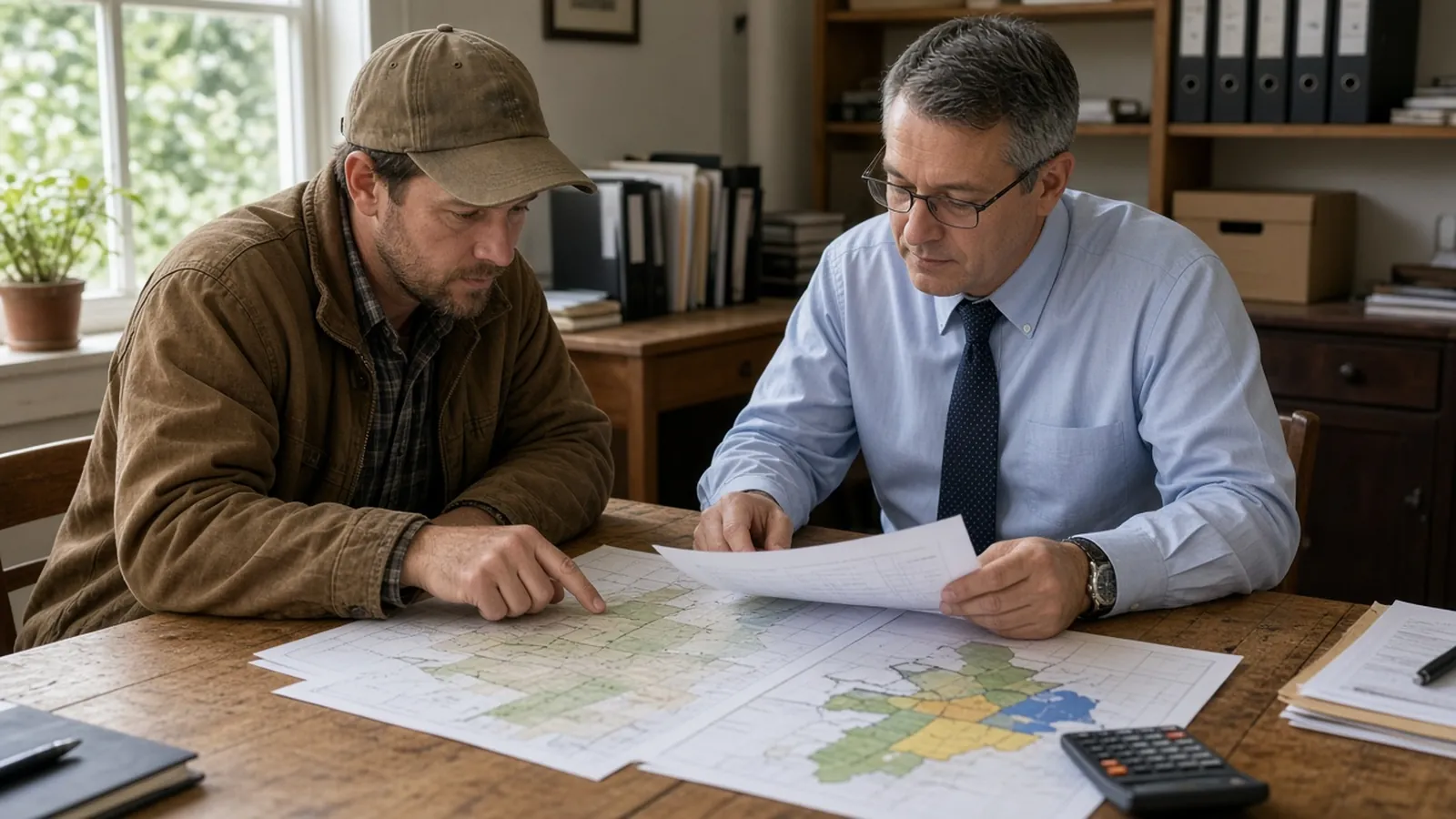
If you have been farming for ten years or less and a regular lender has already told you the numbers do not work, the USDA Farm Service Agency is often the next door you try. FSA beginning-farmer loans can help you buy land, stand up an operating line, or take a smaller microloan with less paperwork. They are still loans, not grants, and the file that gets approved is the one that shows, in plain numbers, how the debt will be repaid.
This guide walks through who counts as a beginning farmer, which loan to ask for, the documents behind form FSA-2001, how long a complete file is supposed to take, and the reasons applications stall. It is written for people in the United States who are trying to buy or expand a farm in 2026.
Last checked: November 2026. Loan limits, rates and forms change. Confirm figures with your local FSA Farm Loan Team and the current fact sheets on fsa.usda.gov before you apply. This article is general information, not lending, legal or financial advice.
1. Who counts as a beginning farmer
FSA’s definition is about experience, not age. The 2022 Census of Agriculture found that many beginning farmers are in midlife. There is no upper or lower age limit on the beginning-farmer label itself.
According to FSA’s January 2026 beginning-farmer fact sheet, a beginning farmer or rancher is an individual or entity who:
- has not operated a farm for more than 10 years;
- substantially participates in the operation;
- for a farm ownership loan, does not already own a farm larger than 30 percent of the average-size farm in the county, measured at the time of application using the most current Census of Agriculture;
- if the applicant is an entity, has all members related by blood or marriage, and every member must themselves be an eligible beginning farmer.
You also have to meet the ordinary loan rules: U.S. citizenship or permanent residency, legal capacity, acceptable credit history, managerial ability (experience, education or training), owner-operator of a family farm, and the ability to repay. Direct loans have a “credit elsewhere” test: FSA is a lender of first opportunity for people who cannot get enough commercial credit at reasonable rates and terms, not a cheaper substitute for a bank that would have said yes anyway.
2. Which loan to ask for: ownership, operating or microloan
Most confusion on forums is not about eligibility. It is about which bucket the money comes from. The uses are different, the ceilings are different, and you can hold more than one type if the combined statutory limits still work.
| Loan type | FY 2026 published ceiling | Typical term | What it can pay for |
|---|---|---|---|
| Direct Farm Ownership (FO) | $600,000 | Up to 40 years | Buy or enlarge a farm; construct or improve essential buildings; soil and water conservation; closing costs |
| Direct FO microloan | $50,000 | Up to 25 years | Same ownership purposes, simpler file |
| Direct Operating (OL) | $400,000 | 1 to 7 years | Annual inputs, livestock, equipment, minor improvements (wells, hoop houses, irrigation, delivery vehicles), some refinancing, family living expenses |
| Direct operating microloan | $50,000 | 1 to 7 years | Same operating purposes; FSA has published a 5% rate cap on this product for beginning and veteran farmers |
| Guaranteed FO or OL (made by a commercial lender, FSA guarantees most of the risk) | $2,343,000 (inflation-adjusted for FY 2026) | FO up to 40 years; OL 1 to 7 years | Similar purposes; guaranteed FO may also refinance certain debts. The lender, not FSA, sets the rate |
| EZ Guarantee | $100,000 ($50,000 if the lender is a microlender) | Set by the lender under the programme rules | A streamlined guarantee for smaller commercial loans |
| Emergency (EM) loans | $500,000 | Set under EM rules | Recovery from a qualifying disaster or quarantine, in designated areas |
Those figures come from FSA’s January 2026 beginning-farmer fact sheet, the November 2025 Farm Loan Information Chart, and FSA handbook notes for FY 2026. They are aggregate ceilings: existing principal plus the new loan generally cannot exceed the cap at closing. There are also combined caps if you stack direct and guaranteed credit. A guaranteed farm ownership or operating loan of $2,343,000 plus a direct ownership loan can reach a combined published limit of $2,943,000 for FY 2026; adding an emergency loan has a higher combined figure still. If you are anywhere near those numbers, sit down with the Farm Loan Team rather than adding the ceilings yourself.
Interest rates on direct loans are based on FSA’s cost of borrowing and are posted as a rate sheet, not as a single number that stays still all year. Do not plan a purchase around a rate you saw in an old forum post. Guaranteed-loan rates are negotiated with the participating lender. The Farm Loan Information Chart notes a 1.5% guarantee fee on guaranteed farm ownership loans; confirm the current fee when you talk to the lender.
A practical way to choose
- You have found a farm to buy or you need to put up an essential building. Start with a direct or guaranteed farm ownership loan, or a participation structure (see below).
- You already have (or will have) land, and you need seed, feed, livestock, a tractor or cash to get through the year. That is an operating loan or an operating microloan.
- You need $50,000 or less and you want a shorter application. Ask about a microloan first. You can have an ownership microloan and an operating microloan, each with its own $50,000 ceiling.
- A bank or Farm Credit association is willing to lend if someone shares the risk. That is a guaranteed loan. You apply to the lender, not to FSA for the money itself.
Farmers often need both: an ownership loan for the land and an operating loan for the first year’s cattle, seed or equipment. That is normal. What is not normal is trying to stretch an operating loan into a land purchase, or assuming a microloan will cover a $200,000 tractor.
For a comparison of FSA, Farm Credit and a local ag bank — including who is usually faster — see Farm Credit vs FSA vs a local bank. The business-plan section of your file is covered in detail in how to write a farm business plan that a lender will actually read.
3. The down-payment and participation options
If the farm costs more than you can borrow from FSA alone, FSA still has ways to sit alongside another lender. Two structures come up often in beginning-farmer conversations:
- Down payment farm ownership loans. These are designed so a beginning farmer can buy with a small down payment and a commercial lender taking a large share of the financing, with FSA taking a portion as well. Exact percentage splits and current rate discounts are set in the programme rules and should be confirmed with the office; they have changed over the years, which is why old Reddit descriptions do not always match today’s product.
- Direct FO participation. The Farm Loan Information Chart describes a participation FO with the same $600,000 ceiling and up-to-40-year term, at the direct FO rate minus 2 percentage points, with a floor of 2.5%, when at least 50% of the loan amount is provided by another lender.
The practical implication is the same: get the other lender talking to FSA early. A seller who will not wait four months will not suddenly become patient because you discovered the participation option in week 12.
4. You usually need the farm in hand before an ownership loan starts
This is the step that surprises people who are used to a residential pre-approval letter. For a direct farm ownership loan, FSA is financing a specific property. Comments from recent beginning-farmer discussions, and FSA’s own application checklist, point the same way: you generally need a signed purchase agreement and a legal description of the land before the ownership loan can be fully processed. There is typically no “pre-approved for $X, now go shopping” letter of the kind a homebuyer gets.
That has consequences:
- Build the file — experience write-up, tax returns, draft operating plan — before you make an offer, so you are not starting the paperwork on the day you go under contract.
- Tell the seller and the estate agent, in writing, that the purchase is contingent on FSA financing and on a realistic closing window. Many beginning-farmer purchases take several months after the contract is signed.
- Have a plan if the contract expires. Cooperative sellers, or sellers who themselves used FSA, are easier to work with than a listing that already has a conventional backup offer.
Operating loans are a little different: you still need a real operation and a plan, but you are not always tying the loan to a new deed. You may still need a lease, a farm number, and enough security.
5. What a complete application actually contains
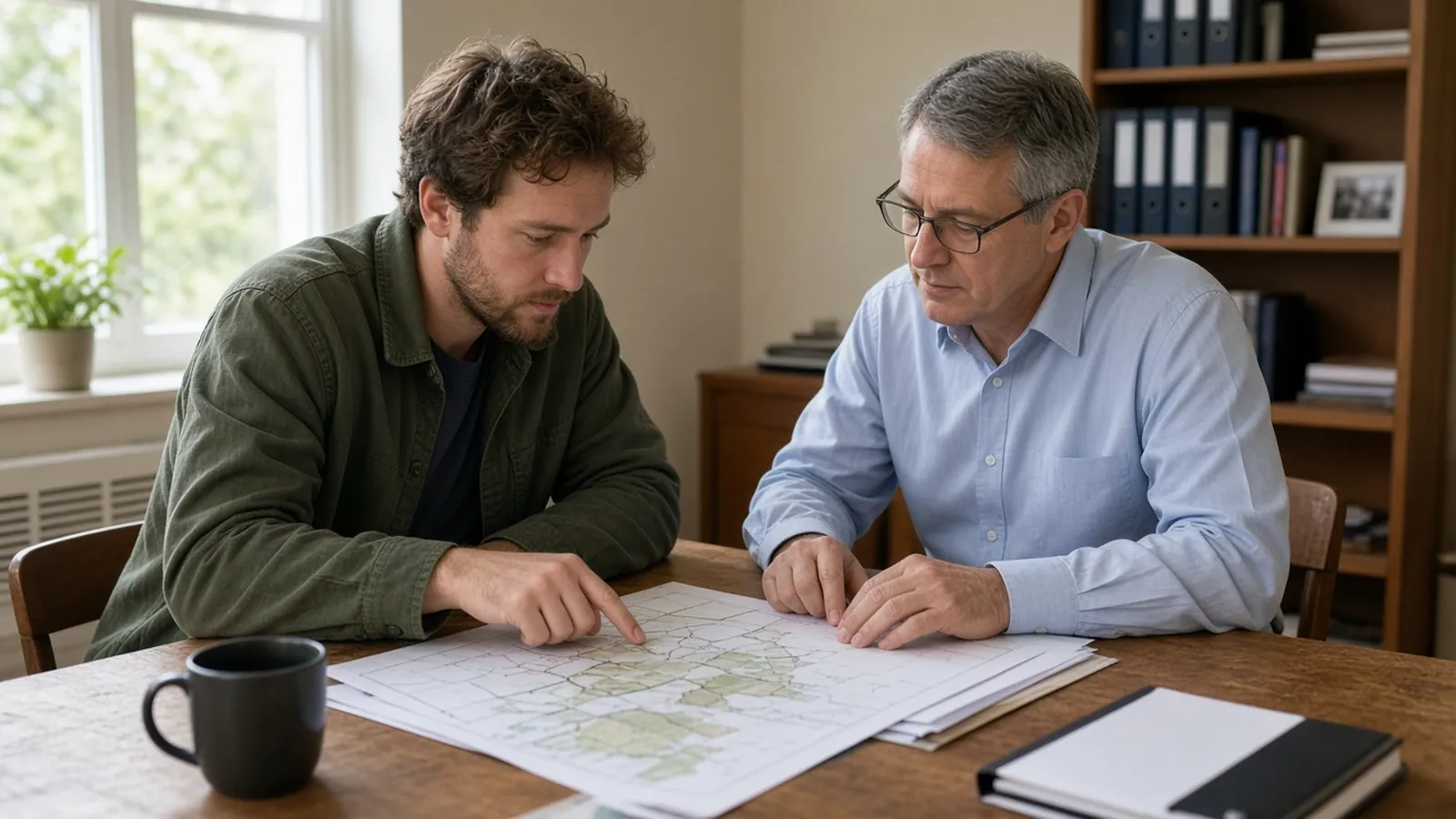
The core form for most direct loans is FSA-2001, Request for Direct Loan Assistance (the May 2026 version was current when this was checked). Individuals can also start an application in the FSA Online Loan Application if they have a USDA customer record linked to a Level 2 eAuthentication or Login.gov account. Either way, the form is only the cover. A complete file is the form plus the evidence that answers FSA’s underwriting questions.
FSA’s own instructions say that within seven calendar days of receiving your application, the office will write to tell you whether the file is complete or what is still missing. Incomplete files are not processed against the 60-day decision clock. If you do not get that letter, call the office.
Use this as a working checklist, then confirm it against the checklist on the last pages of FSA-2001 and with your loan official:
- Completed, signed FSA-2001 (and entity documents if you are not applying as an individual).
- A written description of your training, education and farm experience — this is not optional colour, it is how you show managerial ability.
- A farm business plan and cash-flow projection, usually built on the FSA-2037 balance sheet and FSA-2038 projected income and expense worksheets, or the same information in the online application.
- A current balance sheet and, where they exist, three years of financial records and tax returns (including Schedule F if you have one).
- Three years of production records if you have been operating. If you are new, bring what you do have: incubator-farm logs, invoices, CSA lists, 4-H or employee records, course certificates.
- Verification of debts and assets (FSA-2015 and supporting statements).
- Evidence of a credit-elsewhere effort, as required for the loan type — often a turndown or a letter from a commercial lender.
- AD-1026, the highly erodible land and wetland conservation certification, filed with FSA.
- For a purchase: a signed sales agreement, legal description, and enough information for an appraisal and an environmental review (FSA-851). A farm visit is normally required before an ownership loan is approved.
- The credit-report fee, when requested.
If you already keep livestock or crop records, even in a notebook or a simple app, bring them. A clean production history is one of the fastest ways to show you can operate a farm, not just describe one. Our guide to keeping livestock farm records is a practical starting point if that part of your file is thin.
6. How long it takes — and when the clock actually starts
Forum posts often say “six to twelve months.” Some files do take that long, especially if the first submission was incomplete, the land appraisal is slow, or funds are tight mid-year. The rule FSA trains staff on is stricter than that folklore: once the application is determined complete, the Agency is supposed to finish processing and notify you of the decision within 60 calendar days, and to tell you the reason if it is turned down.
The gap between those two stories is almost always completeness. A file that sits on someone’s desk because the tax transcript never arrived, or the purchase contract was never attached, is not yet on the 60-day clock. The seven-day completeness letter is there so that delay is visible. Answer it quickly.
| Stage | What “done” looks like | What usually slows it down |
|---|---|---|
| Preparing the file | You can hand over a complete FSA-2001 packet, or submit it online with uploads | No property under contract (ownership loans); missing tax returns; a plan with no numbers |
| Completeness review | Written notice that the application is complete (target: within 7 calendar days of receipt) | Office backlog; you did not include the sales contract or AD-1026 |
| Underwriting and visit | Farm visit, appraisal, environmental review, credit memo | Appraisal delay; title problems; plan numbers that do not match the tax returns |
| Decision | Approval, conditional approval, or a written denial (target: within 60 calendar days of a complete file) | Funding cycles; unresolved eligibility issues |
| Closing | Loan documents signed, funds disbursed, lien perfected | Title insurance, survey, seller delays, last-minute debt that changes the balance sheet |
If the loan is denied, that is not automatically the end. FSA denial letters describe appeal rights, which can include reconsideration, mediation and a review by the National Appeals Division. Read the letter before you assume you must start over with a different lender.
7. A worked example (illustrative numbers only)
Example — labelled so it is not mistaken for a quote or a pre-approval. Jordan has farmed vegetables and cut flowers on a one-acre incubator plot for three years, has two years of Schedule F, and works a part-time off-farm job. Jordan has a signed contract to buy 12 acres of tillable land, irrigation already in the ground, and a small shed, for $240,000. Closing costs are estimated at $8,000. Jordan can put down $20,000 in savings. The request to FSA is a direct farm ownership loan of $228,000, under the $600,000 ceiling, plus a $35,000 operating microloan for a used tractor, a walk-behind, seed and plastic.
What the loan official will test is not the story. It is the farm operating plan: can the 12 acres, at realistic yields and prices Jordan has already received, plus the off-farm wages, cover family living, the new mortgage, the microloan, taxes and a reserve? If the plan only works at peak farmers-market prices every week of the year, it will not survive review. If it works on the prices Jordan actually banked last year, with a modest yield assumption and the off-farm income written down honestly, the file has a chance.
Collateral would typically start with a lien on the 12 acres and on the equipment bought with the microloan. FSA looks for adequate security on the loan (primary security at least equal to the loan) and may ask for additional security up to a higher target when other assets are available. FSA does not typically take a personal residence, retirement accounts or ordinary household goods as security.
Change any one of those facts — no off-farm income, no production history, a purchase price well above the likely appraisal, or a seller who must close in 30 days — and the same request can become a denial or a better fit for a guaranteed loan through a commercial lender.
8. Why applications stall or get declined
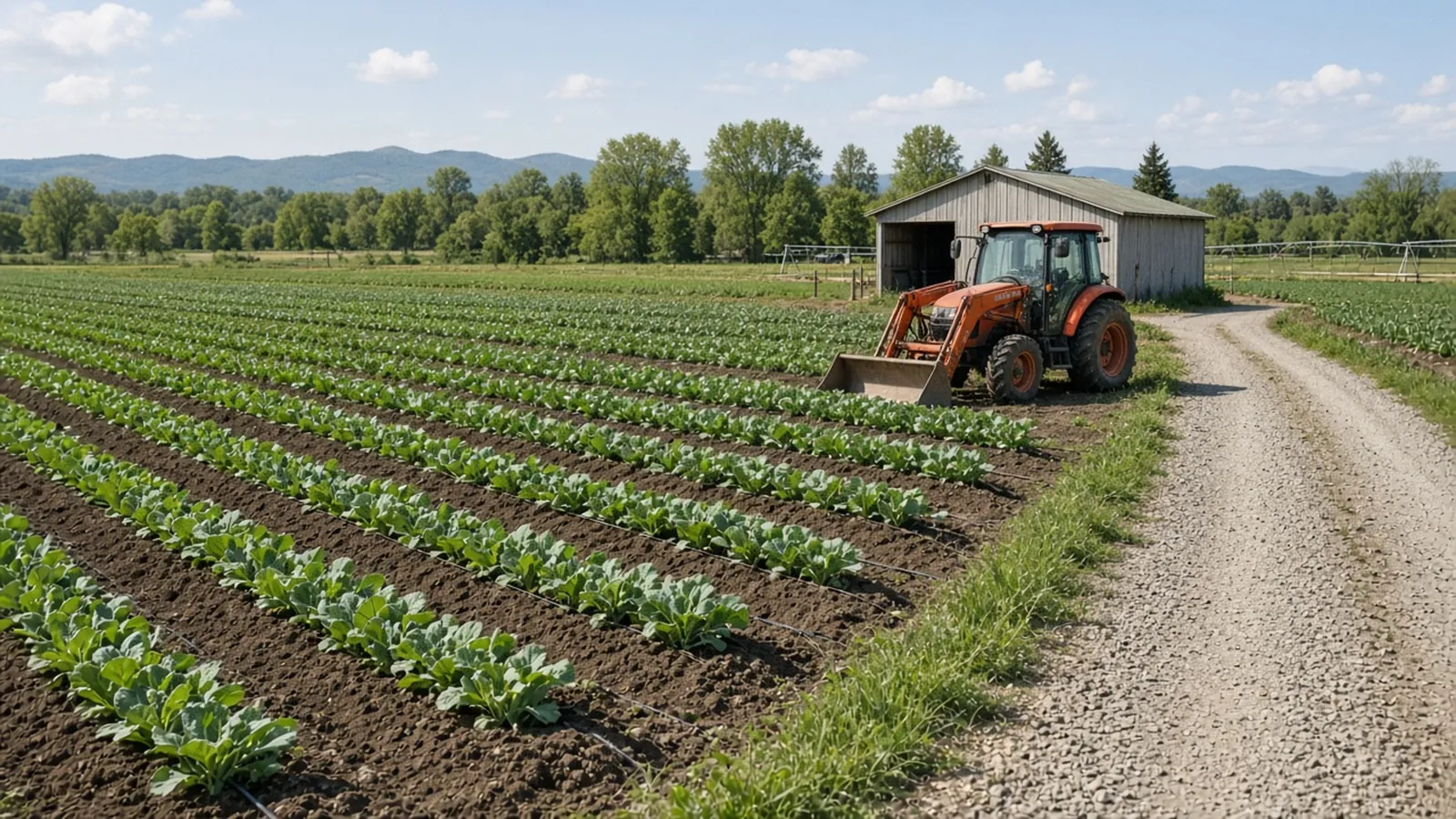
The Farm Aid training material used with FSA partner advisers in 2026 puts repayment first: “Can the loan be repaid?” Character, the operating plan and collateral are the three legs. In practice, the files that struggle usually have one of these problems:
- The plan and the tax returns tell different stories. Projected vegetable sales of $80,000 sit next to a Schedule F that never cleared $18,000, with no explanation of new land, new markets or why this year is different.
- No managerial ability on paper. “I grew up on a farm” needs dates, tasks, acres, and who can confirm it. Employee work, military equipment experience, a degree, or a completed borrower-training course can all count; they have to be written down.
- The ownership loan was started before there was a farm to buy. The office cannot underwrite a property that has not been identified.
- Credit-elsewhere or outstanding federal issues. A direct loan generally needs the commercial-credit test to be met. Delinquent federal taxes, unpaid federal judgements, debarment, or certain crop-insurance violations can stop a file.
- Security and title problems. Clouded title, an access easement that does not exist, or a purchase price the appraisal will not support.
- Unrealistic timing. A contract that expires in three weeks is not an FSA timeline.
9. How to work with the county office
Find your Farm Loan Team through the service-centre locator on farmers.gov. Call before you file, and ask whether they prefer a paper FSA-2001 or the online application. Take a short, complete packet rather than a long, incomplete story. If you need help building the financial statements, a beginning-farmer organisation, an extension educator, or a SCORE mentor can help you do the work — the loan official can explain the forms, but they cannot write your plan for you.
Targeted funds are set aside each year for beginning farmers. That can help when money is tight, but it is not a separate, easier loan. You still have to clear eligibility and repayment.
Common mistakes
- Treating FSA as a grant programme or as a pre-approval engine for land shopping.
- Copying a business-plan template and leaving the numbers blank, or inventing a market you have never sold into.
- Forgetting AD-1026 and then wondering why the file is “incomplete.”
- Applying only for an ownership loan when the first year clearly also needs operating credit — or the reverse.
- Ignoring Farm Credit or a local ag bank. Sometimes the better answer is a guaranteed loan, or a commercial loan FSA never needs to see.
Checklist before you submit
- I meet the 10-year beginning-farmer test, or I am applying under the regular (non-beginning) rules and have said so clearly.
- I know whether I am asking for FO, OL, a microloan, a guarantee, or a combination, and the amounts fit the published ceilings.
- For an ownership loan, I have a signed contract and a legal description, or I am still preparing the file and have not represented myself as pre-approved.
- My balance sheet, debt verifications and tax returns add up to the same story as my cash-flow projection.
- AD-1026 is filed, and I can pay the credit-report fee when asked.
- I have a closing timeline the seller has seen, measured in months, not days.
Frequently asked questions about FSA beginning-farmer loans
1. How long does an FSA loan take?
Once FSA has a complete application, the Agency is supposed to reach a decision and notify you within 60 calendar days. Getting the application to “complete” is often the slow part. Build the packet before you go under contract, and answer the seven-day completeness letter immediately. Closings can add more time after approval.
2. Do I need a rejection letter from a bank?
Direct loans generally require a credit-elsewhere test: FSA needs to see that you cannot obtain sufficient credit elsewhere at reasonable rates and terms. How that is documented varies by office and loan type; it is often a lender letter. Guaranteed loans work the other way around — you start with a participating lender. Ask your Farm Loan Team what they want to see in your county.
3. Can I get an FSA loan if I do not already own land?
Yes. Many beginning farmers buy with a farm ownership loan, or operate first on leased land with an operating loan. You do need control of the land you will farm — a deed or a written lease — and, for an ownership loan, a specific property under contract. Personal gardens and purely non-profit growing usually do not qualify as a family farm business.
4. Is there a USDA grant to start a farm?
No. FSA’s farm loan programmes are loans that must be repaid. Some NRCS and Rural Development programmes offer cost-share or, at times, energy grants for specific practices, not for a general farm start-up or a land purchase.
5. What is the difference between a direct loan and a guaranteed loan?
A direct loan is made and serviced by FSA. A guaranteed loan is made by a bank, Farm Credit association or other participating lender, and FSA guarantees most of the lender’s risk (up to 90% on most loans, and up to 95% in some cases, according to recent programme summaries). Guaranteed loans can be larger; the lender sets the rate and runs the underwriting, with FSA’s guarantee behind it.
6. Can I use a farm ownership loan for a house on the farm?
FSA-2001 says ownership loans can be used to construct, purchase or improve farm dwellings and other facilities essential to the operation, as well as to buy land and pay closing costs. “Essential” is a facts-and-circumstances question. Do not assume a large custom house will qualify; ask the loan official before you write it into the contract.
7. Do the 2026 loan limits apply to beginning farmers only?
The published ceilings — $600,000 direct FO, $400,000 direct OL, $50,000 microloans, $2,343,000 guaranteed — are programme maxima for FY 2026, not a separate beginning-farmer pot. What beginning farmers do get is a statutory targeting of a share of each year’s funds, and access to products such as down-payment loans and the operating-microloan rate cap described in the current chart. Always re-check the chart for the year you apply.
Final thoughts
An FSA beginning-farmer loan is a serious, document-heavy mortgage or operating note, offered at a point in your life when a commercial lender may not yet be comfortable. The people who get through it treat the 60-day clock as something they earn by submitting a complete file, not as something they are owed on the day they first call the office. Get the property, the plan and the records in a single story, and then stay in touch with the Farm Loan Team until the loan either closes or you have a written decision you can act on.
Keep the records your loan file will need
LazAgro helps you record production, inputs and sales on the farm, online or offline, so the next balance sheet is not a weekend spent reconstructing the year from memory.
Discover LazAgroSources and further reading
- FSA, Loans for Beginning Farmers and Ranchers (January 2026 fact sheet)
- FSA, Farm Loan Information Chart (November 2025)
- FSA-2001, Request for Direct Loan Assistance (May 2026)
- farmers.gov — service centre locator, Loan Assistance Tool and online loan application information
- Farm Aid, Understanding the FSA Direct Farm Loan Process (June 2026 training deck)