 LazAgro
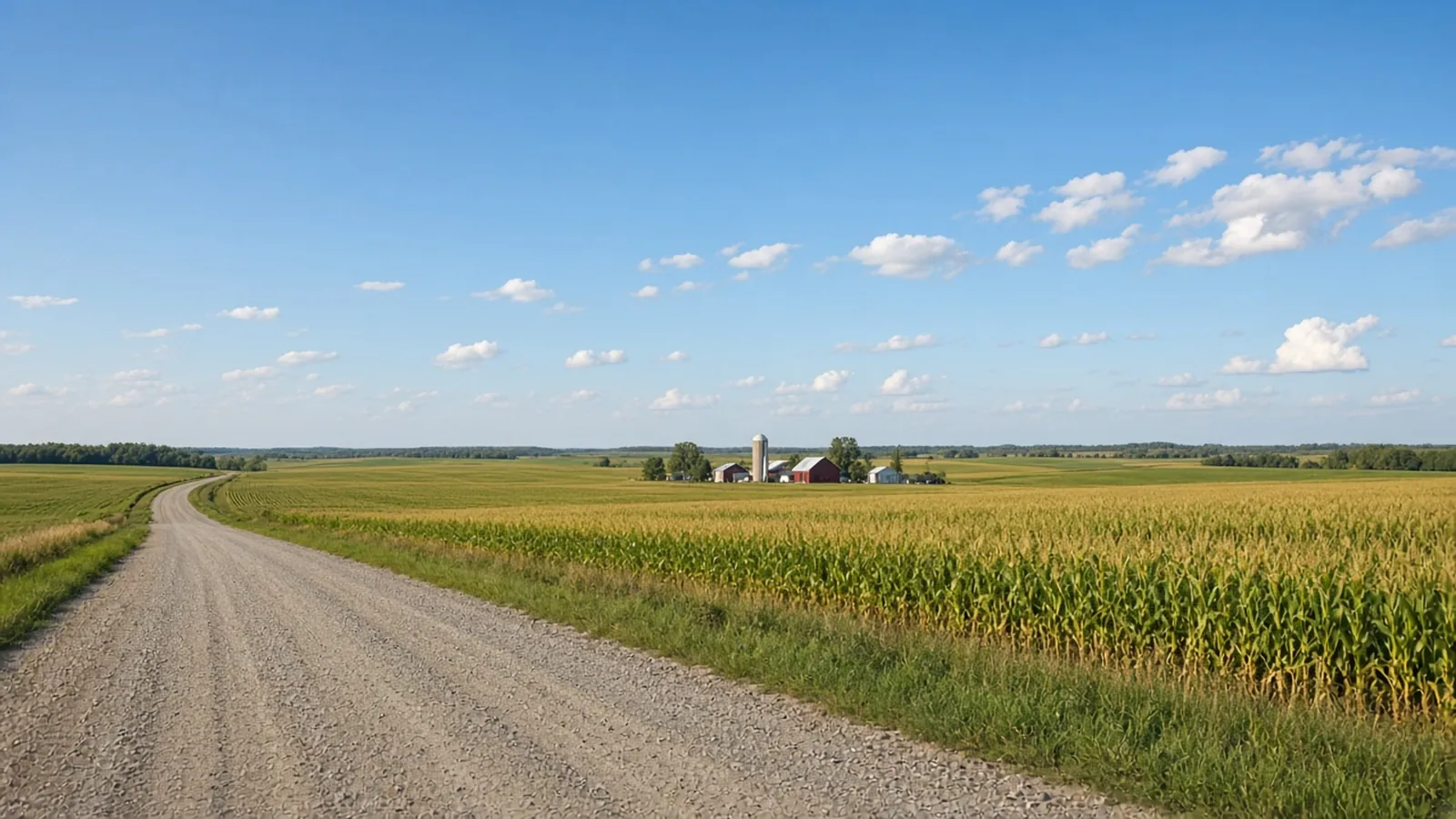
Farmland is often sold, in investment writing, as a quiet asset that “always goes up” and pays a rent cheque while you wait. The official numbers are more modest than that story, and more useful. In 2026, according to USDA’s National Agricultural Statistics Service, US cropland averaged $6,020 an acre and cash rent averaged $160 an acre. That is a national cash yield of about 2.7% before tax, vacancy, water and repairs — not a mystery 8% coupon, and not a reason to dismiss the asset either.
This guide compares three ways people actually take the exposure: buying a farm and leasing it out, buying shares in a listed farmland REIT, and using a private crowdfunding or syndication platform. It is written for readers in the United States first — where the official land-value series and the two listed REITs live — and it will still help investors in Canada, Australia and the United Kingdom who are trying to tell a cash-rent story from a stock story.
Last checked: November 2026, against the USDA-NASS Land Values 2026 Summary (released 31 July 2026) and published cash-rent estimates for 2026. This is general information, not investment, tax or legal advice, and it is not a recommendation to buy any stock, farm or platform interest.
1. What official 2026 land values and rents actually say
NASS’s Land Values 2026 Summary put average US farm real estate — land and buildings together — at $4,500 an acre, up $150, or 3.4%, from 2025. Cropland averaged $6,020 an acre, up $190, or 3.3%. Pasture averaged $2,000 an acre, up $80, or 4.2%. These are averages for the 48 contiguous states, from a survey of operators, not the asking price of a particular 80-acre tract on a black-soil road you like.
Cash rents move more slowly than prices. Farm Bureau’s write-up of the 2026 estimates put average US cropland rent at $160 an acre, down $1 from 2025; irrigated cropland rent held at $244; non-irrigated rent was $146; pasture rent rose to a record $16.50 an acre. USDA’s Economic Research Service, using the same NASS data, published regional 2026 figures that show how little a single national average tells you:
| Region (USDA ERS / NASS, 2026) | Cropland value per acre | Cropland rent per acre | Simple rent-to-value (illustrative) |
|---|---|---|---|
| Corn Belt | $9,280 | $241 | About 2.6% |
| Pacific | $10,080 | $267 | About 2.6% |
| Lake States | $7,240 | $188 | About 2.6% |
| Northern Plains | $4,350 | $126 | About 2.9% |
| Southern Plains | $2,730 | $47 | About 1.7% |
| United States (48 states) | $6,020 | $160 | About 2.7% |
Pasture, at $2,000 and $16.50, is a different, usually thinner, cash yield. A ranch in the Mountain region and an irrigated fruit block in the Pacific region should not share a one-line “farmland returns 3%” slogan. Look up the county, the irrigation, and the soil, then do the division again.
2. Buying the land and letting it out
Direct ownership is the oldest model. You buy the ground, you find a tenant (or keep a family operator in place), and you take a return as cash rent, a share of the crop, or a custom-farming arrangement. r/Fire and r/investing threads on this subject come back to the same menu:
- Cash rent — a fixed amount per acre, typically set annually or on a short lease. The tenant takes most of the crop-price risk. You take tax, insurance, some maintenance, and the risk of a weak tenant or a late payment.
- Share lease — you and the operator split some combination of income and input costs. You need to understand the crop. The upside and the downside are both larger.
- Custom farming — you pay people to do the work and you keep the crop. This is an operating business, not a passive land investment.
- Farming it yourself — only a real plan if you already know how, or are prepared to learn the hard way. It is not a weekend version of a REIT.
Financing a purchase as a passive investor is different from financing it as an owner-operator. FSA direct farm loans are for family-farm operators, not for a purely rental investment. Farm Credit and some banks will finance investment farmland, usually with a substantial down payment; a comment in a Nebraska-based discussion described 30–40% down as a normal conversation in that market, which you should verify locally, not treat as a rule. For a comparison of operating lenders, see Farm Credit versus FSA versus a bank, and do not force an investment purchase into a beginning-farmer application.
Due diligence on a tract is unromantic and necessary: title, access, water rights or a well log, drainage tile, flood and erosion history, soil maps, mineral rights, and whether a solar or wind lease already sits on the property. Our soil erosion guide is about the resource; an investor who ignores gullies and a missing tile map will learn the same lesson in the purchase price, later.
3. Listed farmland REITs
Two publicly traded US real estate investment trusts have been the standard way for a non-farmer to buy a liquid slice of farmland: Farmland Partners (ticker FPI) and Gladstone Land (ticker LAND). They own farms and generally lease them to operators; they pay dividends from that activity, and their share prices move with the stock market as well as with land values. Descriptions of the two portfolios change as they buy and sell property, so read the current filings rather than an old summary of acreage or crop mix. In mid-2026 reporting used in investment explainers, both remained the main listed vehicles, with different weights toward row crops versus higher-value permanent and fresh-produce farms.
The point of a REIT is liquidity and a small ticket: you can buy one share through a brokerage account, and you can sell it on an ordinary trading day. The trade-off is that you do not control the land, you pay the company’s costs, the dividend can be cut, and the share price can fall even if the underlying farms are fine. Threads on r/dividends and r/reits regularly argue about valuation and management quality. Those arguments are the work of owning a stock, not a reason to treat either ticker as a recommended buy.
4. Crowdfunding and private platforms
Private platforms that offer fractional interests in a specific farm, or in a fund of farms, sit between those two worlds. They are often limited to accredited investors, they are typically illiquid for years, and they charge fees for acquisition and management. An r/investing discussion in 2025 about AcreTrader, for example, was as much about ethics and access as about return. Whatever the platform, you should be able to see the fees, the hold period, the valuation method, who the tenant is, and how you get out. If you cannot, do not treat the marketing site as a substitute for a disclosure document.
Illustrative yield only. Suppose a Midwestern cash-rent farm is offered at $9,000 an acre, close to the 2026 Corn Belt average of $9,280, and a tenant will pay $240 an acre, close to the $241 regional rent. Gross yield is about 2.7%. Subtract $25 an acre for property tax (this is an example, not your county’s mill rate), $8 for a liability and vacant-land policy, and $15 for a farm manager, and you have about $192 an acre left, or about 2.1% net, before any vacancy, well repair or legal cost. Appreciation, if it continues, is on top of that; a 3% price fall in a year would more than wipe out the net rent in a mark-to-market sense, even though you still received the cheque. That is why people who buy land as an inflation hedge usually talk in decades, not in quarters.
5. How to choose, in practice
- If you want a small, liquid position and you can live with stock-price noise, a listed REIT is the tool that actually exists for that job.
- If you want a particular county, a family farm, or a depreciation and estate-planning story, you are in direct-purchase territory, and you need a local lawyer, a water and soils check, and a lender who finances investors, not only operators.
- If a platform offers “farmland” in a few thousand dollars with a high headline yield, read the fees and the exit, twice.
- If your interest is actually in operating a farm, stop using investment language and go back to a business plan and an operating loan.
- If the land is in another country, the due-diligence list is longer, not shorter. See due diligence for African agribusiness rather than importing a Midwestern cash-rent model into a different land-tenure system.
6. Tax, inheritance, and the same idea outside the United States
Tax treatment is often a large part of why a family holds land, and it is also where casual articles go wrong. Depreciation, 1031 exchanges, estate-tax rules, and the way REIT dividends are taxed in a brokerage account are all real, and they are all facts for a tax professional in your jurisdiction, not for a paragraph of general advice. What you can usefully do, before that meeting, is to separate three numbers: the cash rent, the cost of holding the land, and any tax deferral you are counting on. If the investment only works because of a tax rule you have not confirmed, it does not work yet.
The same caution applies to Canada, Australia and the United Kingdom, where listed “farmland” exposure, if it exists, may be a different vehicle (a fund, a trust, or a company), and where foreign ownership of agricultural land can be restricted or reportable. Australian and Canadian farmland markets have their own appraisal and rent conventions; British farmland has its own planning and tenancy law. Do not import the NASS $6,020 figure into those markets. Use the local official series or a current appraisal, and ask whether you are even allowed to hold the interest you have in mind.
If you are buying with siblings or a spouse, write down the ownership structure and the exit — who can force a sale, who farms, who receives the rent — before the closing. A lot of painful farm-investment stories are family-governance stories, not yield stories. A short shareholders’ or partners’ agreement is cheaper than a later argument in a good year when one person wants to sell and the other wants to hold for another decade. Put the agreement in writing while everyone is still speaking, and revisit it when a new heir or a new spouse enters the picture, and not after the first missed rent cheque or the first unexpected offer from a neighbour.
Common mistakes
- Quoting long-run appreciation as if it were a promised annual return.
- Using a national average price to judge a specific irrigated fruit farm, or a national rent to judge a dry pasture.
- Ignoring water, tile, access and mineral rights because the brochure photographed a sunset.
- Buying a thinly traded or highly valued REIT on a story, without reading the current report.
- Confusing an FSA beginning-farmer loan with an investment-property mortgage.
Frequently asked questions
1. Is it better to buy a farm or a farmland REIT?
They solve different problems. The REIT is liquid and small-ticket, and you do not choose the tenant. The farm is illiquid and operationally real, and you do. Many people who want “some farmland exposure” are actually describing the REIT. People who want that quarter-section are describing a purchase.
2. What cash yield is realistic?
On 2026 national averages, gross cash rent over cropland value is about 2.7%, and regional simple ratios in the ERS table sit in a similar band, with thinner figures in some lower-rent regions. Net yields, after tax and costs, are lower. Anyone quoting a much higher cash yield should be able to explain whether they are mixing in operating profits, a development story, or a very different land type.
3. How much of a down payment will I need?
It depends on the lender, the land, and whether you will operate it. Investment purchases often need a larger down payment than a residence. Ask a farm lender for a current loan-to-value, and do not use a number you saw in a forum post from one state.
4. Cash rent, share lease or custom farm?
Cash rent is the most passive and, for a non-farmer, usually the cleanest. Share and custom arrangements can pay more and can lose more, and they need crop knowledge. If you would not know whether a yield report was honest, do not sign a share lease unaided.
5. How do I get out of a private farmland deal?
Listed REIT shares can be sold on an exchange on a trading day, at a price the market sets. A private fund or a fractional farm interest may have no ready buyer until a planned sale of the land, often years away. Read the exit before you read the yield.
6. Does farmland always rise in price?
No. The recent official series has been strong — ERS noted that even after inflation adjustment, values had a powerful run from 2021, with 2026 appreciation slowing in real terms — but land prices have been flat or have fallen in other periods. Rent can also stall while prices stay high, which is how cash yields compress.
Final thoughts
Farmland can be a serious asset in a long portfolio. It is not a story asset. Use the official price and rent series to anchor a yield, decide whether you want liquidity or a specific tract, and only then look at a ticker, a platform or a farm listing. If the return only works when you assume last year’s rate of appreciation will repeat, it is not a cash-rent investment. It is a bet on the next brochure.
If you operate land, keep records like an owner
LazAgro helps working farms record production, inputs and sales — the same numbers a tenant report or a family balance sheet eventually has to show.
Discover LazAgro