 LazAgro
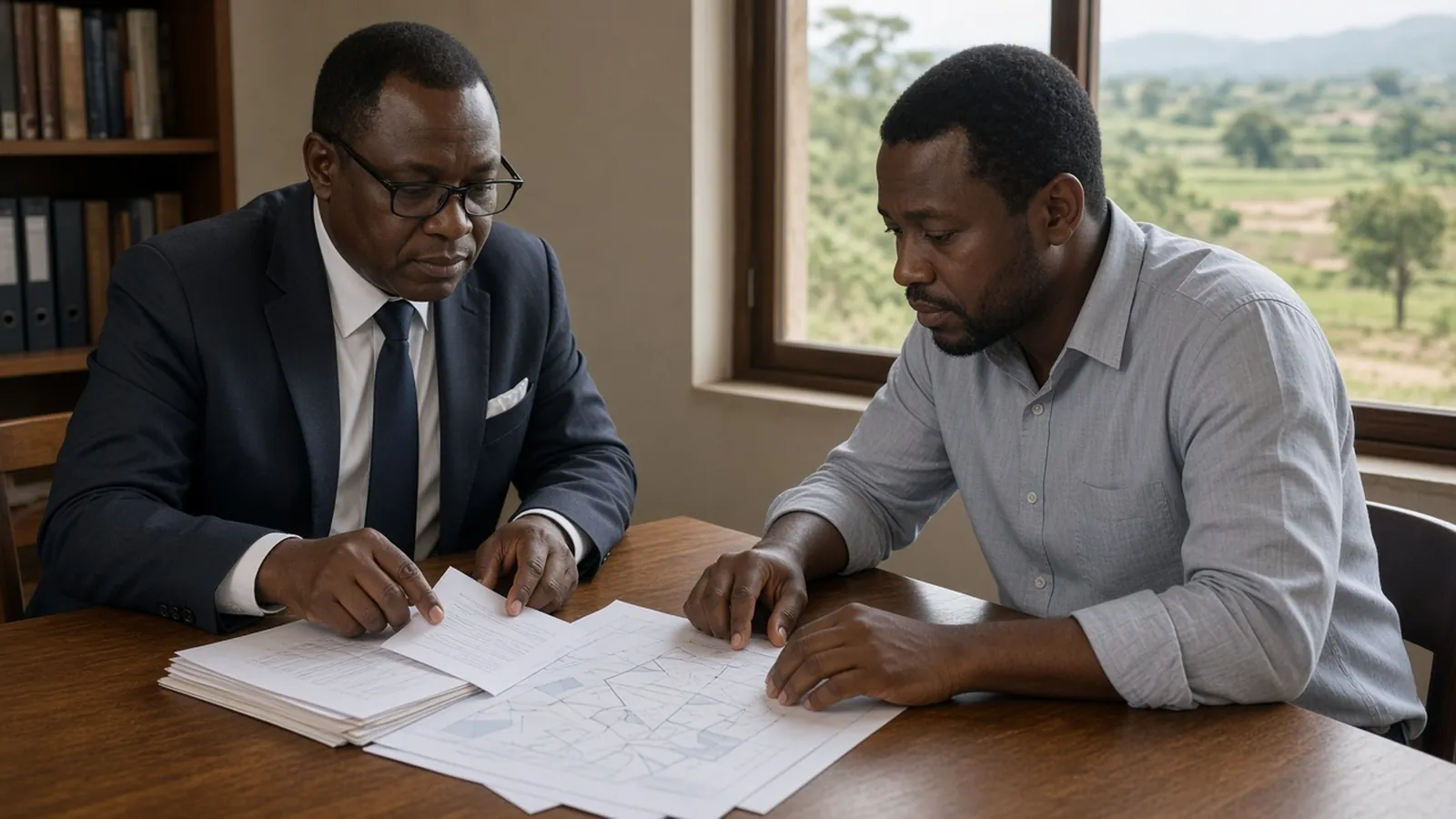
Every year, people living in London, Houston, Toronto or Melbourne are asked to put money into a farm or a processing project “back home.” Some of those projects are real. A great many of the worst stories start the same way: a trusted cousin, a promised fixed return, a title document that was never checked at the registry, and a farm manager who stopped sending photos after the first instalment cleared. This article is a due-diligence checklist for diaspora and foreign investors, not a pitch about African agriculture as the next gold rush.
It will not tell you that a particular country is “safe” or “unsafe.” Land law, foreign-ownership rules and court practice differ between Nigeria, Kenya, Ghana, Cameroon and everywhere else. You need local counsel in the country of the land, not a general blog post, before you transfer a serious sum. What follows is the list of questions that come up again and again in legal guides and in the aftermath of deals that went wrong.
Last checked: November 2026. This is general information, not legal, investment, tax or immigration advice, and it is not a recommendation to invest in any country, company or scheme.
1. Who can hold the land, and in what form
The first question is not “is the soil good?” It is “can I lawfully hold this interest, and is the person selling it allowed to sell it?” In Kenya, legal explainers aimed at diaspora and foreign buyers stress that Kenyan citizens can buy agricultural land more directly, while foreigners generally need Land Control Board consent and often hold agricultural land on a leasehold basis rather than as an ordinary freehold. In Nigeria, diaspora guides repeatedly warn about forged allocations, uncompleted governor’s-consent steps, and the need for an independent search at the lands registry and a proper survey. Other countries have their own versions of family land, customary land, state lease, and foreign-ownership caps. Do not import a Midwestern US deed model into a customary-land transaction and call it done.
If you cannot hold the land yourself, some investors use a local company, a long lease, or a processing business that contracts with growers rather than trying to own the fields. Each of those has its own registration, tax and control problems. A local partner can be essential and can also be the entire risk. Write down who owns what, in percentages, and what happens if the relationship sours, before anyone plants a single crop.
Compared with buying listed farmland or a US cash-rent farm — see how to invest in farmland — African agricultural land is usually less liquid, more dependent on relationships, and more sensitive to the exact legal form of the interest. That is not a reason to avoid it. It is a reason to pay for better advice.
2. Title, survey, and money that should not go to a personal account
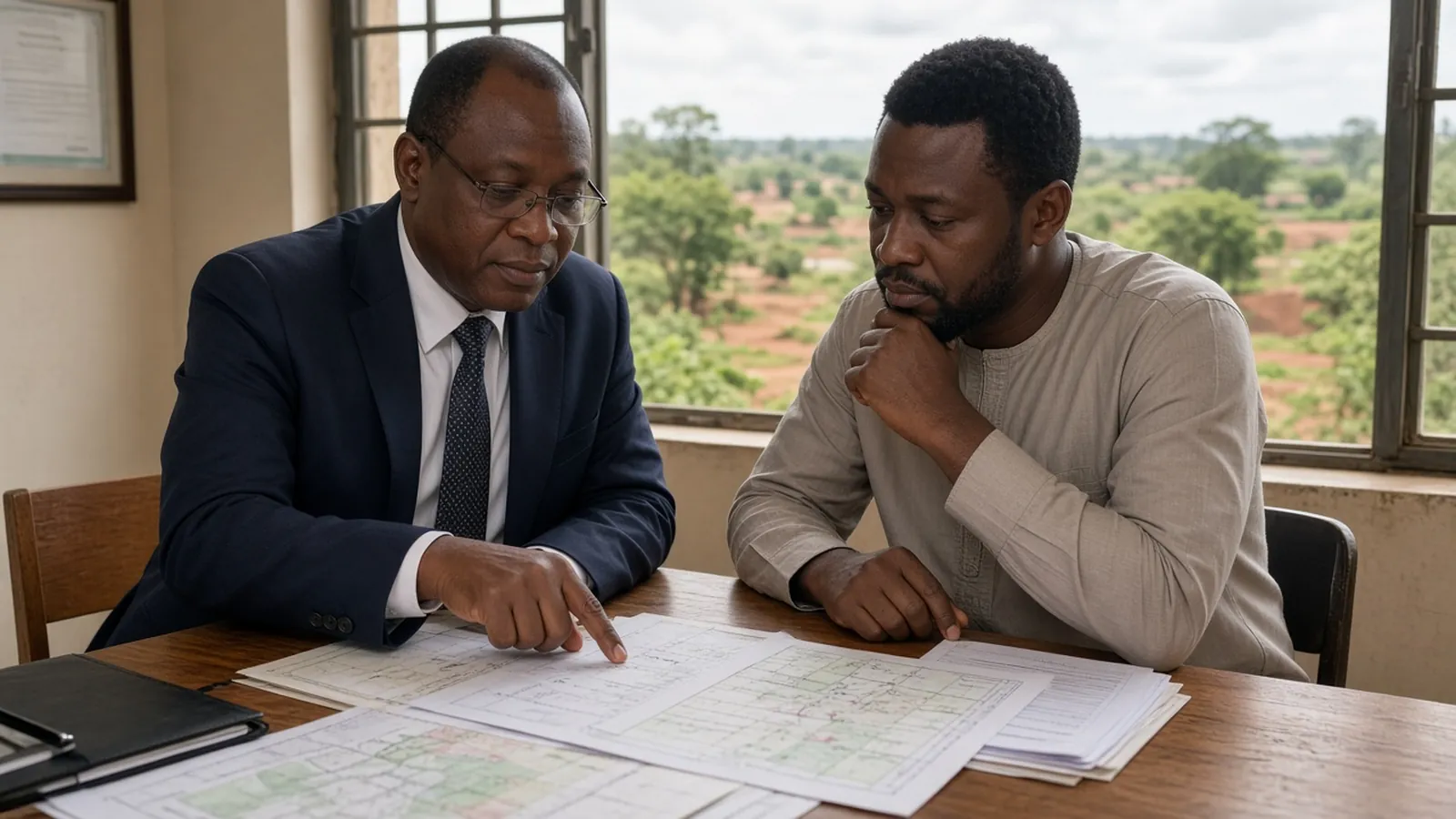
A colourful “deed” in a WhatsApp photograph is not a search. Pay a lawyer you have chosen, not one nominated only by the seller, to:
- search the relevant land registry or land-records office, and explain, in writing, what they found;
- check the survey plan against the ground, including access and boundaries, not only against a paper chart;
- confirm that the seller has the right to sell or lease, including family or community consents where customary land is involved, and any governor’s consent, land-control or equivalent step the law requires;
- flag encumbrances, court cases, overlapping allocations, and rights of way;
- hold the purchase money in a proper escrow or a firm’s client account, and release it only against the agreed documents. Do not wire a deposit to a private mobile-money wallet because the seller is in a hurry.
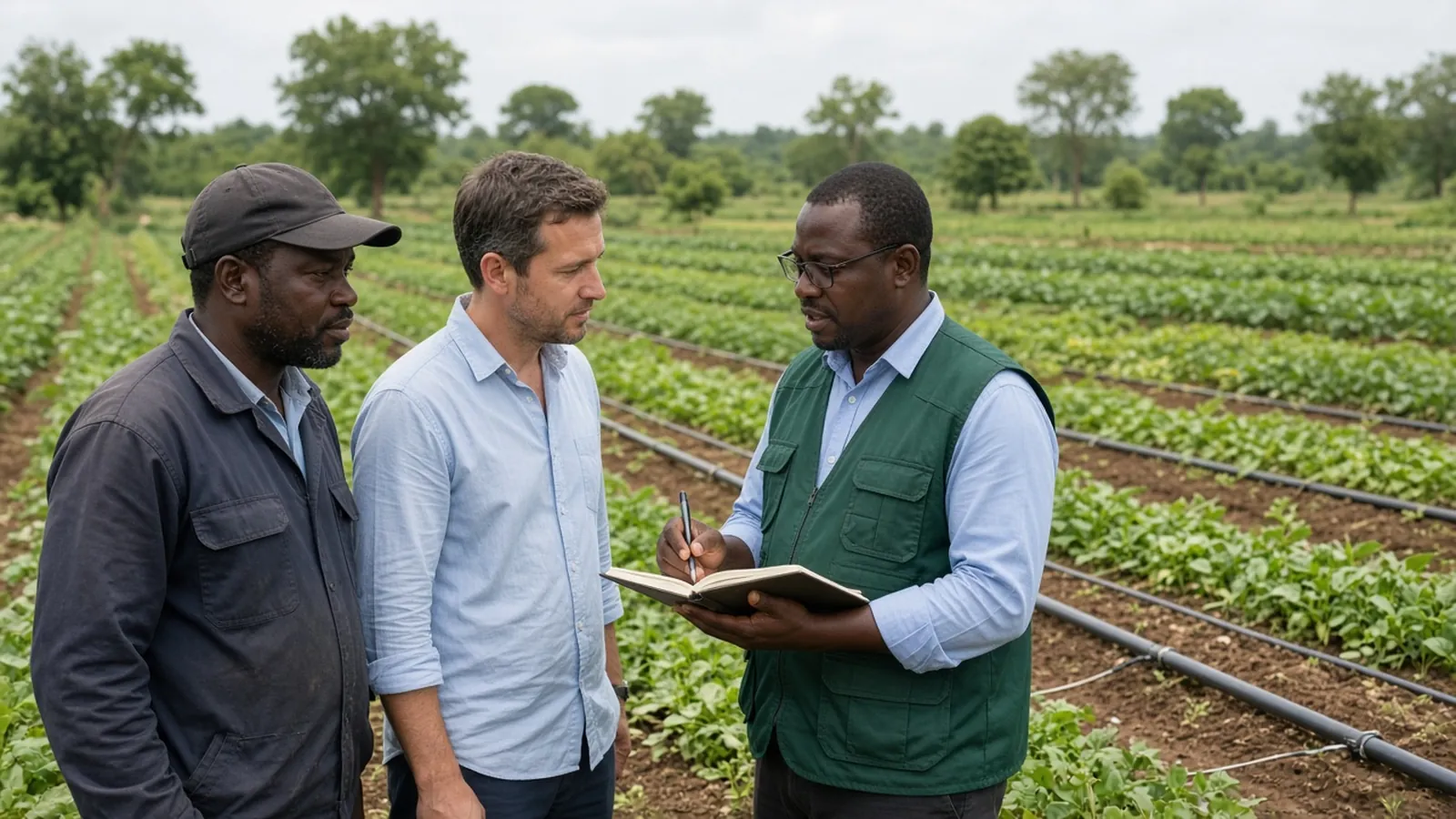
Visit if you can, or send someone whose incentives are not the seller’s. A video walk of a green field is easy to stage. A boundary dispute with a neighbour is not visible on a drone clip shot at noon.
3. The operating reality: water, offtake, management and fraud that looks like a “fund”
A clean title on tired, unwatered, inaccessible land is still a bad business. Walk the water source, the road in the rains, and the power situation. If the plan depends on irrigation that does not yet exist, cost it honestly. Our soil erosion notes are a reminder that a pretty slope can be a liability. Ask who has actually grown this crop, in this place, at a commercial scale, and ask to see sales invoices, not a business-plan chart.
Offtake is the next hole. “We will export to Europe” is not a contract. A named buyer, a specification, and a sense of the 2026 compliance pack — especially if the crop is cocoa or coffee heading into the EU — is a contract conversation. Read export finance and EUDR standards before you treat an export story as the repayment plan.
Then there is the manager. A salaried manager with a reporting rhythm, a visiting auditor, and the power to sign only within limits is a cost. A “partner” who promises you 30% a year, takes a lump sum, and sends pictures of a farm that may not be yours is a classic pattern. Fixed high returns on a biological asset, paid from new investors rather than from crop sales, should be treated as a warning, not as a bargain. If you cannot visit twice a year, budget for a professional who will, and for a way to replace the manager without losing the land.
A pattern, not a tale about a named person. An investor abroad is offered a five-hectare “turnkey” block, already planted, with a promised 20% annual return, paid quarterly, managed by a local team. The title arrives as a PDF, the deposit is requested in three days “to hold the plot,” and the only lawyer on offer is the seller’s brother. The checks this article describes — independent search, escrow, a visit, invoices from previous seasons, a realistic yield at a real farm-gate or contract price — would usually stop that deal. A slower, smaller, verified lease or shareholding, with conservative yields and no promised rate of return, is the duller project that sometimes actually exists.
4. Currency, tax, political risk, and how you exit
You may invest in one currency and receive revenues in another, while your own living costs are in a third. Ask how money legally leaves the country, what approvals are needed, and how long a dividend or a lease payment has actually taken to arrive in other companies like yours. A project that only works if the exchange rate stays still is not a farm project. It is a currency position with a crop on top.
Tax in the host country and in your country of residence both matter. Double-tax treaties, withholding on dividends or rent, and the way a foreign company is reported at home are questions for accountants in both places. Political-risk or expropriation insurance exists for some investors and some countries, usually at a cost and with conditions; it is not automatic, and it will not save a badly contracted private dispute. Ask a broker who actually places such cover whether you even qualify, before you mention it in a pitch to co-investors.
Exit is the question diaspora deals skip. Who can you sell to? Does a shareholders’ agreement have a buy-out clause? Is there a local market for the land interest you hold? If the only exit is “we will list the company in five years,” you should be willing to hold the asset as if that listing will not happen. Many sound family farms are never listed. They still have to have a way for one sibling in the diaspora to be bought out.
5. Buying shares in a company, or funding a processor, instead of buying land
Many diaspora deals are not land purchases at all. They are subscriptions for shares in a company that says it will build a drier, a cold room, or a small mill, or they are shareholder loans dressed up as “partnerships.” Those deals need a different file: the company’s registration, a current official search, the register of members, audited or at least coherent accounts if they exist, and a shareholders’ agreement that covers reserved matters, information rights, and what happens if more capital is needed. A company with a beautiful farm story and no filed accounts should be treated as early-stage, which means the risk of a total loss, not as a bond with a farm attached.
Processors can be a better business than raw land, because they sit closer to a buyer and can serve many farms. They also fail in ordinary ways: unpaid electricity, a machine with no spare parts, a manager who buys crop for cash and cannot account for it, a licence that was never renewed. Visit the site when it is working, not only when it is empty and swept. Ask to see the last three months of intake records, power bills and buyer payments. If the investment is meant to sit beside an export plan, the agronomy of the crop and the document pack in the export guide both belong in the file. A mill without a mapped, quality-consistent supply is just a building.
Insurance will not close every gap, but ask what is already in place on the assets and on public liability, and what would happen in a fire or a theft. Then write down, for yourself, the largest cheque you can lose without harming the people who depend on you. Invest no more than that in a first remote agribusiness deal, however confident the group chat is. A second cheque, if it comes, should follow a season of records you have actually seen, not a second brochure.
Common mistakes
- Wiring a deposit to a personal account because the plot “will be gone by Friday.”
- Using only the seller’s lawyer, or a friend of a friend, as the only pair of eyes on the title.
- Believing a fixed high return on a farm that has no audited sales.
- Ignoring foreign-ownership and land-control rules, then discovering the transfer cannot be registered.
- Having no written way to replace a manager or to take money out in a harder currency year.
Checklist
- I know, from independent counsel, whether I can hold this interest, and in what legal form.
- A registry search and a survey have been done, and I have the written report.
- Funds will move through escrow or a regulated client account, against documents.
- I have seen real offtake or sales evidence, not only a plan, and I understand the 2026 compliance load if the crop is for export.
- I can explain the FX path, the tax reporting, and the exit, in writing, including a dull case.
- I have a way to verify, and if needed replace, the person who will run the place.
Frequently asked questions
1. Can a diaspora citizen or a foreigner hold agricultural land?
It depends on the country, on citizenship, and on the form of the interest (freehold, lease, shares in a local company). In some countries a non-citizen will struggle to hold agricultural land outright and may need a lease or a local vehicle, sometimes with a board or a land-control consent. Ask a lawyer in that country, not a group chat.
2. How do I verify title from abroad?
By instructing an independent lawyer to search the official record and to report to you, and by not releasing funds until that report and the transfer documents are in the agreed form. A scanned certificate in a chat window is not a search.
3. Should I use escrow?
For a land or share purchase of any serious size, yes, or a law-firm client account with written release conditions. “Escrow” should mean a regulated arrangement you have verified, not a friendly middleman.
4. What about managers who promise a fixed return?
Treat a guaranteed high return on a farm as a warning sign. Farms have seasons, prices and losses. Ask for invoices, a conservative yield, and a management contract you can exit. If the return is being paid from later investors, you are not in a farm investment.
5. How does foreign-exchange risk show up?
In the gap between what the crop earns locally and what you can actually remit, and in the timing of that remittance. Model a weaker local currency and a delay, not only a clean year-end dividend in your home currency.
6. Do I need political-risk insurance?
Maybe, if you qualify and if the amount at stake justifies the premium. It will not fix a bad title or a dishonest manager. Get the legal structure right first, then ask a specialist broker whether cover is available and what it excludes.
Final thoughts
A sound African agribusiness investment is usually slower, more legalistic, and less spectacular than the message that first reached you. Pay for independent title work, hold the money until the papers are real, visit, and demand a repayment story that comes from a crop and a buyer, not from a promised percentage. If those steps kill the deal, they have done their job. The deals that survive them are the ones you can explain, a year later, to someone you love who is wondering where the money went. If you cannot yet explain the title, the offtake and the exit in a few plain sentences, you are not late, and you are not a difficult investor. You are simply not finished, and the money can simply wait in your own account until that explanation is easy to give, and true.
If you operate, not only invest, keep records that can be checked
LazAgro helps working farms record production and sales — the sort of evidence a distant partner or a lender should be able to ask for without relying on a single photograph.
Discover LazAgroSources and further reading
- Country-specific legal guides for diaspora buyers (for example, recent Nigeria title-and-fraud explainers and Kenya land-control / foreign-ownership explainers). These are starting points; they are not a substitute for counsel on your transaction.
- LazAgro, African agribusiness export finance and buyer standards
- LazAgro, how to invest in farmland (for the contrast with listed and cash-rent models in the United States)