 LazAgro

Rabbit farming in Cameroon tends to start the same way: someone buys a pair, puts them in a wooden box behind the kitchen, and within a year has either twenty rabbits or none. Rabbits multiply fast when conditions suit them, and die fast when they do not. The difference is usually housing, feed hygiene and heat.
For a smallholder, rabbits have real advantages. They need little space, eat grasses and leaves that cost nothing, and a doe can produce several litters a year. Rabbit meat is lean and sells to restaurants, hotels, health-conscious families and people who simply like it. In towns like Bamenda, Bafoussam, Dschang, Buea and Yaoundé, there are buyers for regular, healthy supply.
This guide is for someone setting up a small rabbitry of a few does and a buck, with a plan to grow. It covers housing, breeds, feeding, breeding, kit care, health and selling.
1. Why consider rabbit farming in Cameroon?
- Fast reproduction. Gestation is only about a month, roughly 31 days.
- Low space needs. A rabbitry can fit in a backyard, even in town.
- Cheap forage. Grasses, legumes and vegetable leaves form much of the diet.
- Manure value. Rabbit droppings are an excellent fertiliser for gardens and nurseries.
- Low noise and smell when hutches are kept clean.
The honest challenges
- Rabbits are sensitive to heat, damp and sudden changes in feed.
- Young rabbits are vulnerable around weaning, especially to digestive problems.
- The market is real but smaller than for chicken or pork, so you need to build buyers deliberately.
- Good breeding stock and quality pellets can be hard to find in some areas.
2. Housing: hutches that beat the heat
Rabbits handle cool weather far better than heat. Temperatures above about 30°C reduce fertility and can kill, especially pregnant does. The Peace Corps rabbit production handbook, written for tropical smallholders, puts heat management at the centre of housing design.
The shed
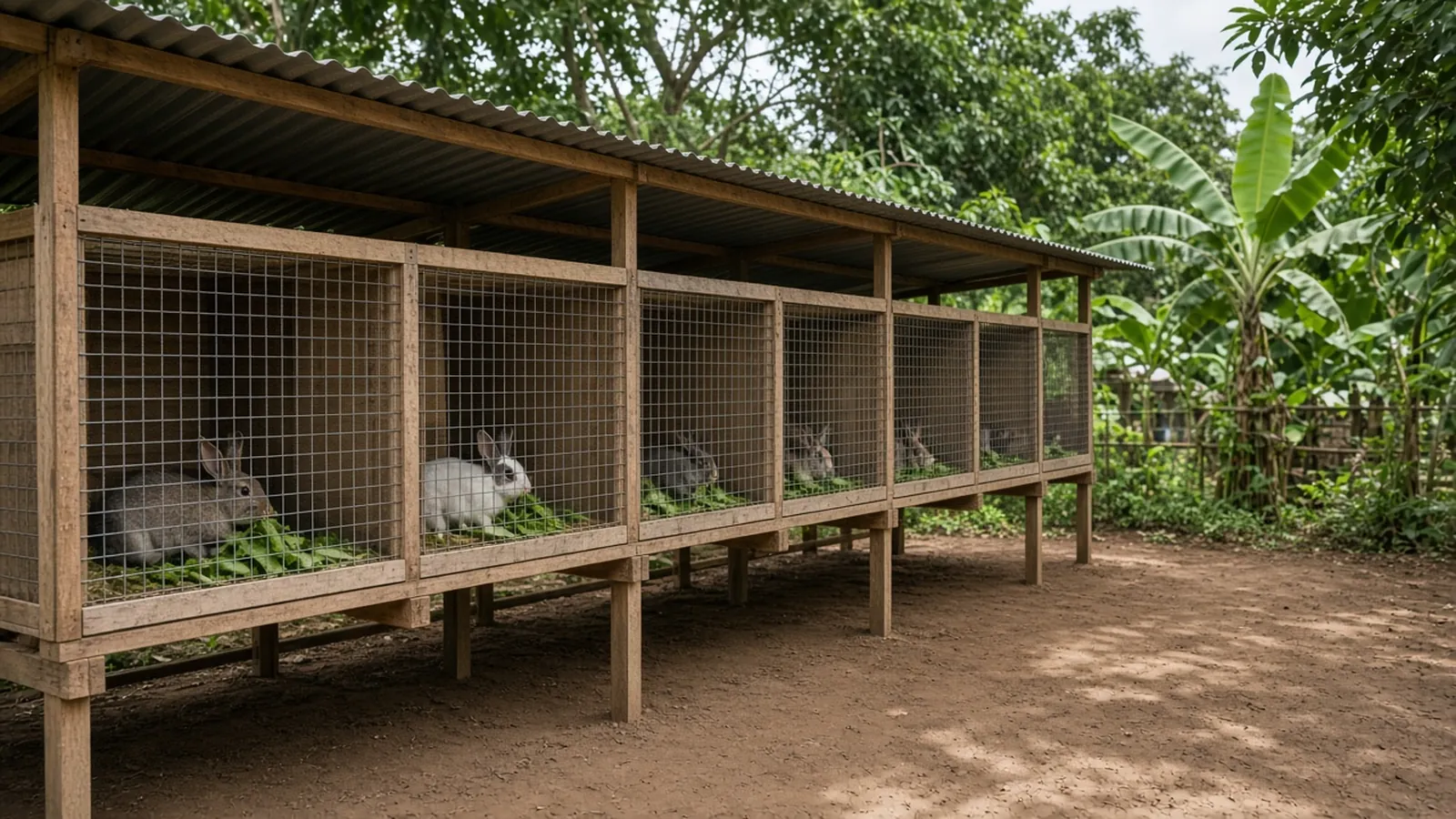
- A roofed shed with open sides or mesh walls for airflow, and long overhangs to keep rain out.
- Shade trees around the shed help in lowland areas like Douala and Kumba.
- A floor that drains, so urine and wash water do not pool.
- Protection from dogs, cats, snakes, rats and thieves.
The hutches
- Raised off the ground, roughly at waist height, so you can inspect and clean easily.
- Wire mesh floors let droppings fall through, keeping rabbits dry. Use mesh that is fine enough not to injure feet, and give each rabbit a small wooden resting board.
- One adult per hutch for does and the buck. Growers can share in small groups.
- Size the hutch for the breed. Medium breeds need enough space to stretch and turn comfortably.
Nest boxes
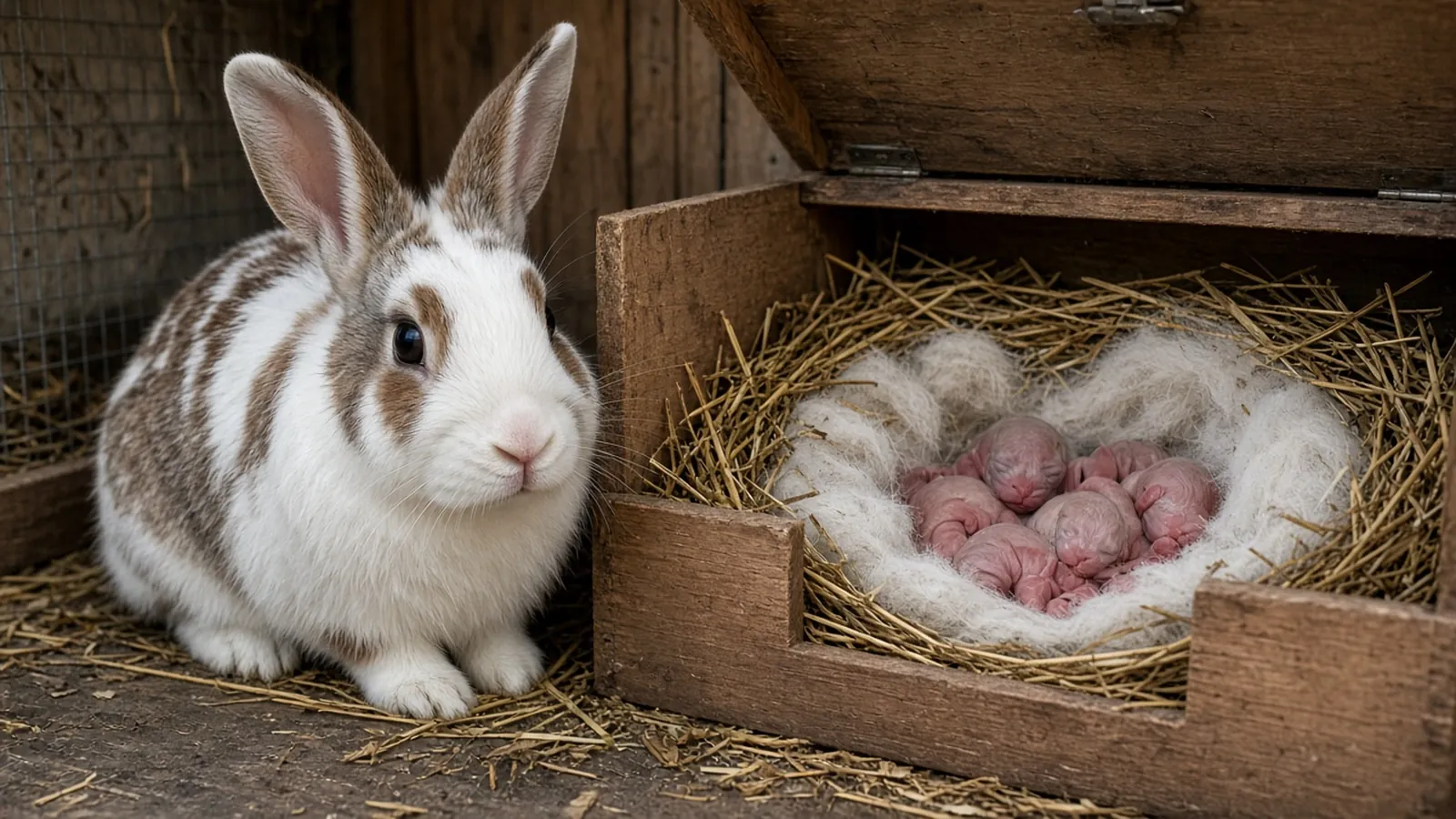
Each breeding doe needs a nest box placed in her hutch a few days before kindling. Use wood, with dry grass or shavings as bedding. The doe will add fur pulled from her own body.
3. Choosing breeds and breeding stock
In Cameroon you will find improved breeds such as New Zealand White, Californian, Chinchilla and Flemish Giant types, plus many crosses and local rabbits. Medium-sized meat breeds and their crosses suit most smallholders: they grow well, reproduce well and tolerate local conditions better than very large breeds.
What to look for
- Bright eyes, clean nose, no sneezing.
- Clean ears with no crusts (a sign of ear mites).
- Dry, clean area around the tail. Staining suggests diarrhoea.
- Firm body, smooth coat, no sores on feet.
- From a breeder who keeps records of parents and litters.
- Buck not closely related to the does.
A common starter unit is a few does and one buck. Start small and learn before scaling.
4. Feeding rabbits well and safely
Rabbits have a sensitive digestive system that depends on fibre. Most smallholders in Cameroon combine fresh or wilted forage with some concentrate.
Forage
Commonly used forages include elephant grass and other grasses, sweet potato vines, tridax, aspilia, leaves of legumes like leucaena and gliricidia (in moderation), and vegetable leaves. Cassava leaves are used by some farmers after wilting, but in limited amounts. Learn from local rabbit keepers which plants are safe in your area.
- Cut forage from clean areas, away from roadsides, latrines and sprayed fields.
- Wilt fresh-cut forage for a few hours. Wet forage, especially in the rainy season, is a major cause of bloat and diarrhoea.
- Never feed mouldy, rotting or fermented material.
- Change diets gradually over several days.
Concentrates and pellets
Pellets made for rabbits give balanced protein, energy and minerals, and are the easiest way to support growth and milk production. Where pellets are not available, a concentrate of maize, bran, soybean cake and minerals can be used, but get advice on proportions. Store feed dry and off the floor; our guide to livestock feed management explains storage and tracking.
Water
Clean water must be available at all times. Nursing does drink a lot. Nipple drinkers or heavy clay pots that cannot tip over keep water cleaner.
5. Breeding: from mating to kindling
When to start
Medium breeds are often first mated at around five to six months, depending on growth. Bucks mature a little later. Breeding too early weakens young does.
How to mate
- Always take the doe to the buck's hutch, not the buck to the doe. Does defend their space.
- Mate in the cool of early morning or late afternoon.
- Return the doe after a successful mating.
- Record the date immediately.
Pregnancy and kindling
Gestation lasts about 31 days, with kindling usually between days 28 and 32. Many breeders palpate the doe gently after about two weeks to check pregnancy. Put the nest box in around day 27 or 28. Most does kindle at night or early morning without help.
Breeding calendar
Does can be re-mated while still nursing, but intensive schedules demand very good feed. For smallholders, a moderate rhythm, re-mating a few weeks after kindling, usually gives healthier does and kits over the year. Record every mating, kindling, litter size, and weaning so you can identify your best does.
| Event | Approximate timing |
|---|---|
| Mating | Day 0 |
| Pregnancy check (palpation) | Around day 10–14 |
| Nest box in | Around day 27–28 |
| Kindling | Around day 31 (range 28–32) |
| Kits leave nest | Around 3 weeks after birth |
| Weaning | Commonly 5–6 weeks after birth |
6. Caring for kits
- Check the nest the morning after kindling. Remove dead kits quietly.
- Make sure kits look round and full. Thin, wrinkled kits are not getting milk.
- Fostering kits to another doe with a litter of similar age is possible if a doe has too many or no milk.
- Keep the nest dry. Replace soiled bedding carefully.
- Give the doe plenty of water and good feed.
Weaning is a high-risk time. Avoid sudden diet changes, keep weaners in clean, dry hutches in small groups, and introduce any new feed gradually.
7. Health: common problems and prevention
Coccidiosis
Coccidiosis is a parasitic disease of the gut and liver, and one of the main killers of young rabbits. Signs include diarrhoea, weight loss, pot belly and poor growth. It thrives on contaminated feed, water and floors. Prevention is mostly hygiene: mesh floors, daily removal of droppings, clean feeders and drinkers, and no feed on the floor. Talk to a veterinarian about treatment and preventive products.
Diarrhoea and bloat
Usually linked to wet or mouldy forage, sudden feed changes, or too little fibre. Fix the cause first.
Mange and ear mites
Crusty ears, itchy, scaly skin and hair loss. Isolate and treat affected rabbits on veterinary advice.
Respiratory problems (snuffles)
Sneezing, nasal discharge, matted front paws. Often linked to dusty feed, ammonia from dirty hutches, or draughts. Isolate sick rabbits.
Heat stress
Panting, lying stretched out, red ears. Move into shade, improve airflow, give cool water. Frozen water bottles placed in hutches help some farmers in hot weeks.
- Quarantine new rabbits for at least two weeks.
- Clean droppings from under hutches regularly.
- Wash and disinfect hutches between litters.
- Keep visitors from handling your rabbits.
- Record every illness, treatment and death.
8. Selling rabbits and rabbit products
Rabbit meat in Cameroon is still a niche product, so marketing is part of the job.
- Restaurants and hotels want regular supply of similar-sized animals. Agree quantities and dates.
- Households buy for celebrations or as a healthy option. Word of mouth and WhatsApp groups help.
- Breeding stock sells to new farmers. Good records make your animals more valuable.
- Manure sells to vegetable growers and nurseries. It is also excellent in your own compost.
- Dressed meat can earn more but requires hygienic slaughter and cold storage.
Plan your breeding calendar backwards from when buyers want rabbits. Producing twenty rabbits nobody has ordered is how small rabbitries end up underpricing.
9. Keeping numbers for your rabbitry
Records answer the questions that decide profit: which does wean the most kits, how much feed you use per rabbit sold, and when losses happen. At minimum, track each doe's matings, kindling dates, litter sizes and weaning counts, plus feed purchases, deaths and sales.
The LazAgro app makes this easier by letting you log batches, feed, treatments, deaths and sales on your phone, even without network. Our guide on how to keep livestock farm records covers what to record and why.
10. Common rabbit farming mistakes
- Hutches on the ground, in damp corners, or under hot zinc roofs without ventilation.
- Feeding forage straight from the field while still wet with rain or dew.
- Changing feed suddenly when pellets run out.
- Breeding related animals over and over.
- No records, so poor does stay in the herd.
- Producing without buyers lined up.
11. Turning rabbit manure into a second income
Rabbit droppings are one of the easiest manures to handle on a small farm. They come out as dry pellets, they are relatively mild compared with fresh poultry manure, and they break down quickly in a compost heap. A rabbitry with mesh floors gives you a steady supply every week.
How to collect it
- Place trays, sacks or a sloped concrete floor under the hutches so droppings collect in one place.
- Collect regularly. Wet droppings mixed with urine release ammonia that harms the rabbits' lungs.
- Store collected manure under a roof so rain does not wash the nutrients away.
How to use it
- Add it to compost heaps as a "green" nitrogen-rich ingredient. Our guide on how to make compost on the farm explains the mix.
- Use well-composted rabbit manure in vegetable beds and nursery mixes. It works well in a raised garden bed beside the rabbitry.
- Sell bagged manure to vegetable farmers, flower growers and seedling nurseries near you.
Some rabbit keepers also raise earthworms under the hutches, letting the worms process the droppings into vermicompost. It takes some learning, but it shows how a small rabbitry can feed the rest of the farm.
Frequently asked questions about rabbit farming in Cameroon
1. How long is a rabbit pregnant?
About 31 days, with kindling usually between days 28 and 32 after mating. Put the nest box in around day 27 or 28.
2. What do rabbits eat in Cameroon?
Mostly grasses and leafy forages such as elephant grass, sweet potato vines, tridax and legume leaves, plus pellets or a balanced concentrate. Always wilt forage and avoid wet or mouldy feed.
3. Why are my young rabbits dying after weaning?
Common causes are coccidiosis, sudden diet changes, wet forage and dirty hutches. Improve hygiene, change feed gradually and ask a veterinarian about coccidiosis prevention.
4. How many rabbits should a beginner start with?
A few does and one unrelated buck is a manageable start. Grow from your own best does once you have learned the routine and found buyers.
5. Is rabbit farming profitable in Cameroon?
It can be, especially when feed costs are kept low with good forage, losses are controlled and buyers are lined up in advance. Keep records to see your real cost per rabbit sold.
Final thoughts
Rabbit farming in Cameroon is a good fit for small spaces and modest budgets, but it rewards care, not just numbers. Keep the rabbitry cool, dry and clean, feed carefully, record every litter and build your buyers before you build more hutches.
Know which does pay their way
LazAgro helps you track litters, feed, treatments and sales for every batch, online or offline.
Discover LazAgro