 LazAgro
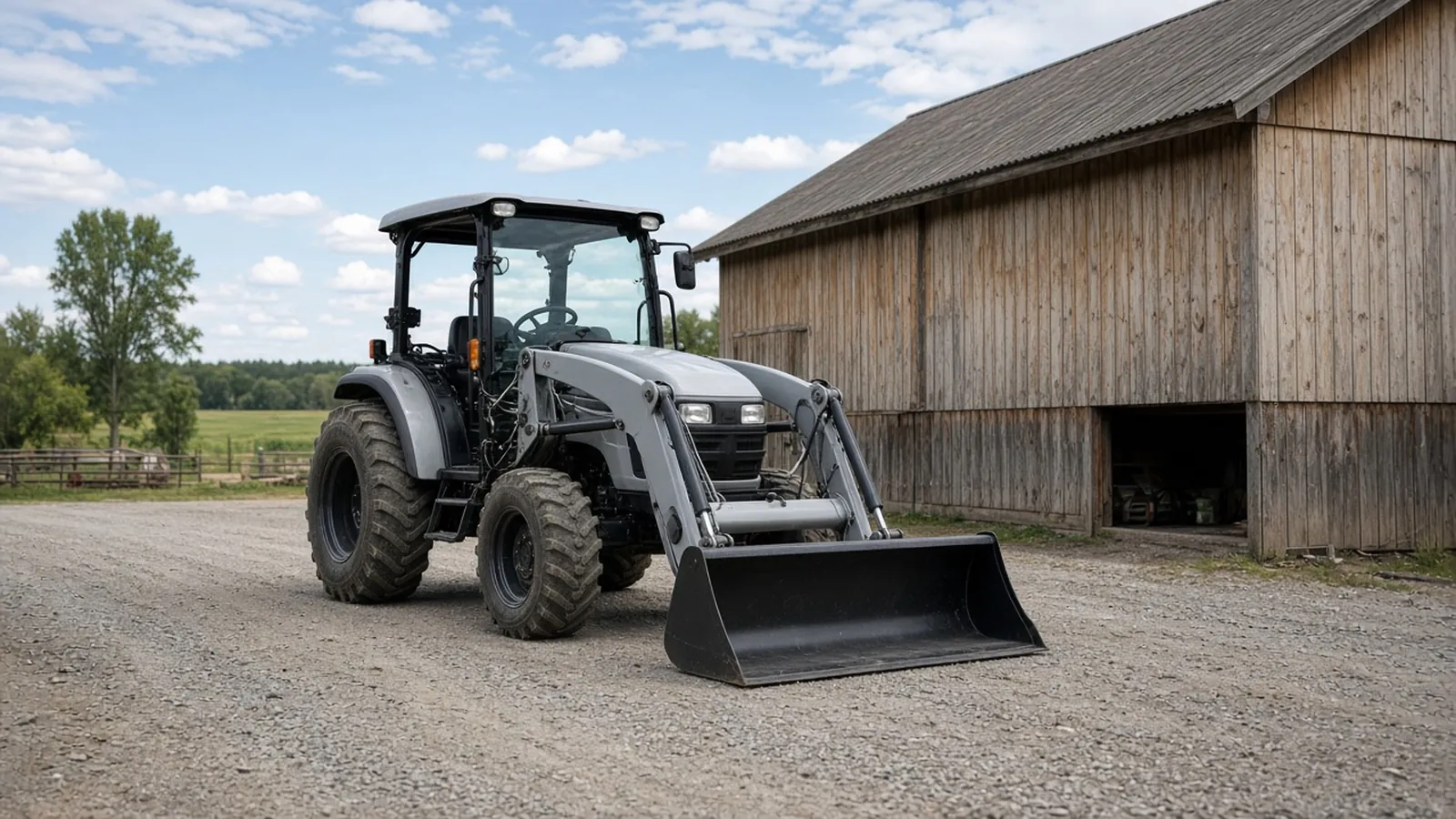
A new tractor, a grain bin or a hoop house can be one of the biggest cheques a farm writes all year. In 2026, two federal rules decide how much of that cost you can take off this year’s tax return: the Section 179 expense deduction, and 100% bonus depreciation (the special depreciation allowance). They are not the same tool, and using the wrong one — or assuming your state follows the federal rule — is a common, expensive mistake.
Last checked November 2026. Figures below are from IRS Publication 946 and the USDA farmers.gov Farm Depreciation Update (11 February 2026), with additional explanation from the National Farm Income Tax Extension Committee’s RuralTax materials (revised August 2026). This is educational, not tax advice. Ask a qualified farm tax preparer about your return, your state and the year you place the asset in service.
The 2026 numbers, in brief. For tax years beginning in 2026, the Section 179 dollar limit is $2,560,000. That limit is reduced dollar-for-dollar once the cost of Section 179 property you place in service exceeds $4,090,000. The Section 179 cap for sport utility vehicles placed in service in 2026 is $32,000. Qualifying property acquired and placed in service after 19 January 2025 is generally eligible for a 100% additional first-year depreciation deduction, which the One Big Beautiful Bill made permanent for eligible property. Always re-check Publication 946 for the year you file.
1. What Section 179 actually does
Section 179 lets you elect to treat the cost of qualifying property as an expense in the year you place it in service, instead of spreading that cost over the recovery period. You choose the amount, asset by asset, up to the annual dollar limit and up to your business income. You do not have to take the maximum.
For a farm, the useful part is the list of assets that qualify. RuralTax and the farmers.gov depreciation update, consistent with IRS rules, treat the following as typical Section 179 property when they are purchased (new or used) and used in the business:
- Agricultural machinery and equipment.
- Livestock used for draft, breeding or dairy purposes.
- Grain storage facilities and field tile.
- Single-purpose livestock structures and single-purpose horticultural structures (a greenhouse built and used for commercial plant production, or a structure built and used for commercial mushroom production).
Land is never depreciable, and it is not Section 179 property. A general-purpose farm building — a machine shed, a farm shop, a general hay barn — is the asset that catches people out. Those buildings have a 20-year recovery period and do not qualify for Section 179. They can, however, qualify for bonus depreciation, which is why the two rules have to be read together.
Related-party purchases do not qualify. The asset must be placed in service — “in a state of readiness for its intended use,” in the language used in the farmers.gov update — in the tax year you claim the deduction. Buying a tractor in December and leaving it on the dealer’s lot until March is a facts-and-circumstances problem; talk to your preparer before you assume December 31 is enough.
The three Section 179 limits that actually bind farms
Three limits stack, in this order:
- The dollar limit. For 2026, $2,560,000. If you place more than $4,090,000 of Section 179 property in service, the $2,560,000 cap falls by $1 for every $1 over the threshold. The farmers.gov update gives a short illustration: if Section 179 purchases are $4,100,000, the maximum Section 179 deduction is lowered to $2,550,000.
- The business-income limit. Section 179 cannot be used to create a taxable loss. The deduction is limited to taxable business income, which can include wages, farm and non-farm business income, certain pass-through income, and gain from the sale of business property. Unused Section 179 can be carried forward.
- Special caps. Sport utility vehicles placed in service in 2026 have a $32,000 Section 179 cap. Listed-property rules can also apply to vehicles with mixed personal use.
If the farm is a partnership or an S corporation, the limits apply at the entity and then again at the owner. That is one reason a “we’ll just expense the whole line” plan can shrink when the K-1s are issued.
2. What 100% bonus depreciation does — and why 2026 is different
Bonus depreciation (the special depreciation allowance) is a percentage of the remaining basis that you take in the year the property is placed in service. Under prior law it was phasing down. The One Big Beautiful Bill changed that. IRS Notice 2026-11 (IR-2026-06, 14 January 2026) explains that the law provides a permanent 100% additional first-year depreciation deduction for eligible depreciable property acquired, or specified plants planted or grafted, after 19 January 2025.
Two timing traps sit in that sentence. Property acquired before 19 January 2025 can still be on the old 40% schedule, and written agreements to acquire property can matter. For most purchases a farm makes in 2026 this is no longer a close call, but if you are finishing a 2025-ordered machine or a building that was contracted earlier, have your preparer read the acquisition-date rules rather than assuming 100%.
Bonus depreciation is broader than Section 179 in one important way: it applies to qualifying property with a GDS recovery period of 20 years or less. That is why a machine shed that cannot be expensed under Section 179 can still be eligible for 100% bonus at the federal level. New and used property can qualify. Related-party acquisitions do not.
Bonus is on unless you elect out — and the election is by class, not by asset. If you elect out of bonus depreciation for 7-year property, that election applies to all 7-year property you place in service that year. Section 179 is the flexible tool (you pick the asset and the dollar amount). Bonus is the blunt tool (all or nothing inside a recovery class). That difference is often the real planning decision in 2026, not “which one is better.”
Bonus depreciation is also not limited by business income. It can create or increase a net operating loss. Section 179 cannot. If your year is already thin, or already very large, that distinction matters more than the headline “100%.”
Your state may not follow the federal rule. The farmers.gov update is explicit: “State rules may not follow federal rules.” An Illinois example in that same presentation shows a $300,000 machine shed that can be fully bonused federally while Illinois depreciation stays on the regular schedule. Do not copy a federal worksheet onto a state return.
3. Recovery periods you will actually use
The farmers.gov update restates the familiar IRS Table 7-1 recovery periods. A few that come up on almost every farm Form 4562:
| Asset | GDS recovery period | Section 179? | Bonus (if eligible and not elected out)? |
|---|---|---|---|
| New farm machinery and equipment | 5 years | Yes, if other tests are met | Yes |
| Used farm machinery and equipment | 7 years | Yes, if other tests are met | Yes |
| Grain bin | 7 years | Yes, if other tests are met | Yes |
| Single-purpose agricultural or horticultural structure | 10 years | Yes, if it meets the single-purpose tests | Yes |
| General-purpose farm building (machine shed, shop) | 20 years | No | Yes, if it qualifies and you do not elect out of the 20-year class |
| Fences (agricultural), drainage, paved lots, water wells | 15 years (typical) | Varies — tile is commonly treated as 179 property; confirm the asset | Often yes, 15-year property |
| Land | Not depreciable | No | No |
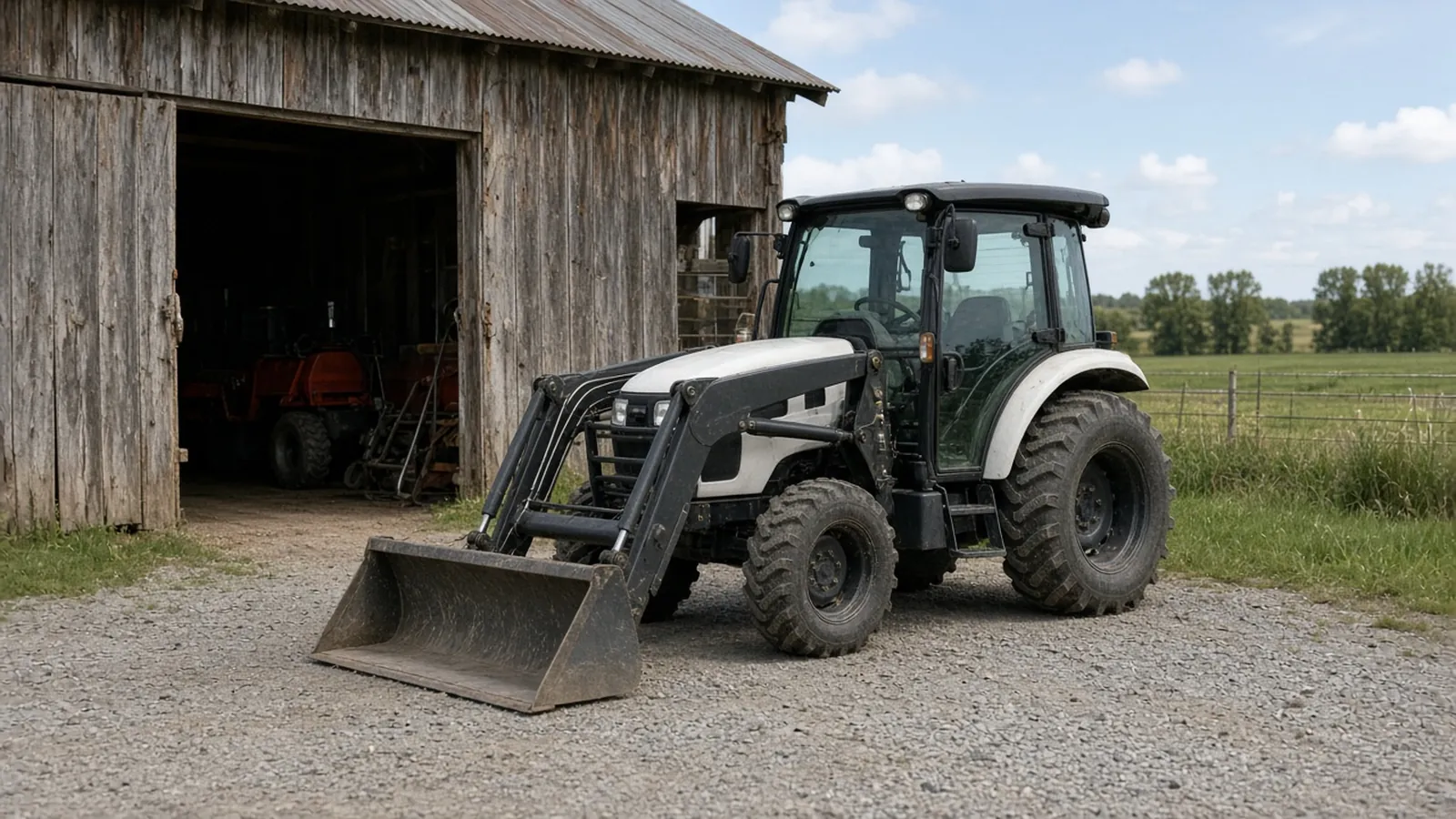
That 5-year versus 7-year split between new and used machinery is easy to miss when you are comparing a new compact tractor with a late-model used one. The purchase price is only part of the comparison; the recovery class changes the default depreciation if you use neither 179 nor bonus. For a total-cost look at compact tractors themselves, see our compact tractor cost guide for farms under 50 acres — then bring the invoice to your preparer before you decide how to expense it.
4. A worked example (illustrative, not a tax computation)
Illustrative only. These numbers show the order of the rules. They are not a quote, a filing position, or a promise of any tax result. State tax, self-employment tax, the qualified business income deduction, listed-property rules and your other income can all change the outcome. A real return is done on Form 4562 by a preparer who has your books.
Assume a calendar-year farm in 2026 places three assets in service, all purchased from unrelated sellers, all used 100% in the farm business, all after 19 January 2025:
- A used compact tractor, $120,000, placed in service in April (7-year property).
- A new grain bin system, $180,000, placed in service in June (7-year property; treated here as Section 179-eligible).
- A general-purpose machine shed, $300,000, placed in service in August (20-year property; not Section 179 property).
Path A — use Section 179 on the equipment, and take 100% bonus on the shed. Elect $120,000 of Section 179 on the tractor and $180,000 on the bin, a total of $300,000. That is well under the $2,560,000 dollar cap, and it only works if 2026 business income is at least $300,000 under the Section 179 income test. The shed cannot take Section 179. If you do not elect out of bonus depreciation for 20-year property, the remaining $300,000 of shed basis can be taken as 100% bonus at the federal level. Federal first-year depreciation on this path is $600,000, subject to those income and state caveats.
Path B — you do not have $300,000 of Section 179 business income. Suppose business income for the Section 179 test is $150,000. You can elect only $150,000 of Section 179 (for example, the whole tractor and $30,000 of the bin). The remaining $150,000 of bin basis, and the tractor residual if any, then go to bonus depreciation unless you elect out of the 7-year class. The shed is still a bonus question, not a 179 question. This is the situation Section 179’s income limit is built for — and the situation in which bonus depreciation, which is not income-limited, often does the work people thought 179 would do.
Path C — you elect out of bonus on 20-year property because your state does not conform, or you do not want a $300,000 federal deduction this year. Regular 20-year depreciation on a $300,000 shed is a much smaller first-year number (the farmers.gov presentation uses $11,250 of regular depreciation on a mid-year $300,000 shed under its 2025 half-year example — your 2026 convention and placed-in-service month must be computed, not copied). The equipment can still be handled with Section 179, asset by asset, because that election is not a class-wide bonus election.
Notice the planning levers: income, class-wide bonus elections, and the fact that a shed never gets into the Section 179 column. Those are the levers a good preparer will pull. “Take 100% of everything” is not a plan.
5. Trade-ins, used equipment and “placed in service”
Used equipment can qualify for both Section 179 and bonus depreciation if the other tests are met. That is a change from older bonus rules that required original use, and it is one reason a late-model used machine can still be a tax-efficient purchase.
Trade-ins are no longer a silent like-kind exchange for personal property. The farmers.gov update notes that personal-property like-kind exchanges ended after 31 December 2017. In the machinery example used in that presentation, a farmer who trades a fully depreciated tractor and buys a replacement must report gain on the trade-in and then depreciates the full purchase price of the new machine. The “net boot” figure on the dealer invoice is not the tax basis. If you are trading a significant machine this winter, take the draft invoice to your preparer before you sign, not after the 1099s arrive.
Financing does not, by itself, block the deduction. A machine you own and place in service can be eligible even if a lender has a lien on it. How you pay for it is a separate question from how you depreciate it; for the loan decision itself, see Farm Credit vs FSA vs a local bank.
6. Structures: hoop houses, livestock buildings and the single-purpose test
A greenhouse “specifically designed, constructed, and used for the commercial production of plants” is the classic single-purpose horticultural structure, and it can qualify for Section 179. A general farm shop cannot. The line is the design and the use, not the fact that plants sometimes sit in the building. If you are comparing a high tunnel, a greenhouse and a heated production house, the tax classification should be part of the design conversation, alongside the construction and programme questions in our hoop house vs greenhouse and EQIP high tunnel guide.
A single-purpose livestock structure has to be designed, built and used to house, raise and feed a particular type of livestock and its produce, and to house the equipment needed for that work. A general barn that also stores a pickup and a boat is not that building. Mis-classifying a general-purpose building as a Section 179 structure is a frequent adjustment when a return is reviewed.
7. How to decide, in practice, before year-end
- List every asset you have placed in service this year, or will place in service before year-end, with invoice cost, new versus used, date ready for use, and recovery class.
- Flag anything that is a general-purpose building, a vehicle, or a related-party purchase — those are the special rules.
- Estimate business income for the Section 179 test, including wages and any asset-sale gains your preparer will count.
- Ask what your state does with Section 179 and with 100% bonus. Do not assume conformity.
- Decide Section 179 amounts first, asset by asset. Then decide whether to elect out of bonus in any recovery class.
- If you are financing the purchase, make sure the loan closing and the placed-in-service date are both in the year you intend to deduct.
- Keep the invoices, serial numbers and a photo of the asset in use. Form 4562 is only as good as the file behind it.
Common mistakes
- Expensing a machine shed under Section 179 because “it’s farm property.”
- Assuming 100% bonus applies to a machine contracted or acquired before 20 January 2025.
- Electing out of bonus on one tractor and accidentally electing out for every 7-year asset that year.
- Claiming the full Section 179 deduction in a year with too little business income, then being surprised by a carry-forward.
- Using the dealer’s trade-in “net cost” as the depreciable basis.
- Leaving a year-end purchase on the dealer lot and still treating it as placed in service.
- Copying the federal 100% bonus onto a state return that has not conformed.
Keep the invoices and the production records together
LazAgro helps you record what the farm produced and spent, online or offline, so the depreciation file and the Schedule F are built from the same year, not from memory.
Discover LazAgroFrequently asked questions
1. Can I use Section 179 and bonus depreciation on the same machine?
Yes, in that order. Section 179 is applied first, to the dollar amount you elect. Bonus depreciation, if you have not elected out of that class, applies to the remaining basis. You can also use Section 179 alone, or bonus alone, or regular depreciation if you elect out of bonus and do not take 179.
2. What is the Section 179 limit for 2026?
Publication 946’s “What’s New for 2026” states a maximum Section 179 deduction of $2,560,000, reduced by the amount by which the cost of Section 179 property placed in service exceeds $4,090,000. The SUV cap for 2026 is $32,000. These figures are inflation-adjusted; use the Publication 946 for the tax year you are filing.
3. Does used farm equipment qualify?
Generally yes, for both Section 179 and bonus depreciation, if you purchase it from an unrelated seller, use it in the business, and place it in service in the tax year. Used farm machinery is typically 7-year property; new farm machinery is typically 5-year property. Confirm the class with your preparer.
4. Can I Section 179 a barn or machine shed?
A general-purpose farm building does not qualify for Section 179. A single-purpose livestock or horticultural structure may. Federally, a general-purpose shed may still be eligible for 100% bonus depreciation because it is 20-year property. That is a federal rule; your state may differ.
5. What if I do not have enough farm income this year?
Section 179 is limited to business income and cannot create a loss; unused amounts can be carried forward. Bonus depreciation is not limited by business income and can create or increase a loss. That is often why a low-income year still uses bonus, or why a high-income year uses Section 179 to target specific assets.
6. Does financing or an FSA loan change the deduction?
Owning the asset and placing it in service is what matters for depreciation, not whether you paid cash. The loan itself is a separate contract. Deducting interest is a different line on the return from depreciating the machine.
7. When do I have to decide?
The elections are made on the tax return for the year the property is placed in service, on Form 4562. The practical deadline is earlier: year-end, while you can still choose what to buy and when it goes to work. Once the year is closed, you can change some elections only in limited ways. RuralTax notes that Section 179 amounts can be more flexible than a class-wide bonus election; do not rely on that without a preparer.
Final thoughts
The 2026 rules are generous at the federal level, and that is exactly why they are easy to mis-apply. Section 179 is a targeted, income-limited, asset-by-asset election with a large but finite cap. Bonus depreciation is a class-wide, income-unlimited 100% allowance for eligible property acquired after 19 January 2025. A machine shed sits in one column and not the other. A used tractor can sit in both. Your state may sit in neither.
If you are buying equipment this year, the useful work is a one-page list of assets, dates and recovery classes, and a conversation with a farm tax preparer before 31 December — not a guess at filing time. Re-check Publication 946 and your state’s conformity rules for the year you file; these figures were last checked in November 2026.
Sources and further reading
- IRS, Publication 946, How to Depreciate Property — “What’s New for 2026” Section 179 dollar limits and SUV cap.
- USDA farmers.gov, Farm Depreciation Update (11 February 2026), Bob Rhea, University of Illinois Tax School.
- IRS, IR-2026-06 / Notice 2026-11 (14 January 2026), permanent 100% additional first-year depreciation after 19 January 2025.
- Rural Tax Education, Depreciation: An Introduction (revised August 2026).
- IRS, Publication 225, Farmer’s Tax Guide.