 LazAgro
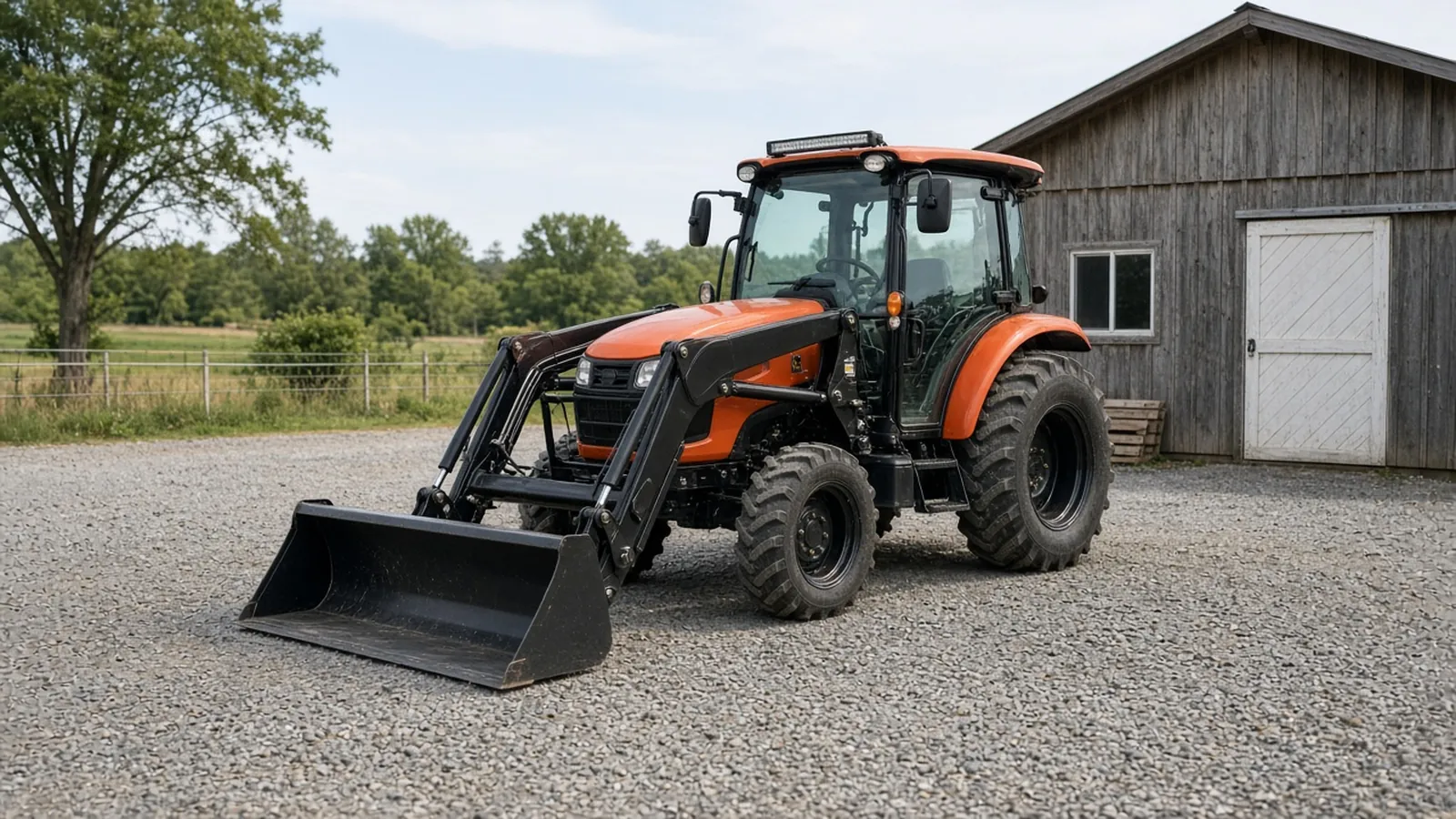
A compact tractor is often the single most expensive machine a small farm buys, and the invoice for the tractor is not the cost of owning it. By the time you add a loader, a mower, a brush hog, a box blade, and the first year of fuel and repairs, the number on the windscreen sticker can look like a down payment. That is why “how much should I budget?” is a better question than “what does a 25-horsepower tractor cost?”
This guide is for farms and rural properties under about 50 acres in the United States, Canada, the United Kingdom and Australia. It is about total cost, new versus used, and matching horsepower to the work — including whether the machine will physically fit in a high tunnel. It is not a ranking of current model years.
Last checked: November 2026. Dealer prices, used values and finance offers change by region and week. Treat every dollar figure below as a planning range from public discussions and typical market observations, or as a clearly labelled example, not as a quote. Get a written price from a local dealer or a documented used listing before you decide. This is general information, not financial advice.
1. What “compact” means, and what work it is for
Dealers use “subcompact,” “compact” and “utility” in slightly different ways. On TractorByNet, a common rule of thumb has been that a compact is roughly under 40 PTO horsepower and relatively light; manufacturers also sell “compact utility” tractors well into the 40–60 horsepower range that still fit on a small farm and in a modest shed. For this article, “compact” means a four-wheel tractor you would buy for a small farm or large rural property: front-end loader, mid or rear mower, and enough hydraulic capacity for a grapple or a post-hole auger, not a garden tractor you mow a lawn with.
The jobs that usually justify one on a place under 50 acres are: moving compost and gravel, mowing pasture or lanes, light tillage or a power harrow, running a post driver or auger, blowing or blading snow, and, on vegetable farms, laying plastic or cultivating between beds. If your only job is two acres of grass, a good zero-turn or a walk-behind may be the more honest purchase. If you are making hay on 40 acres or running a heavy round-baler, you are already out of the compact conversation and into a utility tractor.
2. What people are actually paying (ranges, not quotes)
Public 2025–2026 threads on TractorByNet (“Realistic $ for a reliable tractor?”, first-tractor and 25 hp purchase threads) cluster around a few planning bands for the North American market. They are not official prices and they are not UK or Australian list prices, which will be in pounds or dollars and will include different tax and dealer packages:
| What you are buying | Planning band seen in 2025–26 owner discussions (USD, approximate) | What is usually included — and what is not |
|---|---|---|
| Used, older compact, often 20–35 hp, variable hours and condition | Often discussed from the high four figures into the mid-teens, with wide scatter | May or may not include a loader. Budget a full inspection and a likely repair |
| New basic compact, about 25–35 hp, 4WD, with a loader | Owners and shoppers often talk in the mid-teens to around $20,000 for a simpler package, and higher for premium brands | Delivery, a mower, and a grapple are frequently extra |
| New, well-equipped 35–40+ hp compact utility from a premium brand (Kubota, John Deere and peers), loader and a useful options list | Discussions commonly land in a broad $26,000–$45,000 band, and can go higher with cabs, mid-mowers and finance-loaded packages | Implements still add thousands |
| Comparable new machines from value brands (names often raised: Kioti, TYM, Mahindra, LS and others) | Often described as several thousand dollars under the premium-brand equivalent, with a trade-off in dealer density and residual value that you have to test locally | The dealer network matters as much as the sticker |
A third-party equipment article that published a Google Trends chart for 2025–2026 also treated compact tractors as the small-farm machine people actually search for, far ahead of niche implements. That matches the forum traffic: the tractor is the decision, the implements come next, and the running cost is what owners complain about a year later.
In the UK, a compact of this class is often bought through a dealership package with VAT, a loader and a choice of mid-deck or topper; in Australia, dealers quote in AUD and will talk about a sun canopy or cab sooner than a Midwestern shop will. Convert nothing in your head. Ask for a local, itemised quote.
3. The costs that sit beside the sticker
Write these as a list before you fall in love with a colour:
- Loader and a useful bucket or grapple. If the farm moves compost, logs, or gravel, a bucket alone will frustrate you. Grapples add cost and are worth it when they are worth it.
- A mower that matches the PTO and the width of your lanes or beds. Mid-mount, rear rotary, or flail — they are not interchangeable, and each wants a certain tractor weight and horsepower.
- A box blade, rear blade, or land plane if you have a long gravel drive.
- Delivery, weights, a top link, and a set of spare pins and a PTO shaft that are not already in the shed.
- A wet area to park it and a way to lock it. Theft and weather both cost money. So does scheduling the machine on a farm policy if it will go on the road.
- Fuel, filters, a first service, and a repair reserve. A used machine that “just needs a steerage work” can swallow the difference you thought you had saved.
- Finance interest if you are not paying cash. Dealer rates look cheap in advertisements until you read the term and the documentation fee.
Illustrative total, not a quote. Suppose a dealer quotes $28,000 for a mid-30s-horsepower compact with a loader in your county. You add a used rotary cutter for $2,500, a box blade for $1,200, a grapple for $3,000, delivery and a hydraulic third function for $1,500, and you put $2,000 aside for the first unexpected repair and a set of water weights or wheel weights. You are now thinking about something near $38,000 before tax and finance, not $28,000. If you instead buy a clean used loader tractor for $16,000 and spend $4,000 on implements and a professional inspection plus a likely repair, you may be in the low twenties — or you may have bought someone else’s problem. The only honest version of this arithmetic uses your quotes, not these figures.
4. New versus used
Buy used if you can inspect it, or pay someone who can. Hours, smoke, wet hydraulics, loader play, undercarriage rust, a bent rockshaft, and a history of the same oil leak all matter more than colour. A used tractor with a local dealer’s inspection and a remaining warranty on a powertrain can be a very good buy. A cheap tractor from a long way away, bought on a video, is a hobby.
Buy new if you need a warranty, a specific tyre or turf setup, a cab for serious winter work, or a finance package that only exists on new iron, and if you will keep the machine long enough to use the warranty up. Premium brands often hold residual value better in many US markets; that is a generalisation owners repeat, and you should test it against actual sold listings in your area, not a brochure.
There is a third path — a late-model used machine at a dealer, sometimes with a limited warranty — that is worth asking about before you choose sides in an internet argument.
5. Horsepower, acres, and the high-tunnel question
For a mixed place under 50 acres that will mow, load, and do light tillage, many owners end up in the mid-20s to about 40 horsepower. Under-powered machines get parked. Over-powered machines cost more, compact the headlands, and may not fit where you wanted them.
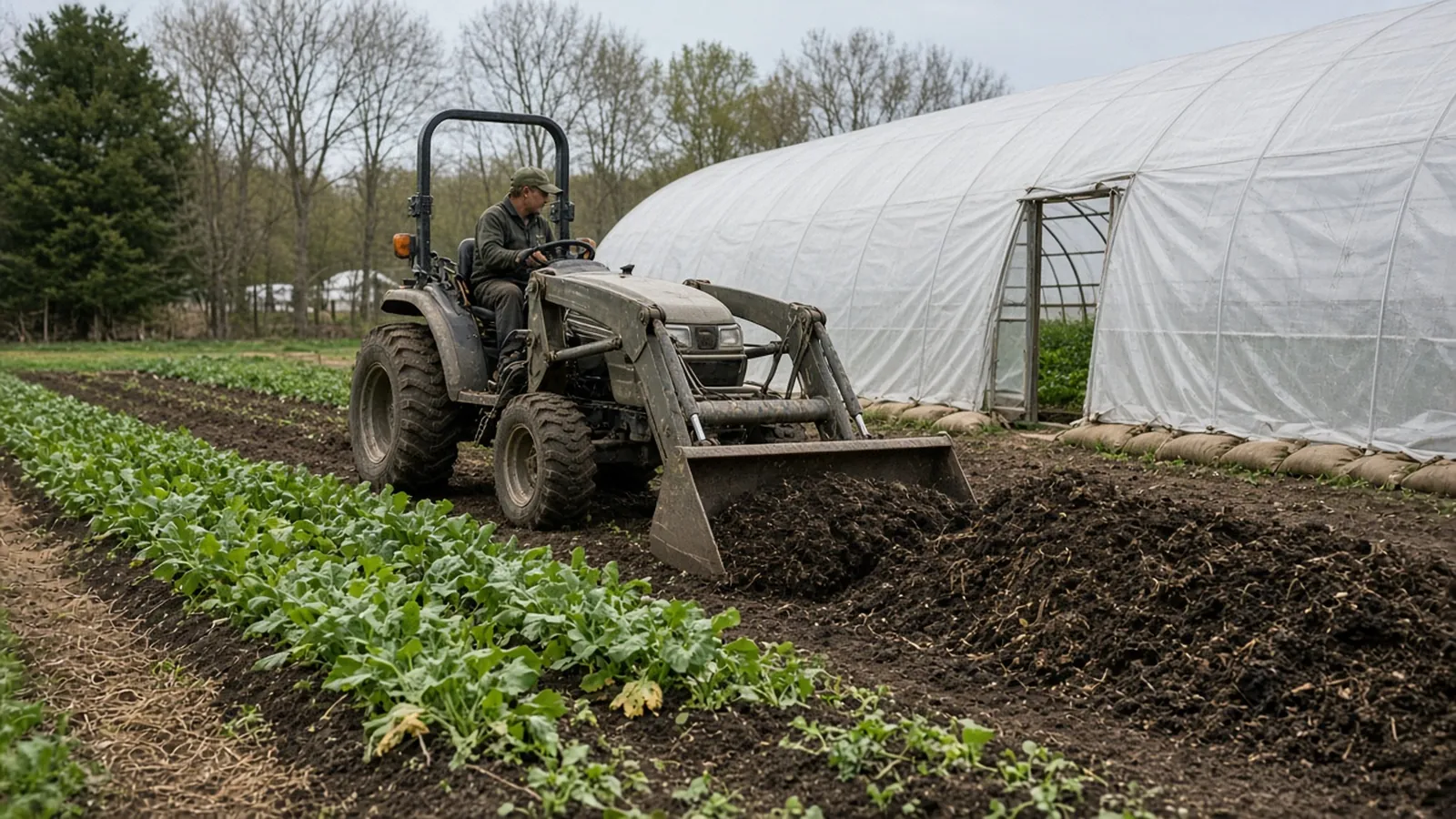
If you will work in a hoop house or high tunnel, measure the building, not the brochure. Practical comments from vegetable growers: a typical 26-foot-wide tunnel, with beds and paths, may leave you a 6- to 8-foot working width; a cab can be too tall; a vineyard or “narrow” compact can help, and a walk-behind (BCS-style) tractor is sometimes the better in-house tool, with the four-wheel tractor doing the compost and mowing outside. Do not buy a wide utility tractor and then design tunnels around it unless you already have the tractor.
6. How to pay for it
Cash, a dealer instalment contract, a bank or Farm Credit equipment note, or an FSA operating loan or microloan (the microloan ceiling published for FY 2026 is $50,000) are all used for machines in this class. If you are already in an FSA beginning-farmer file, ask whether the tractor belongs in the operating request rather than on a high-interest dealer contract. Compare the annual percentage rate, any balloon, and whether you can pay it off early. Do not let a “$0 down” advertisement hide a price that was inflated to fund the rate.
7. Before you sign: a short inspection and test-drive list
On a new machine, walk the options against the invoice: loader joystick, third function, tyre type (ag, industrial or turf), cruise or mid-PTO if you want a mid-mower, and whether a canopy or cab is already in the price. Sit in it with the boots you actually wear. Look over your shoulder at the hook on the three-point, because you will do that a thousand times.
On a used machine, start it from cold if you can. Watch the exhaust, the colour of the oil, and whether the hydraulics are slow or noisy. Raise and lower the loader, curl the bucket, and listen for a pump that screams. Check the underside for welds that were not there from the factory, a bent three-point, and play in the loader pins. If you are not comfortable judging those things, paying a mobile mechanic or a dealer for an inspection is a cheap insurance policy compared with a blown pump. Hours matter, but a 1,200-hour tractor that was serviced and stored inside can be a better buy than a 400-hour machine that lived in a hedge.
Take a 20-minute drive with the loader on, including a hill if you have one, and a tight turn in the yard. If you cannot try the exact implement you will use, at least confirm the PTO horsepower, the hydraulic flow, and the category of the three-point against the implement’s manual. A mismatch discovered on delivery day is an expensive mismatch.
Common mistakes
- Buying horsepower you will not use, or under-buying and burning a clutch in wet ground.
- Pricing the tractor without the loader and the first three implements.
- Skipping an inspection on a used machine because it “looks clean.”
- Ignoring dealer proximity. A three-hour round trip for a hydraulic hose gets old in the first season.
- Forgetting that the machine needs insurance, a lock, and a shed — and, if it goes on the road, a legal way to be there.
Checklist
- I have listed the jobs for the first two years, including whether the tractor must fit a tunnel or a particular shed door.
- I have a written quote or a documented used price, plus a list of implements I do not already own.
- If the tractor is used, I have an inspection plan and a repair reserve.
- I have compared finance only on a full APR and term, not on a monthly payment.
- I have asked how the machine will be insured and where it will be parked.
Frequently asked questions
1. How much does a compact tractor cost?
The machine alone, new and loader-equipped in North America, is often discussed in a band that starts in the mid-teens of thousands of US dollars for a simple compact and runs into the thirties and forties for a well-optioned compact utility. Used prices run lower and scatter more. Always add implements, delivery and a repair reserve, and always get a local quote.
2. Is a used tractor a better buy than a new one?
It can be, if you inspect it and you have a dealer or a mechanic who will stand behind the diagnosis. It is a worse buy if the saving is eaten by a loader rebuild, tyres and a trip across the state every time something leaks.
3. What size do I need for a farm under 50 acres?
It depends on the work, not the acreage. Mowing and loading on a mixed 20-acre place often fits in the mid-20s to about 40 horsepower. Hay-making, heavy tillage or a large rotary cutter want more. Measure implements and gates before you decide.
4. Will it fit in a high tunnel?
Only if you measure width, height (especially with a cab or a raised loader) and turning space against the building you have or plan to build. Many vegetable farms keep a walk-behind for in-tunnel work and a compact for the yard.
5. Which brand should I buy?
Buy the dealer you can reach and the machine that fits the work, then compare residual values in your local used market. Brand loyalty is real in this category; it should not replace a test drive and an itemised quote.
6. Can I finance a compact tractor with an FSA loan?
Equipment is a normal use of an FSA operating loan or operating microloan, and of commercial or Farm Credit equipment notes. See the Farm Credit vs FSA vs bank comparison for which door to try first.
Final thoughts
The compact tractor that pays for itself on a small farm is the one that is sized for the work, supported by a dealer you will actually call, and budgeted as a loader-plus-implements system. Get three written numbers — new, late-model used, and a realistic implement list — and only then decide whether the cheaper machine is cheaper.
Track the hours and the repairs, not just the purchase
LazAgro helps you record equipment use, inputs and jobs on the farm so the next machine decision is based on what you actually did this year.
Discover LazAgroSources and further reading
- TractorByNet owner threads, including “Realistic $ for a reliable tractor?”, compact comparisons, first-tractor and 2026 sales-data discussions — used as evidence of what buyers are paying and asking, not as a price list.
- FSA Farm Loan Information Chart for operating and microloan ceilings if you are financing equipment.