 LazAgro

In many parts of southern Cameroon, snails are something you collect, not something you farm. After the first heavy rains, children and adults head into the bush with baskets, and roadside sellers appear with big, dark-shelled snails. Then the dry season comes, supply falls and prices climb. Snail farming in Cameroon is a way to have snails to sell when the bush has none.
Snail farming, or heliciculture, does not need much land, capital or feed. It suits women's groups, students, retirees and anyone with a shaded corner of land. It also takes pressure off wild populations, which are shrinking in many areas because of forest clearing, bush fires and overharvesting.
But snails are slow, and so is the business. This guide covers species choice, pen design, feeding, breeding with the rains, health and selling, so you can set realistic expectations before you start.
1. Which snail species to farm
Three giant African land snails are commonly discussed in West and Central Africa:
| Species | Common notes | Farming value |
|---|---|---|
| Archachatina marginata | Large, dark, heavy shell with a blunt tip; very popular in southern Cameroon and Nigeria | Strong market demand and price; the usual choice for farming |
| Achatina achatina | Very large, striped shell with a pointed tip | Big snails but often more sensitive to dry conditions |
| Achatina fulica | Smaller, thinner shell; breeds quickly | Lower market value; a serious crop pest in many regions |
Most Cameroonian snail farmers choose Archachatina marginata, the species studied in reproduction trials by researchers in the country. Start with what your buyers know and prefer.
Where to get breeding stock
- Established snail farms are the best source: animals are adapted to captivity and you can see how they are kept.
- Wild-collected snails can work, but choose mature, healthy ones, and avoid snails from sprayed farms or polluted areas.
- Choose heavy snails with intact shells and a firm, moist body that retracts quickly when touched.
- Avoid snails with broken shells, a dry or foul-smelling body, or very thin, light shells.
2. Choosing the right site
Snails need shade, moisture and calm. They hate wind, direct sun and dry air.
- Shaded by trees or a roof, with no afternoon sun on the pens.
- Protected from strong wind, which dries snails out.
- Close to water for keeping soil and pens moist.
- Well-drained ground, since flooding drowns snails.
- Away from sprayed farms, roads and smoke.
- Secure from thieves, rats, ants, lizards, birds and snakes.
The humid forest zones of the South West, Littoral, Centre, South and East are naturally suited. In the drier Western Highlands, extra shade and watering are needed, especially in the dry season.
3. Building snail pens
Types of housing
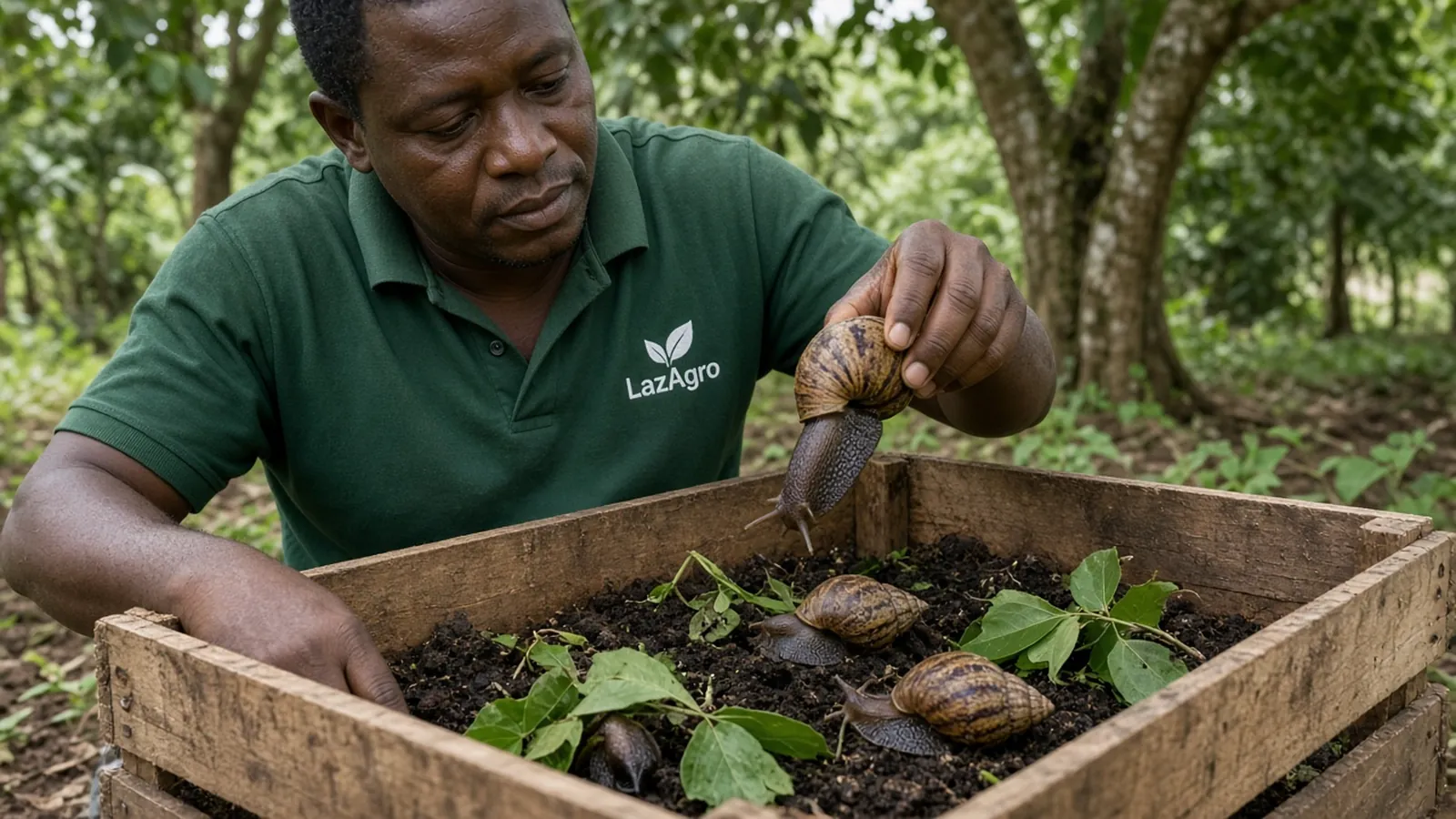
- Hutch boxes: wooden boxes with soil in the bottom and a mesh-covered lid. Good for small units and for breeding.
- Trench pens: shallow pits lined with blocks and covered with mesh. Cool and moist, but must drain well.
- Concrete or block pens: low walls with a mesh roof, often divided into breeding, nursery and growing sections.
- Old tyres and drums: a cheap start for a few snails, with mesh covers.
Essential features
- Escape-proof. Snails climb and push through small gaps. Use fine mesh and tight lids.
- Soil layer. Loose, loamy, slightly moist soil, around 20–30 cm deep for breeding pens, where snails lay eggs. Avoid clay that stays waterlogged and sand that dries out.
- Separate sections for breeders, eggs and hatchlings, and growers, so big snails do not crush small ones.
- Easy access for feeding, cleaning and collecting eggs.
4. Feeding snails for meat and strong shells
Snails are not fussy, but what they eat shows in growth and shell quality.
Leaves
Pawpaw leaves, cocoyam leaves, cassava leaves (in moderation), sweet potato leaves, lettuce and cabbage leaves, and many forest leaves are used by farmers. Pawpaw leaves are a favourite in many snail farms.
Fruits
Ripe pawpaw, banana, mango, pineapple peels, plantain peels and other soft fruit. Remove leftovers before they rot.
Concentrates
Many farmers add a dry mix of maize bran, wheat bran or other grain by-products to boost growth. Some use poultry mash.
Calcium
Snails need calcium for their shells. Crushed eggshells, oyster shell, bone meal or limestone sprinkled in the feed or on the soil help produce thick, heavy shells that buyers prefer.
- Feed in the evening. Snails are mostly active at night.
- Use clean, shallow feeding trays.
- Remove uneaten and rotting food each morning.
- Provide water in a very shallow dish, or keep feed and soil moist. Deep water can drown small snails.
- Never use leaves from sprayed farms or polluted roadsides.
5. Moisture and temperature
Moisture is the snail farmer's main daily task. When conditions are too dry, snails seal themselves inside their shells and stop eating and growing.
- Keep soil slightly moist, not muddy.
- Sprinkle water on pens in the evening during dry weather.
- Use thick shade and mulch like dry leaves or banana leaves over part of the soil.
- In the rainy season, check drainage so pens do not flood.
6. Breeding with the rains
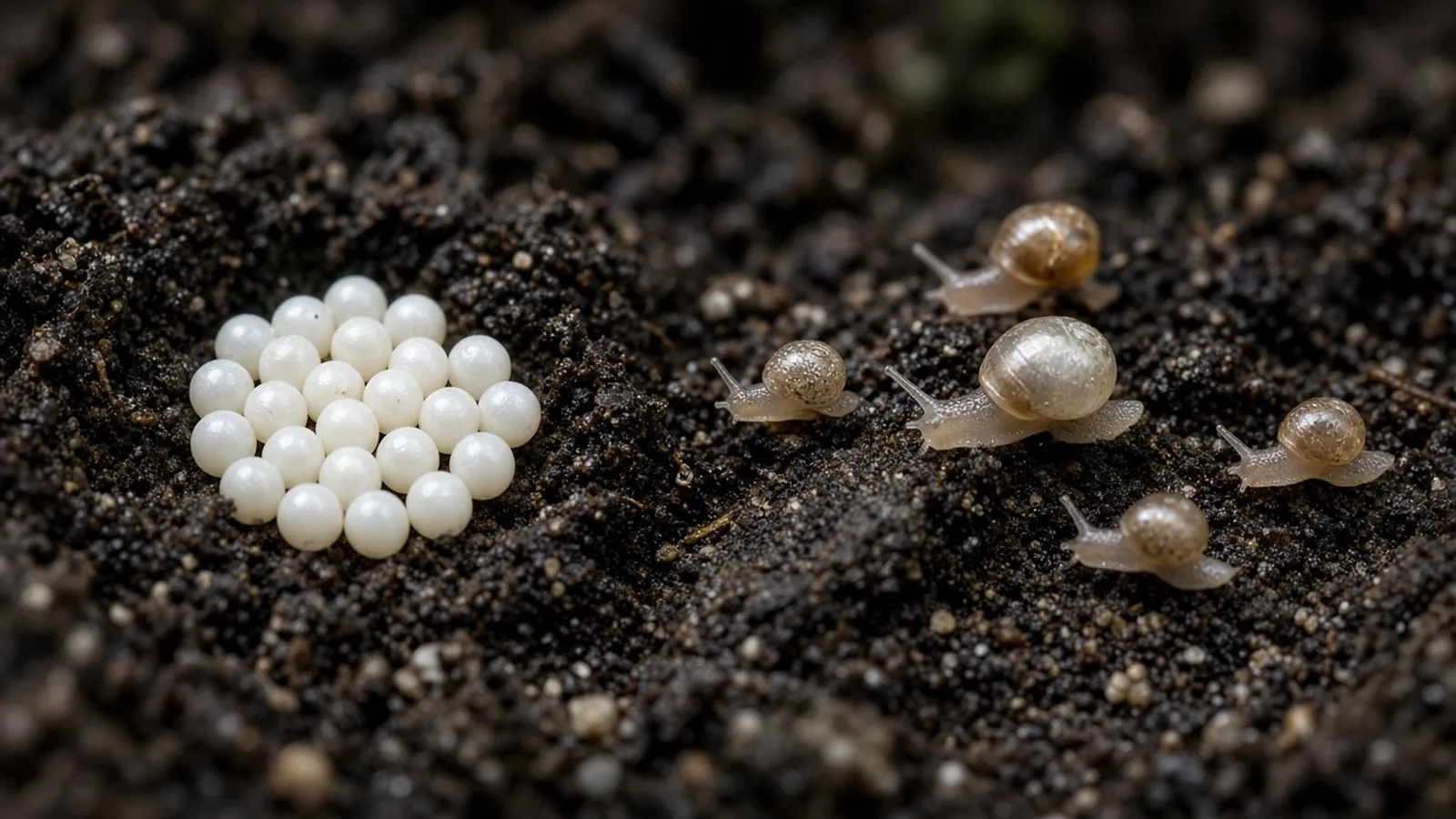
Giant African land snails are hermaphrodites: each snail has both male and female organs, but they still need to mate with another snail. Breeding is strongly seasonal. Research on Archachatina marginata in Cameroon, including a study of reproduction in captivity, recorded several useful figures:
- Egg laying occurs mainly during the rainy months.
- Snails in captivity began laying from around 13 months of age.
- Clutches were small, typically up to about 10 eggs.
- Incubation ranged widely, from roughly five weeks to about three months.
Researchers have also studied factors affecting hatchability of snail eggs in the Western Highlands, showing that soil moisture and handling affect results.
Practical breeding tips
- Put mature breeders in well-prepared breeding pens before the rains start.
- Keep soil loose and moist so snails can dig and lay.
- Check for eggs gently. Some farmers leave eggs in the pen; others move them to a separate box of moist soil.
- Handle eggs carefully and keep them at a similar depth and moisture.
- Move hatchlings to a nursery pen with soft food and calcium, away from large snails.
Because clutches are small and maturity takes time, building a snail herd from your own breeding is slow. Many farmers start with a larger number of breeders to speed things up.
7. Health, hygiene and predators
Snails have few major diseases in well-kept farms. Problems usually come from dirt, crowding and predators.
- Overcrowding slows growth and increases disease. Give snails room.
- Rotting food and dirty soil breed bacteria and mites. Clean daily and change pen soil periodically.
- Predators: ants, rats, lizards, birds, frogs and snakes. Fine mesh and raised boxes help. Keep the area around pens clear.
- Shell damage: handle gently. Cracked shells heal slowly and reduce value.
- Chemicals: snails are very sensitive. Never use insecticides near pens.
8. Selling snails at the right time
Snail prices often rise in the dry season, when wild collection falls. A snail farm that can supply during those months has an advantage.
- Grade by size. Large snails sell for much more each. Keep smaller ones growing.
- Supply restaurants and "pepper soup" spots that want regular quantities.
- Sell breeding stock to new farmers, a growing market as more people start.
- Consider processed products like cleaned, cooked or smoked snail meat, if you can meet hygiene standards.
- Use the shells. Crushed shells can go into animal feed as a calcium source.
9. Records for a snail farm
Track breeders, eggs collected, hatching dates, survival, feed costs, water use in the dry season and sales. After one cycle, you will know your real hatch rate and growth period. The LazAgro app lets you record batches, inputs and sales on your phone, even in a shaded corner with no network. Our guide on keeping livestock farm records explains the basics.
10. Common snail farming mistakes
- Building pens in full sun or in windy, open spots.
- No water plan for the dry season.
- Leaving rotting food in pens.
- Mixing hatchlings with large snails.
- Using leaves from sprayed farms.
- Expecting fast profits from a slow-growing animal.
11. Combining snails with other farm activities
Snails fit well into a diversified farm. Pawpaw trees, plantain and cocoyam give shade and feed. Vegetable trimmings and fruit peels become snail feed. In turn, snail droppings and old pen soil enrich compost (see our guide on how to make compost on the farm). Some farmers run snail pens beside mushroom houses (see our guide on mushroom farming in Africa) since both need shade and humidity.
12. A realistic first-year plan
Many people quit snail farming in the first year because they expected quick sales. A written plan keeps you steady. Here is one way to think about the first twelve months for a farm in the humid south.
| Period | Main work | What success looks like |
|---|---|---|
| Dry season before you start | Choose the site, build pens, plant pawpaw and shade, secure water, find a breeder | Pens ready and tested for escape and drainage |
| Start of the rains | Stock mature breeders, feed well, keep soil moist and loose | Breeders active, eating, and few deaths |
| Middle of the rains | Check for eggs, protect clutches, move hatchlings to nursery pens | Eggs and hatchlings counted and recorded |
| End of the rains | Grade growers, prepare for dry weather with extra shade and watering | Steady growth, no flooding losses |
| Following dry season | Water daily, feed in the evening, protect from heat and ants | Most snails stay active; few go dormant or die |
Costs to budget for
- Pens: wood or blocks, fine mesh, lids, hinges and locks.
- Breeding stock: usually the largest single cost at the start.
- Water: containers, a watering can or hose, and possibly a tank for the dry season.
- Feed supplements: bran, mash and calcium sources. Leaves and fruit are often free from your own farm.
- Labour: daily feeding, cleaning and watering, even if it is your own time.
Get current prices for breeders and materials from two or three sources near you before deciding how many snails to start with. It is better to stock fewer snails in good pens than many snails in poor ones.
Frequently asked questions about snail farming in Cameroon
1. Which snail is best for farming in Cameroon?
Archachatina marginata is the most popular choice because of its size, heavy shell and strong market demand.
2. How long do snails take to reach market size?
Giant African land snails grow slowly. Reaching good market size usually takes more than a year, depending on feed, moisture and species.
3. How many eggs does a snail lay?
Studies of Archachatina marginata in Cameroon recorded small clutches, typically up to about 10 eggs, laid mainly during the rainy season.
4. What do snails eat?
Leaves like pawpaw and cocoyam, ripe fruits and peels, some bran or mash, and a calcium source like crushed eggshells for strong shells.
5. Is snail farming profitable in Cameroon?
It can be, particularly when you can sell during the dry season when wild supply drops. Profit depends on survival, growth and steady buyers, so start small and keep records.
Final thoughts
Snail farming in Cameroon rewards steady, quiet attention: shade, moisture, clean food and patience. It will not make you rich in three months, but a well-run snailery can become a reliable side income, especially when you can sell while the bush is dry.
Track every clutch and every sale
LazAgro helps you record batches, feed, losses and sales, online or offline.
Discover LazAgro