 LazAgro

Every tomato farmer in Cameroon knows the swing. One month a crate goes for a price that makes you feel rich. A few weeks later, the same crate barely covers transport from Foumbot or Santa to the market. Tomato farming in Cameroon is less about growing tomatoes and more about growing them at the right time, keeping them alive through pests and disease, and getting them to buyers before they soften.
Tomato is grown in almost every region, but the big production belts sit in the Western Highlands around Foumbot, Bafoussam, Dschang, Santa and Bambili, and in peri-urban gardens near Yaoundé, Douala and Buea. It is a high-input, high-risk crop. It is also one of the few crops a small farmer can turn into serious cash within about four months.
This guide compares rainy- and dry-season production, then walks through seedlings, field setup, staking and pruning, fertility, water, and the two problems that ruin most crops: Tuta absoluta and blight.
1. Rainy season or dry season: choosing your window
In most of southern Cameroon, the heaviest tomato supply comes from rain-fed planting. Fewer farmers produce through the dry season because it needs water, and fewer still manage the peak of the rains because disease pressure is brutal. Prices usually follow supply, though every market has its own pattern. Track what buyers pay month by month in your area.
| Rainy-season tomatoes | Dry-season tomatoes | |
|---|---|---|
| Water | Free from rain, but often too much | Needs irrigation: stream, well, borehole or tank |
| Main disease risk | Late blight, bacterial wilt, fruit rots | Lower blight; more mites, whiteflies and viruses |
| Pest pressure | Moderate to high | Tuta absoluta and whiteflies often high |
| Price at harvest | Often lower when many farms harvest at once | Often higher, as fewer farms produce |
| Main cost | Fungicides, staking, drainage | Water pumping, labour, mulch |
For a first crop, many farmers start in the early rains or late rains, when conditions are kinder, learn the crop, then move into dry-season production once they have water and experience.
2. Picking varieties
Variety affects disease tolerance, fruit firmness and how well tomatoes survive the journey to market.
- Determinate (bush) varieties grow to a set height and fruit over a short period. Easier to manage, good for processing and short-season planting.
- Indeterminate varieties keep growing and fruiting, need staking and pruning, and can give a longer harvest.
- Hybrids often yield more and carry tolerance to specific diseases, but seed costs more and you cannot save seed from them.
Ask input dealers and experienced farmers near you which varieties hold up best in your season and on the road. Firm, oval fruit usually travels better in crates than large, soft, round fruit.
3. Raising strong seedlings
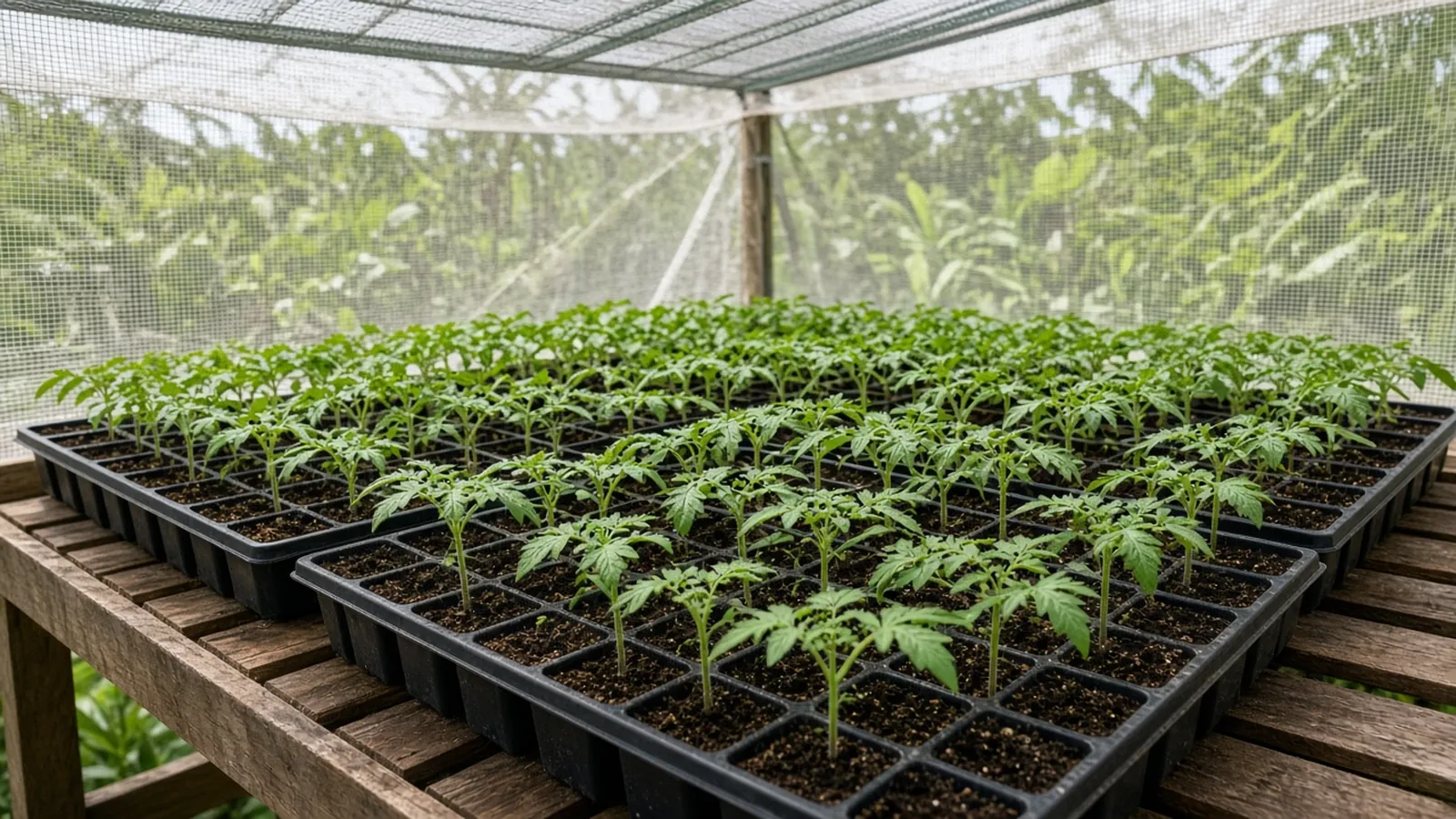
Good tomatoes start in the nursery. Weak, leggy seedlings never become strong plants. Our guide to starting a vegetable seedling nursery goes into detail, but the essentials are:
- Use clean, well-drained growing media, not soil from an old tomato field.
- Sow in trays or raised nursery beds under light shade and rain protection.
- Cover the nursery with fine insect-proof netting to keep out whiteflies and Tuta moths.
- Water gently in the morning; avoid wet leaves at night.
- Harden seedlings by gradually increasing sun exposure in the last week.
- Transplant at around four to six true leaves, typically three to five weeks after sowing.
4. Preparing the field
Rotation
Do not plant tomato where tomato, pepper, garden egg, huckleberry (njama njama) or Irish potato grew in the last two or three seasons. These crops share diseases, and wilt organisms build up in the soil. Rotate with maize, beans, cabbage or a fallow.
Beds and drainage
Raised beds or ridges keep roots out of standing water during the rains. On slopes, run beds across the slope to slow runoff. In the dry season, flat or slightly sunken beds hold irrigation water better.
Organic matter
Work well-rotted manure or compost into the beds two or three weeks before transplanting. Fresh poultry manure can burn roots and bring in diseases, so let it age first.
5. Transplanting, staking and pruning
Transplant in the late afternoon or on a cloudy day and water immediately. Common spacing is around 50–60 cm between plants and 80–100 cm between rows, but follow advice for your variety.
Staking
Staking keeps fruit off wet soil, improves airflow and makes spraying and harvesting easier. Bamboo, raffia stakes or a string trellis all work. Stake within the first two weeks, before plants sprawl.
Pruning
For indeterminate varieties, remove side shoots (suckers) that grow between the leaf and the main stem, leaving one or two main stems. Remove lower leaves that touch the soil. Pruning in the rainy season is especially valuable because it lets leaves dry faster after rain, which cuts blight pressure.
6. Feeding and watering
Tomatoes need steady nutrition, with more potassium and calcium once fruiting starts. A soil test is the best guide. Without one, combine compost or manure at planting with fertiliser recommended by your extension agent or input dealer, split into several applications rather than one big dose.
Water
- Irregular watering causes blossom end rot (black, leathery patches at the bottom of fruit) and cracking.
- Water the soil, not the leaves. Drip lines or watering at the base reduce disease.
- Mulch with dry grass to keep soil moist and stop soil splashing onto leaves.
- In the dry season, water early in the morning or late afternoon.
Dry-season irrigation options for small farms
Dry-season tomatoes live or die on water. Before you plant, walk your water source in the driest weeks you remember, not in the rains. A stream that looks generous in October can shrink to a trickle by February.
- Watering cans and buckets work for small plots near water but take a lot of labour. Plan who will carry water every day for three months.
- Motor pumps with hoses are common in the Foumbot and Noun valley gardens. Budget for fuel, maintenance and a spare.
- Gravity-fed drip lines from a raised tank use much less water and keep leaves dry. Kits cost more at the start but save labour and reduce disease.
- Rainwater harvesting from roofs into tanks can carry a nursery and a small plot into the early dry season.
Whatever system you use, mulch heavily. A thick layer of dry grass can noticeably reduce how often you need to water, and it keeps fruit off the soil. Compost worked into the beds also helps the soil hold moisture; our guide on how to make compost on the farm explains a simple method.
7. Tuta absoluta: the tomato leaf miner
Tuta absoluta is a small moth from South America that has spread across Africa over the past decade and a half. A review of Tuta absoluta in Africa lists Cameroon among the affected countries. Studies in the North West have reported very heavy leaf damage around Bambili, one of the first areas where it was found.
How to recognise it
- Pale, transparent blotches (mines) on leaves, with dark droppings inside.
- Small holes in fruit, often near the stem, with tunnels inside.
- Damaged growing tips on young plants.
- Small grey-brown moths flying at dawn and dusk.
Managing it
- Start clean. Raise seedlings under netting and inspect them before transplanting.
- Monitor. Pheromone traps (where available from input dealers) show when moth numbers are rising.
- Remove and destroy heavily mined leaves and damaged fruit. Bag or bury them; do not leave them at the field edge.
- Destroy crop residues immediately after the last harvest.
- Break the cycle by not planting tomato continuously in the same area.
- Use insecticides carefully. Tuta develops resistance quickly. Use only registered products, rotate between different active ingredients, and respect pre-harvest intervals.
8. Late blight, wilt and other diseases
Late blight
Late blight is the classic rainy-season killer. Dark, water-soaked patches spread across leaves and stems, sometimes with white growth underneath in humid mornings. Fruit develops firm brown patches. In wet, cool weather it can destroy a field within days.
- Choose tolerant varieties for rainy-season planting.
- Stake, prune and space for airflow.
- Use preventive fungicide programmes recommended locally, starting before symptoms appear.
- Remove infected plants early.
Bacterial wilt
Plants wilt suddenly in the heat of the day while leaves stay green. Cut a stem and place it in a glass of clean water: a milky stream flowing out suggests bacterial wilt. There is no cure. Pull and destroy affected plants and rotate away from tomato and its relatives for several seasons.
Viruses
Yellowing, curling and mottled leaves are often viral, spread by whiteflies and aphids. Control the insects early, remove infected plants and use netting in the nursery.
9. Harvest, handling and selling
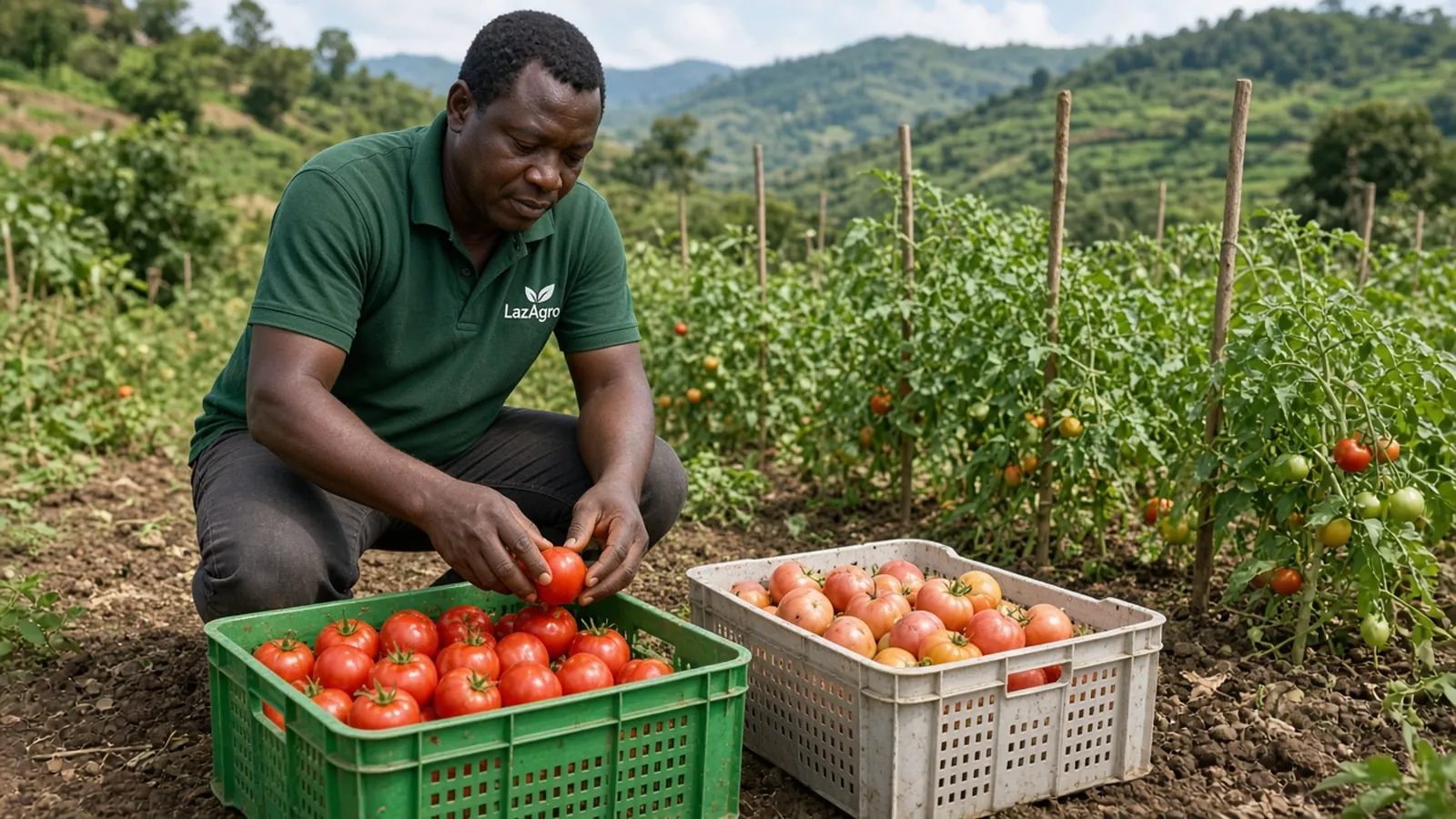
Pick tomatoes at the breaker or early pink stage if they must travel far, and riper for nearby markets. Handle gently, and keep picked fruit in the shade. Crates bruise less than sacks, and bruised tomatoes are what traders use to push your price down.
- Grade. Separate large, clean fruit from small or damaged fruit.
- Know your price before the buyer arrives. Call a contact in the market or check recent sale prices you recorded.
- Stagger planting. Transplanting in two or three lots a few weeks apart spreads your harvest across different price days.
- Build regular buyers. Restaurants, hotels and supermarkets value consistent quality.
10. Planning tomato farming in Cameroon as a business
Tomatoes eat cash: seed, nursery, stakes, fertiliser, fungicides, insecticides, labour and transport. Track every expense by plot from nursery to final sale.
Keeping these numbers on paper is fine, but they get lost. The LazAgro app lets you log inputs and sales per field from your phone, including in areas with no network, so your break-even figure is always ready when a trader calls. If you're working far from coverage, our guide to managing a farm without internet explains how offline records work.
11. Common tomato mistakes
- Planting tomato after tomato on the same plot.
- Transplanting weak seedlings from an open, unprotected nursery.
- Waiting for blight symptoms before starting any protection in the rains.
- Spraying the same insecticide again and again against Tuta.
- Leaving old plants and rotten fruit in the field after harvest.
- Harvesting everything on one day for one buyer with no backup.
Frequently asked questions about tomato farming in Cameroon
1. When is the best time to plant tomatoes in Cameroon?
Many farmers plant in the early or late rains when conditions are easier. Dry-season production with irrigation often meets better prices, but needs reliable water and closer pest control.
2. How long do tomatoes take to mature?
Depending on variety and season, first harvests usually begin around two to three months after transplanting, and harvesting can continue for several weeks.
3. How do I control Tuta absoluta without heavy spraying?
Start with clean seedlings under netting, use pheromone traps to monitor, remove mined leaves and damaged fruit, destroy crop residues and rotate crops. Use registered insecticides only when needed, rotating active ingredients.
4. Why do my tomatoes have black bottoms?
That is usually blossom end rot, linked to irregular watering and calcium uptake. Water evenly, mulch, and avoid big swings between dry and soaked soil.
5. Why do my tomato plants wilt suddenly?
Sudden wilting with green leaves is often bacterial wilt. Pull and destroy affected plants and avoid planting tomato and related crops on that plot for several seasons.
Final thoughts
Tomato farming in Cameroon is not for the careless, but it rewards farmers who plan their season, keep their nursery clean, stay ahead of blight and Tuta, and know their numbers. Start with a plot you can manage well, write down every cost, and use each season to sharpen your timing.
Know your break-even price before the trader calls
Track nursery, input, labour and sales costs per field with LazAgro, online or offline.
Discover LazAgro