 LazAgro
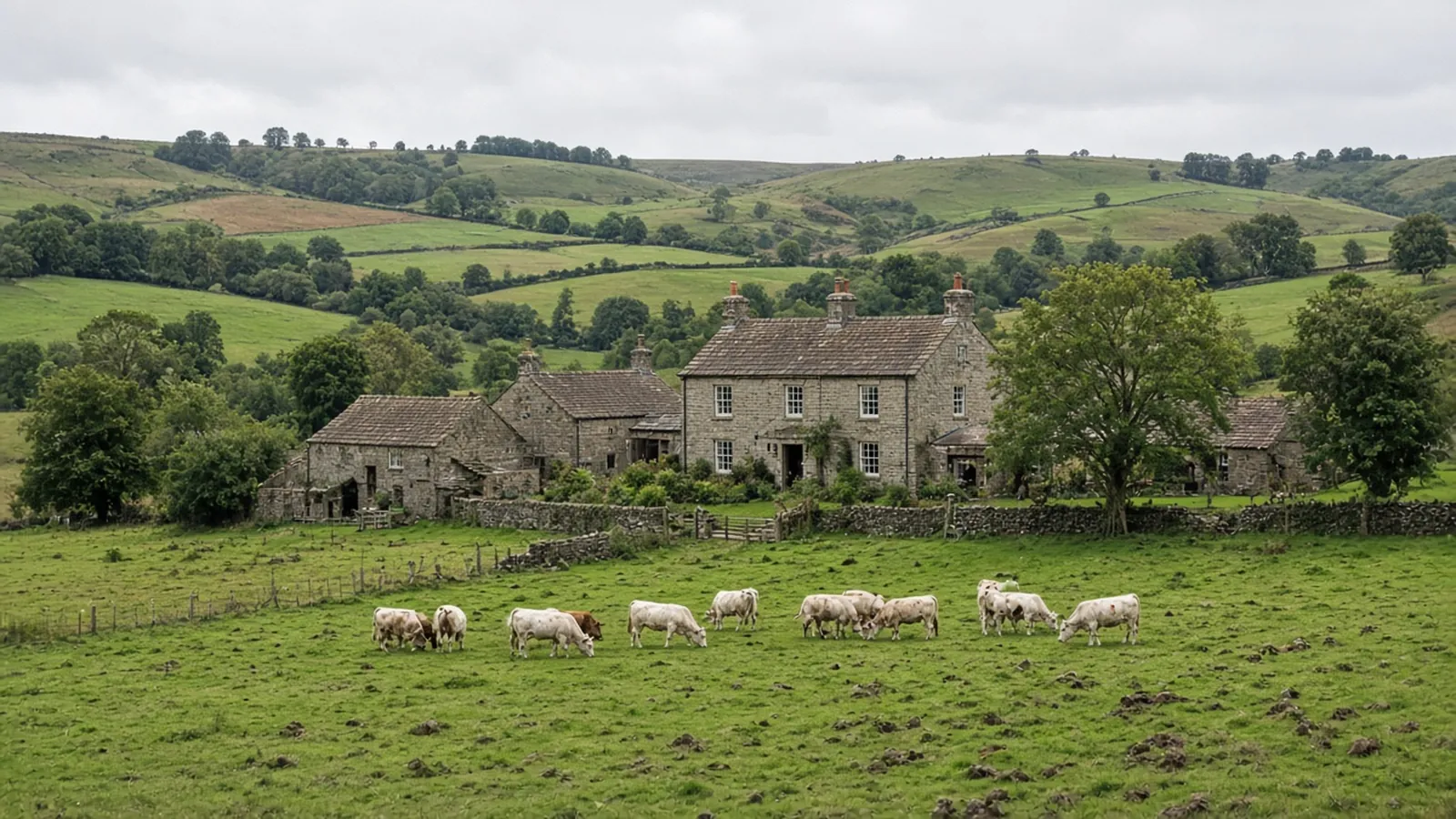
From 6 April 2026, Agricultural Property Relief and Business Property Relief no longer take a qualifying farm out of Inheritance Tax at 100% with no upper limit. A new combined allowance caps 100% relief at £2.5 million of qualifying agricultural and business property. Value above that still gets relief — but at 50%. For a lot of family farms that is the difference between “the next generation inherits the land” and “the estate has a tax bill that has to be funded.”
Last checked November 2026 against GOV.UK guidance last updated on 6 April 2026, the official policy paper on the relief changes, and GOV.UK’s Inheritance Tax overview. This is a plain-language guide, not tax, legal or financial advice. Inheritance Tax is fact-specific. Speak to a solicitor and a tax adviser who work with UK farms before you change a will, a partnership, a tenancy or a lifetime gift.
The rule that is now in force. For deaths on or after 6 April 2026, the combined amount of 100% Agricultural Relief and 100% Business Relief allowed against a person’s estate cannot exceed £2.5 million. Qualifying value above that receives 50% relief. Any unused portion of the £2.5 million allowance can be transferred to a surviving spouse or civil partner, so a couple may have up to £5 million of qualifying agricultural and business property before the 50% rate applies — on top of the existing nil-rate bands. These figures come from GOV.UK, not from a commentator’s summary.
1. What Agricultural Relief still covers — and what it never did
Agricultural Relief (often called Agricultural Property Relief, or APR) reduces the Inheritance Tax on the agricultural value of qualifying agricultural property. GOV.UK describes that property as land or pasture used to grow crops or to rear animals, and it also includes:
- growing crops;
- stud farms used to breed and rear horses, and grazing;
- short-rotation coppice (trees planted and harvested at least every 10 years);
- land not currently being farmed because it is under an environmental land management agreement, or under a crop rotation scheme;
- some agricultural shares and securities;
- farm buildings, farm cottages and farmhouses, subject to extra tests.
Just as important is the list of things that do not qualify for Agricultural Relief: farm equipment and machinery, derelict buildings, harvested crops, livestock, and property that is already subject to a binding contract for sale. Those assets may still be relevant to Business Relief, or they may simply sit in the estate at full value. Mixing the two reliefs up is one of the ways a “we’ll be fine, it’s a farm” assumption comes apart.
The property has to be part of a working farm in the UK, owner-occupied or let. The ownership and occupation tests are still the old ones: two years if the owner (or a company they control, or their spouse or civil partner) occupied it for agricultural purposes, and seven years if someone else occupied it. Outstanding mortgages and other secured liabilities are deducted before the relief is calculated.
The farmhouse is not automatically the whole house
This is the test that still surprises families. Buildings have to be of a nature and size appropriate to the farming that is actually taking place. The property is valued for Agricultural Relief as if it could only be used for agricultural purposes. Any extra value — the “country house” element of a farmhouse in a pretty valley — does not qualify. Cottages and farmhouses also have occupation rules: they must be occupied by someone employed in farming, or by a retired farm employee (or their surviving spouse or civil partner) on the tenancy terms GOV.UK sets out.
In practice, that means a valuation for Inheritance Tax and a valuation for a sale are not the same exercise. If you are also thinking about what the land would fetch as an investment, our guide to investing in farmland is about a different decision, but the same warning applies: the figure in a brochure is not the figure a relief is calculated on.
2. The £2.5 million cap, the 50% band, and spouses
Until 6 April 2026, qualifying agricultural property could attract 100% relief without a quantitative cap, where the old 100% conditions were met (the owner farmed it, or it was on a short-term grazing licence, or it was let on a tenancy that began on or after 1 September 1995). Those 100% conditions still matter. What changed is the amount of property that can receive 100% relief.
On or after 6 April 2026:
- 100% relief on the combined value of qualifying agricultural and business property is limited to £2.5 million for deaths on and after that date.
- The £2.5 million includes qualifying property in the estate, qualifying property given away on or after 30 October 2024 if the gift was made within seven years of death, and other qualifying property (including property in trusts) treated as part of the estate.
- Where the total value of qualifying property exceeds £2.5 million, the excess receives 50% relief.
- The 100% allowance is applied in date order, starting with the earliest qualifying lifetime gift from 30 October 2024. Any remainder is then shared equally across qualifying agricultural or business property in the estate on death. You cannot simply point the whole allowance at one field.
- Unused allowance can be transferred to a surviving spouse or civil partner if a claim is made within the time limits on GOV.UK (within four years of the survivor’s death, or within six months of the personal representatives starting their role). If the first spouse or civil partner died before 6 April 2026, it is assumed the full £2.5 million is available to transfer.
The standard Inheritance Tax rate remains 40%, charged only on the part of the estate that is above the available threshold. A 50% relief on the excess therefore leaves an effective 20% tax on that slice, before other allowances and before any 10-year instalment arrangement. That 20% figure is arithmetic on the official rates, not a separate HMRC rate.
The ordinary nil-rate band is still £325,000 on the GOV.UK Inheritance Tax overview. If you pass your home to children or grandchildren, that threshold can increase to £500,000. Unused threshold can be added to a spouse or civil partner’s threshold. The government’s December 2025 announcement described the £5 million of transferable 100% relief as sitting “on top of existing nil-rate bands.” Do not add those bands together on the back of an envelope and treat the total as a guaranteed tax-free estate; residence relief has its own conditions and tapers, and Agricultural Relief applies to agricultural value, not to every asset you own.
This is not a tax on every farm. In a 23 December 2025 announcement, the government raised the planned cap from £1 million to £2.5 million and said that around 85% of estates claiming agricultural property relief in 2026–27, including those that also claim business property relief, were forecast to pay no additional Inheritance Tax because of the reforms. It also said the number of APR-claiming estates affected in 2026–27 would be up to 185. Forecasts are not a personal clearance. A smaller farm can still have a bill if the house, the machinery, the cash or a diversification sits outside the relief, or if the agricultural-value test on the farmhouse is tighter than the family expected.
3. Business Relief, machinery and the bits APR does not reach
You cannot claim Business Relief on value you have already claimed Agricultural Relief on. You may be able to claim Business Relief on value that Agricultural Relief does not fully cover, if you are a farming business and the Business Relief conditions are met. That is how machinery, livestock, harvested produce and some diversified trades often enter the conversation — not as an afterthought, but as a second, separate relief with its own tests.
One change to watch, because it is easy to miss in farm talk: the rate of Business Relief is reduced to 50% in all circumstances for shares admitted to trading on recognised exchanges that HMRC treats as “not listed” (AIM shares are the example most advisers mention). That is a business-property rule, not an agricultural-land rule, but many farm families hold both.
The option to pay Inheritance Tax by equal annual instalments over 10 years, interest-free, has been extended to all property eligible for Agricultural Relief or Business Relief. That does not shrink the bill. It can, where it applies, change whether the land has to be sold to pay HMRC on the ordinary timetable. Eligibility and administration sit with the estate’s advisers and with HMRC, not with a blog post.
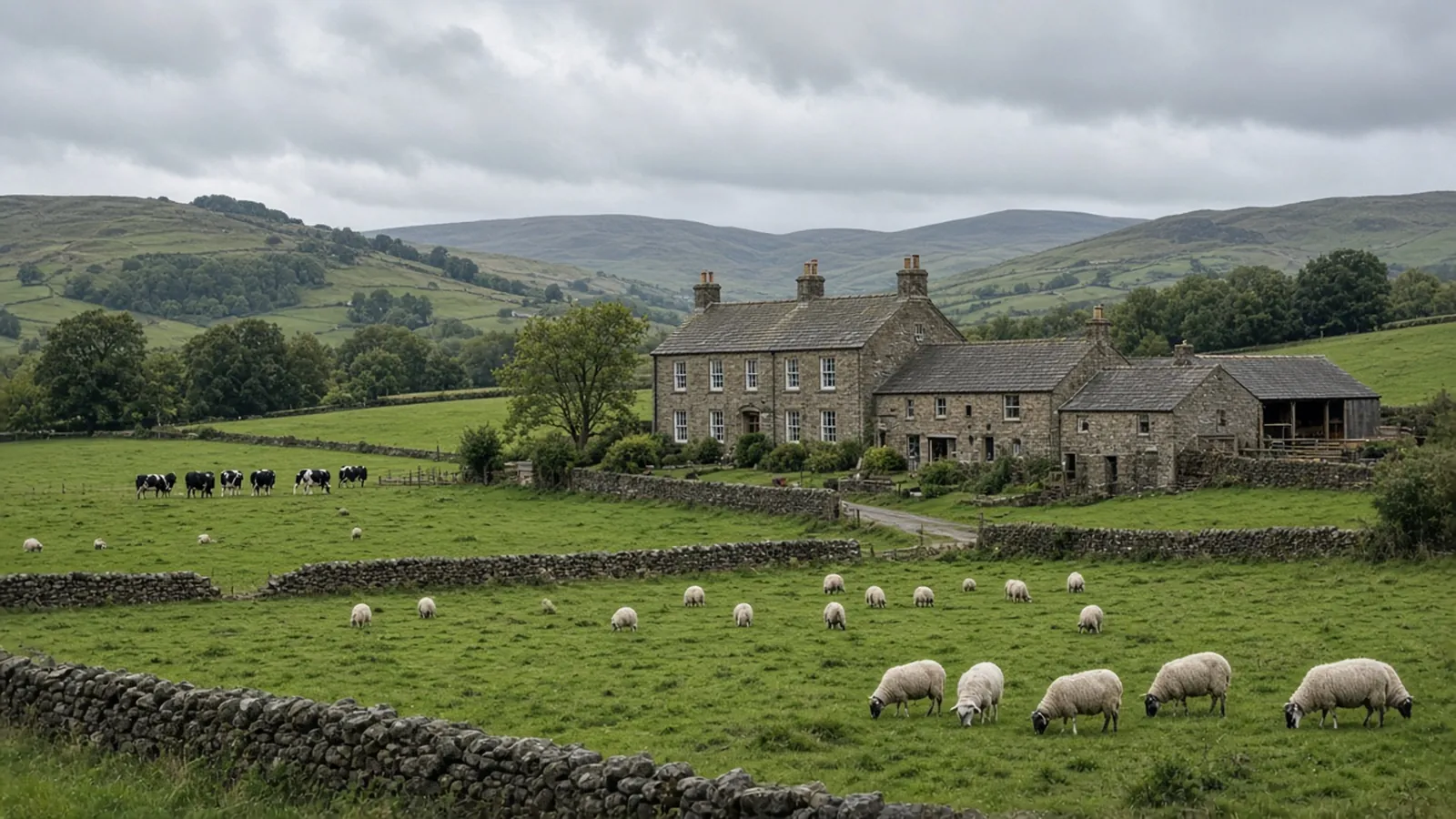
4. A worked example (simplified, not an estate account)
Illustrative only. This is a teaching sketch, not a valuation, a clearance or a computation of a real estate. Mortgages, the agricultural value of the house, lifetime gifts, trusts, the residence nil-rate band and the rest of the estate can all change the arithmetic. A solicitor and a tax adviser do this with valuations, not with a round number.
Imagine a widowed farmer who dies in September 2026, having made no lifetime gifts of qualifying property after 30 October 2024. The estate includes qualifying agricultural property with an agricultural value of £4 million (land, appropriate buildings, and the agricultural value of the farmhouse), and no other qualifying business property. There is no deductible mortgage on the land. The farmer can use one £2.5 million 100% allowance (the spouse died before 6 April 2026, and the unused allowance is transferred).
Under the April 2026 rules:
- £2.5 million of that agricultural value receives 100% relief.
- The remaining £1.5 million receives 50% relief, so £750,000 remains in the chargeable estate from this property.
If, for this sketch, the only other moving part is the standard £325,000 nil-rate band (ignoring residence relief, cash, machinery and everything else), Inheritance Tax at 40% would be 40% of (£750,000 − £325,000) = 40% of £425,000 = £170,000. If the unused spouse allowance had not been available, only £2.5 million would have been fully relieved, the chargeable slice would have been larger, and the bill would have been larger with it.
Now change one fact: the same land is worth £4 million agriculturally, but the farmhouse has substantial extra non-agricultural value, there is a diversified let property, and a machinery fleet sits outside Agricultural Relief. Those items may get Business Relief, partial relief, or no relief. The £170,000 sketch does not survive contact with that estate. That is the point of the example.
5. Lifetime gifts, trusts and the 30 October 2024 tail
Families who made gifts after the 2024 Budget, expecting to “get ahead” of April 2026, need to read the transitional rules rather than assume the gift is outside the cap. Qualifying property given away on or after 30 October 2024 can still use up the £2.5 million 100% allowance if the donor dies within seven years. The allowance is applied to those gifts first, oldest first. GOV.UK also sets conditions for replacement agricultural property and for gifts that have to remain agricultural property in the donee’s hands.
Trusts have their own version of the £2.5 million allowance. The official policy paper says the measure affects existing trusts from the next 10-year anniversary on or after 6 April 2026, and that new trusts, or trusts that did not hold agricultural or business property on or before 30 October 2024, are affected from that earlier date as to 100% relief. If the land is in a trust, this is not a will-only conversation.
6. What farm families are actually deciding
The useful questions are practical, and they are the ones advisers have been asked since the Budget:
- Whose name is the land in, and is there a spouse allowance to transfer?
- What is the agricultural value of the land and the house, as opposed to hope value or amenity value?
- What sits outside Agricultural Relief — machinery, livestock, cash, a farm shop, holiday lets, development land — and does Business Relief actually reach it?
- Is there a written partnership, and does it match the way the bank, the BPS/delinked payments or the Sustainable Farming Incentive file is set up?
- Would a lifetime transfer, a tenancy, or a reorganisation help — or would it waste the allowance, fail the occupation tests, or create a different tax?
- If a bill arises, can it be funded from assets, life insurance or the 10-year instalment option, without a forced sale of the core land?
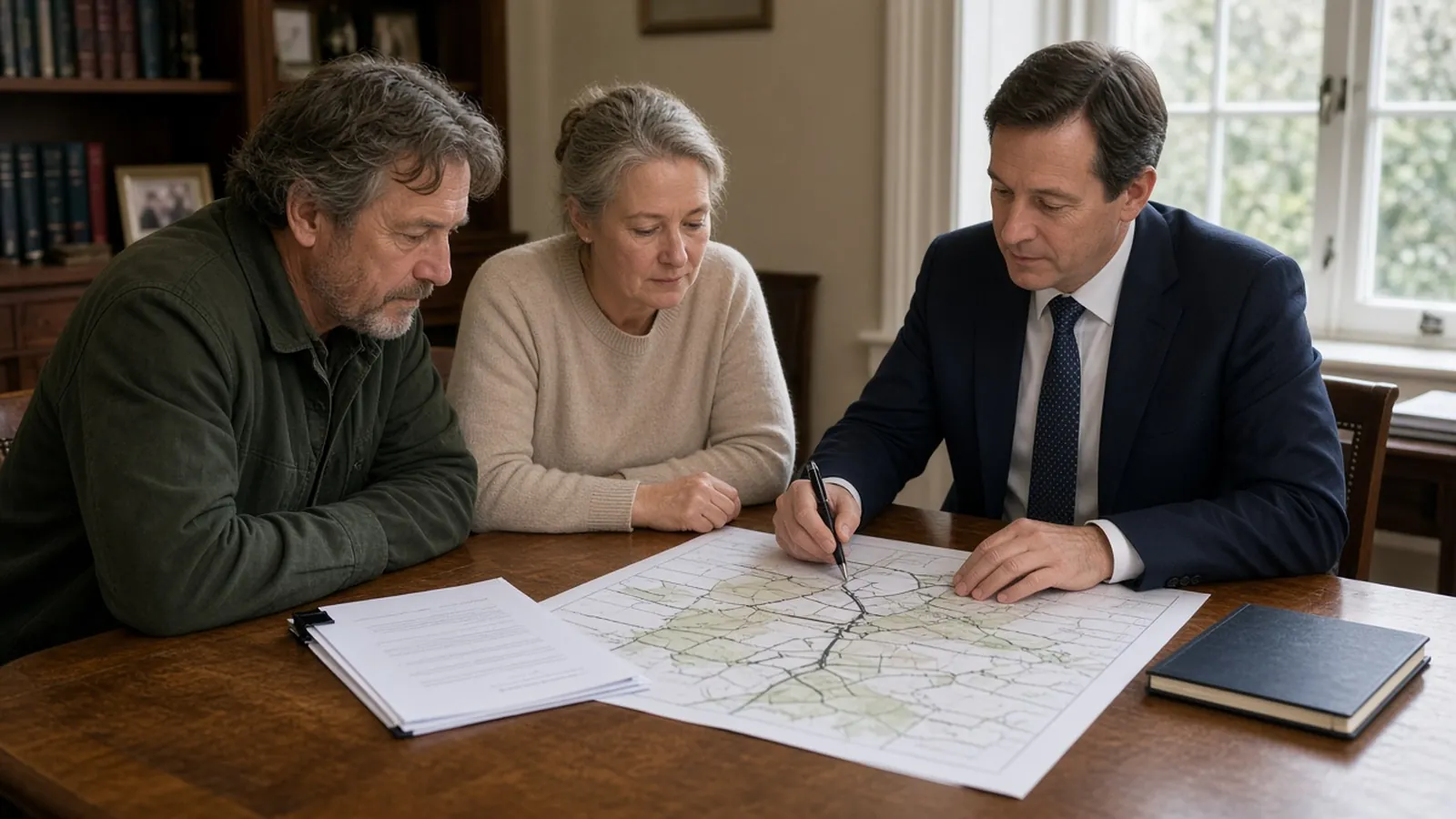
Those questions need records: a plan of the land, tenancy agreements, partnership accounts, and a clear picture of who does the farming. A set of farm accounts that a lender would recognise is also a set of accounts an adviser can use; our guide to a farm business plan a lender will actually read is written for borrowing, but the same discipline helps here. So does keeping the production and livestock records current — see how to keep livestock farm records — because occupation and the nature of the business are facts, not slogans on a letterhead.
- Read the current GOV.UK Agricultural Relief page, not a 2024 commentary that still talks about a £1 million cap.
- Get an up-to-date will, and a note of any trusts, from a solicitor who does agricultural estates.
- Ask for a rough split: agricultural value, extra farmhouse value, and assets that depend on Business Relief.
- Check mortgages and charges; they come off before the relief.
- If you are a couple, ask specifically about transferring unused allowance and about the order in which gifts use the cap.
- Do not make a large lifetime gift of land only to “use up” a rule you have not had advised in writing.
- Revisit the plan after any death, divorce, land sale or new tenancy — and after any further Budget change.
Common mistakes
- Treating the market price of the farmhouse as fully relieved.
- Assuming machinery, livestock and harvested crops are agricultural property. GOV.UK says they are not, for Agricultural Relief.
- Adding £5 million, £325,000 and £175,000 into one “safe” number and stopping there.
- Ignoring lifetime gifts made on or after 30 October 2024.
- Updating the will but not the partnership or the tenancy.
- Using a 2024 article that still describes the cap as £1 million. That figure was increased before the April 2026 start date.
Clear records help every adviser you will need
LazAgro helps you keep production, livestock and sales records in one place, online or offline, so the file you take to a solicitor or accountant is the same year the farm actually ran.
Discover LazAgroFrequently asked questions
1. Is Agricultural Relief abolished?
No. It is still available on qualifying UK agricultural property. What changed on 6 April 2026 is that 100% relief is capped at £2.5 million of combined qualifying agricultural and business property, with 50% relief on the excess.
2. Can a married couple use £5 million of 100% relief?
Unused allowance can be transferred to a surviving spouse or civil partner, so up to £5 million of qualifying property can receive 100% relief between them, on top of existing nil-rate bands, if the conditions and claim time limits are met. It is not automatic on the first death in the way people sometimes describe it; the transfer is claimed on the second death, with a special rule if the first death was before 6 April 2026.
3. Does let land still qualify?
Yes, a working farm in the UK can be owner-occupied or let. The occupation period is longer when someone else farms it (seven years). The 100% rate still depends on the letting conditions GOV.UK lists, including tenancies beginning on or after 1 September 1995.
4. Do I pay 20% Inheritance Tax on everything above £2.5 million?
Not on “everything.” Qualifying agricultural or business value above the allowance gets 50% relief, and the standard Inheritance Tax rate of 40% then applies to the chargeable part of the estate after other thresholds and exemptions. 40% of the remaining half is 20% of that qualifying slice, before those other moving parts. Non-qualifying assets are a different calculation.
5. What about gifts I made after the 2024 Budget?
Qualifying gifts made on or after 30 October 2024 can still count against the £2.5 million allowance if you die within seven years. The allowance is applied to those gifts first. Get advice before you assume a gift has taken the land out of the cap.
6. Can the tax be paid over time so the farm is not sold?
The government extended interest-free instalments over 10 years to all property eligible for Agricultural or Business Relief. Whether that applies to a particular estate, and whether it is enough, is a question for the personal representatives and their advisers.
7. My farm is worth less than £2.5 million. Can I ignore this?
You should still check what is actually qualifying agricultural property, what the house is worth on an agricultural-value basis, and what else is in the estate. A sub-£2.5 million land account can still sit beside assets that are taxable. The official forecast that most APR-claiming estates will not pay extra tax is a population figure, not a ruling on yours.
Final thoughts
The April 2026 rules are now the current rules, not a proposal. Agricultural Relief still does a lot of work, especially where a spouse allowance is available and where the estate is within or close to the £2.5 million 100% band. It does not do all the work a 2023 will was written to expect. The families who will sleep better are the ones who have had the land, the house, the partnership and the lifetime gifts valued and advised as they are, not as a headline.
Re-check the GOV.UK Agricultural Relief page if you are reading this after a later Budget. These figures were last checked in November 2026.
Sources and further reading
- GOV.UK, Agricultural Relief for Inheritance Tax (last updated 6 April 2026).
- GOV.UK, Work out how to apportion Agricultural and Business Relief.
- GOV.UK, Agricultural property relief and business property relief changes.
- GOV.UK, Inheritance tax reliefs threshold to rise to £2.5m (23 December 2025 announcement).
- GOV.UK, How Inheritance Tax works: thresholds, rules and allowances (£325,000 threshold, 40% rate, home-to-descendants increase to £500,000).