 LazAgro
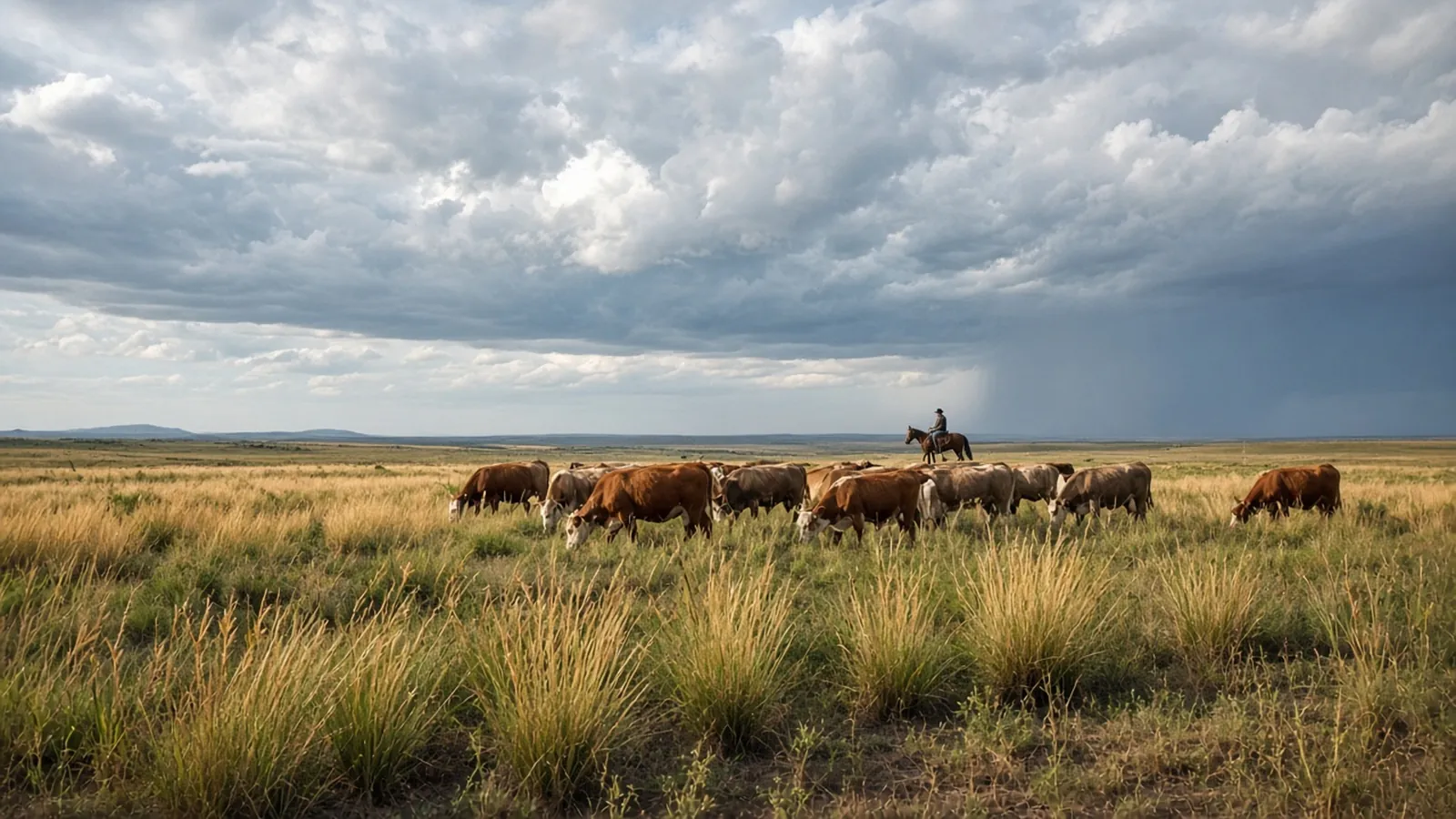
Pasture, Rangeland, Forage insurance is the policy many ranchers buy without ever setting foot in a crop adjuster’s truck. It does not look at your grass, your hay yield or your cows. It looks at rainfall across a grid of roughly 17 miles by 17 miles, compares it with that grid’s long-run normal for the two-month periods you chose, and pays if the index falls below your coverage level. That simplicity is why PRF has spread across grazing country. It is also why people get frustrated with it. For the 2027 crop year the policy changed in ways that matter, and the sales closing date is December 1, 2026.
Last checked November 12, 2026. Rules below come from USDA Risk Management Agency bulletins PM-25-054 (2026 and succeeding crop years) and PM-26-053 (2027 and succeeding crop years), with explanations from Montana State University’s AgEconMT, Farm Credit of Florida, ProAg and NDSU’s ARPC. Premium rates, county base values and subsidy figures come from the actuarial documents on the day you buy. This is educational, not insurance advice or a quote. Only a licensed crop insurance agent can sell or bind PRF coverage.
2027 PRF in five lines. Sales closing and acreage reporting: December 1, 2026. Rainfall data now come from NOAA NCEI gridded precipitation, which changes rates and historical payment patterns. For grazing, you must keep livestock at at least 25% of the stocking rate listed for the forage type and keep supporting records. The January–February interval is capped at 25% of total policy liability. Coverage levels remain 70% to 90% and productivity factors 60% to 150%.
1. How PRF works, in plain terms
PRF is an area-based, rainfall-index plan. Instead of measuring your loss, it measures a weather signal for your grid. The pieces you choose are:
- Grid ID. Each grid covers 0.25° of latitude by 0.25° of longitude. Your acres are assigned to the grid they sit in. Ranchers whose land straddles grids may have more than one.
- Use. Grazing or haying (with irrigated and non-irrigated hay practices in some areas). The county base value per acre differs by use.
- Coverage level. 70% to 90% in 5% steps. CAT coverage is not available. A 90% level pays when the grid index falls below 90% of normal.
- Productivity factor. 60% to 150% in 1% steps, scaling the county base value up or down to reflect your land’s productivity. It raises or lowers both protection and premium.
- Index intervals. Eleven two-month periods, from January–February through November–December. You must choose at least two, and they cannot overlap (you cannot pick both March–April and April–May).
- Percent of value. How much of your protection you put in each interval. Agencies describe a minimum of 10% and a maximum of 70% per interval, with the total adding to 100%. From 2027, January–February is limited to 25%.
The payment trigger is the final grid index for each interval you insured. If it lands below your coverage level, the policy pays for that interval, whatever happened on your own pasture.
2. What changed for the 2027 crop year
| Change | What it means for you | Source |
|---|---|---|
| Rainfall data switch to NOAA NCEI gridded precipitation | Rates, historical illustrations and payment patterns may differ from prior years. Montana State shows some areas would have triggered less often under the new data and others more often; premiums adjust too. | PM-26-053; MSU AgEconMT; NDSU ARPC |
| 25% minimum stocking requirement (grazing) | You must maintain enough livestock on insured grazing acres to equal at least 25% of the stocking rate for the forage type listed on the applicable state or federal reference. Records must support it. | PM-26-053; ProAg |
| Livestock records | Keep records such as vet, sales, purchase or pregnancy-check records; MSU says for three years, and provide them on request. | MSU AgEconMT; ProAg |
| January–February capped at 25% of liability | You can still insure the winter interval, but not load most of your protection there. | PM-26-053; Farm Credit of Florida |
| Carried over from 2026: lease documentation, beginning farmer definition | Leases or lease certifications must be signed and submitted by the acreage reporting date. The beginning farmer or rancher definition and subsidy were updated to conform with the One Big Beautiful Bill Act. | PM-25-054 |
The stocking rule is the change most likely to catch people out. PRF was designed for working pasture and hay ground. RMA is now asking you to prove that grazing acres are actually being grazed at a minimum level. If you run cattle on part of the year only, or lease the grass to someone else, sort out the numbers and records with your agent before you finalise acres, not after a claim.
3. How protection and payments are calculated
Agents use a straightforward chain of multiplications. Using the example published by one agency: if the county base value for grazing is $22.00 per acre and you choose a 90% coverage level and a 150% productivity factor, your dollar amount of protection is $22.00 × 0.90 × 1.50 = $29.70 per acre. At a 60% productivity factor it would be $11.88.
That per-acre figure is then multiplied by your insured acres, your share, and the percent of value in each interval. If an interval triggers, the payment is that interval’s protection multiplied by a payment calculation factor that reflects how far the final grid index fell below your trigger.
Illustrative example, not a quote. A rancher insures 1,000 grazing acres at 100% share, with $29.70 of protection per acre (the agency example above). Total protection is $29,700. She splits it 50% to April–May and 50% to June–July.
- Protection in each interval: $14,850.
- Coverage level 90%, so the trigger is an index of 90.
- If the April–May final grid index comes in at 63, the shortfall is 90 − 63 = 27 points. Payment calculation factor = 27 ÷ 90 = 0.30.
- Indemnity for that interval: $14,850 × 0.30 = $4,455, before any adjustments in the actual policy.
- If June–July comes in at 95, it pays nothing.
Premium is not shown because it depends on that grid’s rate and the subsidy on the day. Ask the agent for the producer premium on your exact selections.
Subsidy
PRF premiums are federally subsidised, and the subsidy rate falls as coverage rises. Montana State’s AgEconMT notes the government pays 59% of the premium at the 70% coverage level and 51% at 90%, and that Montana producers have received more in indemnities than they paid in premiums in eight of the last ten years. That is a statement about a past period in one state, not a promise for your grid, especially with the 2027 data switch.
4. Choosing intervals: where most of the value is
The interval choice is where PRF stops being a form and starts being a decision. Three practical approaches:
- Match your grass. Put most weight on the two-month windows when rainfall drives forage growth on your ground. For warm-season native range in the southern Plains that is often late spring and early summer; for cool-season pasture or hay it may be earlier. Your own grazing records are better guidance than a neighbour’s habits.
- Match your cash risk. Some ranchers weight the intervals when a dry spell would force them to buy hay or sell cows early, because that is when a payment would do the most good.
- Use the history carefully. RMA’s PRF Decision Support Tool and agency tools show how your grid would have paid in past years. With NCEI data for 2027, compare the new illustrations rather than relying on what the old data showed.
Remember the rule that intervals cannot overlap. Choosing April–May and June–July is fine; April–May and May–June is not.
5. Basis risk: why PRF sometimes “misses”
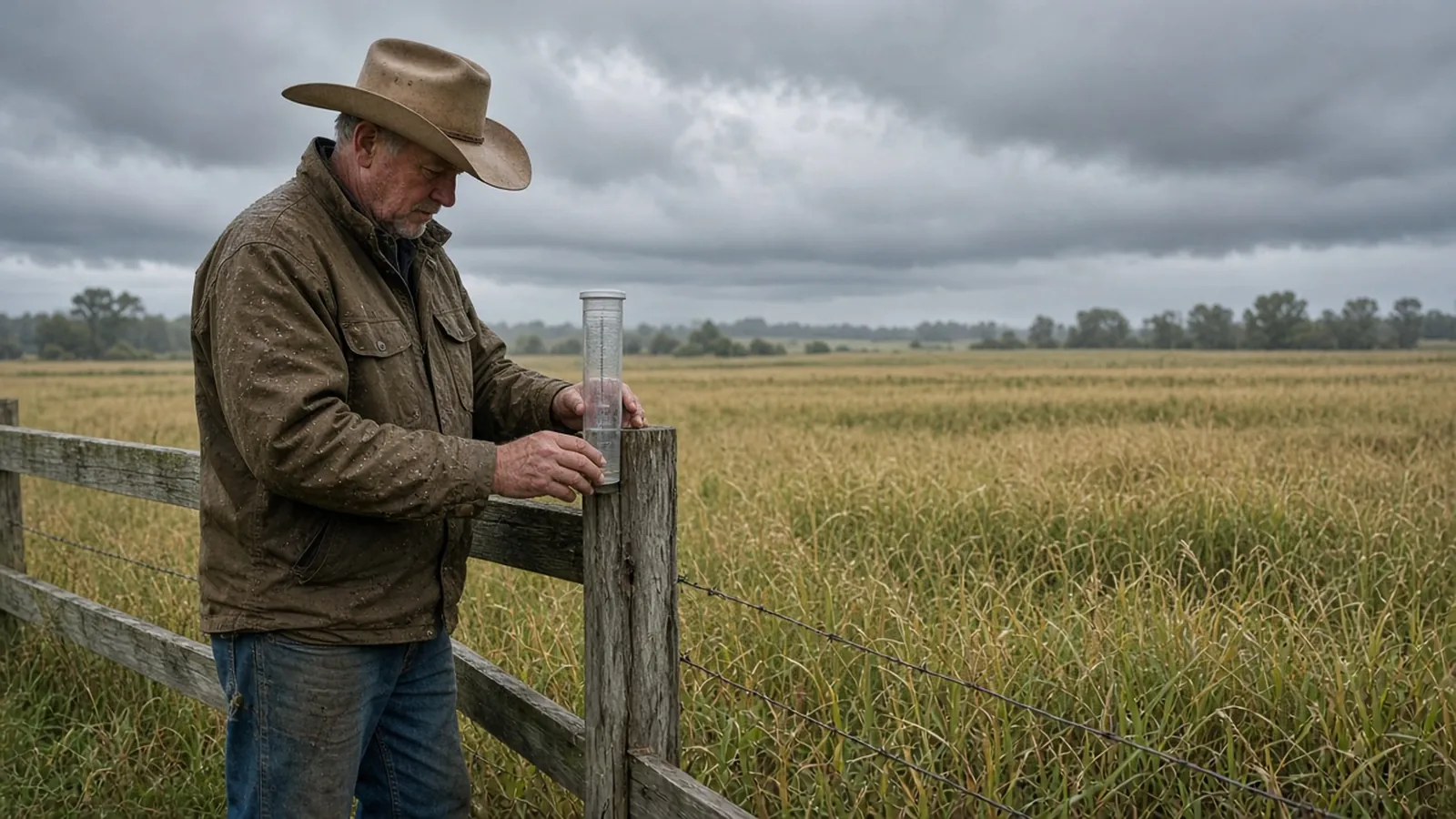
Because PRF pays on a grid average, it can pay when your pasture looks fine and miss when you had a local dry patch. Community discussions reflect this clearly. In a long NewAgTalk thread titled “PRF insurance. In or out?”, some producers described strong multi-year returns while others reported paying premiums for years without a payment. A Reddit rancher thread comparing LRP and rain insurance showed the same split.
Basis risk falls when your land is near the middle of a grid and the grid’s terrain is similar to yours. It rises with storms that hit one corner of a grid, with very different soils, and when your critical grass months do not line up with your chosen intervals. PRF is best seen as budget protection against regional drought, not as a precise pasture policy.
6. PRF and your other risk tools
PRF covers forage. It does not cover cattle prices. If you also worry about a market break before you sell calves or yearlings, read our guide to Livestock Risk Protection for cattle, which explains how a price-index endorsement works alongside a rainfall-index policy. For hay or crop ground, compare PRF with the crop policies explained in our MPCI, crop-hail and Whole-Farm Revenue Protection guide; ask your agent which combinations are allowed on the same acres.
Many ranchers also need liability and property cover that has nothing to do with rain. Those are separate policies; PRF will not help if a cow on the road causes an accident.
7. Before December 1: a working checklist
- Confirm the acres you own, lease or hold under permit, and get leases or lease certifications signed by the acreage reporting date.
- For grazing acres, check the stocking rate for your forage type and confirm you can document at least 25% of it.
- Gather livestock records (sales, purchases, vet, preg-check) and keep them where you can produce them on request.
- Ask your agent for 2027 illustrations using NCEI data for your grid IDs.
- Decide coverage level and productivity factor with premium in hand, not before.
- Choose at least two non-overlapping intervals, keep January–February at or below 25%, and check percent-of-value limits.
- Check whether you qualify as a beginning farmer or rancher under the updated definition.
- Sign and file before December 1, 2026.
8. Common mistakes
- Buying the same intervals every year without thinking. The 2027 data change is a good reason to revisit them.
- Maxing the productivity factor on poor ground. It raises premium. It should reflect your land, not wishful thinking.
- Insuring grass you do not graze. From 2027 the stocking requirement makes this a compliance problem, not just a judgement call.
- Treating PRF as income. It is a hedge against regional drought. In wet years you pay premium and receive nothing.
- Missing the lease paperwork. Undocumented leased acres are not insurable under the 2026 changes.
9. Three ranch situations, three different PRF choices
The cow-calf operator on native range
Her biggest fear is a dry late spring that leaves little standing forage for summer, forcing early weaning or hay purchases. She puts most of her percent of value into the two intervals that cover her main growing season, picks a coverage level she can afford after subsidy, and keeps a productivity factor close to what her land actually carries. In a wet year she accepts that the premium is a cost, the same way she accepts a fire policy that never pays.
The hay producer
He sells small squares and round bales, so a dry spell during first-cutting regrowth hurts his revenue directly. He insures as haying use, weights the intervals just before his main cuttings, and compares PRF with any crop policy his agent can offer on the same ground. He also records yields by field, because if he ever switches to an actual-production policy, he will need that history.
The stocker operator who leases summer grass
She grazes leased pasture from spring to early autumn and ships cattle by September. Under the 2027 rules she checks two things first: that the lease is signed and documented by the acreage reporting date, and that her stocking numbers on those acres will meet the 25% minimum. Only then does she work on intervals, which for her will be concentrated in the months her cattle are actually on the grass.
10. Questions to ask your agent
- What is the county base value for my grid and use, and what productivity factor is reasonable for my land?
- How do the 2027 NCEI illustrations for my grid compare with the old history?
- What is my producer premium per acre at 70%, 80% and 90% coverage, after subsidy?
- Which records will you want to see to support the stocking requirement?
- When would an indemnity typically be paid after an interval ends?
Keep the grazing records PRF now asks for
LazAgro lets you log head counts, moves, sales and vet work by pasture, even without signal, so stocking records are ready when an agent or adjuster asks.
Discover LazAgroFrequently asked questions
1. When is the PRF deadline for 2027?
The sales closing and acreage reporting date for the 2027 crop year is December 1, 2026. Changes to coverage must be made by then.
2. Does PRF pay if my own pasture is dry?
Only if your grid’s final rainfall index for an insured interval falls below your coverage level. Your own conditions are not the trigger.
3. Can I insure hay ground under PRF?
Yes. PRF covers perennial pasture, rangeland and forage, with haying as a separate use from grazing in the actuarial documents. Base values and rates differ.
4. What does the 25% stocking requirement mean?
For grazing acres from 2027, you must keep enough livestock on the insured acres to equal at least 25% of the stocking rate listed for that forage type, and keep records to prove it.
5. Is PRF worth it?
It depends on your grid, your intervals and your finances. Historical results in some states have been favourable, and the premium is heavily subsidised, but many producers have also gone years without a payment. Ask for grid-specific illustrations and decide with the premium in front of you.
6. Why did my 2027 rates or history look different?
Because PRF switched to NOAA NCEI gridded precipitation data for 2027. Historical illustrations are recalculated, and rates adjust to the new data.
Final thoughts
PRF is simple on paper and subtle in practice. The policy pays on rain in a grid, during months you pick, at a level you choose. In 2027 it also asks you to show that grazing acres are genuinely stocked. Treat the December deadline as a chance to revisit intervals with the new data, and buy coverage that protects your hay budget in a dry year rather than coverage that looks good on last decade’s chart.
Rules and dates were last checked on November 12, 2026, against RMA bulletins PM-25-054 and PM-26-053. Confirm your grid’s current rates and any later RMA changes with a licensed agent.
Sources and further reading
- USDA RMA, PM-26-053: Rainfall Index policy changes for 2027 and succeeding crop years.
- USDA RMA, PM-25-054: PRF changes for 2026 and succeeding crop years.
- USDA RMA, Pasture, Rangeland, Forage FAQ.
- Montana State University AgEconMT, Updates to PRF insurance: choosing insurance in 2027.
- Farm Credit of Florida, PRF insurance updates for 2027.
- NDSU ARPC, PRF insurance moves to NCEI rainfall data.
- ProAg, Pasture, Rangeland, Forage (PRF).