 LazAgro
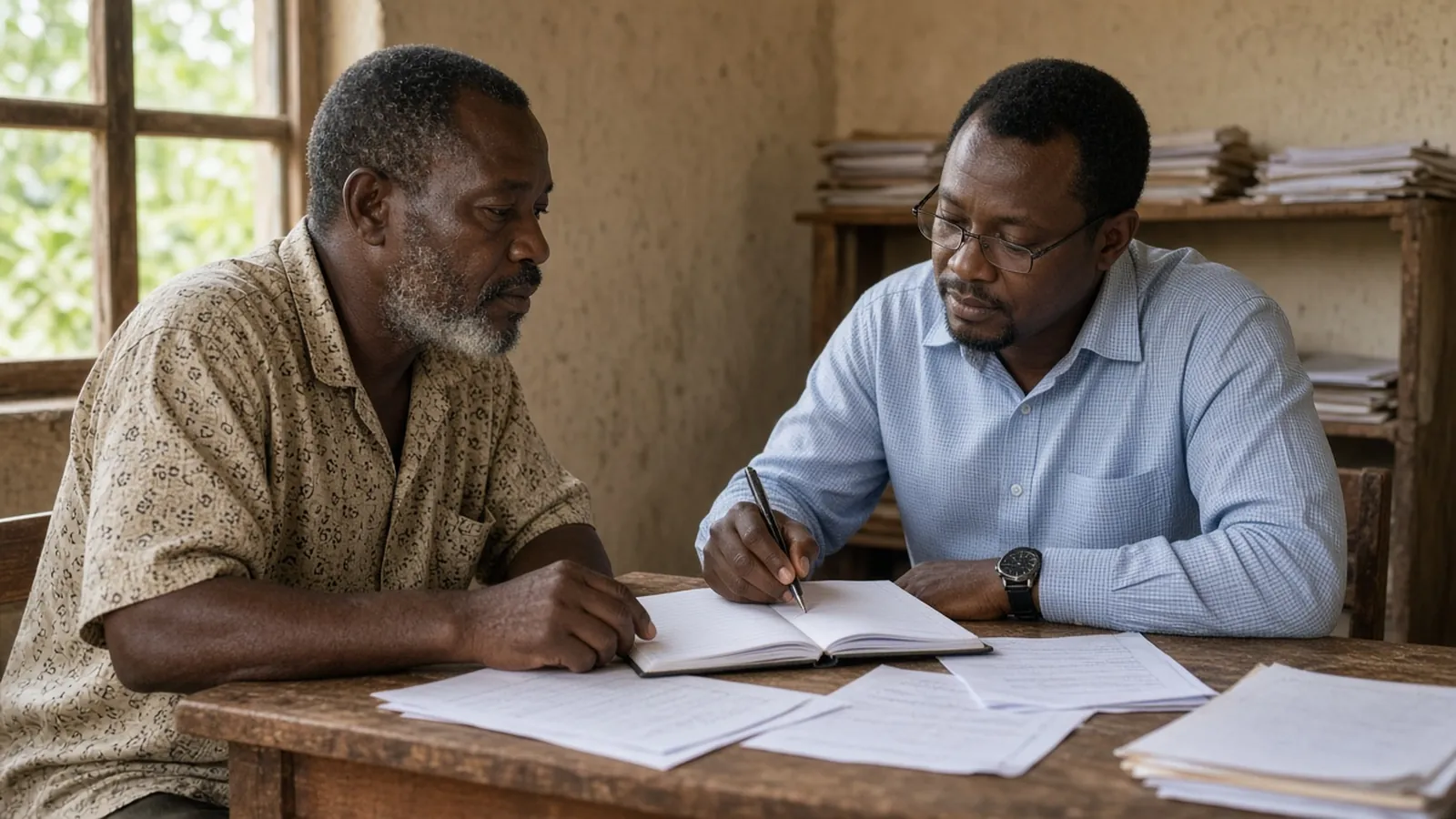
Most Cameroonian farm plans do not stall on a lack of ideas. They stall on cash between planting and harvest, on a mill or a store that will not wait, and on a lender who wants collateral the farmer cannot show. In 2026 the Ministry of Agriculture and Rural Development has again tried to narrow that gap by putting more of the Decentralised Rural Credit Project through cooperative and microfinance networks. That is useful — if you know what the project is, what it is not, and what a file has to look like before anyone will lend against a crop or a herd.
Last checked November 2026. Programme descriptions below follow contemporaneous reporting of official signings by Business in Cameroon (CamCCUL partnership, 12 January 2026; FIGEC partnership, signed 31 July 2026 and reported 10 August 2026). Loan totals from 2023 are dated as such. Projected 2026 figures are labelled as estimates, not results. This is educational, not financial, legal or investment advice, and it is not an application form. Terms, eligible regions and products change; confirm them with the institution and with MINADER before you treat any figure as current.
What changed in 2026. In January, MINADER formalised a public-private partnership with the Cameroon Cooperative Credit Union League (CamCCUL) to implement the Decentralised Rural Credit Project (PCRD), with a focus on smallholders, youth and women, and on credit and savings close to rural producers. On 31 July, Agriculture Minister Gabriel Mbairobe and FIGEC SA chief executive Aubert André Tchikantio signed an agreement bringing FIGEC into the same project. PCRD is reported as already operating in six of Cameroon’s ten regions — Adamawa, North, Far North, Centre, South and Littoral — reaching nearly 50,000 producers through a network of six cooperatives, with a target that at least 40% of beneficiaries be young people and women.
1. Why farm credit is still hard, even when a programme exists
Agriculture is regularly described as about a fifth of Cameroon’s GDP and the country’s largest source of jobs. Business in Cameroon, citing World Bank and FAO figures around the CamCCUL signing, put the sector at about 20% of GDP and close to 60% of employment, with smallholders producing the bulk of food and supplying export crops such as cocoa, coffee, cotton and bananas. Those weights have never automatically translated into a loan.
The barrier that FIGEC’s chief executive named at the July signing is the one farmers already know: many producers cannot provide the collateral commercial banks ask for. Land may be occupied under customary arrangements without a land certificate; livestock move; a harvest is not a title deed. Formal lenders are also bound by CEMAC and COBAC rules. Minister Mbairobe, at the CamCCUL signing, called on parties to respect regulations governing microfinance institutions, including COBAC standards. A “soft” loan that ignores those rules is not a product you should plan a farm on.
This article does not replace the two higher-value pieces already on LazAgro about money that crosses a border: how African agribusinesses can access export finance and meet buyer standards, and a due-diligence checklist for diaspora and foreign investors. Those are about contracts, documents and buyer standards. This one is about getting working capital or equipment finance inside Cameroon.
2. The main doors in 2026: PCRD, cooperatives and microfinance
PCRD is not a new slogan. Business in Cameroon, reporting the FIGEC agreement, said the project was created more than 30 years ago to address the shortage of financial services adapted to agricultural production and other rural activities. Its work is described as supporting local financial institutions, developing rural products, facilitating access to low-interest loans, and strengthening the people who run those institutions. MINADER provides a financing mechanism that combines repayable funds for lending to producers with non-repayable support to strengthen the microfinance institution — staff, systems, equipment, risk management and financial education. The loans themselves are still loans. They have to be repaid.
CamCCUL is the cooperative credit-union network. The January 2026 agreement is designed to use that network to bring credit and savings closer to producers, including for farm inputs, diversification, rural infrastructure and value-chain activities, and to treat savings as a buffer and as a source of investment capital. CamCCUL’s director-general, Jonas Tientchou (also styled Tieutchou in some reports), linked the deal to the network’s restructuring and to more assistance in rural areas.
FIGEC SA is a microfinance institution brought into the same project in July 2026. It is expected to serve small-scale farmers and rural micro, small and medium-sized enterprises, to manage the resources it is given, and to accompany the producers who borrow. The agreement also asks FIGEC to make access easier for people with disabilities.
Do not confuse a ministry partnership with a grant to start a farm. The repayable funds are for lending. The non-repayable money described in the coverage is for strengthening the institutions and for training, not for a free tractor. If someone offers you a “MINADER grant” to buy land or start a farm in exchange for an upfront fee, treat that as a warning sign, not as an official product.
What the published numbers actually say
| Figure | What it is | Date and source, as reported | How to read it |
|---|---|---|---|
| Six regions; nearly 50,000 producers; six cooperatives | PCRD’s reported current reach | FIGEC signing coverage, August 2026, quoting PCRD national coordinator Nadiembe Emmanuel Ebune | A reach figure, not a guarantee that your village is already served. West, East, North-West and South-West were not in that six-region list. |
| More than CFAF 1.5 billion mobilised from rural financial institutions; more than CFAF 1.2 billion in agricultural loans | Programme activity | As of 31 December 2023, presented by the coordinator at the 2026 FIGEC signing | These are 2023 figures. They are not 2026 disbursements. They show the project has a lending history; they do not tell you this year’s volume. |
| More than FCFA 1.2 billion in credit; more than FCFA 1.5 billion in savings | CamCCUL estimates under the PCRD partnership | January 2026 signing coverage | Projections, not audited results. Useful as a statement of intent; not a pot of money waiting for any one applicant. |
| At least 40% of beneficiaries young people and women | Inclusion target | FIGEC agreement coverage, August 2026 | A target for the institution, not an automatic preference that replaces a viable file. |
West, North-West, South-West and East are not in the six-region list published at the FIGEC signing. If you farm in one of those regions, do not assume PCRD already operates next door. Ask CamCCUL, a local credit union, FIGEC or the MINADER delegation what is actually open where you live. Commercial banks and other microfinance institutions still operate nationally, on their own terms.
3. Commercial banks, trade finance and what they will ask for
PCRD is not the only door. Commercial banks in Cameroon make agricultural and agri-SME loans, usually to operators who can show a formal business, a repayment source and security — a land certificate, a charge over equipment, a bankable offtake, or a guarantee. AfDB has also backed trade-finance facilities with Cameroonian banks for SMEs, including agribusiness import and export activity. Those facilities sit closer to the exporter and the processor than to a first-cycle maize plot, and they still require a bank that is willing to take the file.
If your plan is an export contract, start with the buyer documents and the performance risk, then the finance. The export-finance and buyer-standards guide is the better first read in that case. If a diaspora relative is the one putting in the money, the questions are control of the land, the company and the cash — the ground covered in the due-diligence checklist.
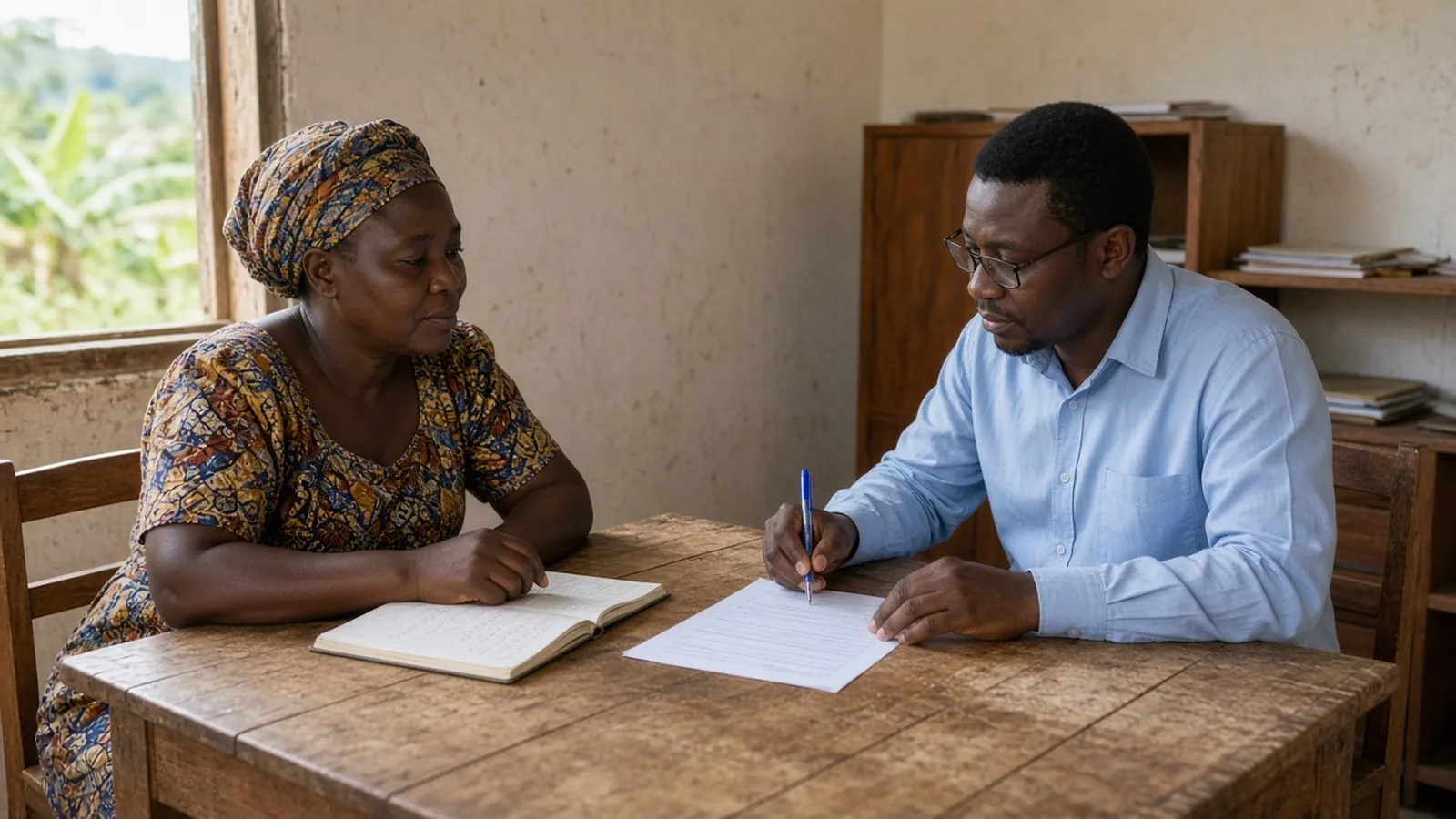
For a domestic production loan, expect some version of the following, whether the lender is a credit union or a bank:
- Who you are: national identity, business registration if you have a company or a cooperative membership, and a tax number where the institution requires one.
- What you farm, on which land, and on what right — a land certificate, a deed, a written lease, or, at minimum, a clear explanation of customary occupation and who else might claim the plot.
- A simple plan for the season or the investment: area or herd, inputs, expected production, buyers, and when cash comes back.
- A record of previous seasons, even a notebook, showing that the plan is not the first time you have thought about the numbers.
- Security or guarantees the institution can actually register, plus any savings history with that same institution.
- For an agri-SME, financial statements, invoices, and the contracts that support repayment — not only a project document written to impress a ministry visit.
A lender-facing plan does not have to be a 40-page brochure. It does have to be a plan a credit officer can test against invoices and a calendar. The structure in our farm business plan for lenders was written with U.S. FSA files in mind, but the skeleton — a real market, a cash-flow calendar, a balance sheet, and documents that match the story — is the same skeleton a Cameroonian credit committee will look for.
4. A worked file (illustrative, not a loan offer)
Illustrative only. This is a sketch of a complete file, not a promise that any institution will lend these amounts, at any rate, in any region.
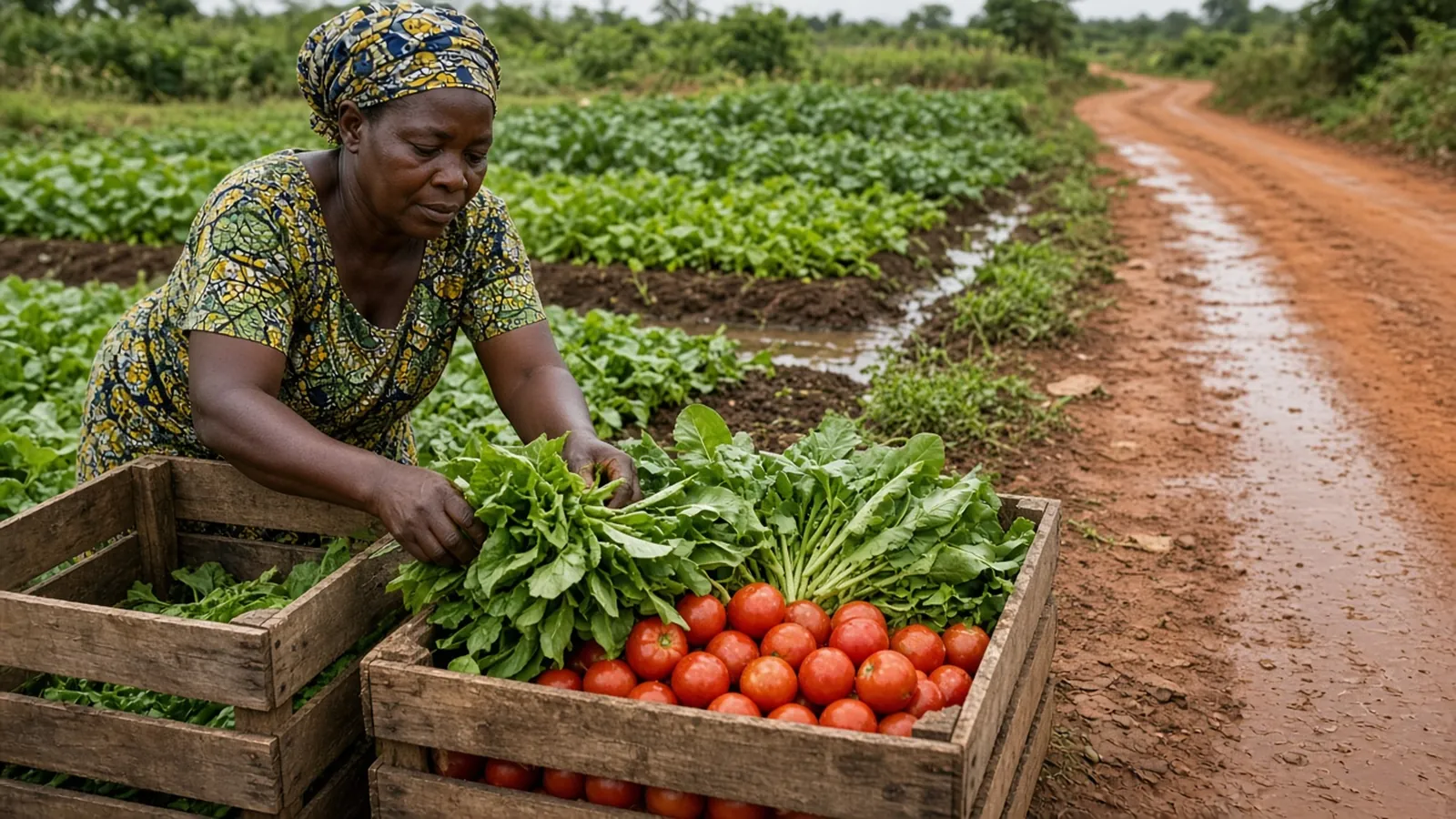
A vegetable producer in the Littoral region, already selling to two urban buyers, wants credit to buy seed, fertiliser, crop protection and packing material for a dry-season plot, and to hire harvest labour. She is a member of a CamCCUL-affiliated credit union and has six months of small savings on the books. She does not yet have a land certificate; she has a written lease, with a remaining term longer than the proposed loan, and a letter from the village authority that is consistent with the lease. Her notebook shows the last two seasons’ sales to the same buyers, with quantities and prices, and she has WhatsApp or invoice evidence of those sales, not only a verbal “I have customers.”
The useful file is: membership and identity; the lease; the two-season record; a one-page cash calendar (when inputs are bought, when labour is paid, when each buyer usually pays); and a request that matches that calendar rather than a round number. The weak file is a photocopied “project” with no lease, no sales history and a request for an amount the plot cannot repay even in a good season.
If the same woman later wants a small pack-house or a pickup, the file changes: it becomes an investment loan, needs a repayment source beyond one season, and will run into collateral questions the seasonal input loan might have lived without. That is the point at which a land certificate, a formal company, or a guarantee usually enters the conversation — and the point at which rushing a title or paying an intermediary for a “shortcut certificate” becomes a legal risk, not a solution.
5. How to be credit-ready before you join a queue
- Join, or regularise your membership in, a regulated credit union or microfinance institution, and start a savings history, even a small one, before you need a loan.
- Put the land right on paper as far as it will go: certificate, title, written lease, or a consistent customary record. Do not pay anyone who promises a fake title.
- Keep a season notebook: area planted, inputs, labour, quantities sold, prices, and who bought. If you keep livestock, keep head counts and sales the same way — see how to keep livestock farm records.
- Write a one-page cash calendar for the loan you actually want, with repayment dates that match the crop or the herd, not a civil-service salary cycle.
- Name the buyer. A contract, invoices or a regular sales record beats a general claim that “the market is there.”
- Ask, in person, whether PCRD or another product is available in your region and at that institution, and what collateral they will accept. Get the list from the officer, not from a social-media flyer.
- Read the repayment schedule, the fees and the default clause before you sign. Low-interest is still interest. If you cannot repay in a bad season, say so at the start, or do not take the loan.
- Keep copies of everything you sign, and of every repayment.
Common mistakes
- Treating PCRD, CamCCUL or FIGEC as a grant window.
- Assuming the six-region reach includes every region, or every village in a listed region.
- Using the 2023 loan totals or the January 2026 CamCCUL projections as if they were a personal entitlement.
- Applying without a land right, a sales record or a repayment calendar.
- Paying a middleman for “access” to a ministry loan.
- Borrowing from informal lenders at terms you cannot explain, then using a formal loan to roll that debt, without telling the institution.
- Registering a company or a piece of land in someone else’s name “for convenience” and then trying to borrow against it. That is how family and diaspora disputes start, and it is exactly the sort of fact a later investor or bank will not ignore.
A loan file is only as good as the season you can show
LazAgro helps you record production, inputs and sales on the farm, online or offline, so the next conversation with a credit union or a bank starts from figures, not from memory.
Discover LazAgroFrequently asked questions
1. Can I get a farm loan in Cameroon without a land title?
Sometimes, especially for a small seasonal loan through a cooperative or microfinance institution that already knows you, if you can show another right to the land (a written lease, a consistent customary record) and a repayment source. Many commercial-bank investment loans will still want a land certificate or other registrable security. There is no single rule that “no title means no loan,” and no honest rule that “no title is never a problem.”
2. Is PCRD a government grant?
No. Coverage of the 2026 agreements describes repayable funds for lending to producers, and non-repayable support to strengthen the partner institutions and to train staff and beneficiaries. You should plan to repay any loan you take, with interest and fees as the contract states.
3. Which regions are covered?
At the FIGEC signing in 2026, the national coordinator said the project covered Adamawa, North, Far North, Centre, South and Littoral. That list can change. If you are in another region, ask MINADER, CamCCUL or a local microfinance institution what is actually available. Do not rely only on this article.
4. I am a young farmer or a woman. Am I automatically eligible?
The FIGEC agreement includes a target that at least 40% of beneficiaries be young people and women. That is a programme target, not a personal approval. You still need a viable activity and a file the institution can lend against.
5. How much can I borrow?
This article does not publish a ceiling, because no official, generally applicable 2026 cap was verified here. The 2023 programme totals and the 2026 CamCCUL projections are institution-level figures, not a per-farmer limit. Ask the credit officer what product, what maximum and what repayment term they can offer for your type of activity.
6. Should I use a bank or a credit union?
A credit union or microfinance institution is often the realistic first door for a smallholder or a first formal loan, especially where PCRD is being implemented through that network. A commercial bank is often the later door, once there is a company, a title, an offtake contract or a larger investment. Many operators will use both at different stages. Compare the actual contract, not the building.
7. What if someone asks me to pay a fee to unlock a MINADER or PCRD loan?
Be careful. Official partnerships can include training and institutional support, and a regulated lender will have documented fees written into a contract. An unofficial intermediary who wants cash up front to “secure” a government loan is a common fraud pattern. Walk into the institution, ask for the official fee schedule, and do not pay a stranger.
Final thoughts
The 2026 CamCCUL and FIGEC agreements are a real widening of the rural-credit machinery, not a rumour. They are also still credit: repayable, regulated, and limited to the regions and institutions that are actually in the project. The farmers who will get further in that system are the ones who look like a borrower — a land right they can explain, a buyer they can name, a notebook for the last season, and a calendar for the next — not the ones with the thickest unofficial “project document.”
Re-check with MINADER and with the institution before you treat any product, region or figure as current. These partnerships and the dated 2023 totals were last checked in November 2026.
Sources and further reading
- Business in Cameroon, Rural Credit Drive Targets Farm Finance Gap as Government Seals CamCCUL Deal (12 January 2026).
- Business in Cameroon, Cameroon Taps Microfinance Firm FIGEC to Expand Farmers’ Access to Credit (10 August 2026), on the 31 July 2026 signing.
- MINADER — ask the local delegation or the PCRD coordination unit for current products and regions, rather than relying on a news report alone.
- COBAC / CEMAC rules on microfinance — the framework Minister Mbairobe pointed to at the CamCCUL signing.