 LazAgro
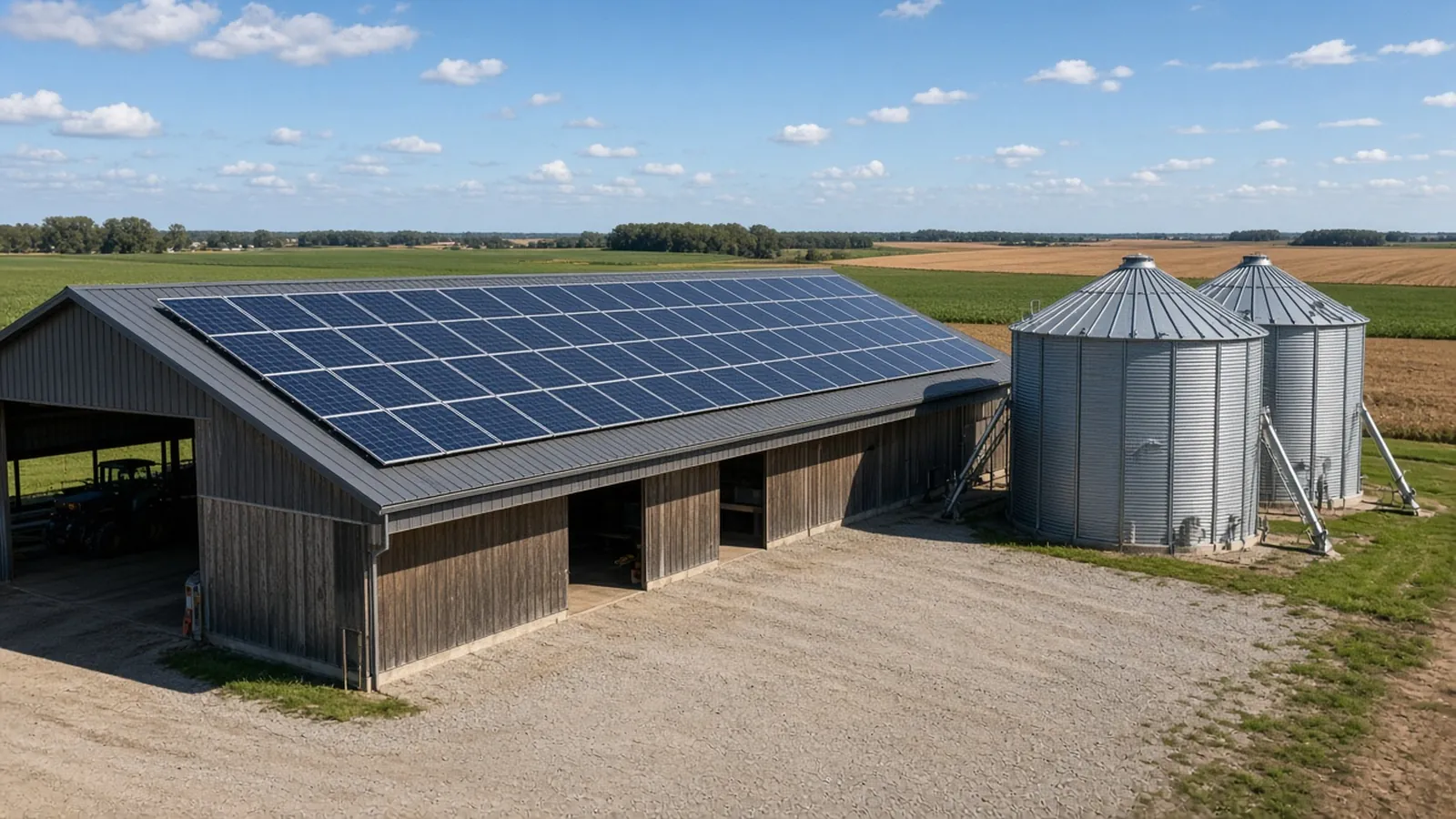
For years, US farmers were told that the Rural Energy for America Program could pay a quarter, and sometimes more, of a new solar array, and that you applied before you built. That is not a safe assumption in late 2026. USDA rewrote the programme in October. On the official Rural Development page, when this article was checked in November 2026, the Agency was not accepting REAP grant applications. Guaranteed loan applications could still be submitted. A grant window may open later. Until an annual notice says so, do not sign a construction contract on the promise of a REAP grant.
This guide explains what REAP is, who is eligible, how guaranteed loans still work, what the October 2026 final rule changed about grants, and how a farm solar or energy-efficiency project should be prepared anyway. It is for agricultural producers and rural small businesses in the United States.
Last checked: November 2026, against the USDA Rural Development REAP guaranteed-loan page and the 2 October 2026 USDA press release and Federal Register final rule (effective 16 October 2026). Confirm status with your state Rural Development Energy Coordinator before you spend money. This is general information, not legal, tax or financial advice, and it is not an application for funding.
1. What REAP is for
REAP, administered by USDA Rural Development’s Rural Business-Cooperative Service, offers guaranteed loan financing and, when a grant window is open, grant funding to agricultural producers and rural small businesses for renewable energy systems and energy-efficiency improvements. Agricultural producers may also use guaranteed-loan funds for certain energy-efficient equipment in production or processing.
Eligible renewable systems listed on the official page include solar, wind, geothermal, hydropower under 30 megawatts, hydrogen, biomass (including anaerobic digesters, when those are not under a temporary pause), and ocean energy. Efficiency examples include HVAC, insulation, lighting, refrigeration, windows, and irrigation changes such as a switch from a diesel to an electric motor or a solar or gravity pump on a pivot. Efficiency projects need an energy audit or assessment that meets the programme’s appendix, with the type of audit depending on project cost.
If your project is a stand-alone water pump rather than a farm-wide energy system, start with the practical design in solar water pumps for farm irrigation, then ask whether REAP is even the right finance tool.
2. Who may apply
An agricultural producer is an entity directly engaged in producing agricultural products, with at least 50% of gross income from agricultural operations. Producers may submit a project in a non-rural area if it is associated with an on-site production operation.
A rural small business must be in an eligible rural area — the official page describes rural areas as populations of 50,000 or less, and you should confirm a specific address in USDA’s eligibility tool — and must meet Small Business Administration size standards. Eligible forms include private for-profit businesses, certain cooperatives, some electric utilities, and certain Tribal businesses. Agricultural producers and small businesses must have no outstanding delinquent federal taxes, debt, judgement or debarment.
Individual borrowers on a guaranteed loan must be US citizens or legally admitted permanent residents. Private-entity borrowers must show that loan funds will remain in the United States.
3. Guaranteed loans, which were still open in November 2026
A REAP guaranteed loan is made by a commercial lender. USDA guarantees a share of the lender’s risk. The official page says loan guarantees may cover up to 75% of total eligible project costs, and that applicants must provide at least 25% of the project cost if applying for a loan. The guarantee percentage for a given year is published in a Federal Register notice; the same page stated that REAP loans approved in fiscal year 2025 received an 80% guarantee. Confirm the figure for the year you apply.
Other published loan terms, subject to the current notice and the lender’s credit policy:
- Interest rate is negotiated between lender and borrower, fixed or variable; variable rates may not be adjusted more often than quarterly.
- The term is set by the lender with Agency concurrence, based on the life of the assets and repayment ability, and will not exceed 40 years.
- Fees described on the page include an initial guarantee fee, then 1% of the guaranteed amount, and a retention fee, then 0.25% of outstanding principal, paid annually, plus ordinary lender origination fees.
- The lender must underwrite the credit in line with prudent lending practice and its own policies.
This is the path that was actually open when this article was checked: find a lender that knows REAP, talk to the state energy coordinator, and treat the loan as a commercial energy loan with a federal guarantee, not as a grant.
4. What the October 2026 rule changed about grants
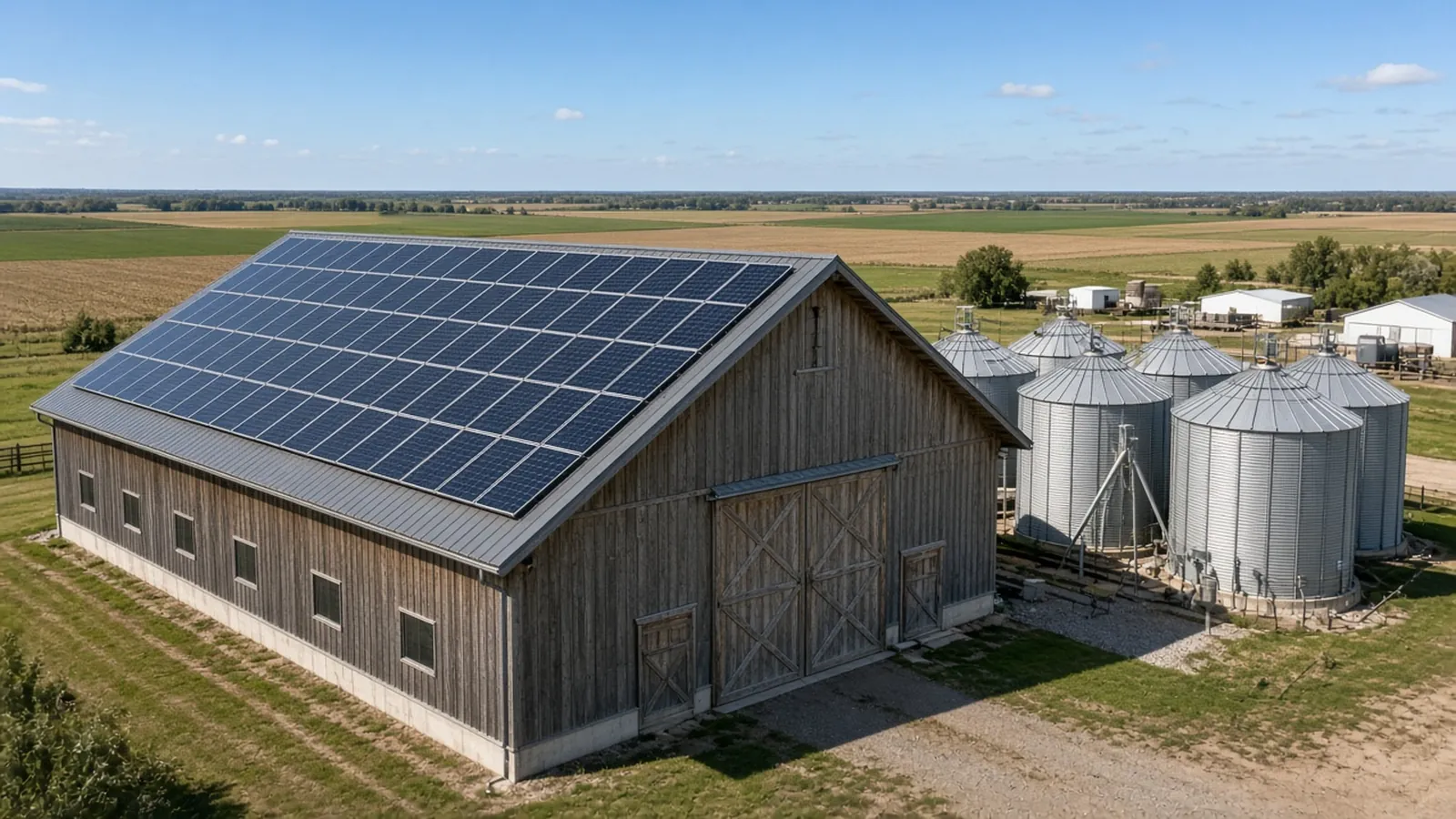
On 2 October 2026 USDA announced a final rule, with a comment period, “ahead of opening the application window.” The rule was published in the Federal Register and took effect on 16 October 2026. Comments were due on 2 November 2026. The Agency said it would issue annual notices with application dates. As of mid-November 2026, grants were still not being accepted on the programme page.
The change that matters most for a farm that has not yet built is the new grant model. Under the final rule, projects must already be fully built and operational before the applicant applies. Applicants then submit actual energy production or savings data for the prior 12 months, alongside 12 months of pre-installation data. Awards, when a window opens, are to be based on documented output, costs and performance, in a single national competition, rather than on a paper projection of a system that does not yet exist. Trade explainers have also noted a first-window concession: projects completed 12 to 36 months before the application date may be eligible in the first window, with a tighter look-back (12 to 24 months) after that. That detail should be confirmed in the annual notice, not treated as a personal promise.
Other changes the Department and the rule highlighted:
- a policy direction to disincentivise solar photovoltaic and wind systems on cropland;
- a focus on appropriately scaled, on-farm systems rather than large or utility-scale developments;
- ineligibility for multi-location projects and for certain technology applications, including components prohibited as coming from foreign-adversary nations under the cited federal rules;
- a planned online application portal.
Older blog posts that still say “REAP grants cover 25% or 50% of a new array, apply before you build, windows in spring and autumn” are describing a previous world. The official page still publishes a grant structure — renewable-energy grants from $1,500 to $500,000, efficiency grants from $1,500 to $250,000, and federal shares of up to 50% for certain qualifying projects and 25% for others, with combined grant and guarantee funding up to 75% of eligible costs — but those numbers only matter when a notice re-opens grants, and they will be applied through the new rule. Do not use them as a budget line on a project you have not built.
5. Controlled-environment agriculture and digesters
Separately from the October rule, USDA has paused acceptance, processing and award of loan-note guarantees for biodigester and controlled-environment agriculture projects through 31 December 2026. The pause has been described as including vertical farming, hydroponics, aeroponics and aquaponics. If your project is a hydroponic greenhouse, do not assume REAP will finance it in 2026. Read the current bulletin, or ask the energy coordinator, before you tell an investor otherwise.
6. A preparation checklist that still makes sense
Even with grants closed, the work you would do for a guaranteed loan, or for a later grant window under the performance model, is the same honest energy file:
- Confirm, in writing, whether you are an agricultural producer or a rural small business, and whether the site is eligible.
- Get 12 months of electricity (or fuel) bills, and keep them. Under the new grant model, pre-installation data is part of the application.
- For efficiency projects, commission the right audit or assessment early.
- For solar, get an itemised quote that states array size, expected annual production, a roof or ground assessment, and whether the array sits on cropland. Roof, yard and non-crop ground are a simpler conversation than a ground mount in a field you would otherwise farm.
- If you intend to use a guaranteed loan, talk to a lender and to the state Rural Development Energy Coordinator before you fill in forms. The official page is explicit: that conversation can save weeks.
- Register in SAM.gov and obtain a Unique Entity ID if you may apply for a grant when a window opens. Those registrations are free and can take time.
- Plan the environmental review. The official page says all projects require one before award or construction when the programme is being used in the ordinary way; the new post-completion grant model may change the sequence, which is one more reason to wait for the annual notice rather than guess.
- Do not start a project “because REAP will pay for it later” unless you can stand the full cost yourself, on commercial terms, if a grant never appears.
Illustrative payback, not a grant claim. A farm’s shop and well use about $6,000 a year of electricity. A quoted roof-mount array is expected, by the installer, to offset most of that bill, at a total installed cost of $48,000. Without any grant, a simple payback against that bill is eight years, before you consider tax credits, depreciation, or rising tariffs, and before you consider whether the quote’s production estimate is conservative. A REAP guaranteed loan might finance up to 75% of eligible costs if a lender and the Agency approve it, which changes cash flow, not the underlying economics. A grant, if a future window awards one after the system has a year of data, would only be a bonus on a project that already had to stand on its own. If the eight-year simple payback only works in the farm’s mind because someone assumed a 50% grant on an unbuilt array, the plan is not a plan.

7. Tax credits are a different conversation
Federal and state tax credits for solar or for energy-efficient equipment are not REAP, and they have their own sunset dates and eligibility rules. Some extension pages have described stacking REAP with tax credits in earlier years. Whether that remains possible, and on what terms, is a question for a tax professional and for the current Internal Revenue Service and USDA guidance, not for a sentence in a blog post. Do not double-count the same dollar of benefit in a cash-flow plan.
Common mistakes
- Budgeting a 25% or 50% REAP grant on a project that has not been built, while grants are closed and the new rule is post-completion.
- Putting a large ground-mount array on cropland without asking how the new “disincentivise” policy will be scored.
- Telling a lender that a hydroponic or digester project is a routine REAP loan while the CEA and digester guarantee pause is still in force.
- Starting construction and only then discovering that an environmental review or a programme rule required a different sequence.
- Filling out forms before speaking to the state energy coordinator and a lender who has actually closed a REAP guarantee.
Checklist
- I have read the Rural Development REAP page today, not last year, and I know whether grants are open.
- I know whether I am seeking a guaranteed loan (open when this was checked) or waiting for a grant notice.
- I have 12 months of energy bills and a quote that states where the equipment will sit.
- I can finance or cash-fund the project without assuming a grant.
- If the project is CEA or a biodigester, I have checked the pause, which was in force through 31 December 2026.
Frequently asked questions
1. Are REAP grants open right now?
They were not being accepted when the official programme page was checked in November 2026. USDA has said it will announce windows in an annual notice. Check the page and your state energy coordinator on the day you decide, not this article months later.
2. Can I still get a REAP guaranteed loan?
Yes, according to the same page: guaranteed loan applications may be submitted. You will need a participating lender, a credit-worthy file, and a project that is eligible under current rules, including the CEA and digester pause if that is your technology.
3. Do I have to build the system before I apply for a grant?
Under the final rule that took effect on 16 October 2026, grant applications are to be for systems already built and operating, with 12 months of actual performance data (and a possible longer look-back in the first window). Wait for the annual notice for the exact documentation list. Do not build solely to chase a grant you might not receive.
4. Can I put REAP solar on cropland?
The Department has said it will disincentivise solar PV and wind on cropland and focus on appropriately scaled on-farm systems. That is not the same sentence as “roof-only, always,” but it is a clear warning to treat a large ground mount in tillable ground as a harder, possibly poorer, application. Ask the energy coordinator how that policy is being applied before you lease a field to yourself for panels.
5. Does REAP fund hydroponics or a greenhouse energy package?
Energy-efficiency improvements can include heating, cooling and lighting, when they qualify, but loan-note guarantees for controlled-environment agriculture projects have been paused through 31 December 2026. A high tunnel under EQIP is a different programme entirely; see hoop house versus greenhouse and EQIP.
6. How much of a project can REAP cover?
The programme page, as written, describes guarantees up to 75% of eligible costs, grants up to 50% in some cases and 25% in others when grants are offered, and a combined cap of 75%. Those percentages are not an entitlement, and grant percentages are not available while grant intake is closed. Ask for the current notice.
Final thoughts
REAP is still a real programme. In November 2026 it is, in practical terms, a guaranteed-loan programme with a rewritten grant mechanism waiting on an annual notice. If a solar array or an efficiency upgrade makes sense on your bills and your quote, it still makes sense. What no longer makes sense is treating an unbuilt project as 25% or 50% “paid for by USDA.” Talk to the state energy coordinator, keep a year of bills, and finance only a system you can justify without a grant.
Keep the energy and farm records a loan file will ask for
LazAgro helps you record operations, inputs and production so the numbers you show a lender are the numbers the farm actually ran.
Discover LazAgroSources and further reading
- USDA Rural Development, REAP Renewable Energy Systems and Energy Efficiency Improvement Guaranteed Loans (status statement on grants and guaranteed loans; eligibility and published terms)
- USDA press release, 2 October 2026, on the REAP final rule
- Federal Register, 7 CFR Part 4280, REAP final rule (effective 16 October 2026)
- USDA Rural Development bulletin extending the biodigester and controlled-environment agriculture loan-guarantee pause through 31 December 2026.