 LazAgro
“Is hydroponics worth it?” is a question farmers ask in almost those words, and the honest answers on farming forums are usually cautious. A hydroponic greenhouse can make money. It can also turn an expensive building into an expensive way to grow a cheap salad leaf, once labour and electricity are counted properly. The rare useful document in this argument is not a vendor brochure. It is a university planning budget with every line filled in.
This article walks through the University of Missouri Extension hydroponic leafy-greens planning budget (publication G695), says what those figures are and are not, and sets them against the questions growers actually raise: which crops have a chance, what happens when power is expensive, and whether USDA programmes will help you build one. It is written for people in the United States, the United Kingdom, Canada and Australia who are considering a commercial or serious semi-commercial house, not a kitchen counter unit.
Last checked: November 2026. The Missouri budget uses April 2024 price forecasts for a specific system and location. Your wages, your tariff and your sale price will move the result. This is general information, not investment, engineering or financial advice, and it is not a forecast of your profit.
1. What the G695 budget actually assumes
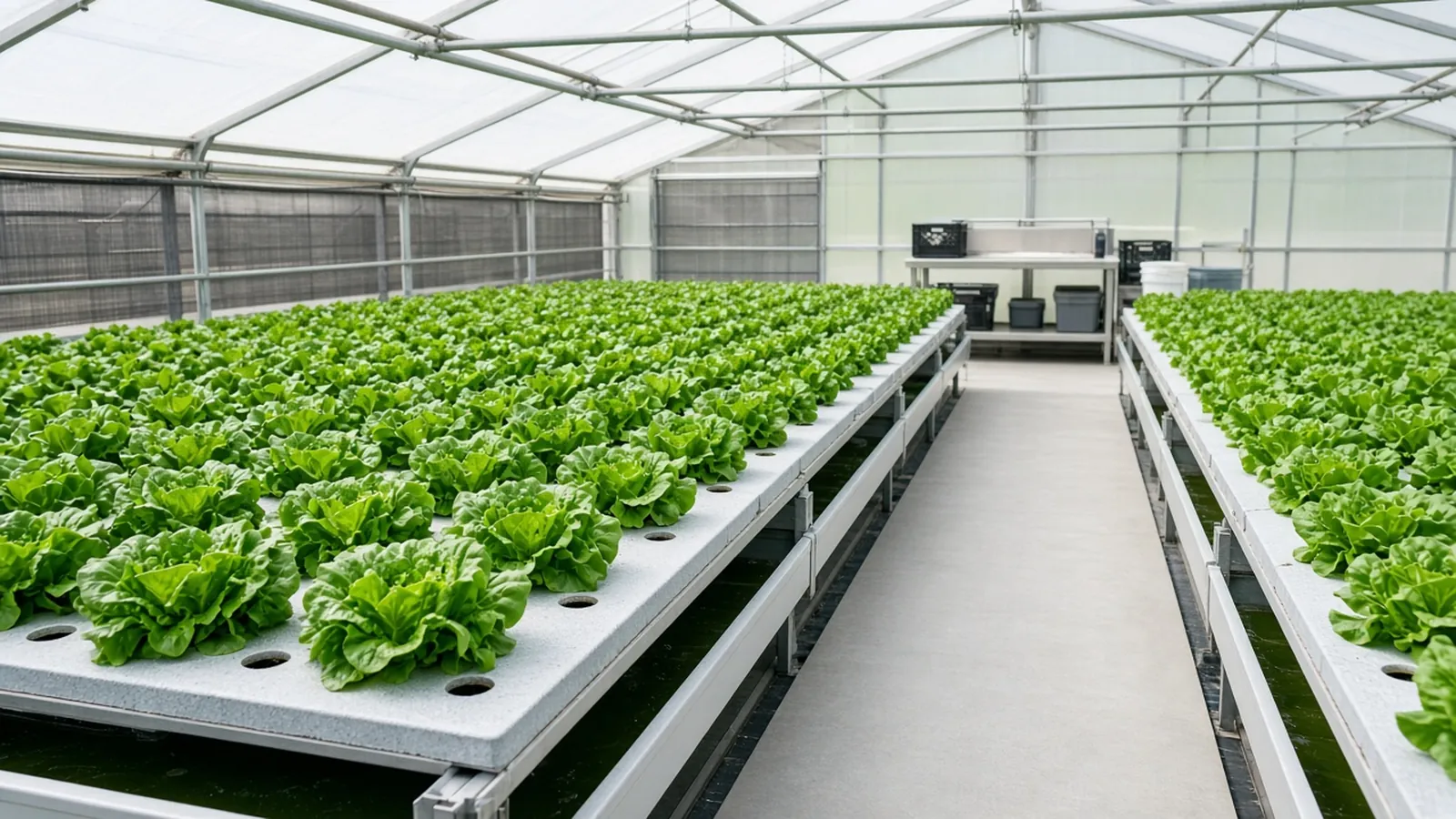
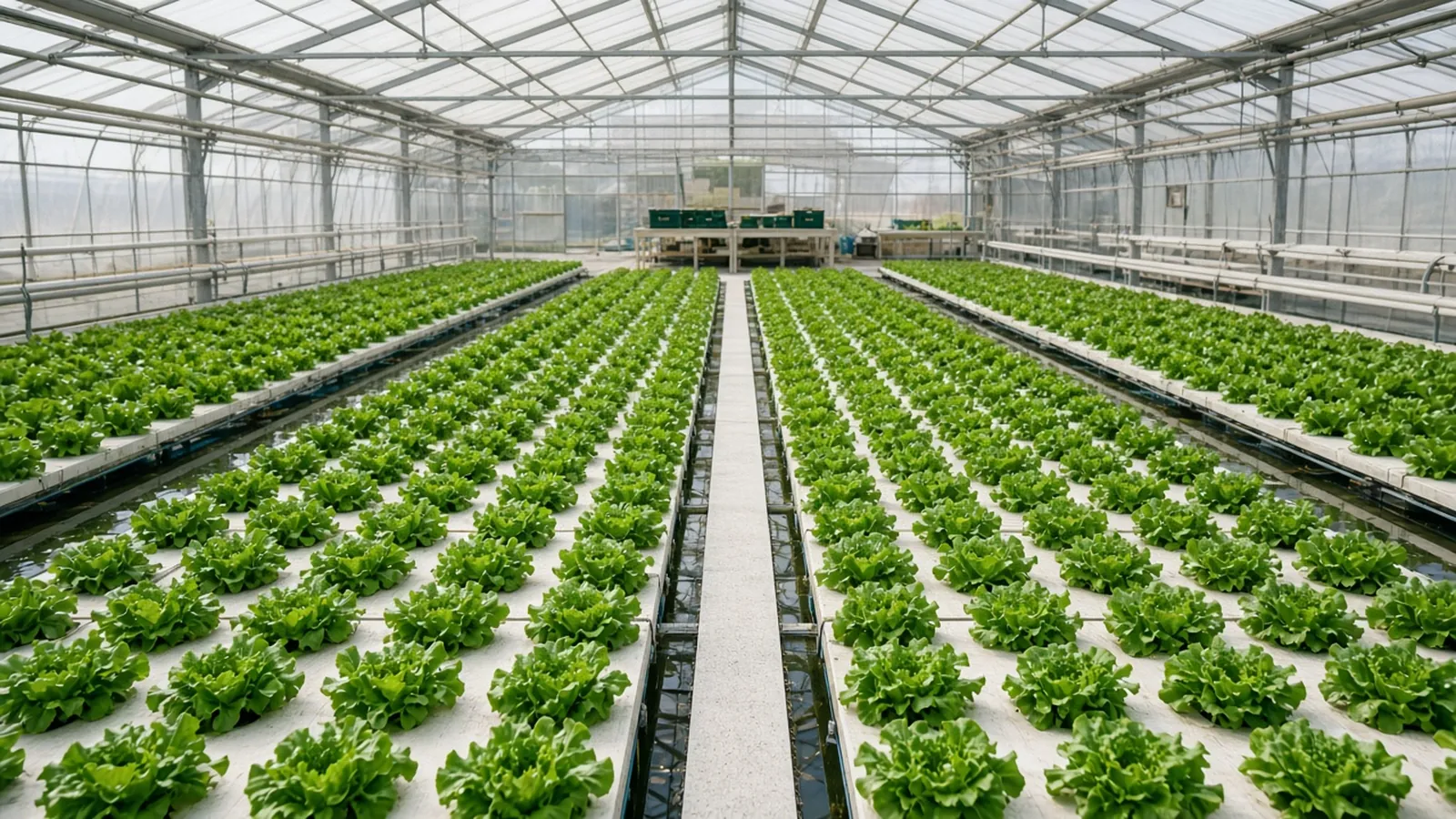
Missouri Extension’s G695 models a deep-water-culture leafy-greens greenhouse of 2,816 square feet, with 85% of the floor used for growing. It plans 30 heads per square foot of greenhouse per year and assumes 95% of those heads are sold. It prices heads at $1.50 wholesale and $2.75 retail, and it gives a “your estimate” column because the authors do not pretend a Missouri planning budget is a forecast for every site.
The published lines, at the April 2024 price forecasts used in the budget, are:
| Line (G695) | Per year | Per head | Per square foot |
|---|---|---|---|
| Total income | $110,922 | $1.63 | $39.39 |
| Labour | $26,000 | $0.38 | $9.23 |
| Utilities | $22,782 | $0.33 | $8.09 |
| Packaging | $10,523 | $0.15 | $3.74 |
| Total operating costs | $70,620 | $1.03 | $25.08 |
| Ownership costs | $17,347 | $0.25 | $6.16 |
| Total costs | $87,967 | $1.29 | $31.24 |
| Income over total costs | $22,955 | $0.34 | $8.15 |
Those figures already include ownership costs, not only the cash spent in a good year. A project that “makes money” before depreciation and the cost of the building is not yet a project that has paid for the building. The $22,955 is also not a salary on top of the $26,000 labour line. If the owner is the labour, some of that $26,000 is their pay, and the $22,955 is what remains for risk, tax, and return on the capital.
The budget is for leafy greens in deep water culture in Missouri. It is not a tomato house, a vertical farm in an urban warehouse, or a hobby NFT gutter in a spare room. If your plan is different, use G695 as a method — fill in every line — not as a result you can photocopy into a pitch deck.
2. Why labour and energy decide the result
In the Missouri budget, labour ($26,000) and utilities ($22,782) are most of the operating cost and about 55% of all costs. That is the heart of the skeptical answers on r/farming. Growers who have tried to scale hydroponics talk about pump sizes, electricity and the difficulty of making labour efficient once the romantic small system becomes a job.
Write your own versions of those two lines first:
- Labour. Who harvests, packs, cleans reservoirs, mixes nutrients, and delivers? At what wage, including the owner’s time? A house that only works if someone works for nothing is not profitable. It is a hobby with a large electricity bill.
- Utilities. Heating, cooling, pumps and, if you use it, supplemental light. A mild Missouri year and a high-latitude winter in Britain or Canada are not the same bill. If you do not have a quoted tariff and a climate plan, you do not have a budget.
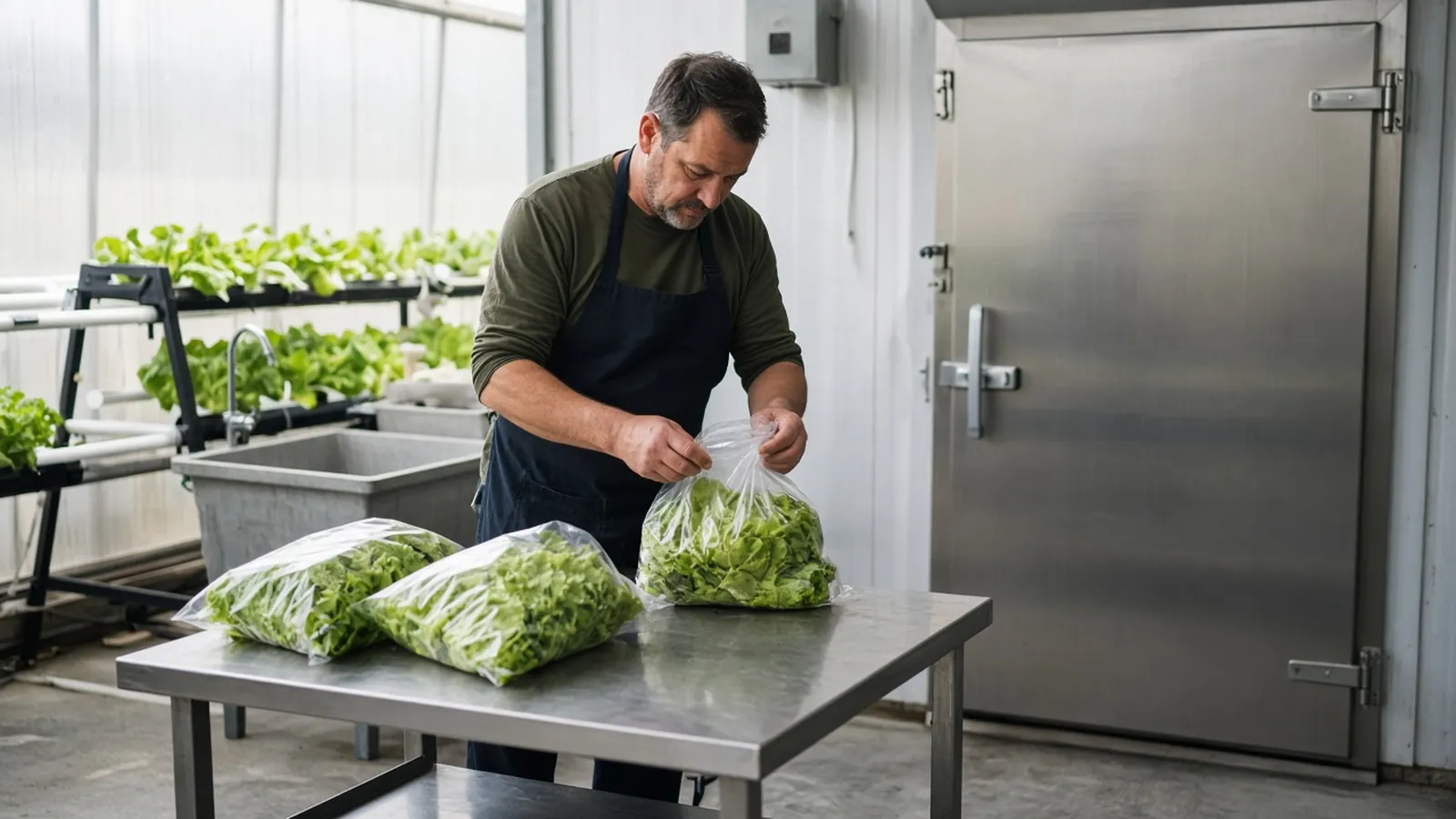
Packaging and delivery are the next quiet killers. The budget’s $10,523 packaging line is a reminder that retail-ready leaves do not walk themselves to a shop. If you do not already have a buyer who wants a regular volume at a known price, the income line is fiction. “Restaurants will love it” is not a market.
3. Which crops have a chance — and which are a vanity project
The forum consensus and the budget agree on a narrow point: hydroponics has a better chance where the product is high-value, perishable, and sold close to the customer, often on a contract or a regular wholesale account, not where you are trying to beat field growers on a commodity vegetable. Leafy greens, herbs, and some specialty leaves are the usual planning crops. Commodity potatoes or storage onions are not.
Tomatoes can be grown hydroponically at a high yield, and some commercial glasshouses do it well. They also want a tighter climate, more skill, and a buyer. A first house is a hard place to learn a long-cycle fruit crop and a hard climate-control system at the same time. If you already grow soil tomatoes well, a soil high tunnel is often the lower-risk way to extend the season. If you already run a seedling nursery, you already know that young plants and a weekly delivery list are a discipline; hydroponic leaves will demand the same discipline, every day of the year.
4. Will USDA or EQIP pay for it?
Usually, not in the way people hope. An EQIP high tunnel is a soil or soil-bed structure under practice 325. Hydroponic channels, benches and pots are outside that practice. Do not design a hydroponic house and apply for it as a hoop house.
USDA Rural Development has also paused loan-note guarantees for controlled-environment agriculture — including hydroponics, aeroponics, aquaponics and vertical farming — and for biodigesters, through 31 December 2026. That pause sits alongside the wider 2026 rewrite of REAP. Energy-efficiency work on a more conventional building may still have a path; a hydroponic start-up should not be planned around a REAP guarantee in 2026. Ordinary commercial credit, savings, or a well-documented farm business plan for a banker who understands the crop are the realistic finance conversation.
5. A way to use the budget without fooling yourself
A method, not a prediction. Copy the G695 lines into a sheet. Replace income with a price you have already been offered, for a volume a named buyer will take, at the number of heads you can realistically harvest with the labour you will actually have. Replace wages with the going wage in your area, including your own time. Replace utilities with a quote from an electrician or an energy modeller for your climate, not a national average. Add the building, the system, a cooler, delivery, insurance and a vacancy or crop-loss month. If the sheet still shows a return that would justify the capital compared with putting the same money into a soil tunnel or into paying down other debt, you have a conversation worth taking to a lender. If it only works at the brochure yield and at a price nobody has offered you, stop.
Simple payback language is easy to abuse. A house that throws off $23,000 over total costs in a planning budget, after labour, is not a house that repays a $300,000 build in a couple of years. Many commercial hydroponic and glasshouse projects cost far more than the modest 2,816-square-foot house in G695, especially once heat and light are added. Get quotes. Do not import a larger capital cost into a smaller budget’s profit line.
6. Capital, disease and a week when the pumps stop
G695’s ownership-cost line is a reminder that the building and the system have to be paid for, but it will not tell you what a contractor in your county will quote in 2026. Get at least two itemised quotes that separate the shell, the heating and ventilation, the hydroponic system, a cooler, a backup generator or a second pump, and the electrical service. If the service upgrade alone is a large number, that number belongs in the budget, not in a surprise invoice after you have already signed for the house.
Water-borne disease and a power cut are the two operational risks people underwrite badly. A reservoir that is not kept clean, or a single pump with no backup, can take out a lot of crop in a short time. Ask whoever designs the system how water is sanitised, how a crop is isolated, and what happens when the power fails on a hot afternoon. Insurance for the structure and for business interruption, if you can get it, is a different policy from farm liability; neither policy will invent a market for a crop you did not pack.
It is also worth putting a soil-tunnel alternative on the same sheet. A high tunnel will not give you the same year-round leaf count. It also will not give you the same capital cost or the same winter electricity bill. If the only way the hydroponic house wins is by assuming a year-round premium price you have not been offered, the alternative structure may be the more serious business, even if it is less fashionable. Profit is the point of this article, not the method.
Finally, give the plan a dull year. Knock yield or price by 15%, or take a month of crop out for a disease clean-out, and see whether the surplus survives. A budget that only works on the planning yield, every week of the year, is the same kind of fragile plan lenders reject in a farm business plan. If you would not show that sheet to a sceptical banker, do not show it to yourself. Walk through the sheet with someone who has packed leaves or paid a winter heat bill, even if they are unkind about your assumptions. An afternoon of that argument is cheaper than a year in a house that cannot clear its own power cost. Keep the notes from that conversation with the quotes, so you can see later which warnings you chose to ignore. If the conversation ends with “start smaller, on a crop you already sell,” that is usually good advice, not a lack of ambition, and it is how a lot of viable houses actually begin.
Common mistakes
- Using someone else’s profit figure and your own (larger) building cost.
- Leaving the owner’s labour out of the labour line.
- Assuming restaurants will buy at a premium before you have a single account.
- Counting on EQIP or a 2026 REAP guarantee to fund the house.
- Under-sizing the pack house, the cooler and the delivery route, which is where a lot of the week actually goes.
Checklist
- I have read G695, or an equivalent extension budget, and I have replaced every line with my numbers.
- I have at least one named buyer and a price, or I am honest that I do not.
- Labour includes the people who will actually be in the house, at a real wage.
- Utilities are based on my climate and a quoted tariff, including winter.
- I am not treating an EQIP high tunnel or a paused REAP CEA guarantee as the finance plan.
Frequently asked questions
1. Is a hydroponic greenhouse profitable?
It can be, on the right crop, in the right market, with labour and energy under control. The Missouri leafy-greens budget shows a modest positive return on a small house after ownership costs, at its assumed prices. It also shows how thin that margin is. Many operators lose money when those assumptions slip. Treat profitability as something you demonstrate in a spreadsheet with quotes, not as a feature of the technology.
2. What does a small commercial house cost to run?
In G695, operating costs alone were $70,620 a year on 2,816 square feet, of which labour and utilities were the large items, and total costs were $87,967. Your figure will follow your wage and your tariff. Ask for those two numbers before you ask about fittings.
3. Which crops are realistic for a first house?
Leafy greens and herbs, sold on a regular account, are the usual planning crops. Long-cycle fruit crops and warehouse vertical systems are harder first projects. Commodity field crops are the wrong comparison and the wrong product.
4. What if electricity is expensive?
Then the utility line in G695 is too low for you, and the $22,955 can disappear. Get a modelled energy bill before you build, especially if you need heat or light. In some climates a soil tunnel with no hydroponics is the more honest structure.
5. Can I use EQIP or REAP?
EQIP high tunnels are for soil or soil-bed production, not hydroponics. REAP loan-note guarantees for controlled-environment agriculture were paused through 31 December 2026. Do not build a finance plan on either programme without a current, written confirmation from the agency.
6. Is a home or hobby system the same question?
No. A hobby system can be “worth it” because you enjoy it and you eat the leaves. This article is about a house that is supposed to stand as a business. Do not use hobby satisfaction to justify a commercial lease or a loan.
Final thoughts
Hydroponics is a production method with a high fixed cost and two hungry variable costs, labour and energy. The Missouri budget is valuable because it admits both, and still shows only a modest surplus on a small leafy-greens house at 2024 planning prices. If you can beat those assumptions with a real buyer and a real tariff, you may have a business. If you can only beat them on a slide, you still have a brochure.
If you grow, keep the records the budget assumed you had
LazAgro helps you record harvests, inputs and sales so the next planning sheet is built from a year you actually ran, not from a copied university column.
Discover LazAgroSources and further reading
- University of Missouri Extension, G695, Hydroponic Leafy Greens Planning Budget
- LazAgro, USDA REAP for farm solar — for the current status of energy programmes and the CEA guarantee pause
- r/farming discussions, including “Is Hydroponics worth it?” (August 2024), used as evidence of the questions growers ask.